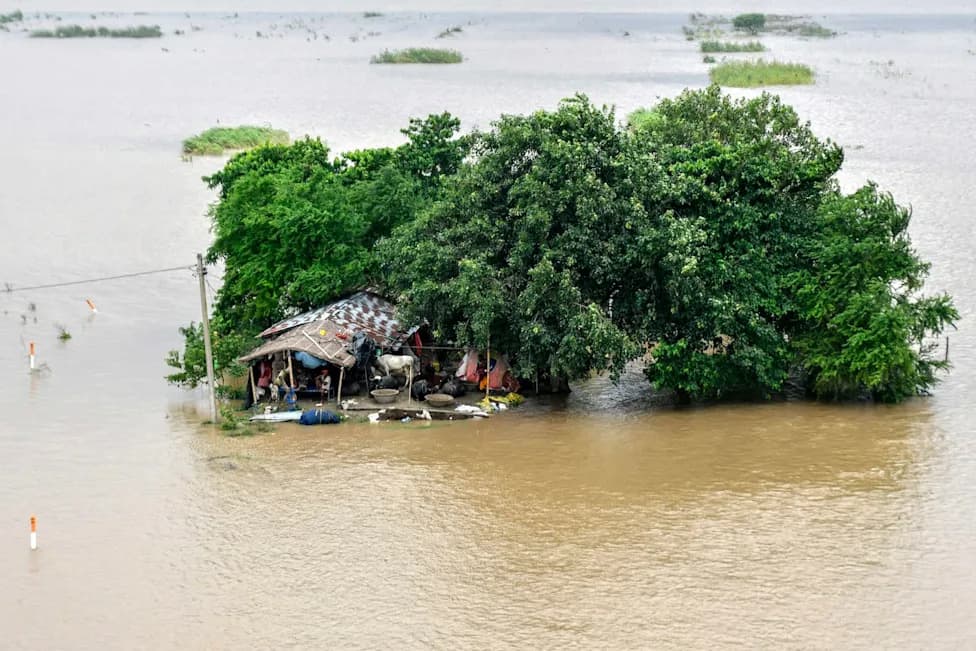
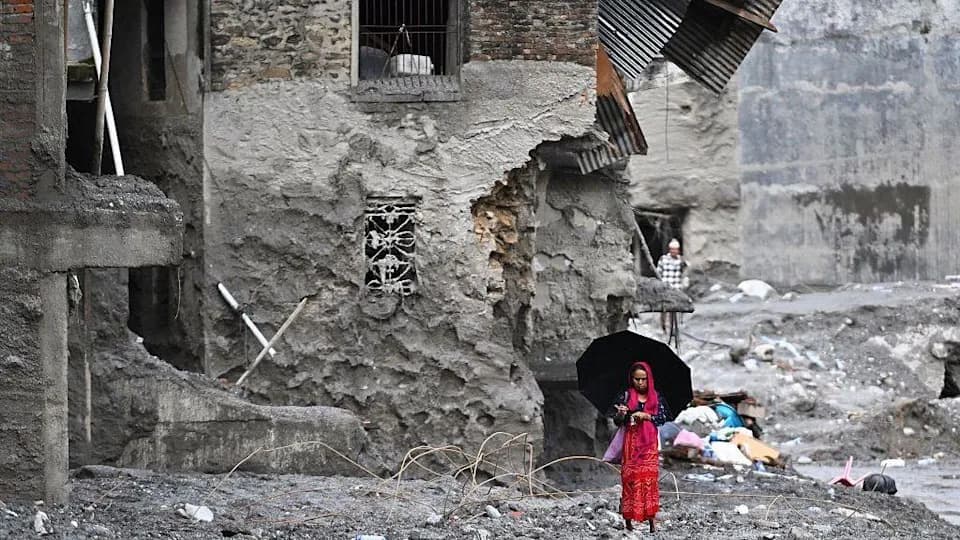
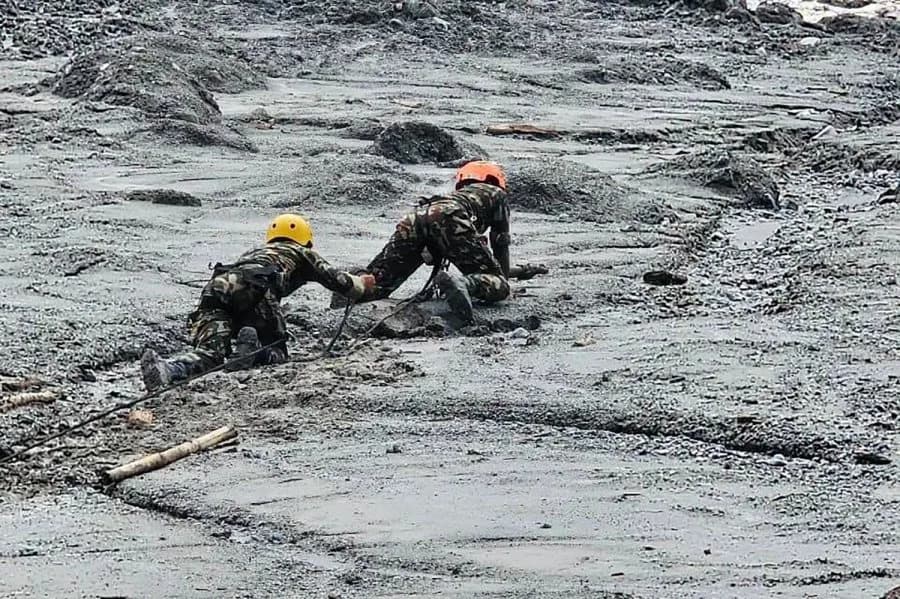
Bangkok declared a citywide flood disaster after nearly 48 hours of heavy rainfall filled canals and submerged roads, with about 300 mm falling in parts of the capital. Pumping stations are running at full capacity (about 1,200 m3/s) and roughly 980 people are in temporary shelters; 36 bed-ridden residents were moved to hospitals. Officials say the situation has stabilised and, if rain stops, drainage should take 2–3 days. Authorities warned of continued low pressure across central Thailand through Sunday and urged residents to stay safe.
Bangkok Declares Citywide Flood Disaster After Nearly 48 Hours of Torrential Rain
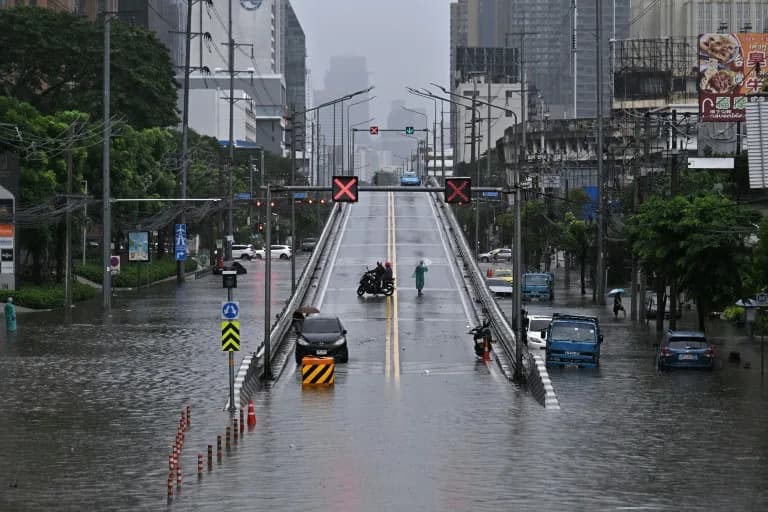
Motorists turn around from an overpass next to flood waters along Phetchaburi Road in Bangkok on September 26, 2026 (Lillian SUWANRUMPHA)
Bangkok officials declared a citywide flood disaster on Saturday after almost 48 hours of heavy rainfall filled canals, submerged roads and forced residents to wade through deep, murky water.
Impact and Immediate Response
Governor Chadchart Sittipunt urged residents to stay home after nearly 300 millimetres (11.8 inches) of rain fell in parts of the capital, while Prime Minister Anutin Charnvirakul cut short a trip to London to return. The Bangkok Metropolitan Administration (BMA) declared a disaster across all 50 districts, granting local agencies extra powers to respond rapidly.
"The water keeps coming in. It's hard to go out now. It's like at my waist level now,"
— Somkid Pheuk-ngam, 67, a vendor living near a canal north of central Bangkok
The governor said the situation had "stabilised" by mid-afternoon and that, if additional rainfall stops, officials expect it will take about two to three days to drain the floodwater. Authorities reported roughly 980 people staying in temporary shelters, and 36 bed-ridden residents were transferred to hospitals for care.
Where Flooding Was Worst
The heaviest flooding affected eastern districts and communities along Bangkok's canal network. At least 13 roads were reported submerged, and AFP journalists observed residents in several neighbourhoods wading through high water. In some areas, locals filled sandbags to protect homes and businesses.
Bangkok—built on former marshland and averaging about 1.5 metres (five feet) above sea level—relies on pumping stations and drains to manage heavy rains. The BMA said pumping stations are operating at full capacity, moving roughly 1,200 cubic metres per second combined, while municipal crews worked to remove rubbish and clear drains so water can flow away.
Wider Context and Weather Outlook
September is normally the peak of the rainy season, but this month has been wetter than usual: the city's drainage and sewage department recorded 487 mm of rain between Sept. 1 and 25, compared with a 1991–2020 average of about 269 mm for the same period. Scientists caution that climate change is increasing the frequency and intensity of extreme weather events.
The Department of Disaster Prevention and Mitigation warned of continued low pressure across eastern, northeastern and central Thailand through Sunday. Officials are coordinating with neighbouring provinces to divert inflows away from Bangkok and reduce pressure on the city’s drainage system.
Practical Advice
Authorities advised residents to move valuables to higher ground, avoid driving through flooded streets, and follow updates from local government agencies. Governor Chadchart urged calm, saying the public should not panic about short-term food supplies despite some blocked roads.
Help us improve.