Developers and industry groups say Con Ed's August and November 2025 rule changes have frozen roughly $1.5 billion and about 600 MW of third-party battery projects in New York City by sharply increasing interconnection costs. Con Ed argues the tighter rules are needed to protect reliability and shield customers from potential cost exposure if many batteries charge at once. The New York Public Service Commission is being asked to restore prior rules while the utility seeks approval for a framework to control when batteries charge and discharge. The commission's ruling will affect heat-wave resilience, local pollution, and future grid costs.
Con Ed Rule Changes Freeze $1.5B and ~600 MW of NYC Battery Projects, Developers Say
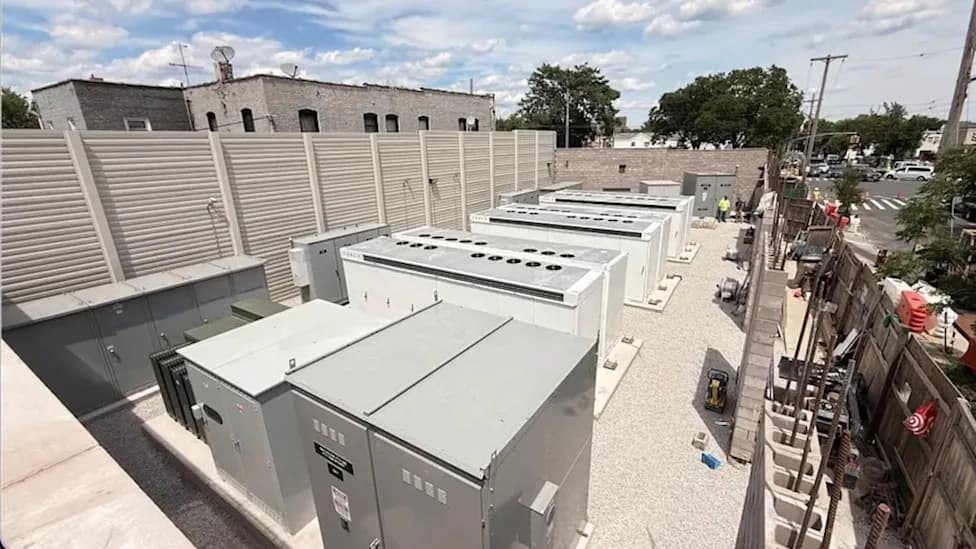
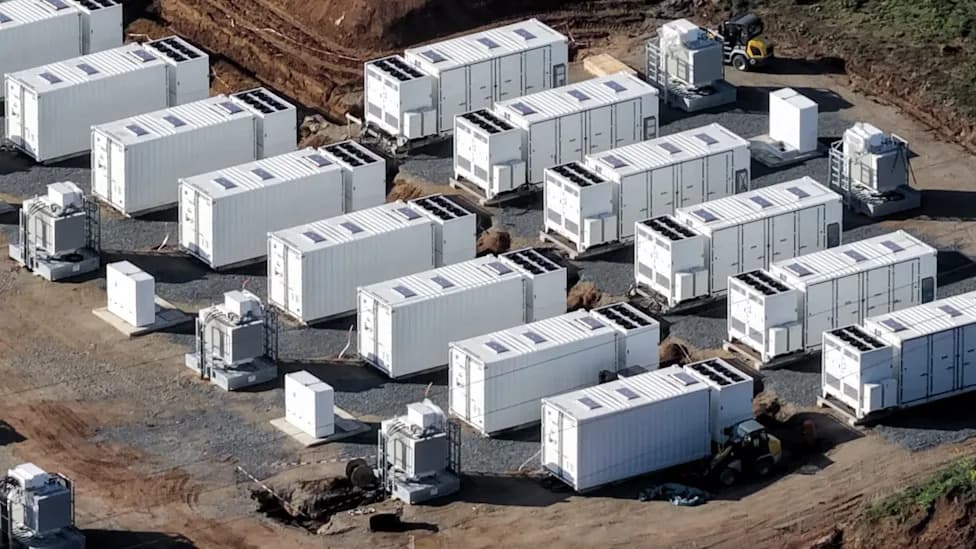
Photo Credit: NineDot Energy
A dispute between Con Edison and independent battery developers has put about $1.5 billion in planned neighborhood-scale energy storage projects on hold, threatening efforts to expand local battery capacity in New York City during periods of extreme heat.
What Happened
In March, trade groups NY-BEST and NYSEIA filed a petition with the New York Public Service Commission arguing that Con Ed's policy revisions — an August 2025 rule change and a revised interconnection policy in November 2025 — have effectively blocked roughly 600 megawatts of third-party battery projects, Canary Media reported. The groups say some interconnection charges rose as much as 14 times previous levels, sharply increasing project costs and stalling investment.
Developers' Concerns
Developers and industry groups say Con Ed's unilateral changes have frozen billions of dollars of planned deployments for distributed battery systems designed to smooth local demand spikes more cheaply and with lower emissions. They argue Con Ed's modeling and planning assumptions mischaracterize how batteries operate — treating highly flexible resources like batteries as if they were rigid and inflexible.
Noah Ginsburg, NYSEIA executive director: 'If your starting point is false assumptions about the flexibility of the resource you're dealing with, you're not going to get a positive outcome.'
Con Ed's Position
Con Edison defends the tighter rules as necessary to preserve reliability and protect customers from potential cost exposure if many batteries charge simultaneously and overload constrained network segments. Raghu Sudhakara, Con Ed's vice president for distributed resource integration, told Canary Media the company supports storage for the clean-energy transition but believes projects must be 'sited in the right location, come online at the right time, and operate under the right operating conditions.'
Why It Matters
Con Ed's July reliability contingency filing identified a need for 125 megawatts of 'clean and non-emitting' capacity in the city by 2033, and named energy storage as a primary resource to meet that need. Advocates say batteries are especially valuable during heat waves when demand spikes and older fossil-fueled peaker plants — which disproportionately emit air pollution in low-income neighborhoods — are often dispatched.
Developers warn that if regulators allow the new rules to stand, New Yorkers could face a slower transition away from polluting peaker plants, a less resilient local grid, and higher long-term costs if more expensive upgrades are required instead of distributed storage.
The Regulatory Fight
The petition before the Public Service Commission asks regulators to find that Con Edison bypassed proper procedures and to direct the utility to reinstate its prior tariff and interconnection rules. Support for a rollback has come from environmental groups and elected officials, including New York City Council Member James Gennaro, chair of the Council's Committee on Environmental Protection and Waterfronts.
At the same time, Con Ed is seeking approval for a framework that would give it greater control over when third-party batteries charge and discharge, arguing that such controls better match operations to local grid conditions and reduce overload risk.
What's Next
The Public Service Commission's decision could shape whether the city secures cleaner backup capacity in time to reduce pollution, relieve pressure during heat waves, and potentially avoid costly centralized grid upgrades that would be reflected in customer bills. Stakeholders on both sides say the outcome will determine how quickly battery storage contributes to New York City's resilience and decarbonization goals.
Related Coverage
- Federal regulators approved a faster grid review process to reduce backlogs for solar and storage projects.
- Connecticut lawmakers expanded advantages for home batteries as rooftop solar incentives face new caps.
- California adopted a rule that cut compensation for community solar projects.
Help us improve.