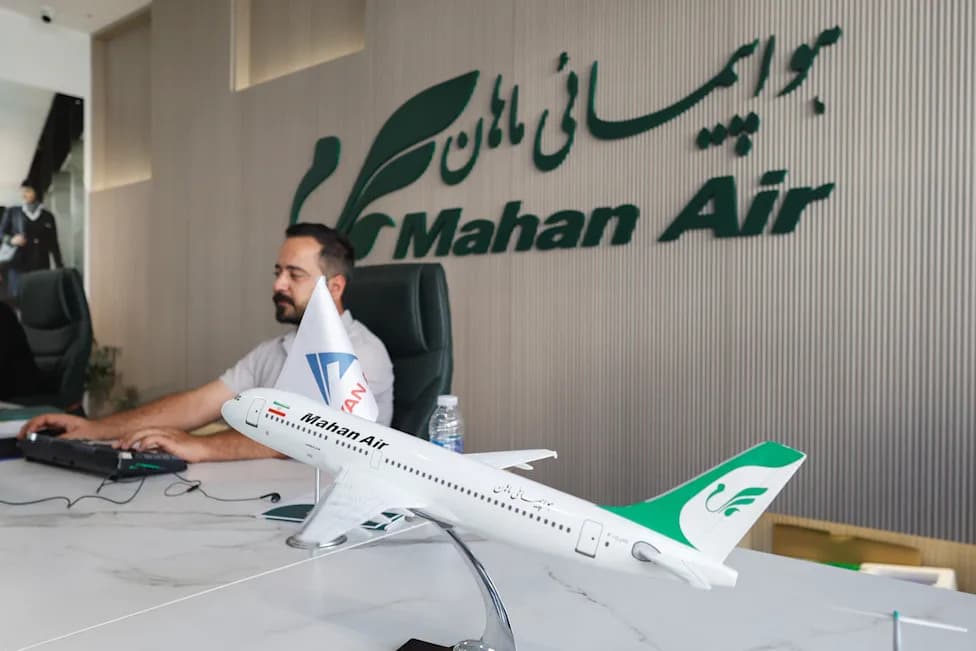
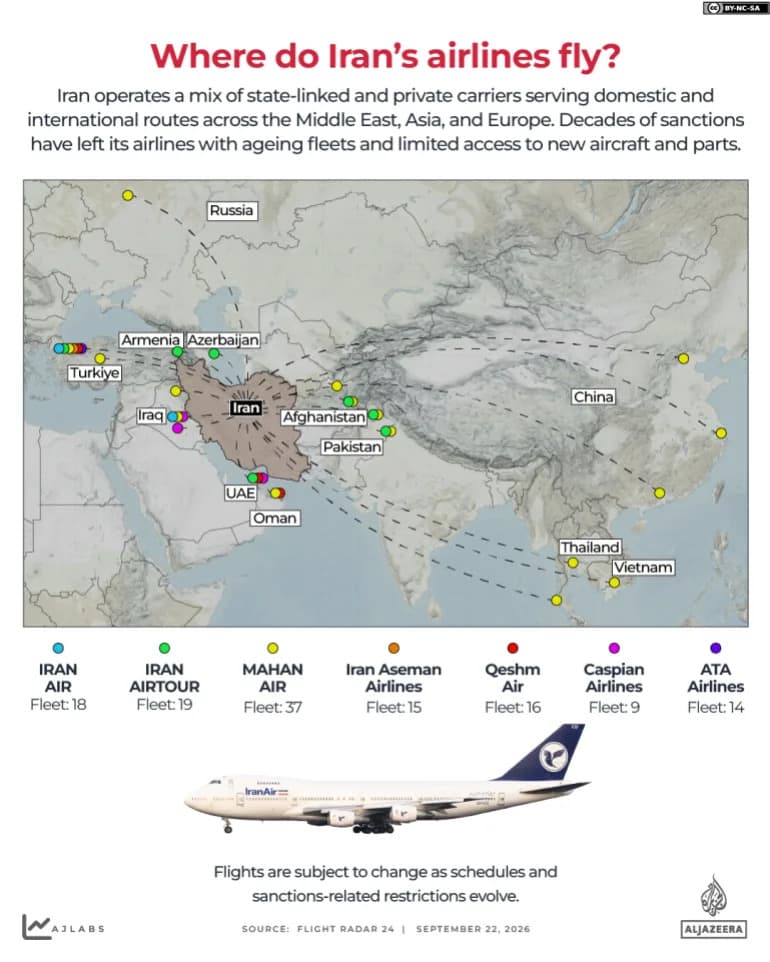
Four Iraqi airports — Baghdad, Najaf, Erbil and Sulaimaniyah — have suspended flights to and from Iran after the US imposed fresh aviation sanctions under Operation Economic Outcast. The ban disrupts pilgrimage and commercial travel, forcing many travellers onto long land routes. Regional carriers and ground service providers say they risk secondary US sanctions, while Iran maintains limited connections to countries such as Turkey, Russia, China and Armenia.
Iraq Suspends Flights To Iran After New US Aviation Sanctions — Pilgrimage Routes Disrupted
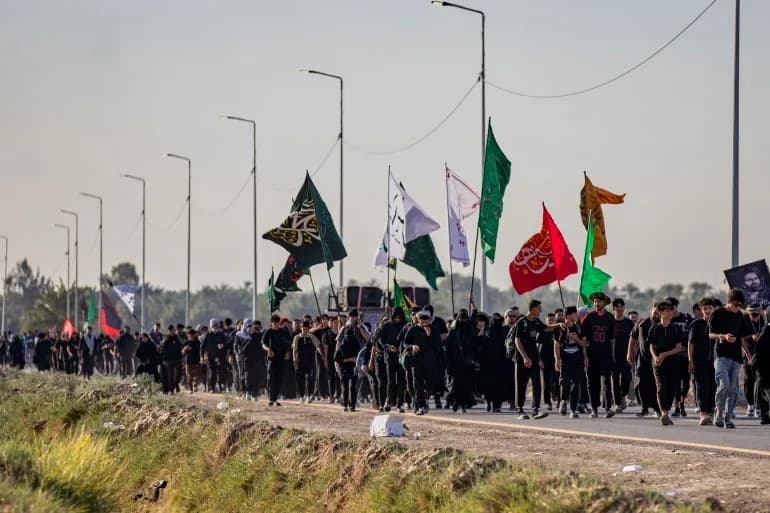
Shia pilgrims march to Karbala to observe Arbaeen that marks the end of a 40-day mourning period following the Day of Ashura, in Najaf, Iraq, on July 28, 2026 [Anmar Khalil/AP]
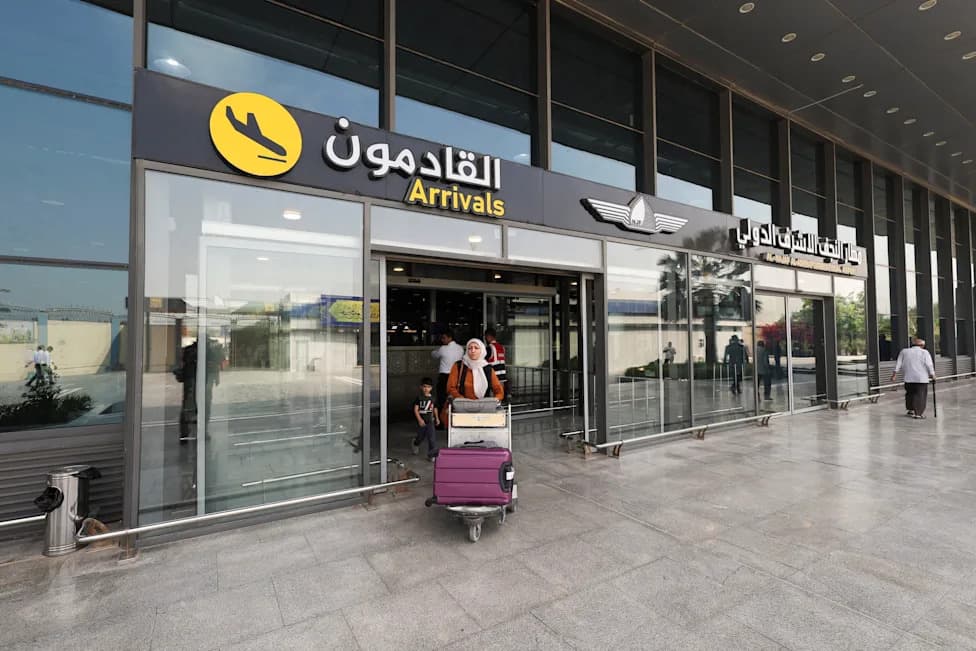
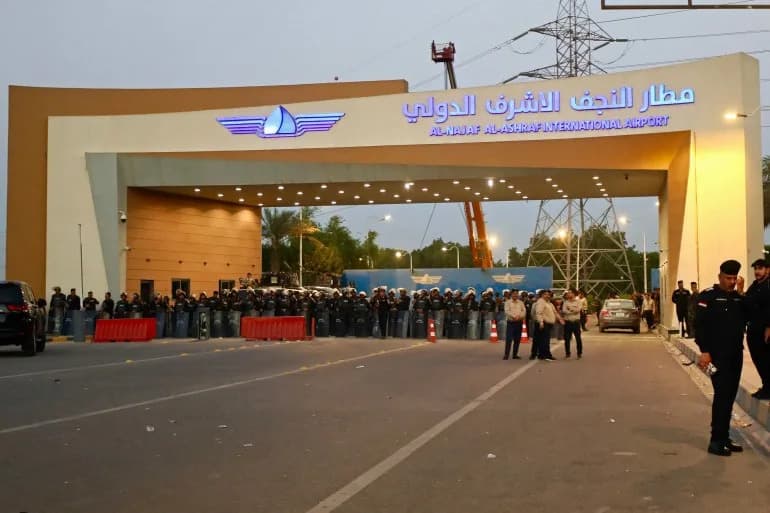
Four major Iraqi airports — Baghdad, Najaf, Erbil and Sulaimaniyah — have suspended all flights to and from Iran following new US aviation sanctions that target companies doing business with Iranian carriers. The move is part of the US Operation Economic Outcast campaign, which aims to further isolate Iran from the global economy.
What Happened
Iraqi state media reported the suspension, which began after a directive from the prime minister's office was passed to local authorities. Najaf airport director Hussein Muhanna told AFP that 'all flights were halted between Iran and Najaf airport following a directive from the prime minister's office to the governor.'
Impact On Travel And Pilgrimage
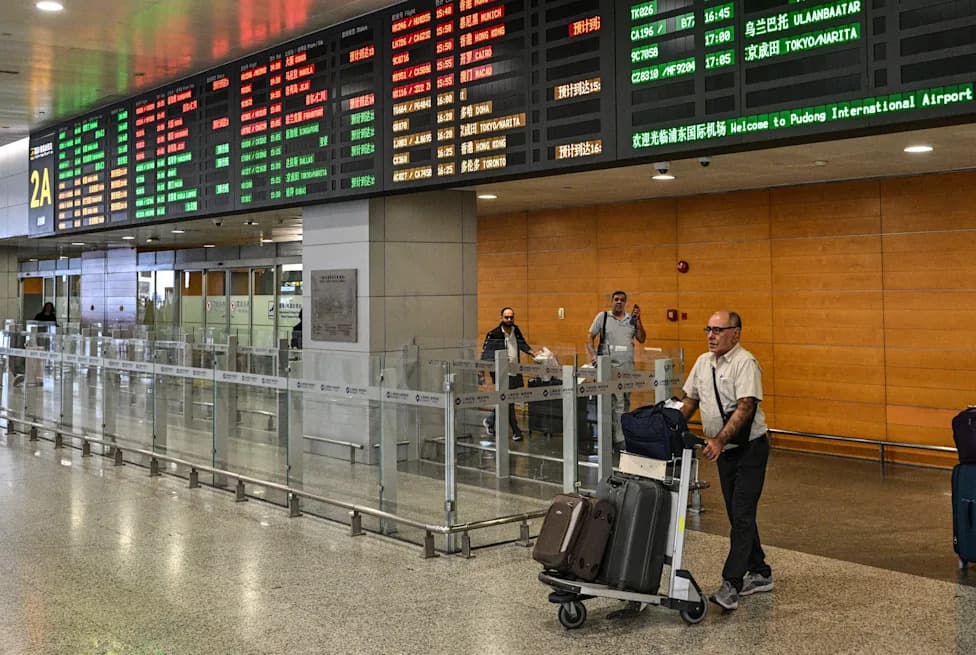
The suspension affects commercial services and religious travel; Najaf is a key hub for Shia pilgrims traveling to and from Iran's holy cities. Iranian carriers had frequently used Iraqi airports — at one point operating around 20 daily flights into Najaf — but local staff said that after the suspension only four unrelated flights remained scheduled on Friday. Passengers traveling between the two countries now face land journeys of at least 12 hours, depending on their destination.
In a reaction on X, the Iranian Consulate in Najaf questioned the decision: 'Najaf International Airport, the shrine of the first Imam of the Shia, and the capital of their last Imam, is closed to the largest Shia country in the world?!'
Regional Response And Wider Effects
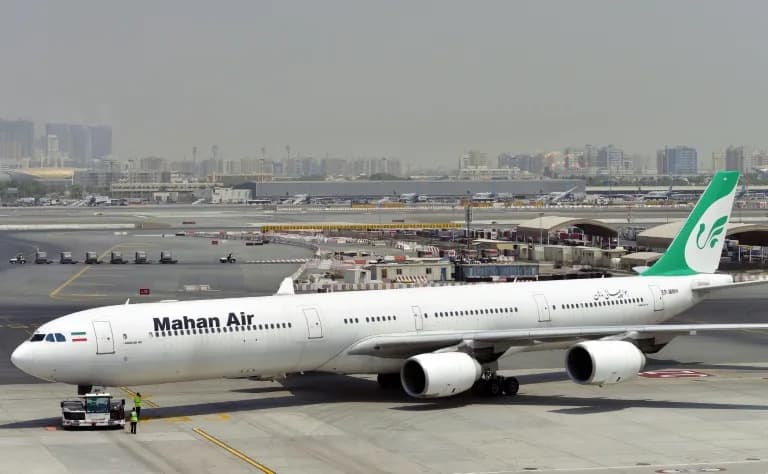
Several regional states, including the United Arab Emirates and Qatar, have already limited or cancelled services to Iran to comply with the US aviation sanctions. Iranian airlines are now relying on a smaller set of international routes — notably to Turkey, Russia, China and Armenia — to maintain limited operations.
Analysts and reporters say the suspensions are driven in part by private firms that provide ground services—refuelling, baggage handling and other airport operations—who are reluctant to risk secondary US sanctions or being excluded from the US dollar financial system. Al Jazeera correspondent Jack Hewson noted that Iraq's central government had not issued a public statement, likely to avoid antagonising pro-Iran factions in parliament.
What This Means
The suspension tightens economic and travel pressure on Iran and complicates travel for pilgrims and ordinary passengers between the two neighbors. It also puts Iraq in a difficult diplomatic position: balancing ties to the US and to nearby Iran while managing domestic political sensitivities.
Key facts: flights suspended at Baghdad, Najaf, Erbil and Sulaimaniyah; major pilgrimage routes disrupted; carriers and service firms cite fear of secondary US sanctions; Iran retains a few reduced international links.
Help us improve.