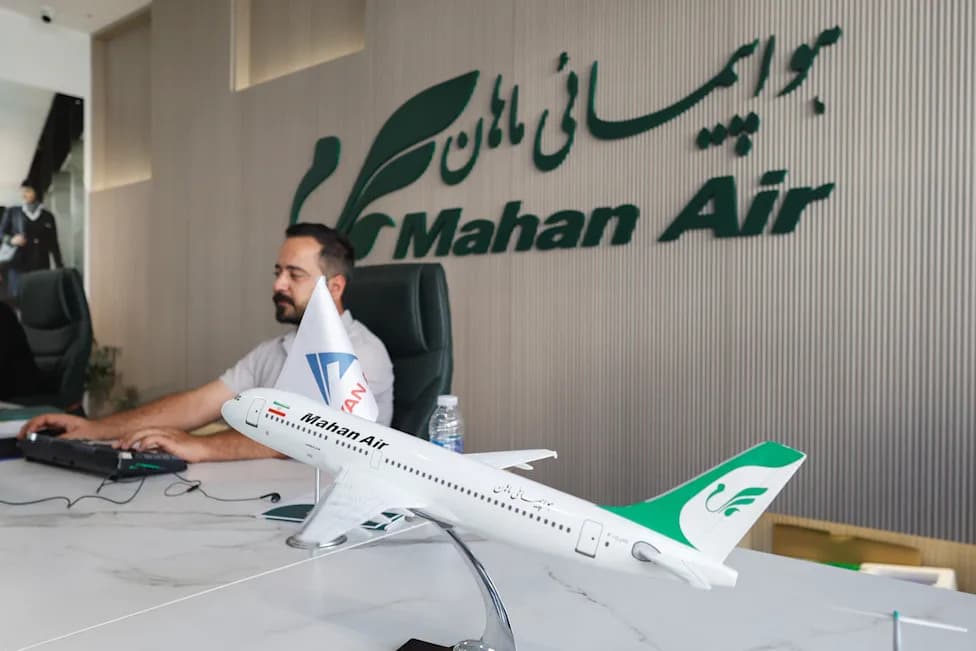
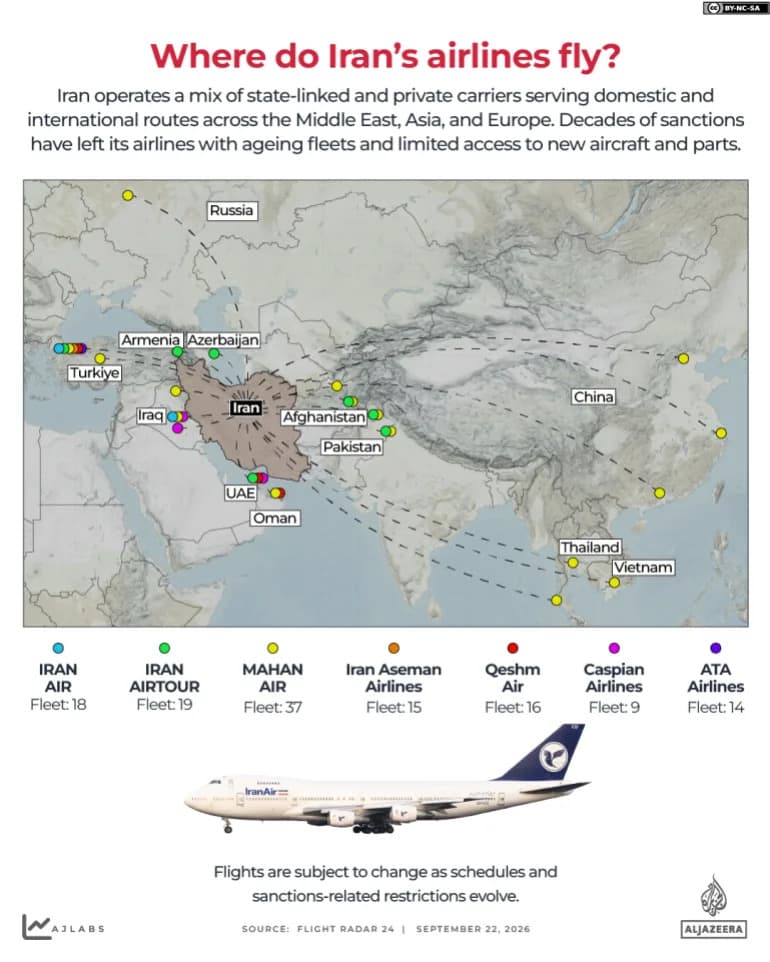
Iraqi Airways has resumed flights between Najaf and Iran after a brief suspension motivated by fears of U.S. secondary sanctions. Iran says it has lodged a formal complaint with ICAO and that the agency ruled in its favour on the protest; Tehran has also filed a separate case at the International Court of Justice over attacks on aviation infrastructure. U.S. sanctions, which took effect on September 23, have led several regional airports to suspend Iranian services, though flights to East Asia reportedly continue.
Iraqi Airways Restarts Najaf–Iran Flights As Tehran Challenges U.S. Aviation Sanctions
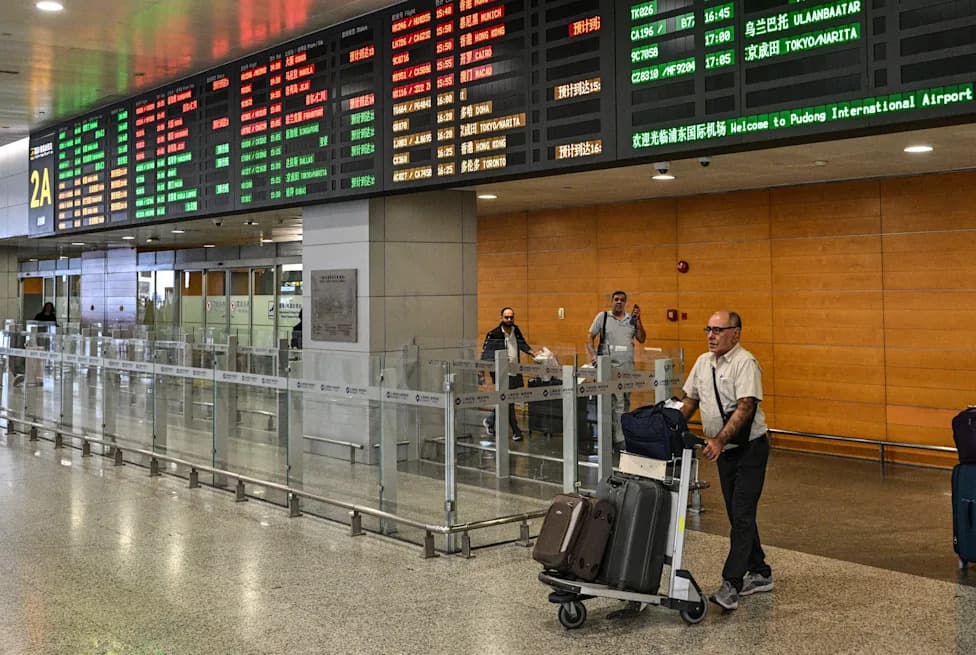
A man arriving from Tehran walks at Shanghai Pudong International Airport in Shanghai on September 24, 2026 [AFP
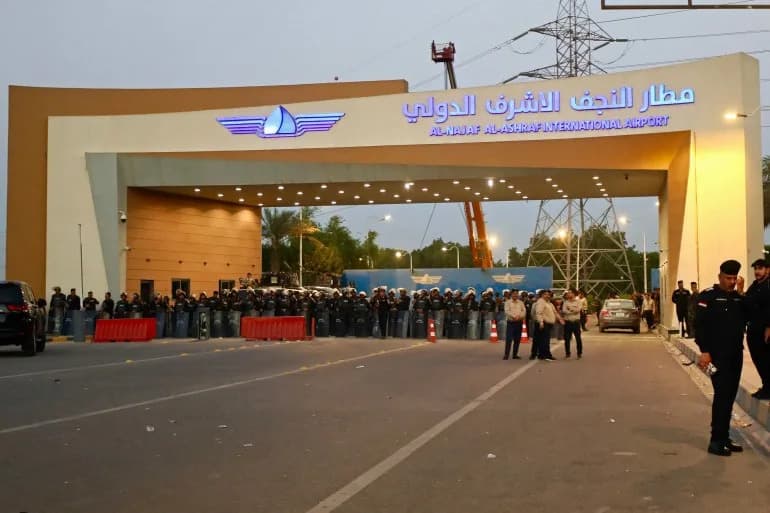
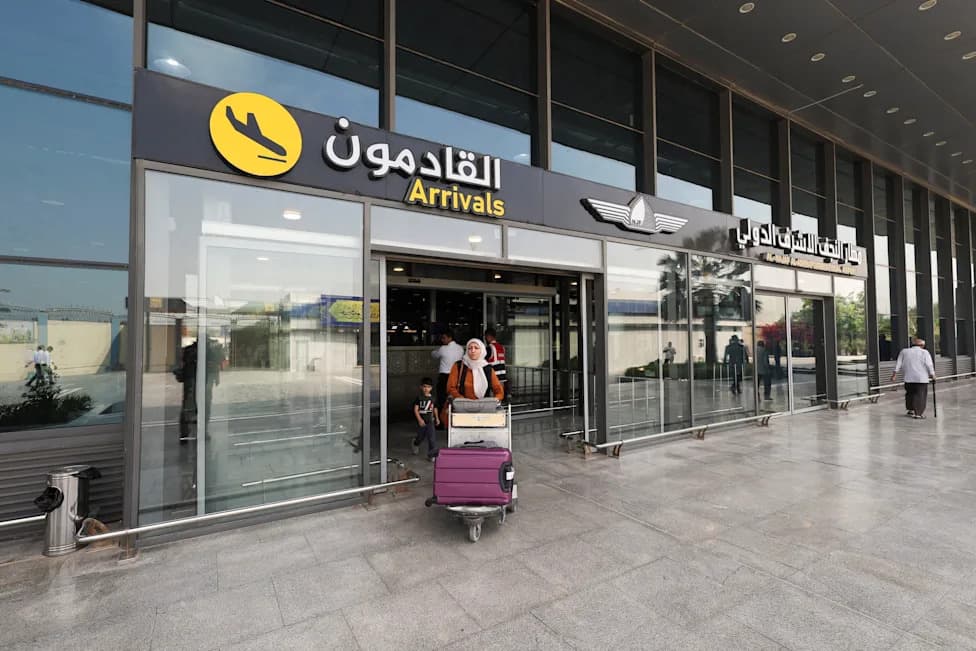
Iraqi Airways has resumed commercial services between Najaf in central Iraq and airports in Iran, the state-run Iraqi News Agency reported. Flights restarted on Monday after Najaf and three other Iraqi airports briefly suspended operations amid concerns about U.S. secondary sanctions targeting aviation services linked to Tehran.
The resumption allows Iraq’s flag carrier to continue services while avoiding operational stand-offs with international ground-handling contractors whose fears of secondary penalties had halted handling services for flights associated with Iran.
Challenging Sanctions at ICAO
Earlier the same day, Iran lodged a formal complaint with the International Civil Aviation Organization (ICAO) over U.S. aviation sanctions, Iran’s IRNA news agency reported. Abuzar Shiroudi, head of Iran’s Civil Aviation Organisation, said Tehran is coordinating with the foreign ministry to pursue legal steps to resume flights.
Shiroudi told IRNA that ICAO had ruled in Iran’s favour regarding its formal protest against the U.S. aviation measures; this is Iran’s account of the ruling. He also said Tehran has taken a separate case to the International Court of Justice (ICJ) in The Hague over attacks on airports, aircraft and radar systems. That ICJ case is under review and any compensation would depend on the court’s final ruling.
Shiroudi added that Iran is seeking diplomatic explanations from several countries for recent suspensions of certain flight routes.
Impact Of U.S. Sanctions And Regional Disruptions
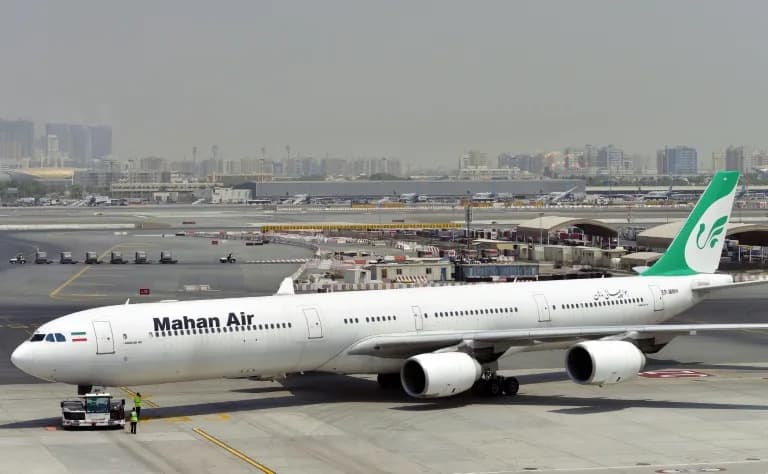
U.S. sanctions on Iranian airlines took effect on September 23, exposing foreign airports and companies that service sanctioned Iranian carriers to the risk of secondary sanctions. Authorities say the measures have not grounded Iranian aviation entirely: according to the semi-official Fars news agency, the CEO of Tehran’s Imam Khomeini International Airport reported that flights to East Asia continue to operate without cancellations.
Meanwhile, several regional airports have suspended or cancelled services by Iranian carriers — including airports in Azerbaijan, Georgia, Iraq, Oman and the United Arab Emirates — reflecting broader commercial and diplomatic strains triggered by the sanctions.
Why it matters: The developments show how secondary sanctions can disrupt international aviation chains far beyond the countries directly targeted, prompting legal challenges at international forums and diplomatic negotiations to keep critical air links open.
Help us improve.