The U.N. summit spotlighted a global education emergency affecting more than 500 million children, many displaced by conflict or climate shocks. Gordon Brown warned that 273 million children are out of school and another 270 million attend but do not learn basic skills by age 11. Donors pledged $3.5 billion through the Global Partnership for Education, while Education Cannot Wait announced emergency grants for Gaza, the West Bank, Sudan and Nepal. Officials cautioned that funding and political will remain far short of what’s needed to meet U.N. education goals by 2030.
More Than 500 Million Children Face a Global Education Crisis, U.N. Officials Warn
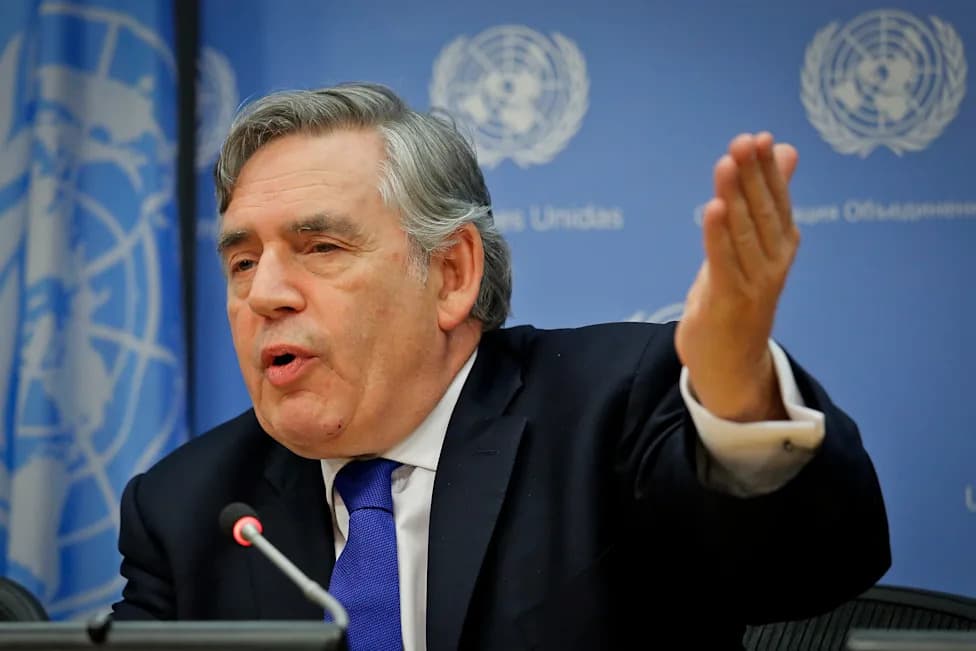
FILE - Gordon Brown, United Nations Special Envoy for Global Education and former Prime Minister of the United Kingdom, holds a news conference at U.N. headquarters, Sept. 16, 2016. (AP Photo/Bebeto Matthews, File)
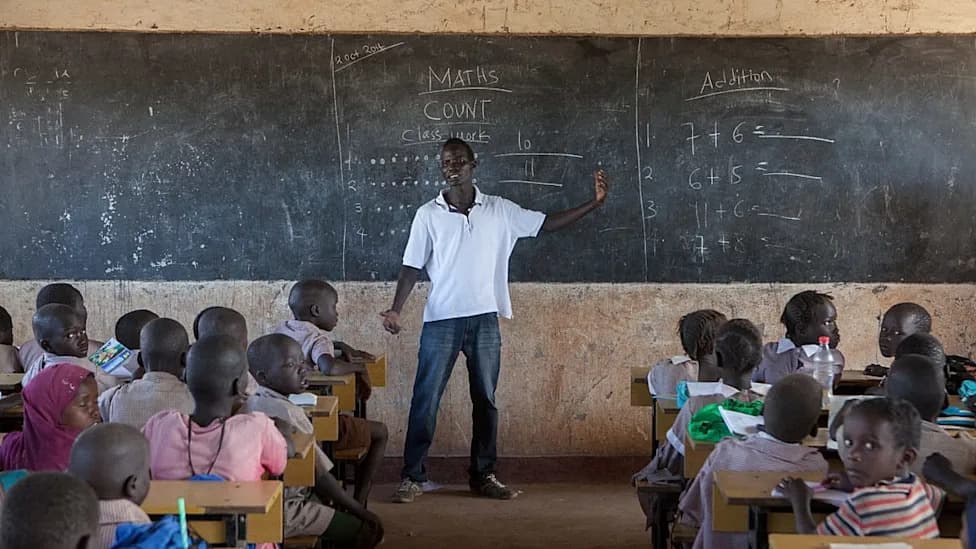
In a sweltering sixth-grade classroom in conflict-ravaged Sudan, one determined teacher taught 120 pupils — including an 18-year-old woman forced from her home by fighting, pushed into early marriage and motherhood, yet resolved to finish her studies.
Maysa Jalbout, director of Education Cannot Wait, described the visit at this week’s U.N. leaders’ meeting. Despite a classroom temperature near 44°C (111°F) and no running water or electricity, the young woman implored Jalbout to help ensure her siblings, cousins and orphaned friends could also attend school. The classroom was full, and hundreds of other children waited outside.
A Growing Global Emergency
The crisis affecting more than 500 million children in urgent need of education has been a prominent issue at the U.N. summit. Gordon Brown, the U.N. special envoy for global education and former British prime minister, said an estimated 273 million children are not enrolled in school and another 270 million are in school but are not learning sufficient reading, writing or arithmetic skills by age 11. Many of these children live in areas hardest hit by conflict and climate shocks.
"Instead of the world developing only some of the potential of some children in some countries, we must be determined to develop the potential of all children at all times in every country," Brown said, urging governments to honour commitments — including directing 20% of public spending to education — and reminding donors of the 2015 U.N. development goals, which aim for quality education for all by 2030.
Funding Pledges and Gaps
While the summit produced some funding commitments, needs far outstrip resources. The Global Partnership for Education (GPE) announced that partners mobilized $3.5 billion to support education system transformation in more than 90 lower-income countries: $2.1 billion in confirmed and anticipated pledges from governments and private donors, and $1.4 billion in co-financing, including $1 billion from development finance institutions and $400 million from philanthropic and private-sector partners.
Nigerian President Bola Tinubu, a co-host of the campaign, said the funding will help nations like Nigeria remove barriers that keep children — especially girls — out of school so they can reach their potential.
Education Cannot Wait: Emergency Allocations
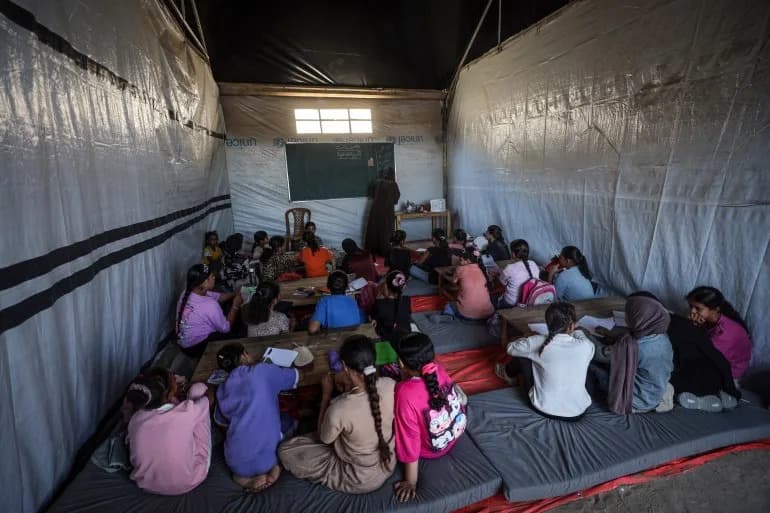
Education Cannot Wait, which focuses on the 258 million school-age children affected by crises, announced several emergency allocations. Jalbout announced a $3 million emergency package for children in Gaza and the West Bank to reach up to 13,000 of the most vulnerable youngsters, prioritizing those with conflict-related injuries and disabilities and children who are unaccompanied or separated from family.
Jalbout noted that Gaza now has the highest rate of child amputees per capita anywhere in the world. "For these children," she said, "survival is only the beginning — a child who has survived this war, lost a limb and perhaps lost their family should not also lose their future because we failed to organize around their needs."
For the third consecutive year, she said, roughly 660,000 children in Gaza remain out of school and about 70,000 of the youngest have no access to preschool. Education Cannot Wait also allocated $1 million to help children affected by Nepal’s devastating floods return to learning and announced $22 million in funding to support several hundred thousand children in Sudan — even as some 8 million children in Sudan remain out of school.
Why It Matters
Officials emphasized that denying children the right to education has lifelong consequences for individuals, families and societies. Despite pledges and some new funds, U.N. officials warned the world remains far from meeting the goal of quality education for every child by 2030.
Reporting by Edith M. Lederer for The Associated Press. Lederer has covered international affairs for the AP for more than 50 years.
Help us improve.