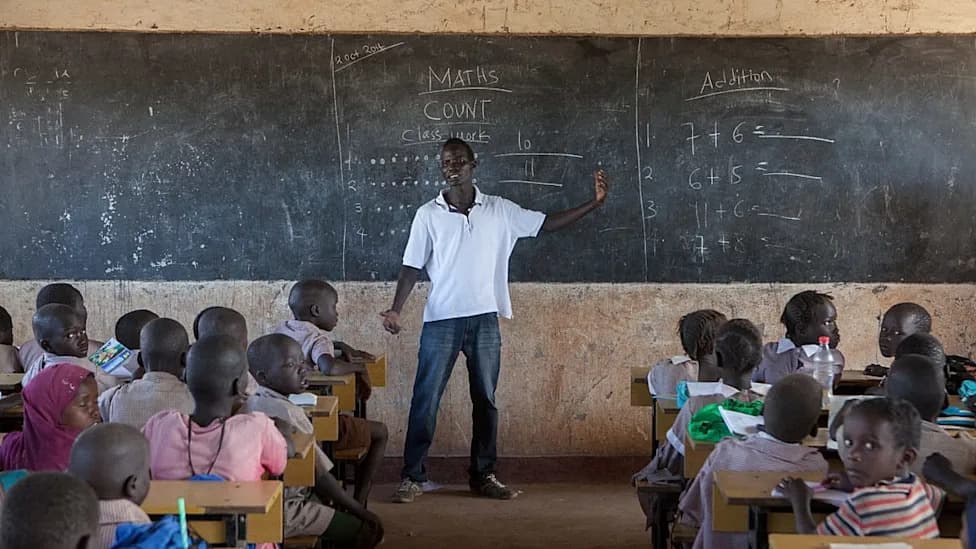
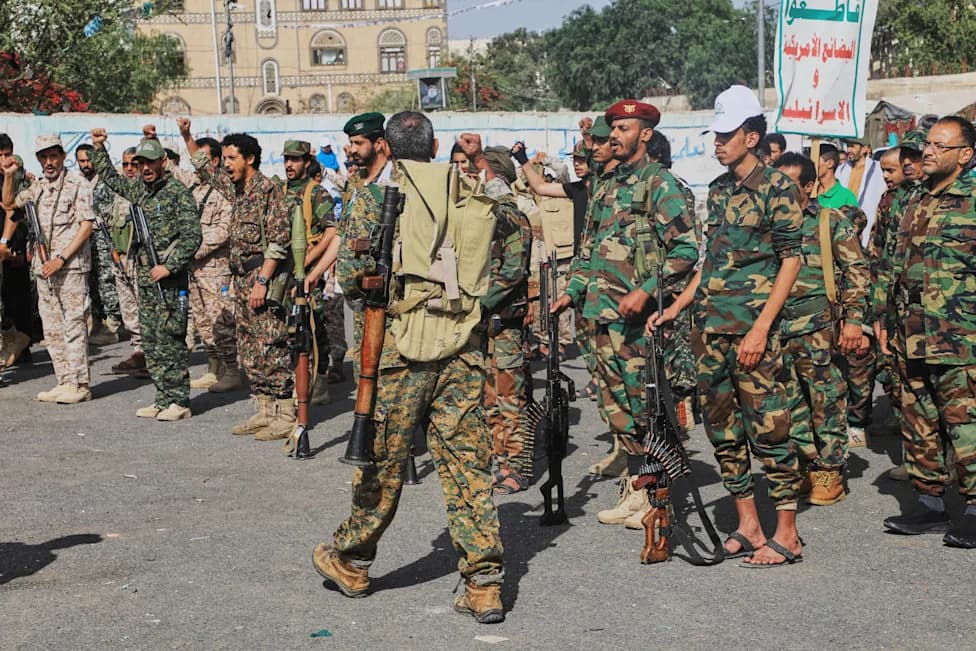
Yemen's prolonged conflict and collapsing livelihoods have pushed millions of children out of school. UNICEF estimates 3.2 million children are out of school this year, up from 1.8 million in 2015, while UN OCHA forecasts 6.6 million children will need education assistance in 2026. Families under extreme strain often send children to work to survive, and humanitarian assessments link a large share of dropouts to hunger and informal daily labour.
Back To Work, Not School: Yemen’s Economic Crisis Forces Millions Of Children Out Of Class
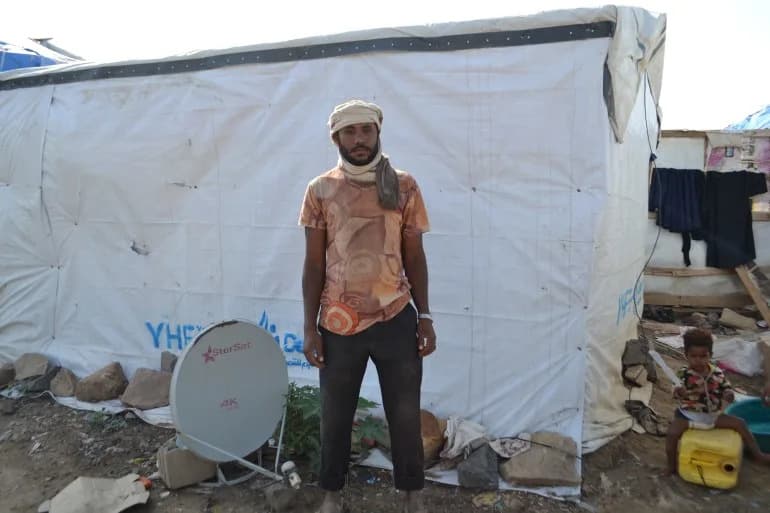
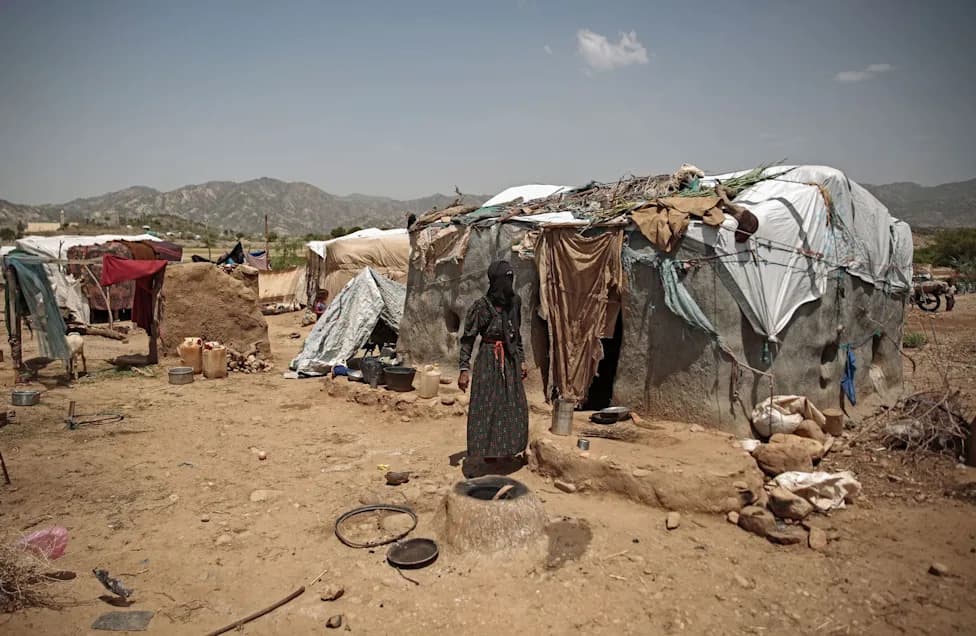
Hasnaa's father Jaber Ali stands beside his shelter before heading to work to wash cars [Nasser Al-Sakkaf/Al Jazeera English]
Taiz, Yemen — While children at a nearby school filed through the gates for a midmorning break, 11-year-old Hasnaa Jaber walked alone across fallow land on the outskirts of Taiz, searching for discarded plastic bottles to sell.
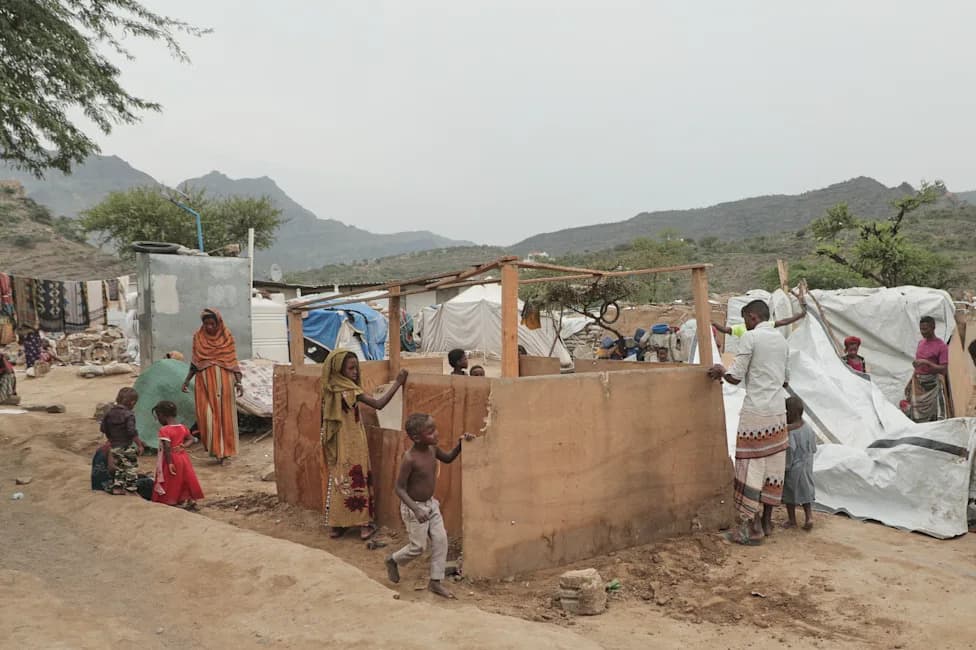
Hasnaa and her family live in an informal settlement for people displaced by Yemen's conflict, now into its second decade. Rather than attending lessons, she spends her days collecting recyclables and doing small jobs to help keep the household afloat.
"My dream is to become a teacher. I studied up to the third grade, but then I dropped out of school along with my two older brothers to help my father,"Hasnaa told Al Jazeera.
The new academic year started in government-controlled areas of Yemen on August 30, yet Hasnaa and many other children from households under severe financial strain are not in classrooms. UNICEF estimates some 3.2 million children are out of school this year — a sharp rise from roughly 1.8 million in 2015, the first year of the war.
Of Hasnaa's four siblings, only the youngest currently attends school because she is too small to collect bottles or wash cars, the informal work the family relies on to survive.
"My two brothers and I asked my father if we could resume our studies this year,"Hasnaa said.
"He was happy that we wanted to go back to school, but providing basic food for the family remains a major struggle. He promised us that we will go back next year."
Hasnaa earns about 1,500 Yemeni rials a day — roughly $1 — selling bottles to scrap traders. That money helps her father, 35-year-old Jaber Ali, who fled fighting near Taiz eight years ago and now washes cars to support the family.
Jaber, who never received formal schooling himself, said he once kept his children in class but that the past two years have become intolerable. Earnings from washing cars no longer cover basic food, let alone school-related costs.
"I was left with two choices: either send my children to school and watch them starve, or ask them to help me earn a living,"Jaber said.
"I had to choose the latter because food is the top priority right now, not education."
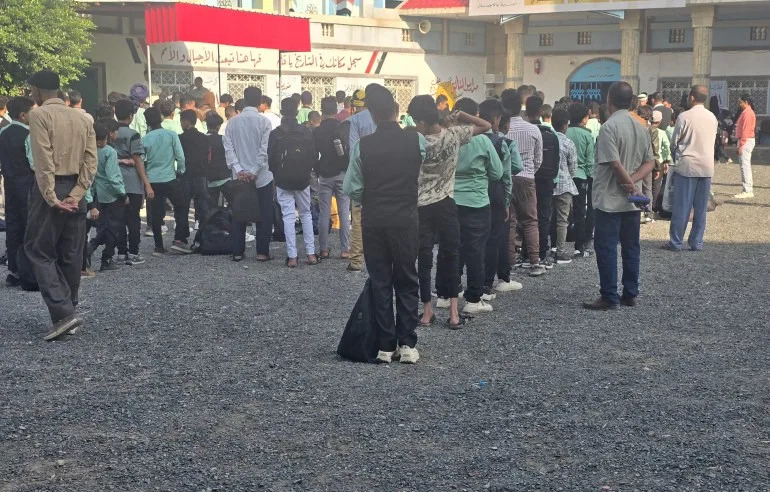
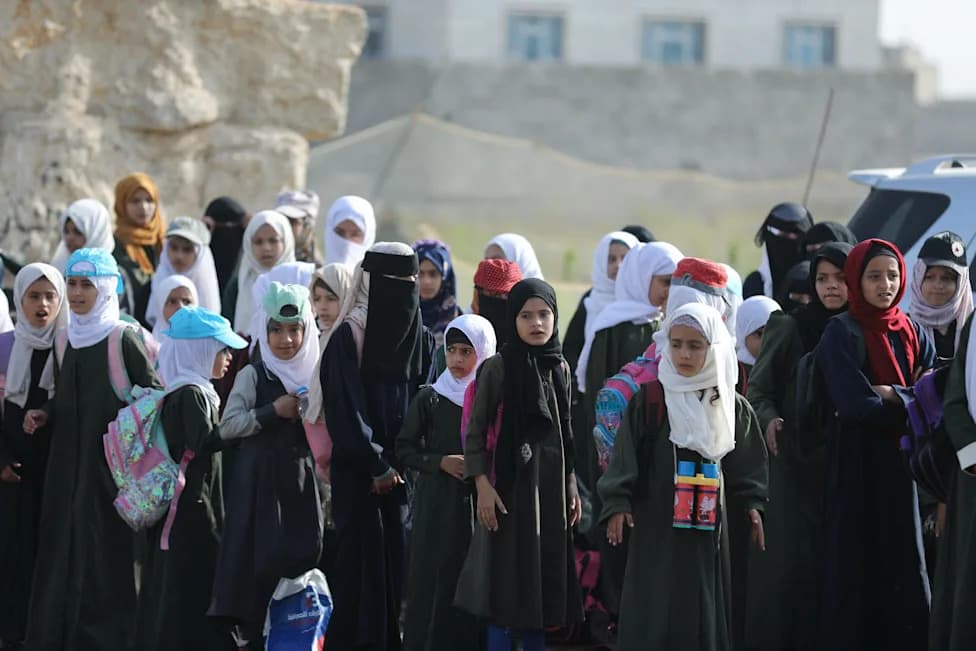
Students stand in line during morning assembly on the first day of the new academic year at a school in Taiz, Yemen [Nasser Al-Sakkaf/Al Jazeera English]
Wider Crisis: Millions Need Education Support
According to the Yemen Humanitarian Needs and Response Plan (HNRP) published by the UN Office for the Coordination of Humanitarian Affairs (OCHA), nearly 6.6 million Yemeni children will need education assistance in 2026. That figure includes children who are out of school and those who remain enrolled but face serious barriers to learning — from active conflict to poverty and the collapse of basic services.
Ammar al-Sharjabi, an education specialist who has worked with ministries in both Sanaa and Aden, warned that rising dropout rates are among the war's most damaging long-term effects.
"Dropping out of school deprives children of their right to education and weakens their chances of securing stable employment in the future, potentially forcing them into hard labour at an early age,"he said.
"At the societal level, persistent dropout rates lead to increased illiteracy, poverty, and unemployment, adversely impacting development and the community's overall future."
An anonymous source at the Ministry of Education in Aden told Al Jazeera the ministry is concerned but limited in what it can do while families face dire economic pressure. "This surge in dropouts is a byproduct of the ongoing war and its economic fallout," the official said, adding that children return to school as soon as households secure stable incomes.
Humanitarian Findings And Personal Sacrifice
A Save The Children assessment of about 2,000 households in southern and southwestern Yemen found that 92 percent of those surveyed did not know where their next meal would come from and that 95 percent rely on precarious daily informal labour. The study reported that 84 percent of families could not afford basic education costs such as uniforms and textbooks, and that nearly one in five identified dropout cases was linked to child labour.
Thirteen-year-old Ahmed Abdulelah, who is not displaced, left school after his father died of cancer two years ago. As the eldest of four siblings, he now works at a grocery store to keep the family fed and pay for his siblings' education.
"My father provided us with everything we needed. But since he passed away, there has been no one else to help us, and I cannot bear to see my mother suffer,"Ahmed said.
"I work here so my siblings can finish their education. They will make up for what I lost, and I am proud that our family doesn't have to beg or rely on anyone else."
What This Means For Yemen's Future
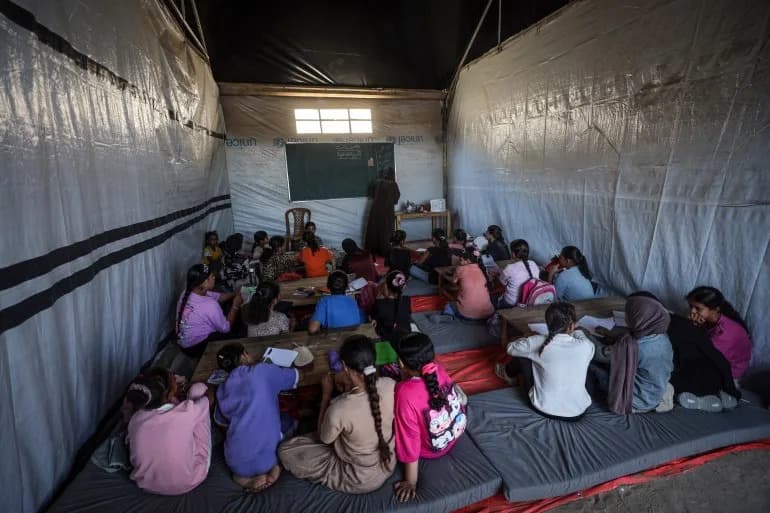
Education experts warn that prolonged disruption to schooling will have long-term social and economic costs for Yemen: higher illiteracy, fewer skilled workers, and a generation at greater risk of exploitation and child labour. Humanitarian groups and education ministries continue to call for expanded support — from cash assistance and food security to school materials and safe learning spaces — to help families choose classrooms over work whenever possible.
For now, millions of children remain on the margins, balancing survival and the slim hope that conditions will improve and they can return to the classroom.
Help us improve.