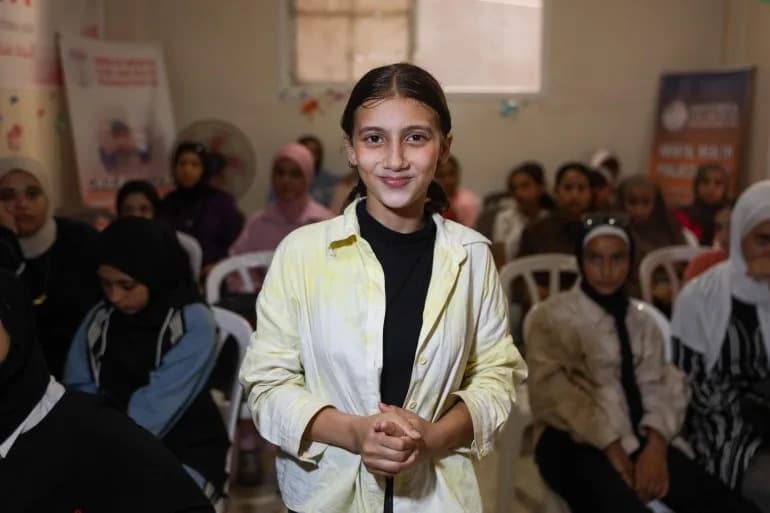
The war in Gaza has decimated formal schooling: many classrooms now operate in tents with limited supplies and volunteer teachers. Some families pay private school fees when they can, but rising prices and collapsing incomes make that unaffordable for most. Field schools and a few flexible private institutions offer temporary relief, yet widespread damage to infrastructure and ongoing hostilities continue to disrupt children's education.
Gaza Parents Struggle to Afford Schooling as Tent Classrooms Replace Damaged Schools
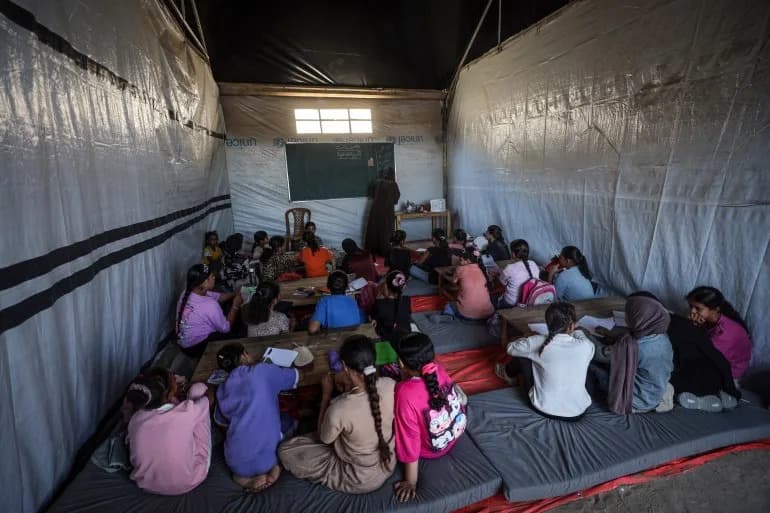
Students attend classes at the Elyaa School, which is operating from tents in Deir al-Balah, central Gaza, with limited resources [Abdelhakim Abu Riash/ Al Jazeera]
Deir el-Balah, Gaza Strip — In a single tent in central Gaza, 39-year-old Khadija Abu Qados prepares her 11-year-old daughter, Jouri, for another day of classes amid continuing air raids and a crippling economic crisis.
The family fled their neighbourhood in northern Gaza, Sheikh Radwan, after it was destroyed during last September's offensive. Like their home, the classrooms where Jouri and her 14-year-old sister, Ritaj, now study at Elyaa' School are tents. With few chairs or desks, children sit on mattresses and carpets. There is no air conditioning or fans, and high temperatures make it hard for pupils to concentrate.
Attempts at remote learning early in the conflict were undermined by poor internet access. Today, Jouri and two of her siblings attend a nearby volunteer-run school that charges 30 shekels (about $8) per month — a modest fee that many families still struggle to pay when food, water and shelter are their priorities.
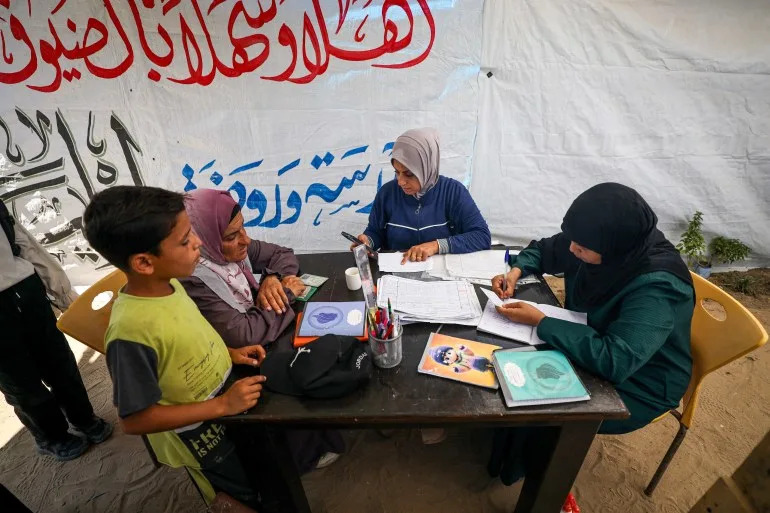
School principal Noha Khader has limited resources and stresses the need for additional support to keep classes operating [Abdelhakim Abu Riash/ Al Jazeera] (Restricted Use)
"If I could afford it, I would send them to private school," Khadija told Al Jazeera.
Before the war, Khadija's daughters attended an UNRWA school in Gaza City and performed well. Now they learn in makeshift classrooms, and while teachers are praised for their dedication, the conditions are far from ideal.
"The teaching here is excellent, but I feel sad for my children because they are studying in these difficult circumstances. There are no chairs and no proper seats. This is not an educational environment at all," Khadija said.
Field Schools Fill a Devastated System
Principal Noha Khader opened Elyaa' School in January under the supervision of the Ministry of Education. More than 1,100 students have enrolled, but the school operates with just 40 volunteer teachers and staff. Classrooms have a handful of desks, worn blackboards and limited stationery; teachers and administrators often use their own funds to buy supplies.
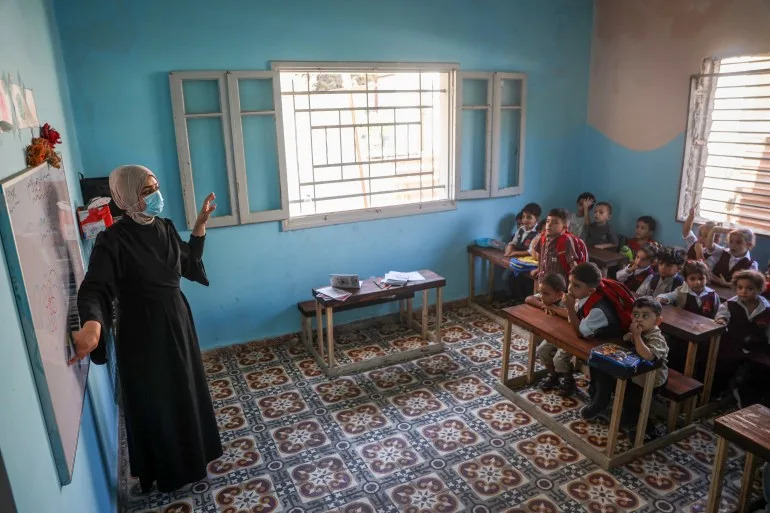
Zahra Saleh works as a kindergarten teacher at the school for a small fee, in exchange for her children's tuition being waived [Abdelhakim Abu Riash/ Al Jazeera]
"At the beginning, there were no tables. The children were sitting on mattresses. Many students come to us without stationery… so we buy it for them ourselves as much as we can," Khader said, describing a gruelling first nine months running the project.
These field schools provide children with a routine, a degree of normalcy and access to basic needs such as water, but they are clearly under-resourced and vulnerable to disruption from ongoing hostilities.
Private Schools Offer Better Conditions — At a Price
Private schools that have reopened generally offer better facilities and lower student-to-teacher ratios, but fees put them out of reach for most families. Zahra Saleh, 25, enrolled her six-year-old son, Ibrahim, and her five-year-old son, Karam, at Abdul Aziz Private School after searching for an affordable option. With her husband unemployed, the school's monthly fee — around 400 shekels (about $131) — presented a major burden. Zahra accepted work at the school to reduce costs.
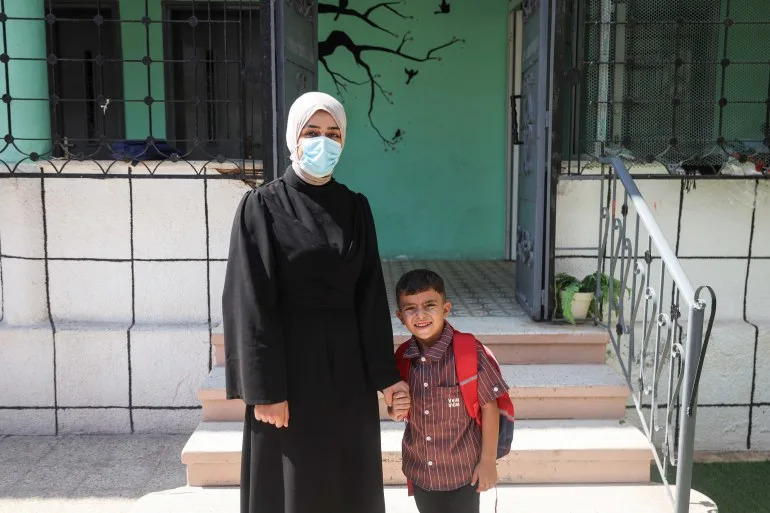
Zahra Saleh with her son, Ibrahim, after enrolment at Abdul Aziz Private School in Gaza City[Abdelhakim Abu Riash/Al Jazeera]
"I'm in a very difficult financial situation. I had to work at the school so I could reduce the cost of the fees for my children," she said. "I taught him at home as much as I could, but children don't learn everything at home. In the end, we had to send him to a school. It's just a normal school environment. That's what I want."
Abdul Aziz began as a tented field school in 2024 and moved into a rented building in Shujaiya for the new school year. About 20 staff teach roughly 300 students aged three to 15. The school's director, Doaa Qdeih, says she adapts fees based on each family's situation and relies on solidarity among parents and income from other businesses to cover costs.
"I don't set a fixed amount. Before I set the amount, I look at the situation of the people — what they do for work and what the child's circumstances are — and then we decide what they can afford," Qdeih said. "We have families who support each other. There is solidarity among us."
Scale of the Education Crisis
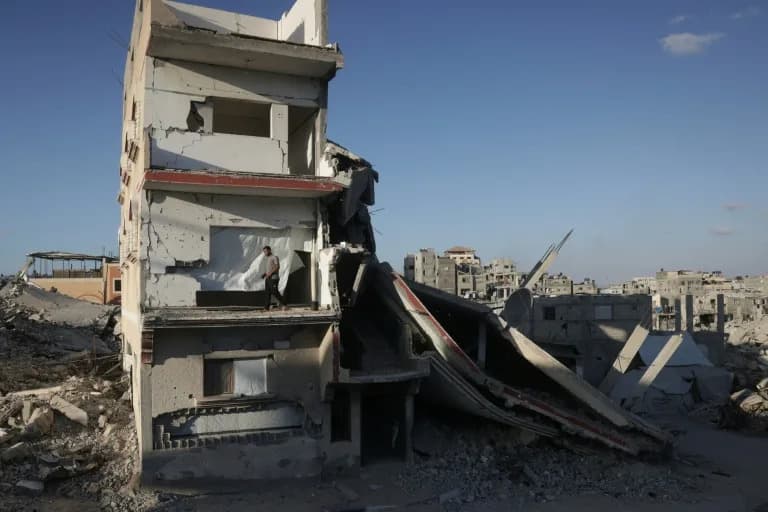
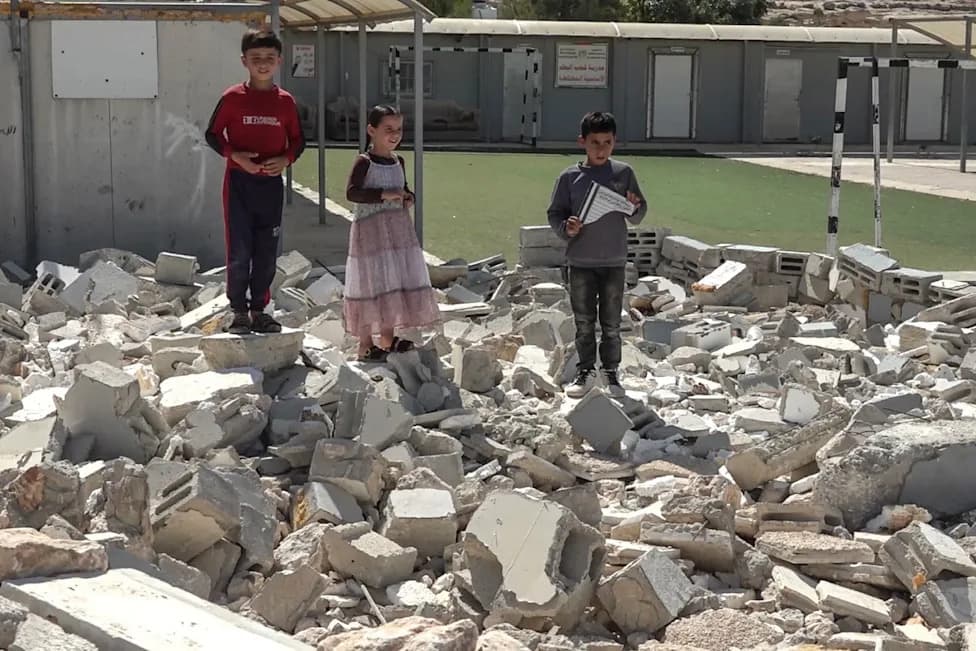
The schooling crisis in Gaza is part of a wider humanitarian emergency. According to UNICEF (May), about 700,000 children aged four to 17 missed formal face-to-face schooling for almost three consecutive school years since the conflict began in October 2023. Only 2% of school buildings are undamaged; 93% require major repairs or complete reconstruction. An estimated 420,000 children had no access to in-person learning.
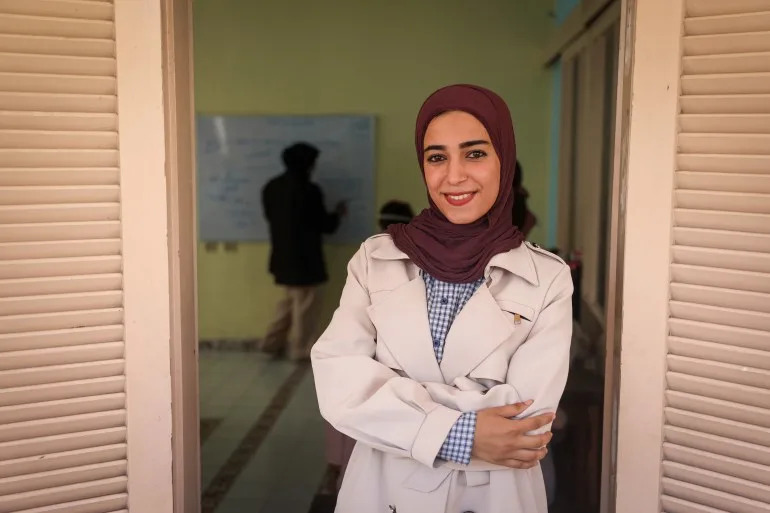
Doaa Qdeih, the director of Abdul Aziz School, speaks about the challenges of providing her children with an education in war-torn Gaza [Abdelhakim Abu Riash/ Al Jazeera]
Hostilities continue to endanger students and teachers. UNICEF reported at least 300 children killed since last October's ceasefire. Recent incidents include the death of eight-year-old Wafaa Akila and her father when their car was struck while returning from school.
Economic collapse compounds the problem. Gaza's labour market is described as largely nonfunctional, with more than 90% of working-age people without stable employment. The Palestinian Central Bureau of Statistics reported Gaza's GDP contracted by 84% in 2025 compared with 2023 and unemployment reached 78%. The World Bank estimated $71.5 billion would be needed for recovery and reconstruction.
What Educators Say
Local educators and parents are keeping education alive through volunteer efforts, flexible payments and makeshift classrooms. But school leaders stress that volunteerism and private initiatives are stopgap measures and that large-scale investment and reconstruction are needed to restore robust, sustainable education systems.
"If the government or the ministry provides places for education, we are ready to volunteer. We don't want anything in return. We just want to continue serving the children and give them the education they deserve," Qdeih said.
The resilience of teachers, parents and communities has kept learning possible for many children — but without reconstruction, funding and safety, the gaps in access, quality and protection will persist.
Help us improve.