Lebanon’s Prime Minister Nawaf Salam met Iran’s President Masoud Pezeshkian at the UNGA and told him Beirut will not be used as a "stage for regional conflicts." Salam urged a state‑to‑state reset with Tehran, requested a new Iranian ambassador after a previous envoy was declared persona non grata, and highlighted priorities including Israel’s withdrawal, restoring state authority and limiting Hezbollah’s armed role. Lebanon has also tightened travel, border and security measures to curb Iranian influence.
Lebanon Tells Iran: “We Will Not Be a Stage for Regional Conflicts” — Salam Seeks State‑to‑State Reset
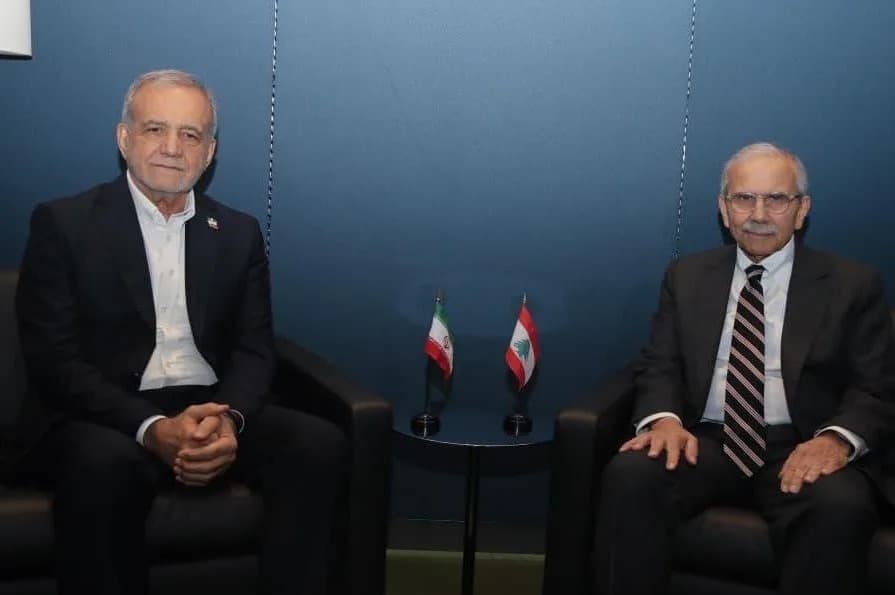
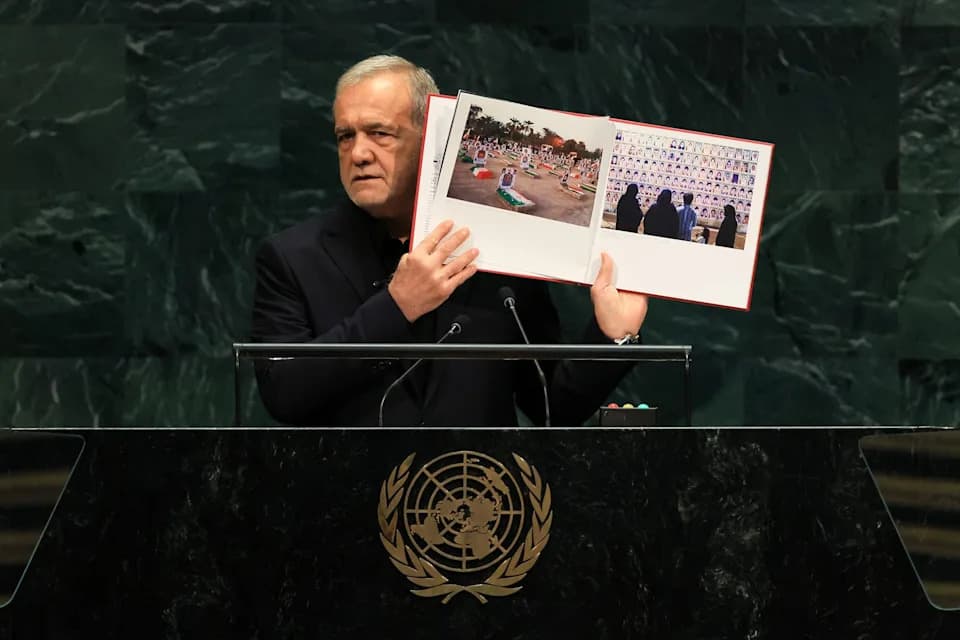
Lebanese Prime Minister Nawaf Salam (R) meets Iran's President Masoud Pezeshkian on the sidelines of the United Nations General Assembly in New York City on Thursday. Photo by Lebanese Prime Minister's Press Office
Lebanese Prime Minister Nawaf Salam met Iranian President Masoud Pezeshkian for about 20 minutes on the sidelines of the United Nations General Assembly in New York, telling him that war‑torn Lebanon has already paid "a heavy price" and will not allow itself to be used as "a stage for regional conflicts" or a venue for sending strategic messages.
Clear Message, New Terms
Salam, who was joined by Foreign Minister Youssef Rajji and Iran's Deputy Foreign Minister Abbas Araghchi, said Lebanon wants to "open a new page in relations" with Iran built on sound state‑to‑state ties, mutual respect for sovereignty, non‑interference and shared interests. He urged Tehran to nominate a new ambassador to Lebanon after the post had been left effectively vacant following the persona non grata declaration in March of Mohammad Reza Shibani.
Ambassador Dispute And Diplomatic Tensions
Salam called on President Pezeshkian to appoint a new envoy after the Lebanese Foreign Ministry declared Iran's ambassador‑designate, Mohammad Reza Shibani, persona non grata and ordered him to leave within three days before he had presented credentials. Shibani stayed confined to the Iranian embassy for months; as a compromise, Lebanon's General Security later granted him a six‑month residency extension.
Security Priorities
"The priority is Israel’s full withdrawal from Lebanese territory and an end to attacks," Salam said, adding that Beirut is working to extend state authority across the country and ensure that weapons are held exclusively by the state.
That statement echoed long‑standing calls for Hezbollah’s disarmament and signaled Beirut’s intent to reassert state control over security matters.
Measures Targeting Iranian Influence And Hezbollah
Salam’s cabinet has pursued a series of measured but assertive steps to limit Iranian influence—largely mediated through Hezbollah—including partial disarmament efforts in southern Lebanon and moves to designate the group's military and security activities as unlawful after it joined the wider conflict in March. The government has also accused the Iranian Revolutionary Guard Corps (IRGC) of directing operations from Lebanese soil, outlawed its activities in the country, and instructed security services to detain and deport alleged operatives.
Authorities say they have taken concrete actions to curb Iranian activity: suspending direct flights to and from Iran, reinstating visa requirements for Iranian nationals, stepping up security checks at Rafik Hariri International Airport (including inspections of diplomatic luggage), and strengthening border controls to curb smuggling of weapons and funds to Hezbollah.
Regional Diplomacy And Mediation
Salam also met Pakistan’s Prime Minister Muhammad Shehbaz Sharif in New York and welcomed Islamabad’s mediation efforts to de‑escalate tensions between the United States and Iran. He said any regional de‑escalation would have a positive impact on Lebanon and reiterated that the Lebanese state alone must represent Lebanon in negotiations about its future.
What Officials Said
After the meeting, Foreign Minister Youssef Rajji told Lebanon's MTV television: "We said what we have to say in a very clear way... This is our position." He declined to disclose Iran's response.
Lebanon’s outreach to Iran appears aimed at drawing a clearer line between state diplomacy and armed non‑state actors, while pressing immediate security priorities: ending cross‑border attacks, restoring territorial sovereignty and reducing foreign influence that undermines state authority.
Help us improve.