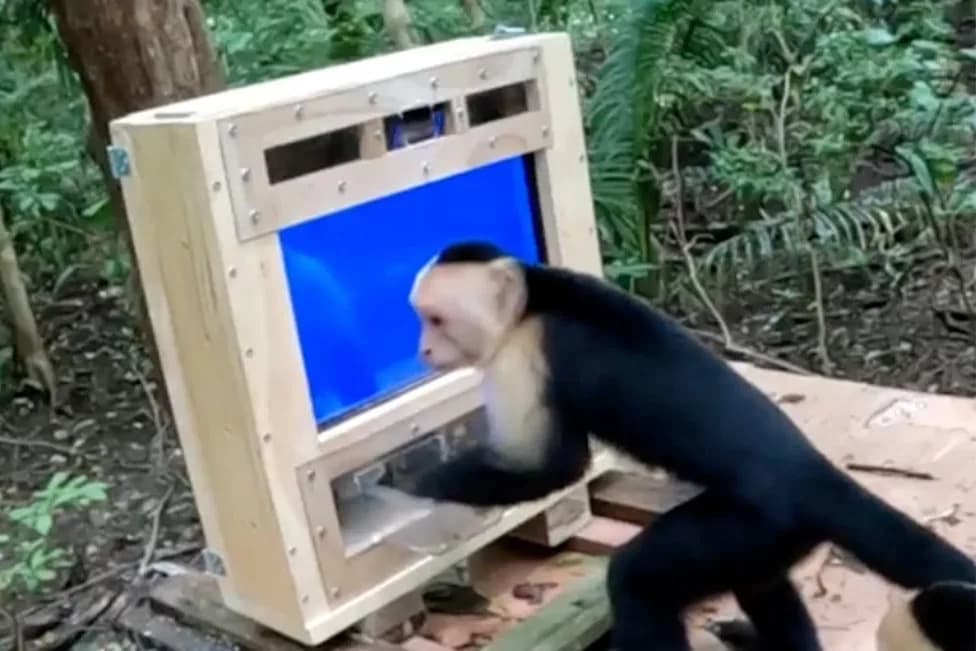
Zoos and aquariums are experimenting with technology—iPads, custom Xbox-style games, robotic feeders and scent-dispensing devices—to encourage natural behaviours in captive animals. Examples include a smart puzzle feeder for an arctic fox and motion-sensored scented bubbles for black bears. Researchers judge success by behavioural changes such as increased activity, though concerns remain about device overreliance and long-term welfare effects.
Zoos Use iPads, Xbox-Style Games and Robotic Feeders to Rekindle Animals’ Wild Instincts

Orangutans
Modern technology is often blamed for weakening our connection to nature, but some researchers are turning those same devices into tools to help captive animals rediscover natural behaviours. Across several institutions, enrichment specialists are testing iPads, bespoke video games, scent machines and robotic feeders to stimulate foraging, hunting and problem-solving instincts.
High-Tech Enrichment in Practice
Rébecca Kleinberger and other researchers have introduced a variety of tech-driven enrichment devices with promising early results. At Stone Zoo in Massachusetts, an arctic fox named Hudson began interacting with a smart puzzle feeder whose difficulty can be adjusted to encourage natural foraging. Black bears at the same zoo have responded to a motion-triggered device that blows scented bubbles to activate their sense of smell.
Other examples include a retractable robotic arm at the Maryland Zoo that dangles peanut-butter–smeared lettuce to mimic prey popping up from ice holes for polar bears, and custom-made Xbox-style touchscreen games at Melbourne Zoo designed to reduce boredom and encourage cognitive engagement in orangutans. In California, aquarists adapted iPad apps originally created for cats so penguins can practice on-screen hunting behaviours.
How Success Is Measured
Because animals cannot speak about their experiences, researchers infer value from observable behaviour: increased activity, more frequent engagement with devices, or a shift from lethargy to exploration. For instance, observers noted Hudson the arctic fox became noticeably more active after the puzzle feeder was introduced.
Concerns And Early Findings
Critics worry that, like people, animals could become overly fixated on screens or devices to the detriment of other natural behaviours. Measuring long-term welfare benefits—whether the enrichment satisfies deeper psychological needs or simply provides temporary diversion—remains an open research question. Nonetheless, many keepers view thoughtfully designed tech enrichment as a worthwhile alternative to monotonous, unstimulating environments.
Conclusion
As zoos and aquariums experiment with technology-driven enrichment, the emphasis is shifting from making habitats look wild to designing features that recreate the functional challenges of life in the wild. Early observations suggest these innovations can increase activity and engagement, but careful evaluation is still needed to ensure they genuinely improve animals’ welfare.
Help us improve.