Bulgaria has rapidly expanded battery storage alongside a solar boom, helping it weather a regional drought that reduced hydropower and nuclear output. About 100 BESS sites and roughly 5.7 GW of operational battery capacity—around a quarter of national generation—have supported net exports of about 830 GWh per month in July and August. Experts warn batteries are best for short-duration balancing (1–8 hours) and that growth needs stronger grid investments to be sustainable.
Bulgaria's Battery Boom Cushions Power Shortfalls as Drought Hits Regional Plants
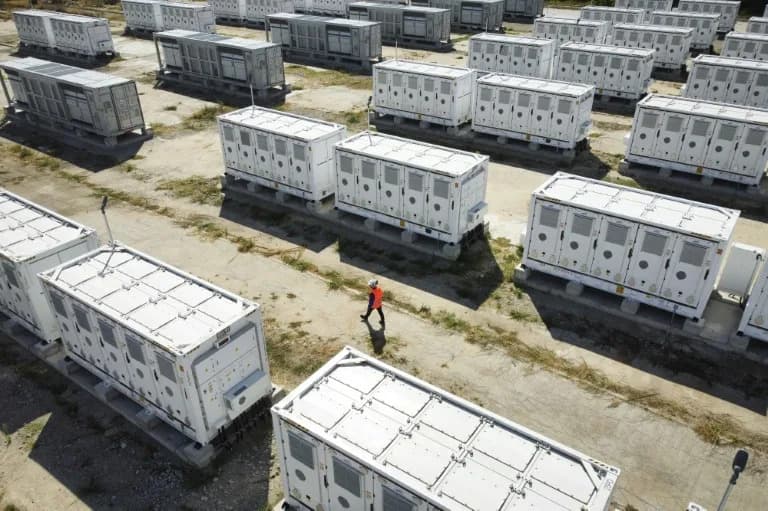
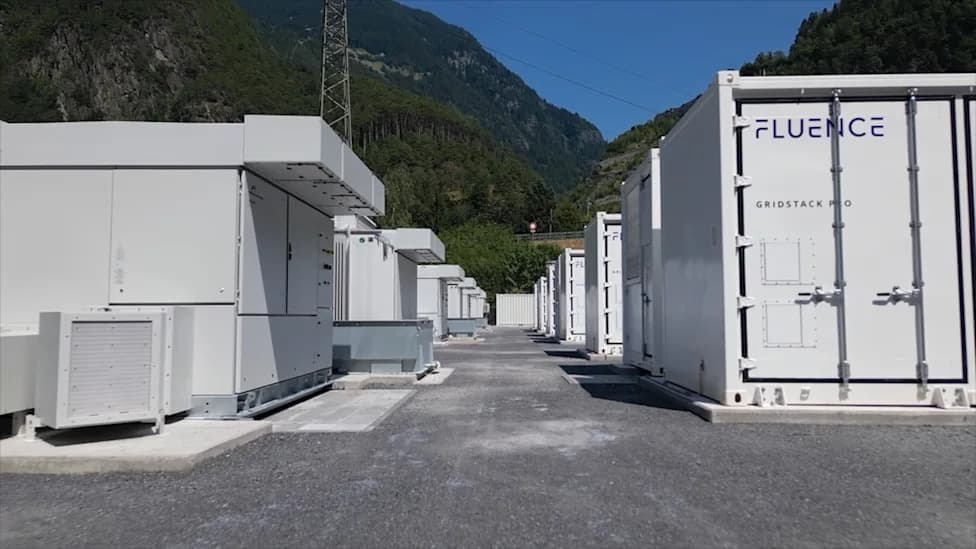
Battery storage blocs operated by ContourGlobal at Maritsa East 3, once Bulgaria's second-largest coal-fired power plant (Nikolay DOYCHINOV)
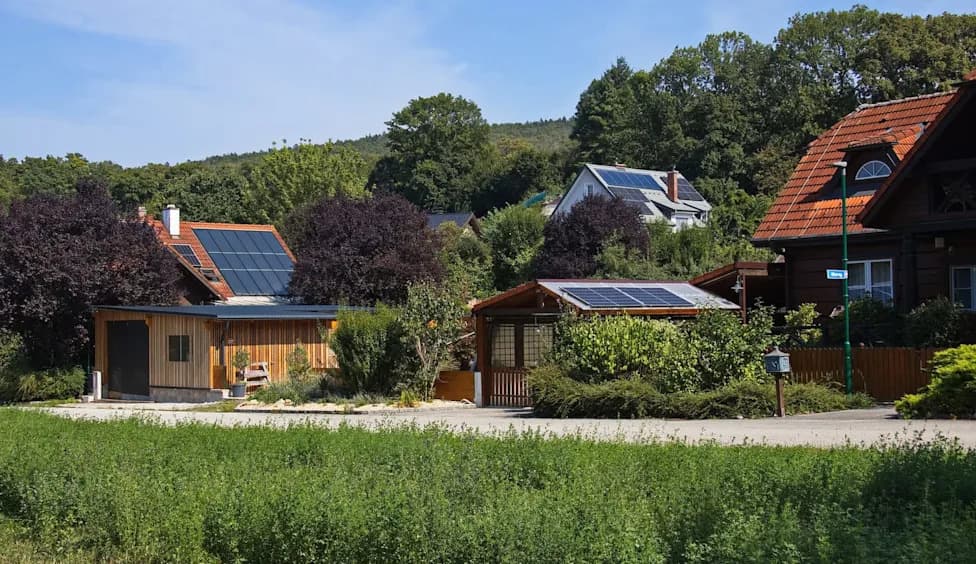
As an unprecedented drought cut hydropower and disrupted nuclear output across Eastern Europe, Bulgaria has emerged as a relative winner by rapidly pairing a solar rollout with a large-scale build-out of battery energy storage systems (BESS).
Roughly 100 BESS sites are now operating across the country, most completed in the past two years. Developers have favoured large installations on former industrial land and airfields or integrated into existing power stations, including repurposed coal facilities.
Why Bulgaria Scaled Storage Quickly
Experts cite several factors behind the surge: low administrative hurdles, a receptive market for clean energy, and access to European Union funding. The installations absorb daytime solar surpluses and discharge that energy when demand peaks—an ability that proved particularly valuable this summer when low Danube levels reduced generation elsewhere.
Real-World Impact
The Bulgarian energy ministry reports about 5.7 gigawatts of operational battery-storage capacity, equivalent to nearly a quarter of the country's total installed generation capacity and more than five times the operational battery capacity of neighbouring Romania. In July and August, Bulgaria recorded net electricity exports of roughly 830 gigawatt-hours per month, more than double May–June averages; Romania took nearly half of July's outbound transfers, estimated at about €74 million ($85 million).
At the Maritsa East 3 site—once Bulgaria's second-largest coal-fired plant—operators disconnected a coal unit and connected batteries to leverage the site's large grid connection.
"We could leverage the large connection to the grid. We decided to disconnect one coal unit and connect batteries," said Vassil Shtonov, head of Bulgaria operations for ContourGlobal. "Coal is out, battery is in — it was the right place at the right time."
Shtonov also said Bulgaria should retain a minimal coal-fired reserve for severe winters or major gas-supply disruptions.
Limits And Risks
Battery storage has clear constraints. Cross-border transmission capacity limits how much power can be exported, and current batteries typically store energy for relatively short durations—usually one to six hours, sometimes up to eight. That makes them excellent for balancing daily peaks and brief shortfalls but not a substitute for long-duration supplies such as a functioning nuclear reactor taken offline by drought.
There are also market risks: as more BESS operators buy cheap power and sell at peak prices, the price spread between low and high periods may narrow, reducing arbitrage margins and long-term profitability for storage operators. Meanwhile, businesses in Bulgaria have signed contracts for nearly 14 gigawatt-hours of large-scale storage capacity, some of which is already online.
Bulgarian officials stress that storage growth must be paired with investments in transmission and distribution networks to ensure a sustainable market role for BESS.
What This Means For Other Countries
Analysts say Bulgaria's experience shows how the right combination of incentives, funding and market conditions can accelerate the energy transition. However, they caution that outcomes depend on local grid limits, storage duration needs and broader system planning.
Help us improve.