H.R. 7945 would ban retail sales of consumer products containing nitrous oxide 180 days after enactment while carving out medical, food and research uses — and even aerosol whipped cream. A 1972 cross‑reference that excludes motor vehicles and motor vehicle equipment from the Consumer Product Safety Act currently shelters much of the motorsports aftermarket, but the bill's plain language treats all nitrous the same chemically. Industry abuse‑deterrent measures already exist, and observers say a short explicit carve‑out for engine use would protect racing without undermining public‑health goals.
House Bill Would Ban Retail Nitrous Oxide — Whipped Cream Exempt, Racers Rely On 1972 Loophole
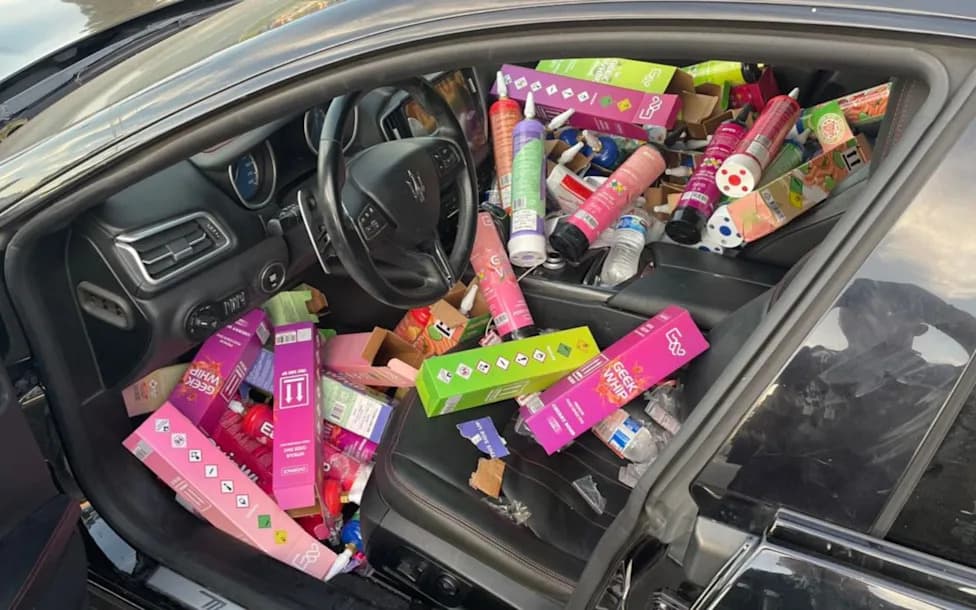
The Nitrous Ban Headed for a House Vote Protects Whipped Cream. Racers Get a 1972 Loophole.
H.R. 7945, the Nitrous Oxide Safety Act of 2026, would ban retail sales of consumer products containing nitrous oxide 180 days after enactment — but its carve-outs and a decades-old cross-reference leave motorsports largely untouched.
The three-page bill, introduced in March by Rep. Kevin Mullin and folded into a 16-bill package by the House Energy and Commerce Committee on September 16, would designate any consumer product that contains nitrous oxide as a banned hazardous product under section 8 of the Consumer Product Safety Act (CPSA). The committee advanced the package on a recorded vote with no member voting against it and listed no amendments to H.R. 7945; the text that moved forward is the same as introduced.
What the Bill Would Do
The statute's mechanism is simple and forceful: 180 days after enactment, consumer products containing nitrous oxide would be unlawful to sell, offer for sale, manufacture for sale, distribute in commerce, or import under the CPSA's prohibited-acts provisions. Crucially, the language targets commerce — not possession or use — so ownership or on‑vehicle use would not by itself be criminalized.
Carefully Drafted Exemptions
The bill spells out several exemptions: licensed medical and dental practitioners (tied to the license of the dispenser), pharmacists, food manufacturers and commercial kitchens (explicitly including restaurants and caterers), accredited research and development labs at universities, companies, nonprofits and government entities — and a narrow food-specific carve-out that protects aerosol whipped cream.
The whipped-cream exemption applies only when nitrous oxide is sold "as part of a food and used to push that food out of a pressurized container" — i.e., a single vessel containing both gas and cream. A bare charger (a canister sold containing only gas) is not covered.
The 1972 Loophole That Protects Racers
The more important protection for motorsports is not in H.R. 7945 itself but in how the CPSA defines "consumer product." The Act expressly excludes motor vehicles and motor vehicle equipment by cross-reference to federal vehicle safety law. That vehicle‑safety statute defines motor vehicle equipment to include parts or accessories sold to improve a vehicle component. On a plain reading, plate kits, solenoids, braided lines and bottles with high-flow valves are motor vehicle equipment — not consumer products — so they fall outside the CPSA prohibition.
That creates a legal puzzle over bulk nitrous: is a ten-pound bottle a consumable chemical sold to a consumer, or is it a component (or the consumable of a component) of motor-vehicle equipment? The question matters because H.R. 7945 targets consumer products containing the gas, not vehicle parts per se. Complicating matters further, federal law defines a "motor vehicle" as primarily for use on public streets and highways; a purpose-built race car may not qualify, meaning the more competition‑focused a car is, the weaker its claim to the vehicle-based exclusion.
Industry Abuse-Deterrent Measures
The aftermarket has long addressed inhalant abuse. Holley’s NOS brand documents that automotive-grade nitrous is dosed with sulfur dioxide at roughly 100 parts per million expressly to deter inhalation and that medical-grade gas offers no performance benefit for engines. The industry deliberately made automotive product unpleasant to breathe while preserving engine performance — a record that spans decades.
H.R. 7945, however, makes no chemical distinction: nitrous oxide is nitrous oxide. The bill's plain language cannot tell apart gas intentionally dosed to deter human inhalation and gas marketed for recreational inhalant use.
Procedure and Practical Impact
Normally the Consumer Product Safety Commission (CPSC) would study a hazard, pursue rulemaking with public notice and comment, and only then restrict products. This bill short‑circuits that process by legislating the ban directly, with no docket, no public comment period and a 180-day effective period — leaving little time for speed shops, manufacturers and distributors to respond.
The commercial effect would fall hardest on refills. A typical ten-pound bottle supports roughly seven to ten quarter‑mile passes on a 125-horsepower plate system (fewer passes at higher power). Serious racers depend on a refill network of independent speed shops and gas distributors; banning retail sales of the consumer-product form would choke that network even while existing hardware on shelves might remain legal.
There is also an ownership‑cost constraint: common aluminum nitrous cylinders are DOT-specification vessels subject to a five-year requalification interval under federal hazardous materials rules. Refill shops already enforce that compliance point, which has long made the retail counter a practical chokepoint.
Engineering, Environment And Enforcement
Technically: nitrous oxide is roughly 36% oxygen by weight. It dissociates in the combustion chamber (around 572°F), releasing oxygen that allows more fuel to burn and leaving nitrogen to buffer cylinder pressure rise; the phase change cools intake charge temperatures by approximately 60–75°F. That combination explains why nitrous remains a high-value, low-cost power upgrade and why system plumbing and cylinders are built to high-pressure standards (bottle pressures near 900–950 psi; system pressures often exceed 1,000 psi).
One environmental footnote: the EPA estimates nitrous oxide's 100-year global warming potential at about 273 times that of carbon dioxide. Every purge emits greenhouse gas, though climate impact has not been central to this bill's public-health rationale.
Fixable With A Simple Carve-Out
Observers note an easy legislative fix: a short, explicit sentence exempting nitrous sold for internal combustion engine use. For example:
"Nothing in this section applies to nitrous oxide sold for use in an internal combustion engine."
That single-line carve-out would preserve the public-health objective aimed at flavored or tampered tanks sold for inhalation while protecting motorsports and the aftermarket — particularly since mainstream automotive nitrous is already dosed to deter inhalation.
Status And Stakes
As of this writing the CPSC has published no guidance on how it would interpret H.R. 7945, and specialty-equipment trade groups have not posted a public position. Whether the House floor will add a motorsports carve-out remains uncertain. What is clear: racing's present protection is an artifact of a 1972 cross-reference; cross‑references are easy to change and easy to overlook, so statutory clarity matters.
Originally appeared on The Auto Wire.
Help us improve.