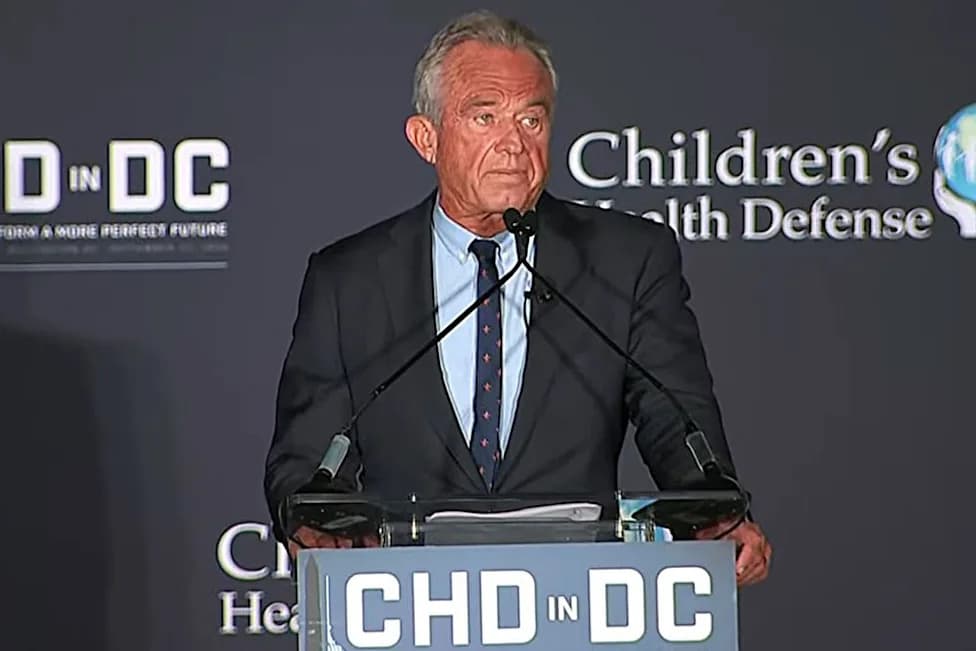
Social media claims that vaccines contain peanut oil or cause peanut allergies lack evidence. No vaccine approved in the United States contains peanut oil, and official ingredient lists are publicly available. Research shows early introduction of peanuts lowers allergy risk, and major medical authorities find no credible link between aluminium adjuvants in vaccines and food allergies.
No Evidence Vaccines Cause Peanut Allergies — US‑Approved Vaccines Do Not Contain Peanut Oil
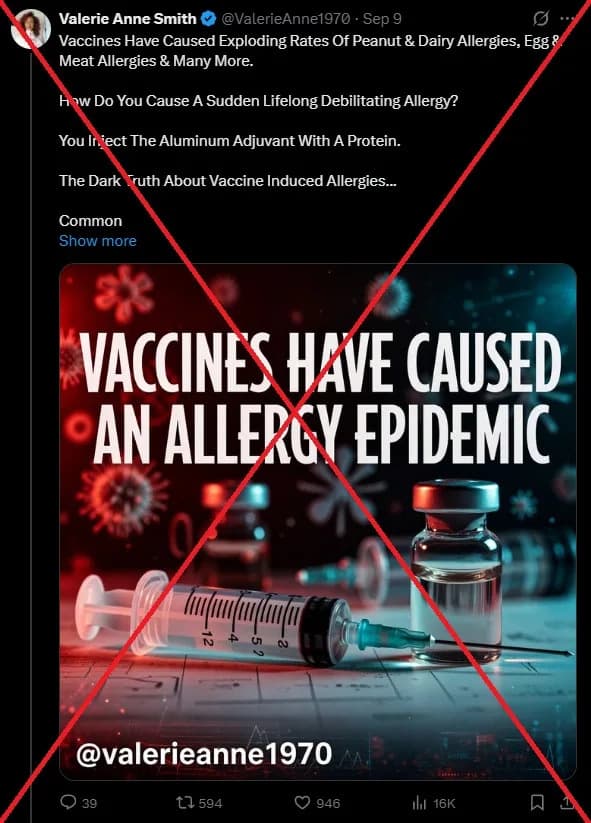
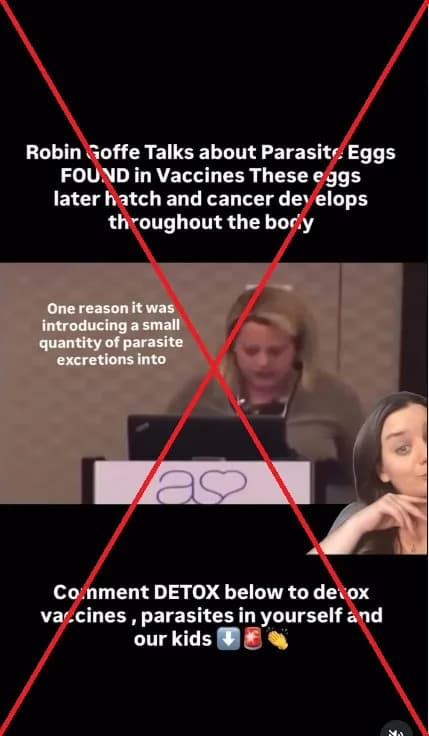
Screenshot of an X post taken September 16, 2026
Social media posts have claimed that vaccines approved in the United States contain peanut oil or that vaccine ingredients are driving a rise in peanut allergies. These assertions are not supported by current evidence or by official vaccine ingredient lists.
What Social Posts Are Saying
"Vaccines have caused an allergy epidemic," reads overlaid text on several posts shared on X, Facebook and TikTok. Some messages also point to the EpiPen and name pharmaceutical companies as having a financial motive to increase allergy rates.
What The Evidence Shows
No U.S.‑approved vaccine contains peanut oil. Official vaccine product labels and ingredient lists published by the U.S. Food and Drug Administration and medical centres such as the Children's Hospital of Philadelphia show no peanut oil in licensed vaccines.
There is also no credible evidence that other vaccine ingredients — including the small amounts of aluminium used as adjuvants — cause peanut or other food allergies. Large epidemiological studies, including nationwide research from Denmark, and statements from professional bodies find no link between aluminium in vaccines and the development of food allergies.
Why Peanut Allergies Occur
Peanut allergy develops when the immune system mistakenly identifies peanut proteins as harmful. Risk factors include family history of the allergy and atopic dermatitis (eczema). About 1–2% of Americans have a peanut allergy, and it remains the leading cause of fatal food‑induced anaphylaxis in the U.S.
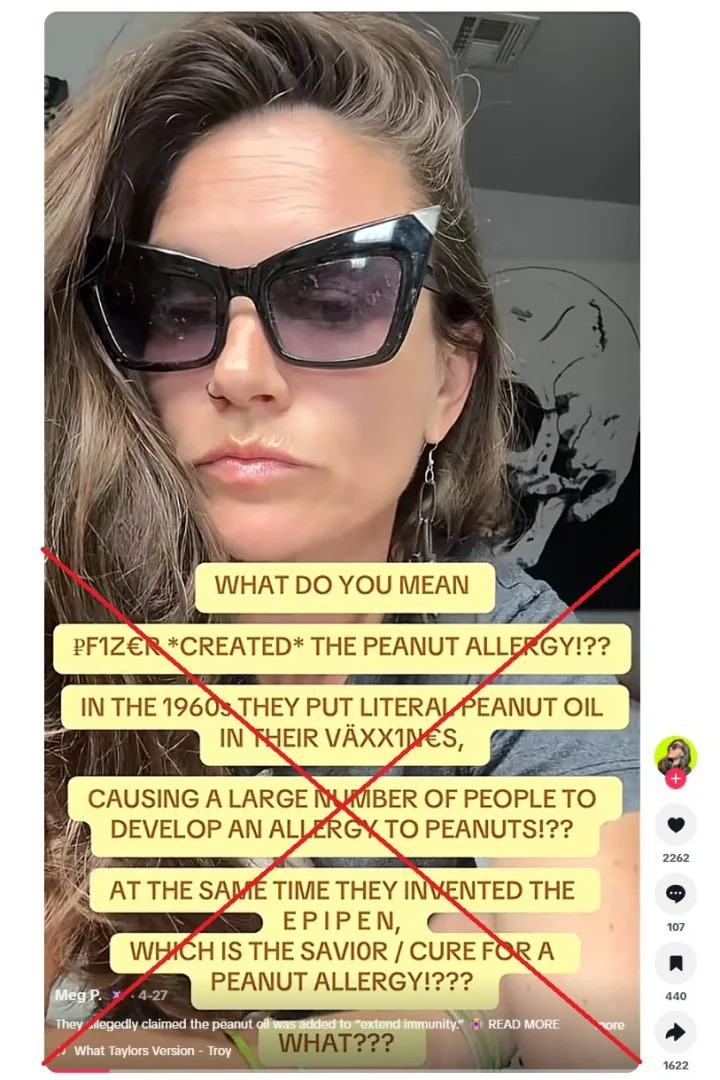
Screenshot of a TikTok taken September 16, 2026
Prevention And Guidance
High‑quality research provides better explanations and prevention strategies. A landmark 2015 New England Journal of Medicine study found that introducing peanut‑containing foods early in infancy substantially reduced the likelihood of developing a peanut allergy. Following that evidence, the American Academy of Pediatrics and the U.S. National Institute of Allergy and Infectious Diseases updated guidance to encourage early introduction of peanuts once infants are ready for solids.
Historical Context: 1960s Research
Some posts cite a 1964 New York Times article describing experimental work on an adjuvant called "Adjuvant 65," which used peanut oil in clinical trials to boost immune response. That adjuvant was discussed in research and held a patent by Merck but was not adopted for routine use in licensed vaccines.
Patents, EpiPen And Industry Claims
Claims that specific companies (for example, Pfizer) profit by creating peanut allergies are not supported by evidence. Pfizer has pointed out that manufacturers and the FDA publish full ingredient lists for approved vaccines. Pfizer also does not hold the original EpiPen patent; that patent was previously held by Mylan, which later merged into Viatris, and the patent expired in September 2025.
Bottom Line
Authoritative sources and peer‑reviewed research contradict social media claims that vaccines contain peanut oil or are causing a surge in peanut allergies. Early dietary introduction of peanut‑containing foods, genetic predisposition and certain skin conditions are the better‑supported explanations for peanut allergy risk and remain the focus of prevention guidance.
Help us improve.