U.S. officials are repurposing pandemic-era wastewater surveillance to track drug use in near real time, prompting fresh privacy, legal, and ethical concerns. The ONDCP's first national report sampled more than 100 counties and detected over 500 substances, while the CDC's rapid build-out proceeded before formal ethical guidelines were finalized. Experts warn small-scale sampling (schools, dorms, jails) can single out identifiable groups, and because CDC limits are policy-based rather than statutory, detailed wastewater data could be accessed or repurposed without clear legal checks.
Wastewater Drug Surveillance Raises Privacy Alarms: From Public-Health Tool to Policing Risk
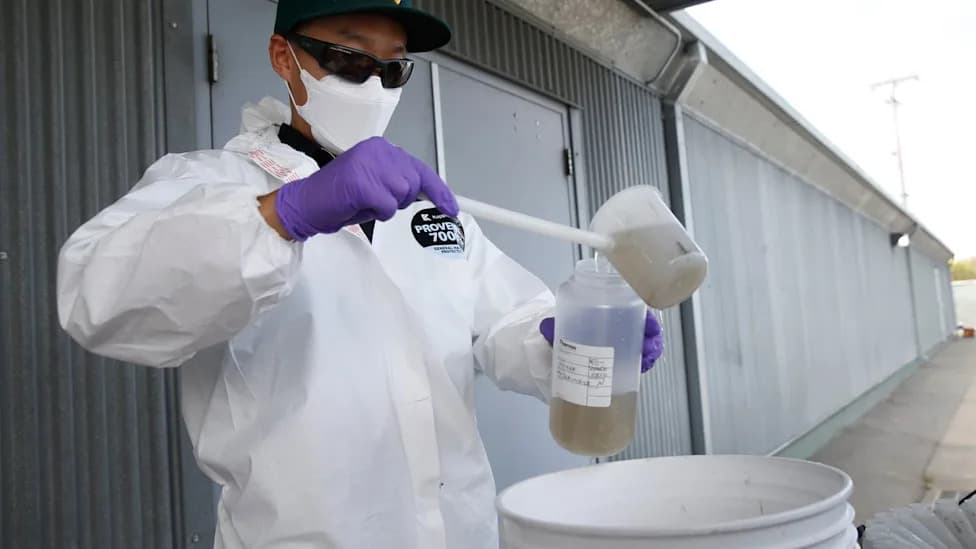
The sewers that traced COVID have been turned toward the nation's drug use hero image
The sewer systems that helped public-health officials map COVID-19 spread are being repurposed to track drug use — and that shift is raising fresh privacy and legal concerns. The White House's 2026 National Drug Control Strategy directed the federal government to build a national wastewater-monitoring system to "monitor drug consumption in real-time." The Office of National Drug Control Policy (ONDCP) has already launched the system and published a first national report, sampling more than 100 counties — roughly a fifth of the U.S. population — and detecting over 500 distinct substances.
What the First Report Found
The ONDCP reported the highest measured concentrations of fentanyl in Washington, cocaine in Texas, and methamphetamine in Colorado and Nevada. The agency framed these state-level readings as potential "hotspots that warrant further examination of drug consumption and trafficking," and explicitly described the data as a tool for "parents, teachers, medical professionals, and law enforcement officials." That last inclusion places police among the intended users of a system that was originally developed for epidemiologists.
How We Got Here
The national monitoring capability traces back to an extraordinary expansion by the Centers for Disease Control and Prevention (CDC) during the COVID-19 pandemic. The network grew from 209 sampling sites in September 2020 to more than 1,500 by December 2022, increasing coverage from about 12% of the U.S. population to roughly 45% — nearly 155 million people. CDC researchers acknowledged that speed required trade-offs: at the time, "formal ethical guidelines on wastewater surveillance" were "lacking," and a privacy and stigmatization framework was still under development.
Scope Creep and Technical Uses
CDC officials have discussed expanding targets beyond respiratory viruses to include antibiotic-resistant bacteria and foodborne pathogens. The agency also funds research to detect genetic traces of resilient bacteria and other agents in water, soil, and treated sewage. That proposed expansion remains contested and has not been finalized.
Privacy Risks: Where Aggregation Breaks Down
Many support wastewater surveillance at the scale of an entire city because blending the sewage of tens of thousands of households typically prevents identification of individuals. A National Academies committee concluded the probability of tracing a reading back to a single person at that scale is very low.
But privacy risks concentrate where samples come from small catchments — a single building, school, dormitory, workplace, or prison — because results can single out and stigmatize identifiable groups who did not consent. An Emory University study in Fulton County Jail illustrated that danger: weekly samples from manholes serving the jail reflected a population that was 98.4% male and 88.8% Black, and project review boards classified the work as not involving human subjects.
Legal Uncertainty
U.S. courts have so far given mixed signals. Several lower courts have treated bodily waste that flows into public sewers similarly to discarded garbage, concluding that a reasonable expectation of privacy ends when waste is irretrievably left in public. Some legal scholars argue that analogy could allow law enforcement broader access to wastewater data; others call constitutional protection for home wastewater "extremely tenuous."
Policy, Not Law
Crucially, the CDC's current restrictions on data release are policy-based, not statutory. The national system withholds published combined results for areas with fewer than 3,000 people and reserves more detailed outputs for public-health departments, but no federal law enshrines those limits. Because they are nonbinding policies, the CDC could alter or remove them without congressional approval, and a court order could compel data release. The agency is not required to log who requests granular data, and no independent body currently verifies whether limits on small-sewershed reporting are enforced.
Illustrative Evidence
A study in England shows how sensitively wastewater readings can register enforcement events: researchers tracking 20 illicit drugs across 15 treatment plants observed cocaine levels fall across sites up to 200 kilometers apart following a single 3.7-tonne seizure at Southampton Docks, demonstrating wastewater monitoring's ability to track trends and intervention impacts.
What This Means
Wastewater surveillance offers powerful public-health benefits: early detection of outbreaks, near-real-time trends, and population-level insights that individual testing can miss. But when data flows into law-enforcement analysis without clear legal limits, it risks repurposing a public-health tool into an instrument of surveillance that could stigmatize vulnerable groups.
Bottom line: Large-scale aggregation protects anonymity, but sampling at small catchments, weak legal safeguards, and policy-based access rules create real privacy and civil-liberties risks that policymakers must address before the system is further expanded.
Help us improve.