The restored gallery beneath the Baths of Trajan now displays two monumental Roman artworks—a 107 sq ft fresco called the Painted City and a 33x52 ft Great Mosaic—rediscovered in the 1990s and likely older than the baths themselves. Scholars suggest the pieces may come from Nero's Domus Aurea, though the port city depicted remains unidentified. Conservation work has stabilized pigments and grouting, and controlled small-group visits began while archaeologists continue excavations.
Underground Roman Masterpieces Open Near the Colosseum: Enormous Mosaic and 'Painted City' Fresco Revealed
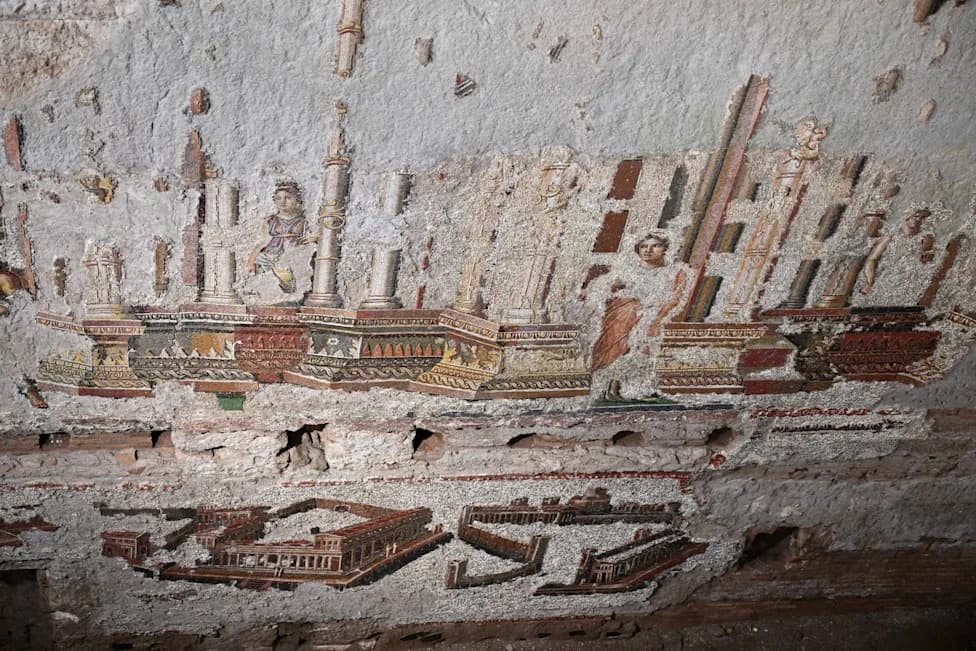
Ancient Rome's Largest Mosaic Shows a Mystery CityXinhua News Agency - Getty Images
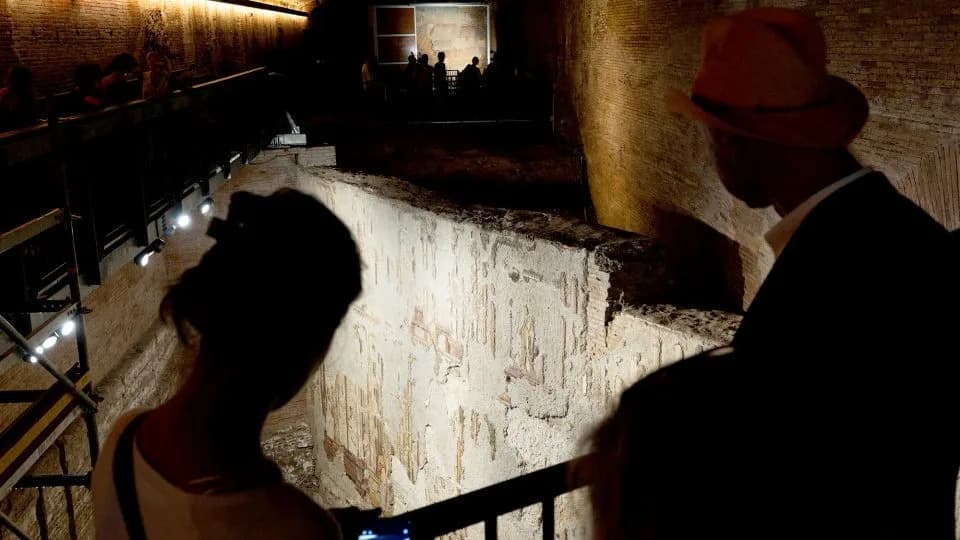
Archaeologists have opened a restored underground gallery beneath the Baths of Trajan—on the Oppian Hill overlooking the Colosseum—to the public for the first time, revealing two spectacular works of Roman art: a vast wall mosaic and a detailed fresco known as the "Painted City." Rediscovered in the 1990s, the artworks likely predate the baths themselves and may have originated in the remains of Emperor Nero's Domus Aurea.
What Was Found
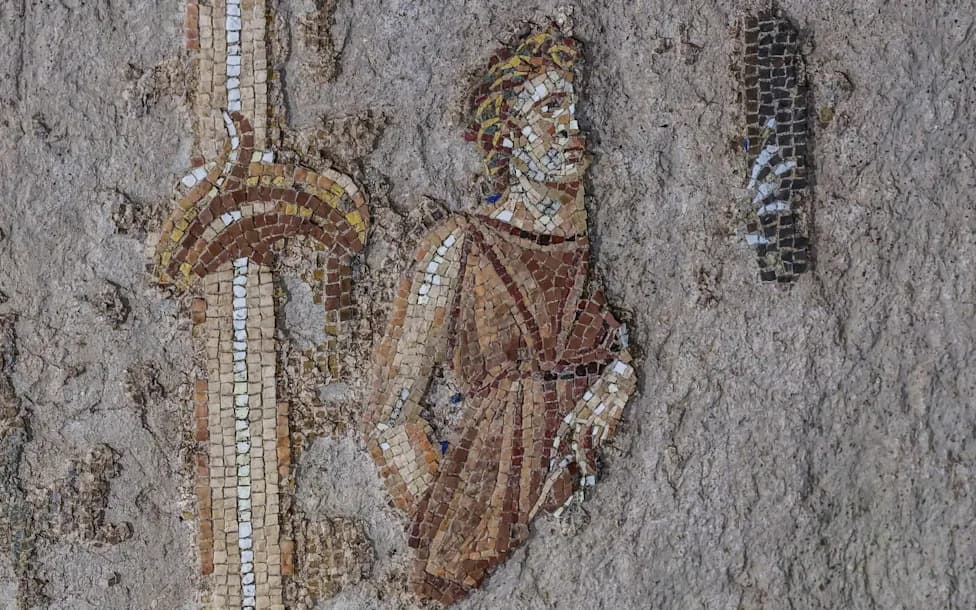
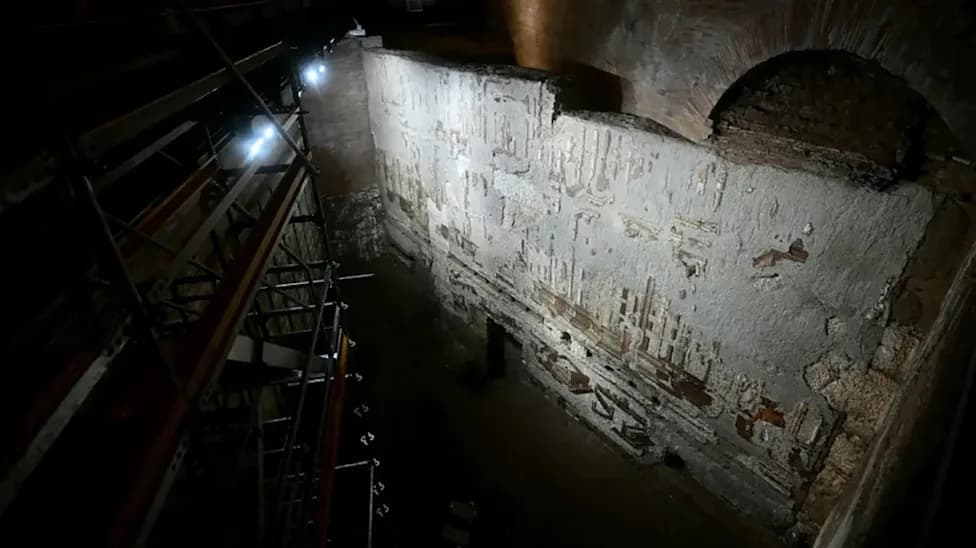
The Painted City fresco covers roughly 107 square feet (about 10 square meters) and depicts a bird's-eye view of a walled maritime city in predominantly blue and terra-cotta tones. The adjacent Great Mosaic measures approximately 33 feet high by 52 feet wide (about 10 by 16 meters) and may be the largest wall mosaic discovered in the Roman world. The mosaic spans four visual levels: upper registers show close, theatrical portrayals of people while the lower registers present the layout of the port city from above.
Origins and Significance
Although the Baths of Trajan were built in 109 C.E. under Emperor Trajan and designed by Apollodorus of Damascus, the fresco and mosaic appear older. Scholars suggest they could belong to the Domus Aurea, Nero's lavish palace constructed around 65–68 C.E. If so, the works offer a rare glimpse into imperial-era decoration and urban imagination. "We don't know what city [they refer] to, but it must have been a particularly well-known one," Claudio Parisi Presicce, Rome's cultural superintendent, told the Associated Press.
Conservation and Public Access
Restoration teams cleaned surfaces, removed deposits, consolidated grouting and improved visibility while preserving the original pigments, which—though slightly faded—remain remarkably fresh after centuries underground. Officials conducted early-September tests allowing only small groups (about 15 visitors at a time) to monitor humidity, light and visitor impact before wider opening. Excavations are ongoing to determine the full extent of the mosaic.
Additional Features
Visitors can also view an above-ground semicircular exedra thought to have functioned as a library—the niches likely once held books and documents—adding context to the site's cultural role in ancient Rome.
"They are truly unique in the world, both from the point of view of artistic beauty and the historic and documental importance," said Rome Mayor Roberto Gualtieri at the unveiling.
Taken together with the Baths of Trajan and the possible link to Nero's Domus Aurea, the mosaic and fresco form a layered cultural monument that illuminates the grandeur and complexity of Rome's imperial past.
Help us improve.