Rome has opened for limited viewing what may be the largest ancient Roman wall mosaic ever found, a 1st-century CE work measuring about 33 feet high and over 50 feet wide, discovered beneath the Baths of Trajan on Oppio Hill. The mosaic's upper registers show human and mythological figures; the lower register depicts a finely detailed port city whose real-world identity is uncertain. A nearby fresco offers a bird's-eye view of another Roman town. Public access begins with guided groups capped at 15 while conservators monitor the fragile surfaces.
Rome Opens What May Be the Largest Ancient Roman Wall Mosaic — Now on Limited View
You Can Now Go See the Largest Ancient Roman Wall Mosaic Ever Found
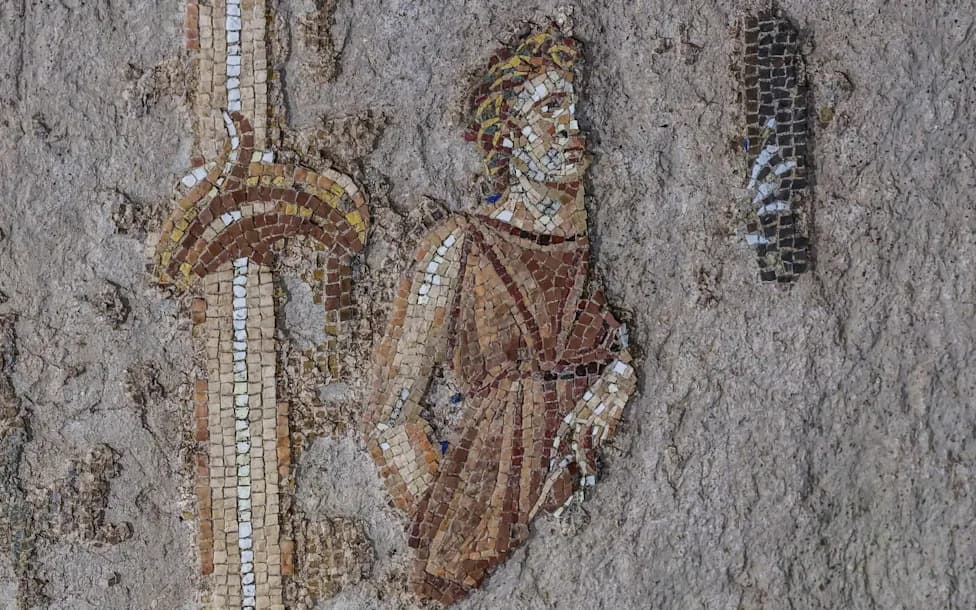
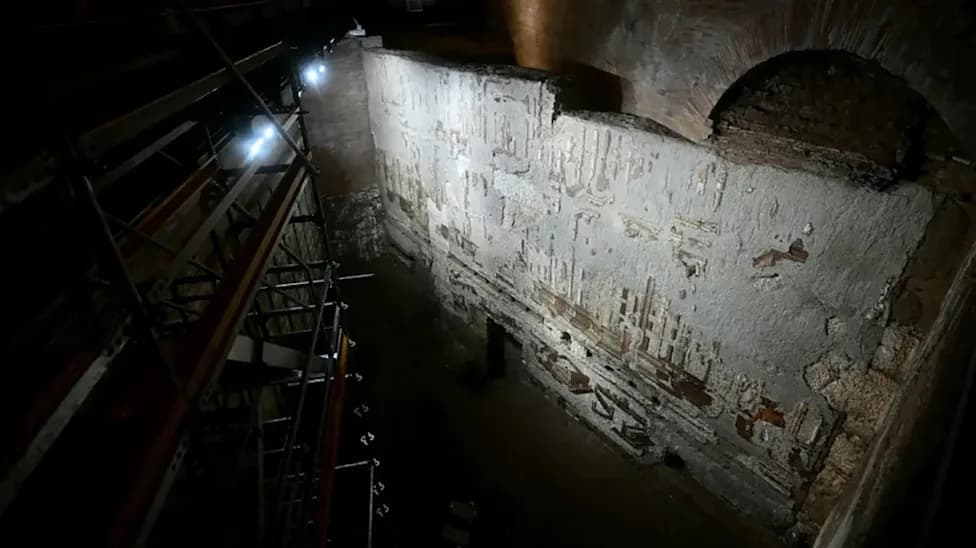
Rome this week unveiled what may be the largest ancient Roman wall mosaic ever found, now open to limited public viewing. Mayor Roberto Gualtieri formally presented the 1st-century CE mosaic alongside a related fresco discovered during the same excavations beneath the Baths of Trajan on Oppio Hill, near the Colosseum.
The artworks were first identified in the 1990s but have only now been fully exposed. The Baths of Trajan, dedicated by Emperor Trajan in 109 CE, were a sprawling leisure complex covering more than 15 acres and including spaces for sport, cultural activities and numerous bathing pools.
The Mosaic
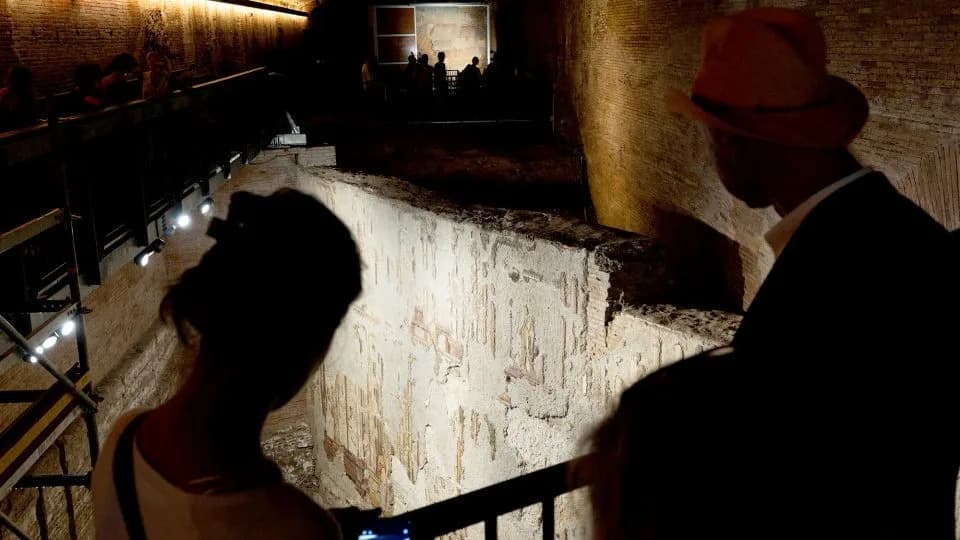
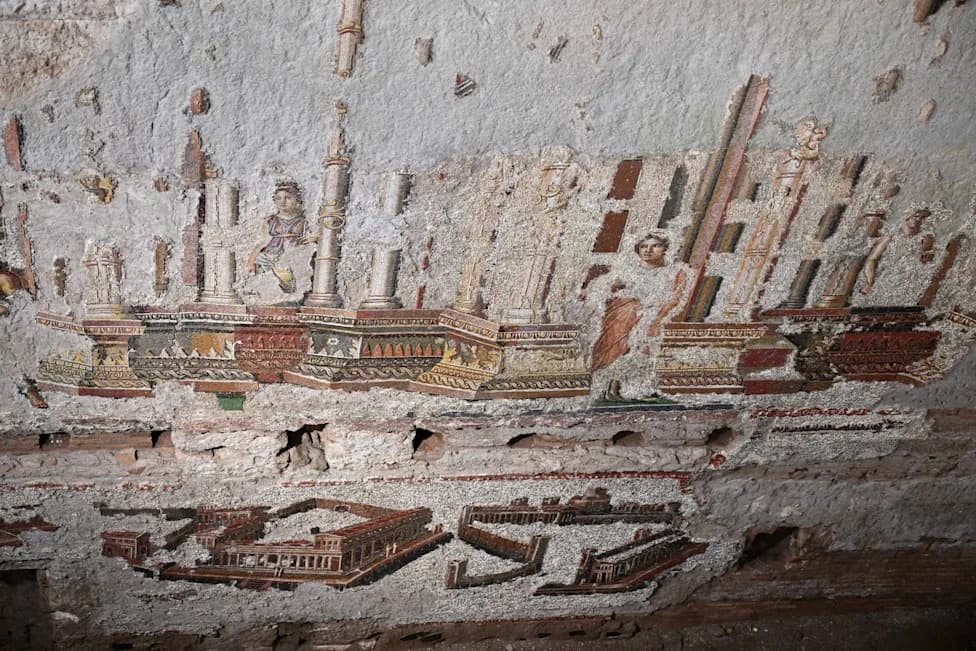
The mosaic occupies an underground gallery beneath the baths and measures roughly 33 feet in height and more than 50 feet across. It may originally have been larger: its uppermost section was cut off when the Baths of Trajan were constructed, and the lower portion has not yet been fully excavated.
The upper registers depict human and mythological figures arranged between rows of columns, while the lower register contains an intricately detailed rendering of a port city. Researchers are still debating whether that port depicts a real contemporary town or an idealized urban scene.
"Either way," said Francesco Pacetti, an archaeologist involved in the excavation, "it has been painted in great detail. You see the stone walls and a main gate with two towers and a glimpse of a temple."
The Fresco And Context
In the same chamber archaeologists uncovered a fresco showing a bird's-eye view of another Roman town, complete with a theater, a temple and residential blocks. Specialists say the decoration may have belonged to a wealthy domus (private residence) or to the Domus Aurea, Nero's palace complex that was later covered over.
Public Access And Conservation
Beginning this month the mosaic and fresco will be open to the public in small, guided groups initially limited to 15 people. Curators and conservators will closely monitor the fragile surfaces during this trial period to assess whether the artworks can withstand larger visitor numbers and to plan further conservation or excavation work.
Why it matters: The discovery enriches our understanding of Roman decorative art and urban imagery, offering a rare, large-scale glimpse of ancient wall mosaics and painted townscapes that once adorned elite spaces in Rome.
Help us improve.