Pope Leo XIV will privately meet seven people who say they survived sexual abuse by Catholic clergy and staff during a four-day visit to France, with the meeting set for Sunday in Lourdes. Survivors emphasize they speak only for themselves and warn that being received is not the same as accepting the church's response. Critics say the attendees appear chosen by bishops rather than survivors' groups and are calling for concrete measures — not just apologies or compensation — including archive access and stronger safeguarding.
Pope Leo XIV To Meet Seven Abuse Survivors In Lourdes Amid Calls For Concrete Action
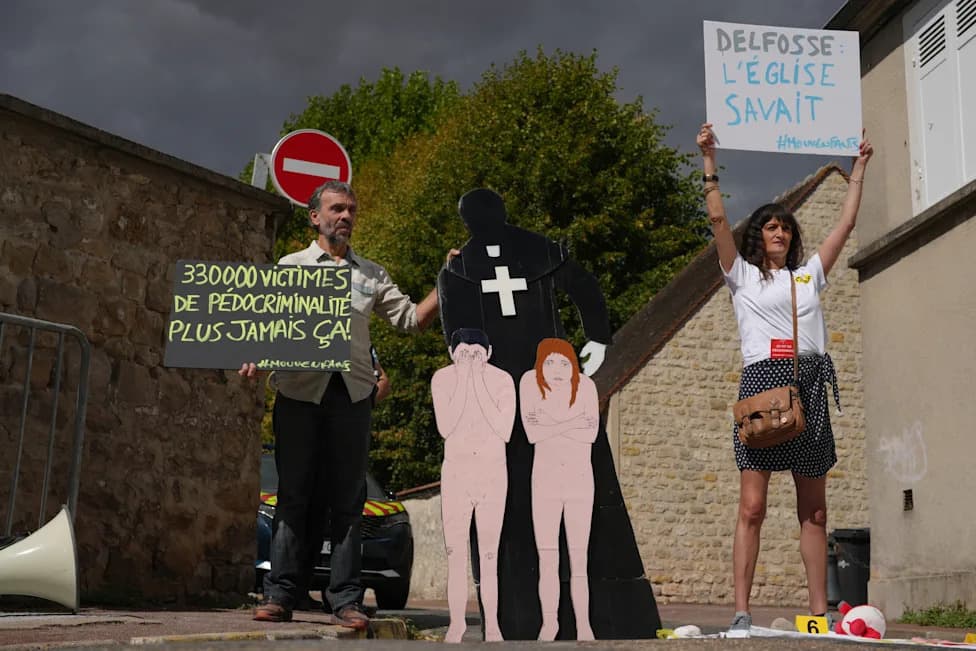
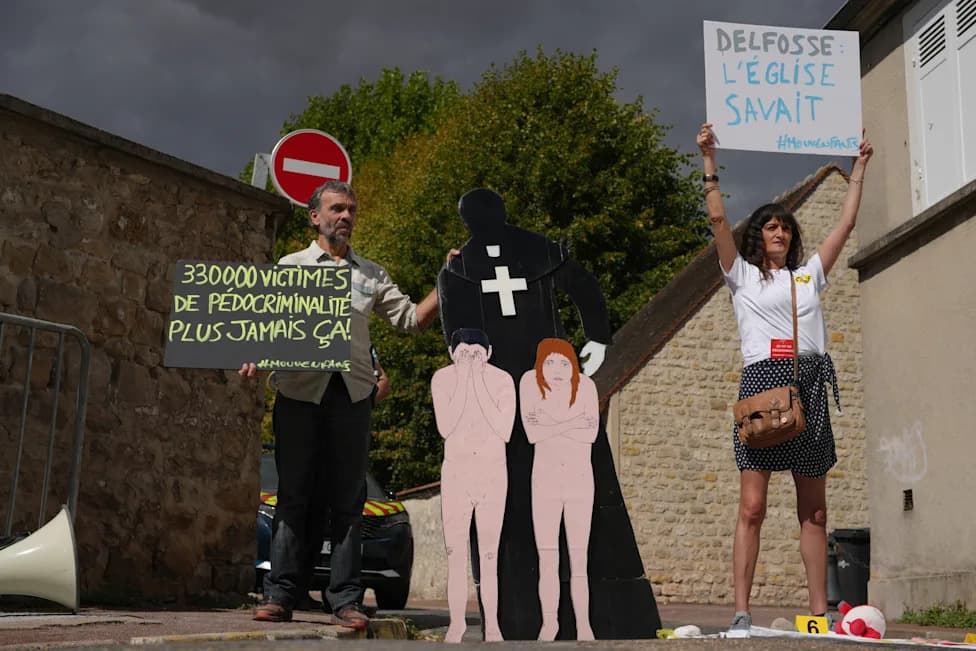
Activists fighting child abuse stage a protest near the home of a former Catholic priest suspected of sexually assaulting dozens of children, in Etrechy, outside Paris, Wednesday, Sept 16, 2026, Placards read from the left: '330,000 victims of child sexual abuse, never again' and Delfosse, the church knew'. (AP Photo/Thibault Camus)(AP Photo/Thibault Camus)
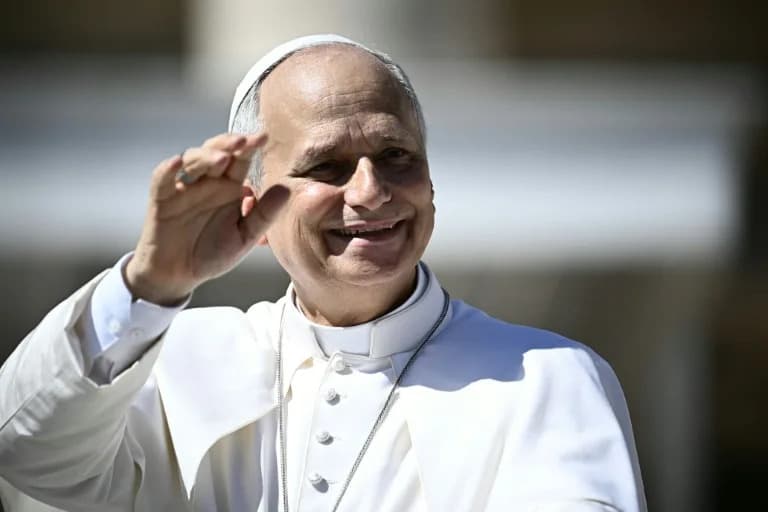
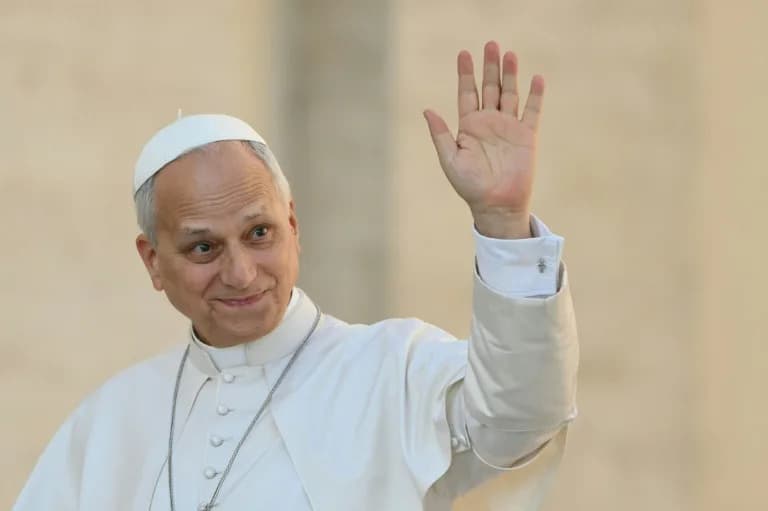
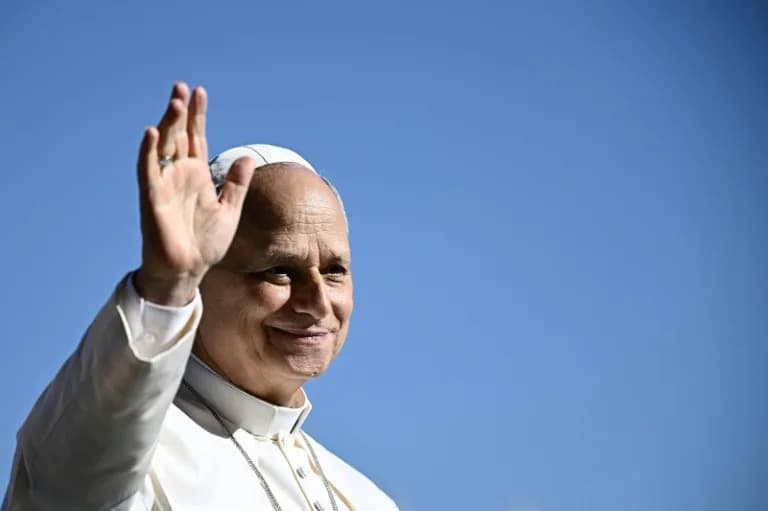
Pope Leo XIV, on a four-day visit to France beginning Friday, will hold a private meeting on Sunday in Lourdes with seven people who say they survived sexual abuse by priests and other Catholic personnel. The encounter — at one of Catholicism's most important pilgrimage sites — will be closely watched by survivors' advocates and critics who say the church has not done enough to confront the crisis.
Who Is Meeting the Pope
The French Bishops' Conference said the group includes people who say they were abused as minors or adults in Catholic schools, parish communities and religious congregations. In a joint statement released last week, the seven attendees stressed that they do not speak for all survivors and that being received should not be taken as a sign that their demands are abandoned.
“Engaging in dialogue does not mean endorsing. Being received does not mean abandoning our demands,” the statement said. “Each of us is taking part in this meeting in our own name, free to express our own views, convictions and choices.”
Criticism Over Selection
Some survivor groups and long-time advocates object to the decision to invite individuals rather than representatives from established survivors' organizations. Charles Mercier, a professor of history and sociology of Catholicism at EPHE, said the main criticism is that the group appears to have been chosen by bishops and church institutions rather than by victims themselves, leaving some advocates feeling unrecognized by the church.
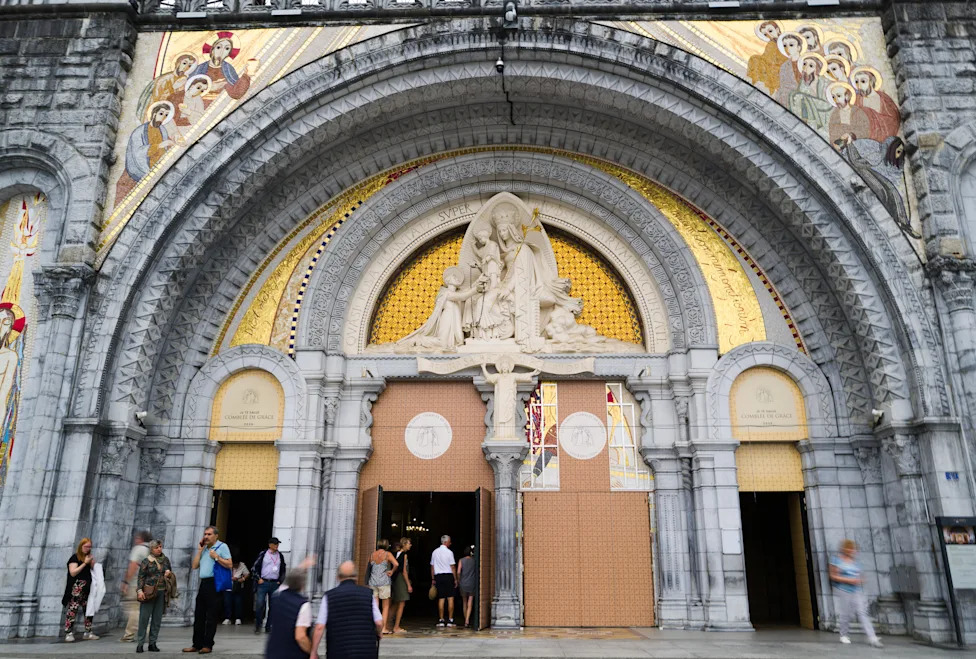
People enter the Notre-Dame-du-Rosaire basilica in Lourdes, southwestern France, Tuesday Sept. 8, 2026 . (AP Photo/Fred Scheiber)(AP Photo/Fred Scheiber)
Context And Ongoing Cases
In recent years the French Catholic Church has created an independent compensation system for survivors and publicly acknowledged its history of abuse. A major 2021 report estimated that roughly 330,000 children in France were sexually abused over seven decades by priests, other clergy, church workers and volunteers.
Several high-profile cases remain part of the backdrop to the meeting. One participant says he was abused at the private Catholic school Notre-Dame de Bétharram in southwestern France, where allegations span more than five decades. Another attendee alleges abuse by Bernard Preynat, a priest who admitted to sexually abusing at least 75 boys; Preynat was convicted in 2020 and sentenced to five years in prison.
Separately, the façade of a basilica in Lourdes was recently covered after mosaics by the Rev. Marko Rupnik were removed; Rupnik is on trial in a Vatican court on accusations of psychological, spiritual and sexual abuse involving more than two dozen women. Child protection activists also recently protested near the home of Jacques Delfosse, a former priest convicted in 2007 of raping two girls and dismissed from the clerical state in 2025 after new allegations emerged. The Lille prosecutor opened a fresh investigation this year into additional claims.
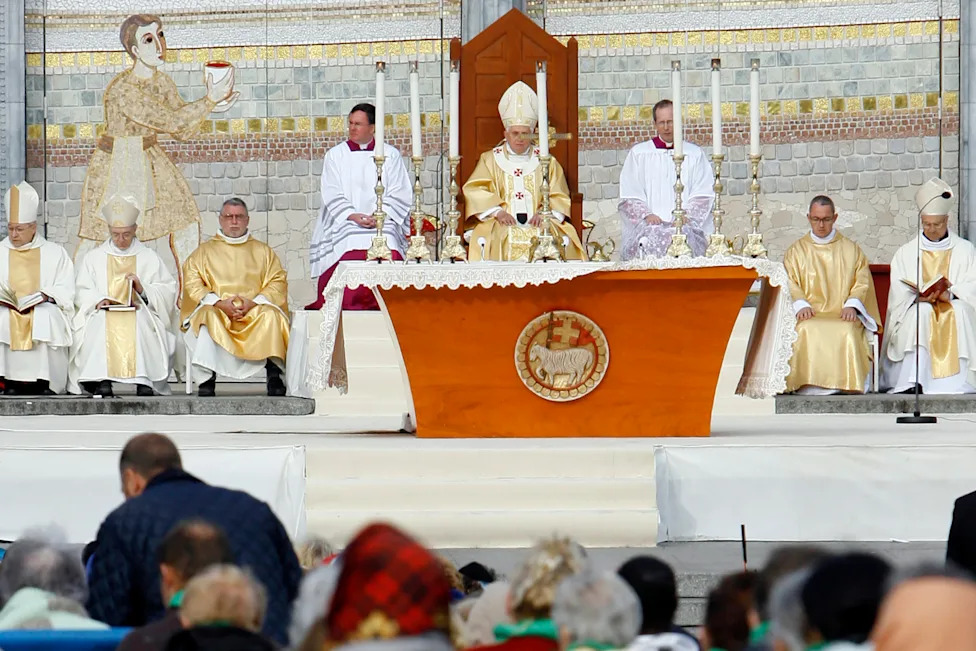
FILE - Pope Benedict XVI, center, celebrates a Mass in front of the Basilica of the Rosary in Lourdes, southwestern France, on Sept. 15, 2008. Behind him is one of the mosaics by Rev. Marko Ivan Rupnik, who was declared excommunicated in 2020 for committing one of the worst crimes in church law – using the confessional to absolve a woman with whom he had engaged in sexual activity. (AP Photo/Alessandra Tarantino, File)(AP Photo/Alessandra Tarantino)
Calls For More Than Words
Advocates say apologies are not enough and are pressing for specific, concrete measures: transparent access to diocesan and Vatican archives, stronger prevention and safeguarding policies, consistent prosecution, and meaningful reparations. Arnaud Gallais, president of the child protection group Mouv'Enfants, urged French President Emmanuel Macron to raise outstanding cases with the pope and called on church authorities to open archives.
Child-protection campaigners point to a report by the Independent Commission on Incest and Sexual Violence Against Children (CIIVISE) noting that only about 3% of rapes and sexual assaults against children each year in France currently lead to conviction, a statistic activists call an urgent call to action.
What To Watch: Whether the private meeting produces concrete promises or policy change, and how church leaders respond to survivors' demands for transparency and accountability.
Associated Press journalists Jeffrey Schaeffer and Alexander Turnbull contributed to this story.
Help us improve.