Summary: Facing difficult midterm contests, a number of vulnerable Republican incumbents and challengers are publicly distancing themselves from President Trump on issues such as the Iran war, immigration and trade. Key examples include two Iowa House members who voted to limit war powers, Maria Elvira Salazar's ad criticizing immigration enforcement, and farm-state pushback over tariffs. The White House and RNC are signaling tolerance for selective dissent as candidates tailor messages to local voters.
As Midterms Loom, Vulnerable Republicans Quietly Break With Trump to Protect Their Seats
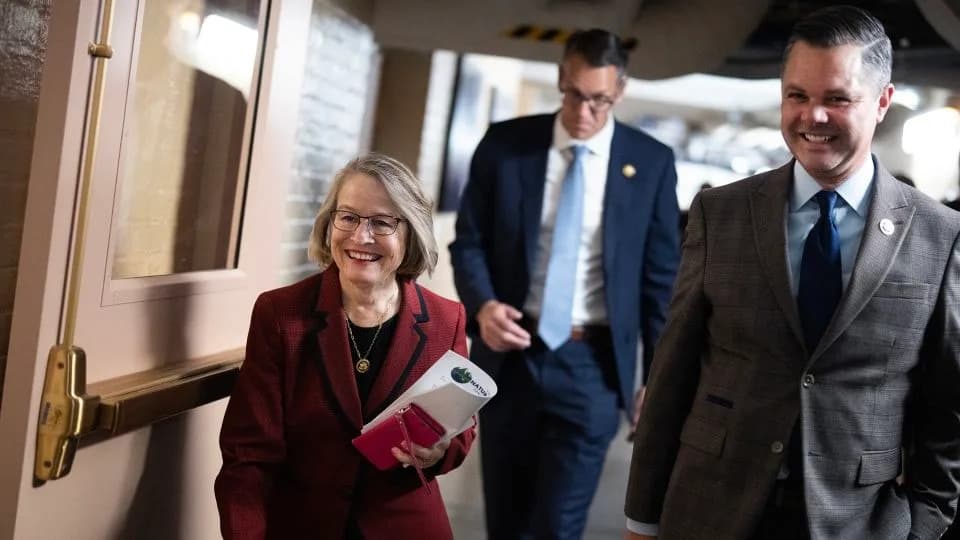
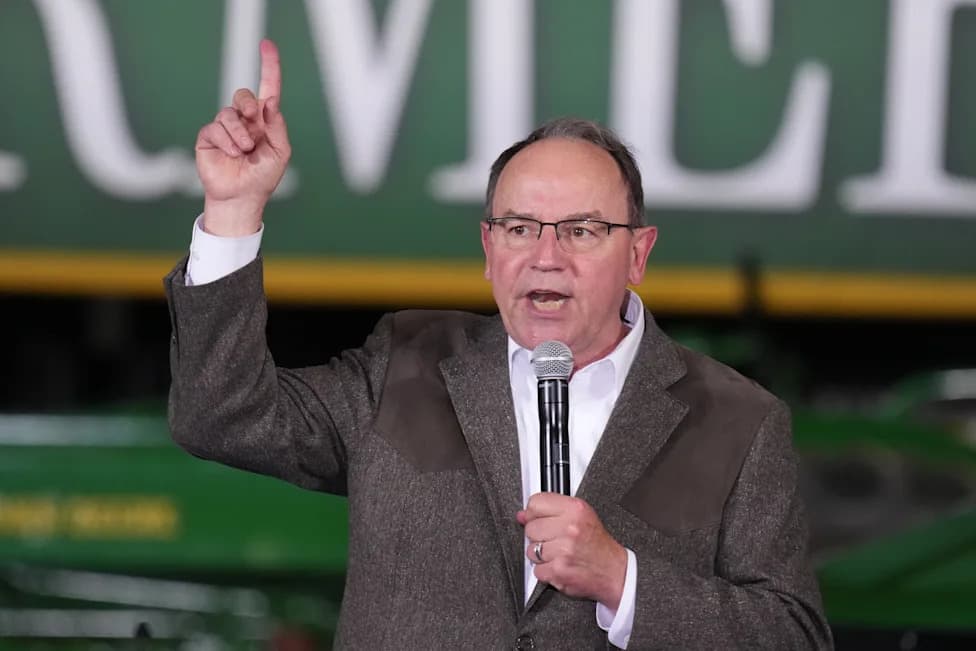
From left, Reps. Mariannette Miller-Meeks, R-Iowa, and Zach Nunn, R-Iowa, arrive for a meeting of the House Republican Conference in the US Capitol on Tuesday, November 19, 2024. - Tom Williams/CQ-Roll Call, Inc./Getty Images
Facing tougher-than-expected midterm battlegrounds, a growing number of vulnerable House and Senate Republicans are publicly diverging from President Donald Trump on issues from the Iran war to immigration and trade. Those moves reflect a strategic calculation: distance where necessary to reassure local voters while preserving party cohesion on broader priorities.
Key Votes and Public Breaks
Two Iowa Republicans, Reps. Zach Nunn and Mariannette Miller-Meeks, voted this week to limit the president's war-making authority with respect to Iran — one of seven GOP defections on the measure, the largest number so far. Both issued statements stressing restraint on prolonged conflict and the economic costs to their constituents rather than naming Trump directly. The president has not publicly rebuked them.
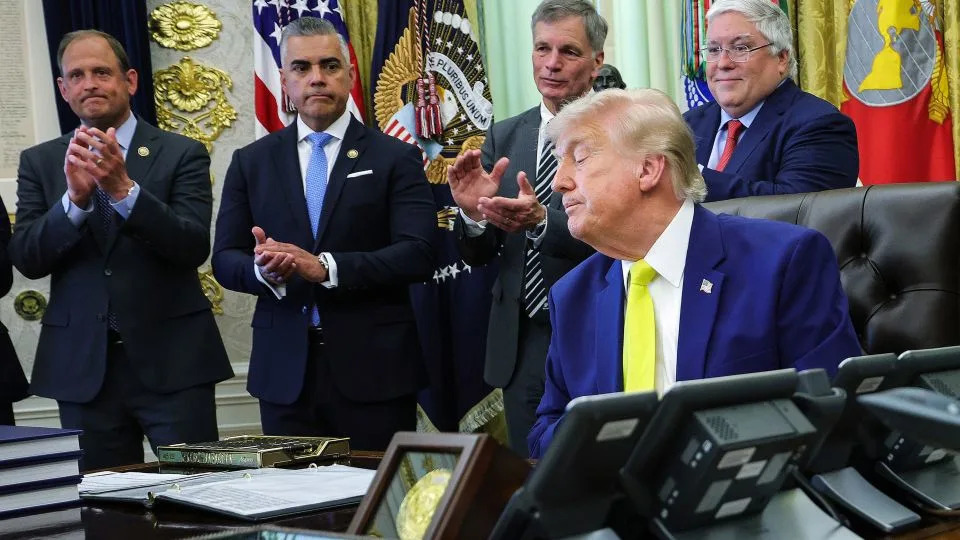
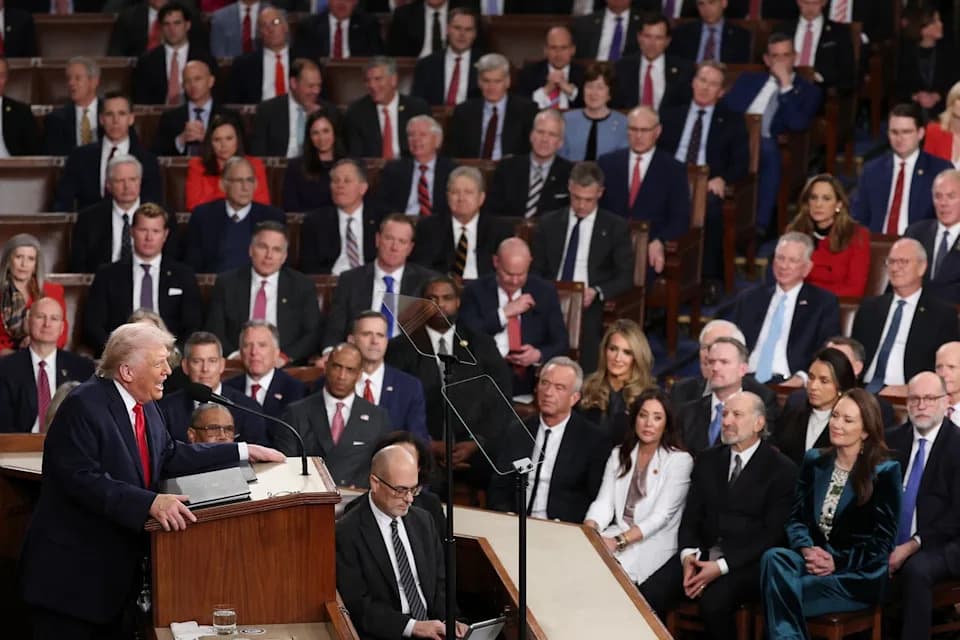
US Rep. Juan Ciscomani (R-AZ), second from left, applauds after U.S. President Donald Trump delivered remarks during a "Beautiful, Clean Coal" event in the Oval Office of the White House on June 04. - Kevin Dietsch/Getty Images North America/Getty Images
In South Florida, Rep. Maria Elvira Salazar ran an ad criticizing the administration's immigration approach as having 'gone too far.' Trump responded that he still supports her reelection even as he disagrees with her critique.
Local Interests Trump National Messaging
Several farm-state Republicans objected after the administration temporarily paused tariffs on foreign beef, and others have publicly pushed back on trade moves that harm regional industries. In Texas, GOP nominee Brandon Herrera openly opposed a proposed border wall in Big Bend National Park, organizing local meetings and attending rallies; the project was subsequently paused.
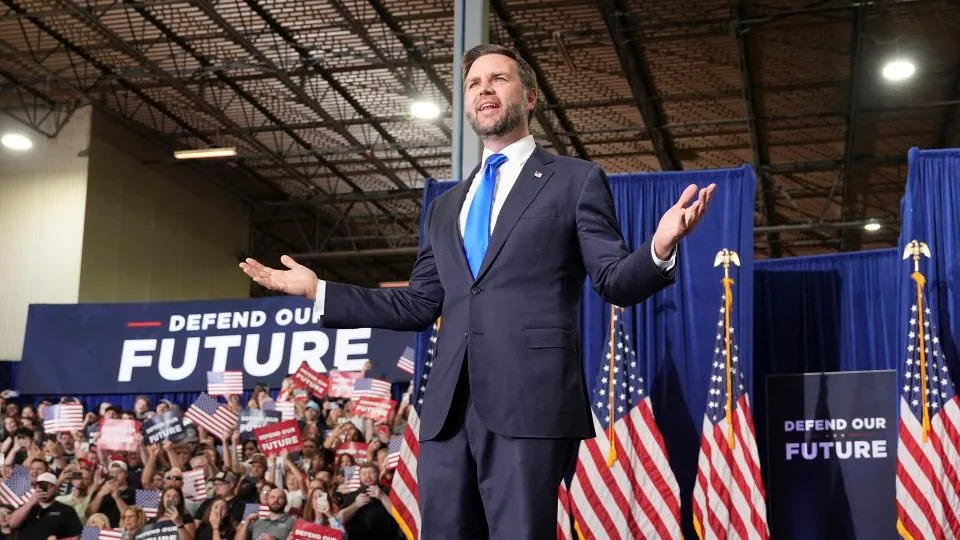
US Vice President JD Vance arrives to speak during an event at Webco Manufacturing in Olathe, Kansas, on September 14. Vance is visiting Missouri and Kansas on a Midwest trip. - Mark Schiefelbein/Pool/Getty Images
These local actions underscore a recurring theme: in competitive districts, incumbents and challengers are prioritizing constituent concerns over strict alignment with White House messaging.
White House, RNC And Allies Signal Flexibility
The White House has largely declined to discipline defectors, and the Republican National Committee has publicly framed the party as 'unified' while admitting campaigns must tailor messages to win. GOP operatives and some White House allies — including Vice President JD Vance — have signaled tolerance for nuance, urging lawmakers to be candid with voters about their frustrations.
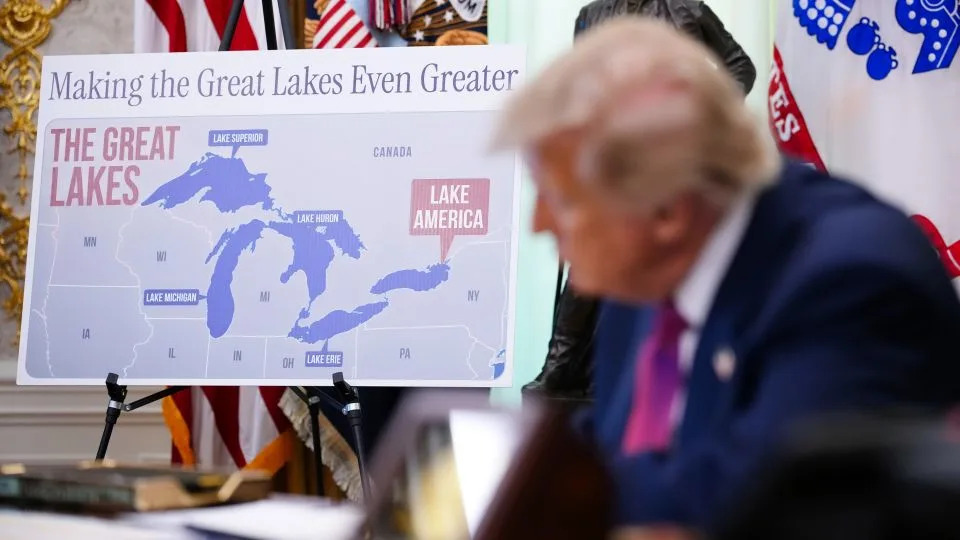
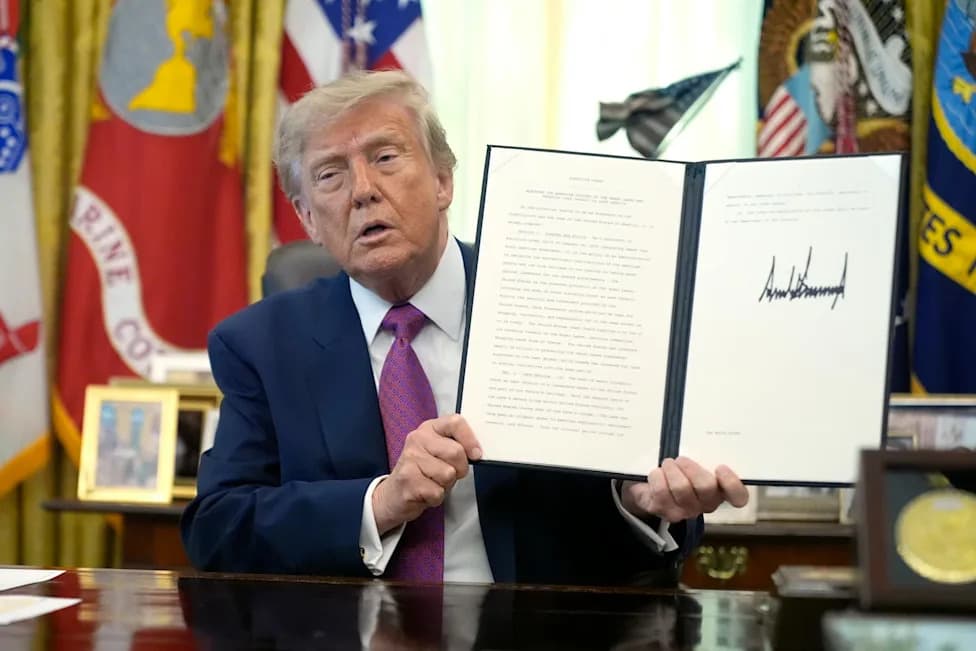
A map labeling Lake Ontario as "Lake America" is displayed as U.S. President Donald Trump signs an executive order during an event in the Oval Office of the White House on August 27. - Andrew Harnik/Getty Images
'It's definitely a different Trump than what we saw in the first administration where he didn't care about burning his relationships with fellow Republicans,' a GOP operative told CNN on condition of anonymity.
Notable Exceptions And Political Calculations
Most Republicans in competitive races, however, continue to back Trump's foreign policy posture, calculating that voters may accept short-term economic pain to avoid the perceived risk of an Iranian nuclear threat. Representative Tom Barrett of Michigan — who voted to limit war powers — nonetheless stood alongside Trump days later to accept his endorsement in a campaign rally.
Sen. Susan Collins of Maine has repeatedly broken with the administration on certain nominees and emergency tariff powers, securing exemptions for Maine goods such as road salt and cement; she remains an example of an incumbent carving an independent path in a state Trump lost in 2024.
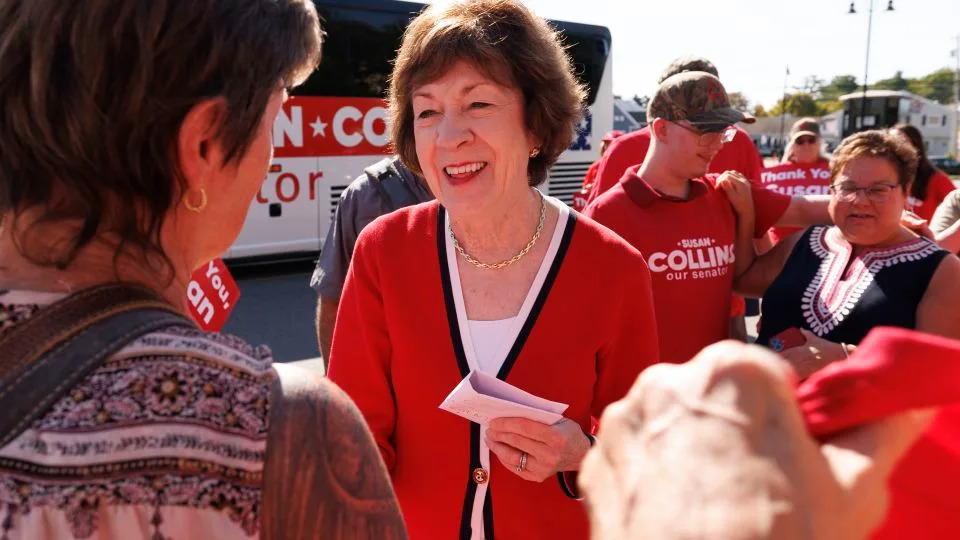
US Sen. Susan Collins (R-ME) greets supporters outside the Kittery Trading Post, the first stop of a weekend re-election campaign bus tour of the state of Maine, on August 14. - CJ Gunther/Getty Images
What This Means For The Midterms
Republicans' measured tolerance for dissent suggests a tactical shift: officials are allowing candidates flexibility to address local political realities without triggering wholesale intra-party retaliation. That approach may help protect vulnerable seats across Kansas, Texas, Florida and other states where Democrats are competitive.
Bottom line: Expect more targeted, district-focused breaks from White House policy in the coming weeks as Republicans try to hold a fragile congressional majority while managing an often unpredictable presidential agenda.
Help us improve.