Key discovery: For the first time, remains attributable to the long-necked sauropod Diplodocus have been identified in Europe, from La Tejería in El Castellar, Teruel, Spain. Specimen details: Researchers recovered 14 well-preserved tail vertebrae and several chevrons, showing distinctive Diplodocus anatomy. Significance: Dated to about 150 million years ago, the find suggests Late Jurassic faunal exchange between North America and Europe and is on display at the Museo Aragonés de Paleontología in Dinopolis, Teruel.
First Confirmed Diplodocus Fossil Found in Europe — 150-Million-Year-Old Specimen Unearthed in Spain
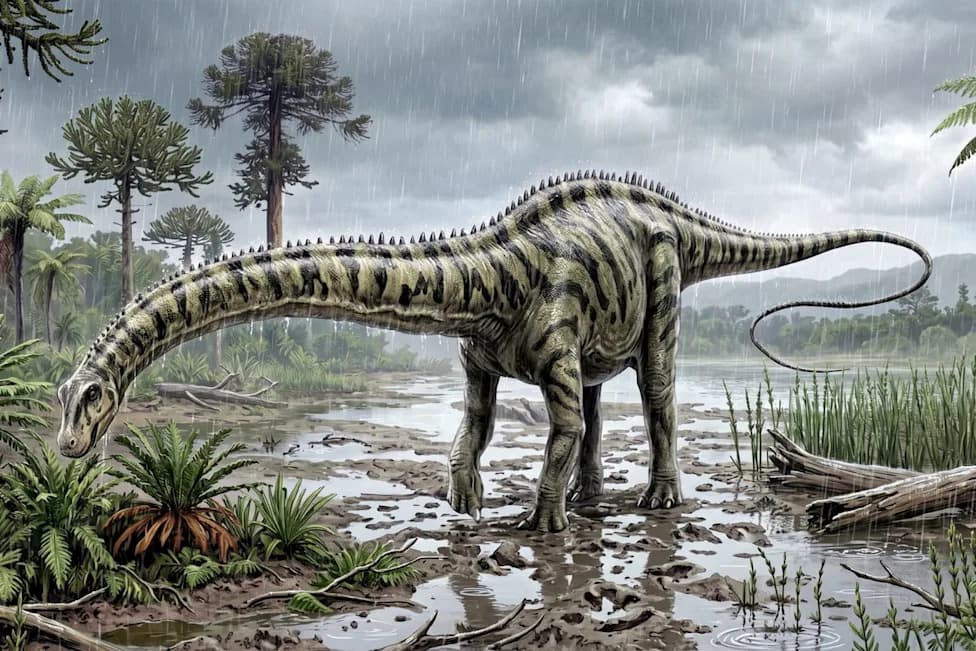
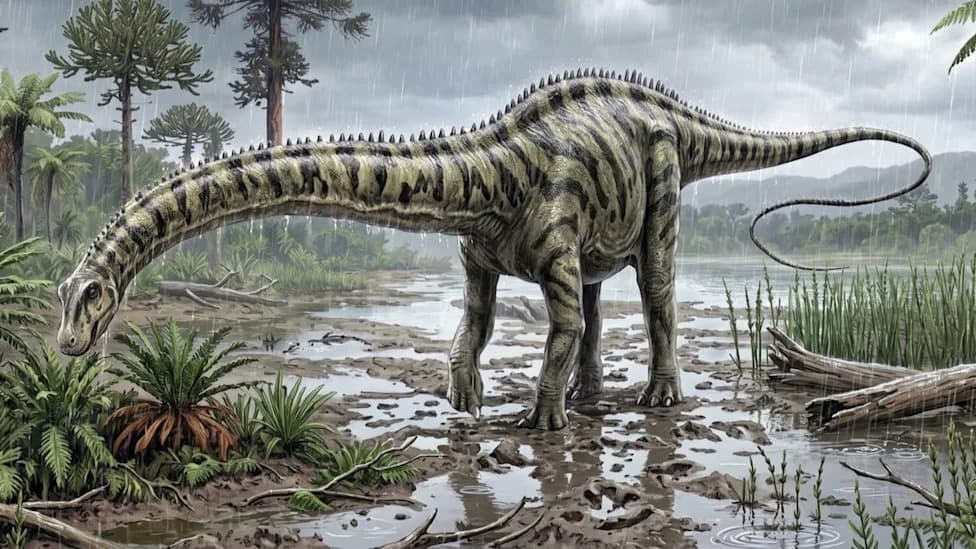
An illustration of the Diplodocus. (Carmelo López via SWNS)
A fossil of the long-necked sauropod Diplodocus has been identified in Europe for the first time, researchers report. The specimen, described in the Journal of Vertebrate Paleontology, was excavated at the La Tejería site in El Castellar, province of Teruel, eastern Spain.
What Was Found
Paleontologists recovered 14 exceptionally well-preserved tail vertebrae and several chevron bones. The fossils display distinctive anatomical features — large pneumatic cavities in the vertebrae, deep longitudinal grooves on the underside of the tail bones and forked chevrons — that allowed the team to assign the material to the Diplodocus genus.
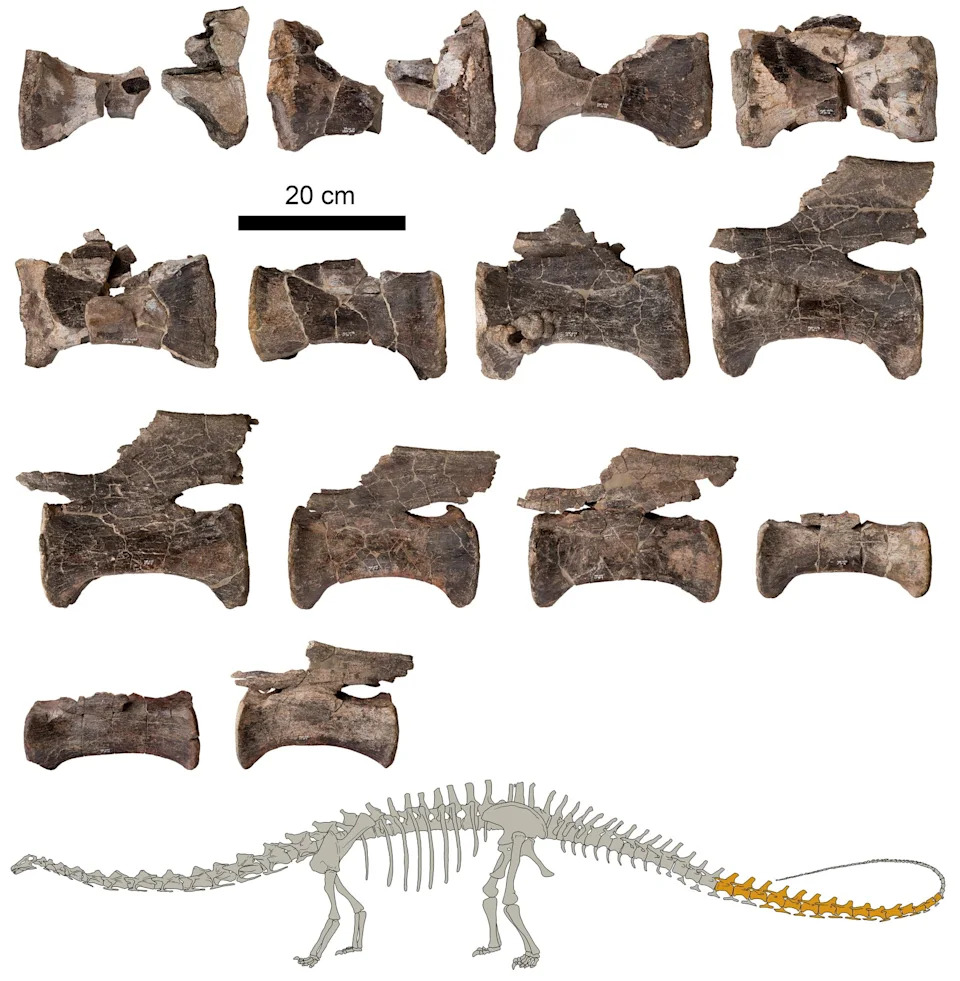
Tail vertebrae of the Diplodocus from El Castellar (Teruel, Spain), together with a figure indicating the studied fossils in dark. (Sergio Sánchez Fenollosa via SWNS))
Scientific Analysis and Significance
Using traditional osteological comparisons alongside advanced phylogenetic analyses, researchers consistently placed the Spanish specimen within the Diplodocus lineage, as a close relative of Diplodocus hallorum. The fossils are dated to roughly 150 million years ago, near the end of the Jurassic Period.
"It was an exciting and continuous process of seeing the pieces of the puzzle gradually fall into place," said Sergio Sánchez Fenollosa, a Ph.D. student at Fundacion Dinopolis and lead author of the study.
Until now, confirmed Diplodocus remains had only been reported from the Morrison Formation in western North America. The new Spanish find therefore provides strong paleontological evidence that some sauropod lineages dispersed between North America and Europe during the Late Jurassic, likely via temporary land bridges formed during regressions of the proto-North Atlantic.
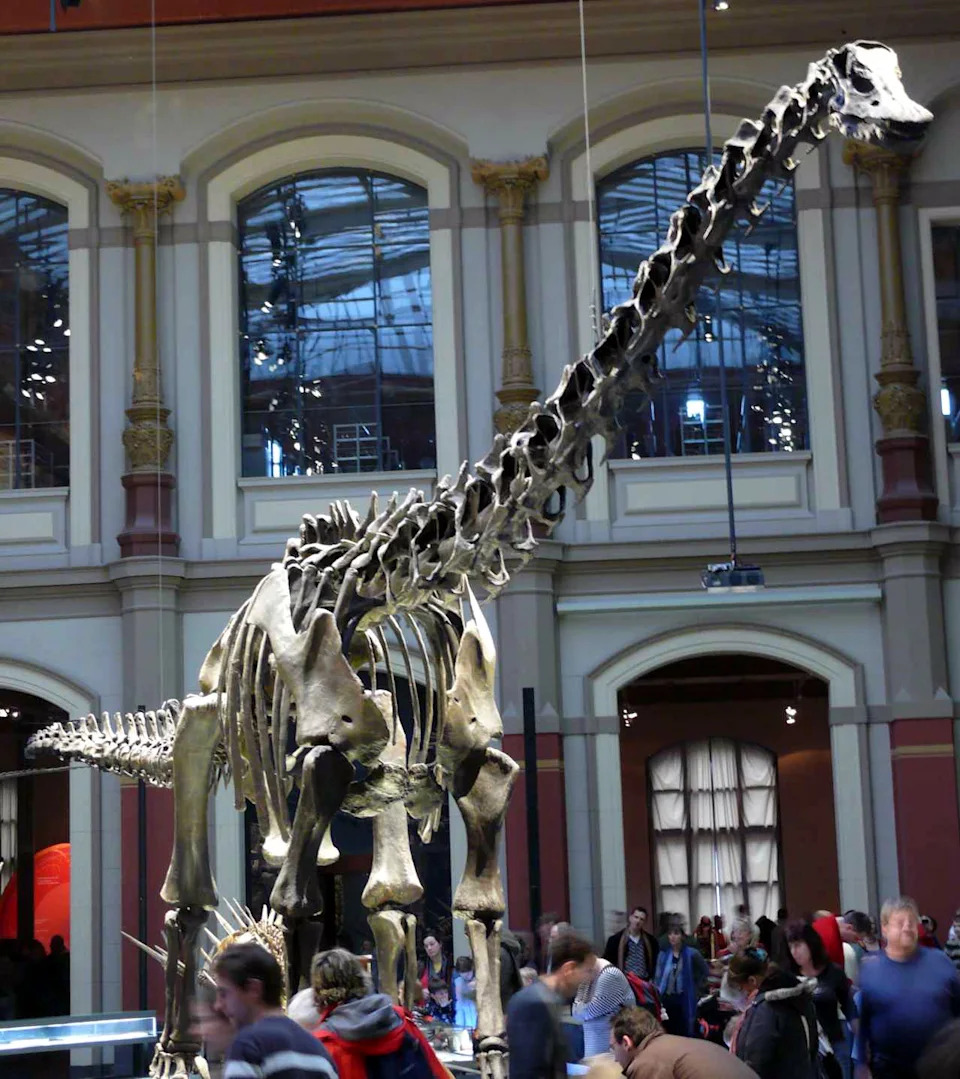
Skeleton of Diplodocus carnegi. Not the one found for this research. (Gunnar Ries Amphibol via Wikimedia Commons)
Context and Display
Study co-author Alberto Cobos, managing director of Fundacion Dinopolis, noted the El Castellar individual measured approximately 25 meters (about 82 feet) in length — comparable to its North American relatives — and joins other large Spanish Jurassic sauropods such as Turiasaurus and Losillasaurus. Together, these discoveries make Teruel an important region for understanding European Jurassic dinosaur diversity.
The fossils are now on display in the dinosaur hall of the Museo Aragonés de Paleontología at Dinopolis in Teruel. The surrounding region has previously yielded a wide range of dinosaur remains — sauropods, theropods, stegosaurs and ornithopods — suggesting ancient coastal environments there supported complex and diverse ecosystems.
Why It Matters
Beyond adding Diplodocus to Europe's confirmed fossil record, the find refines our picture of Late Jurassic biogeography and ecosystem structure in Iberia. It highlights how episodic connections between continents may have shaped dinosaur distributions and evolution.
Help us improve.