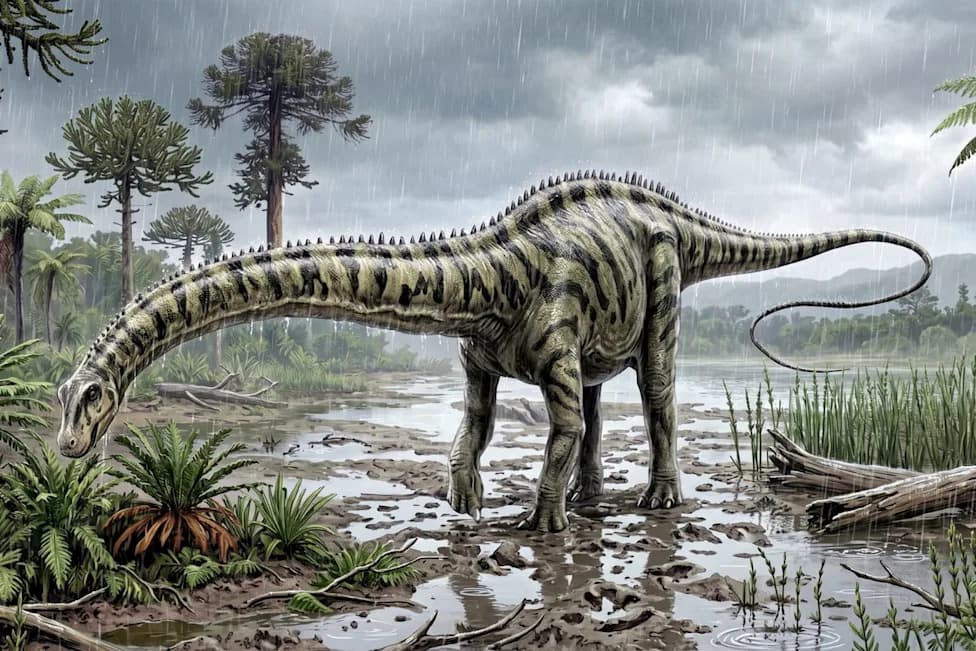
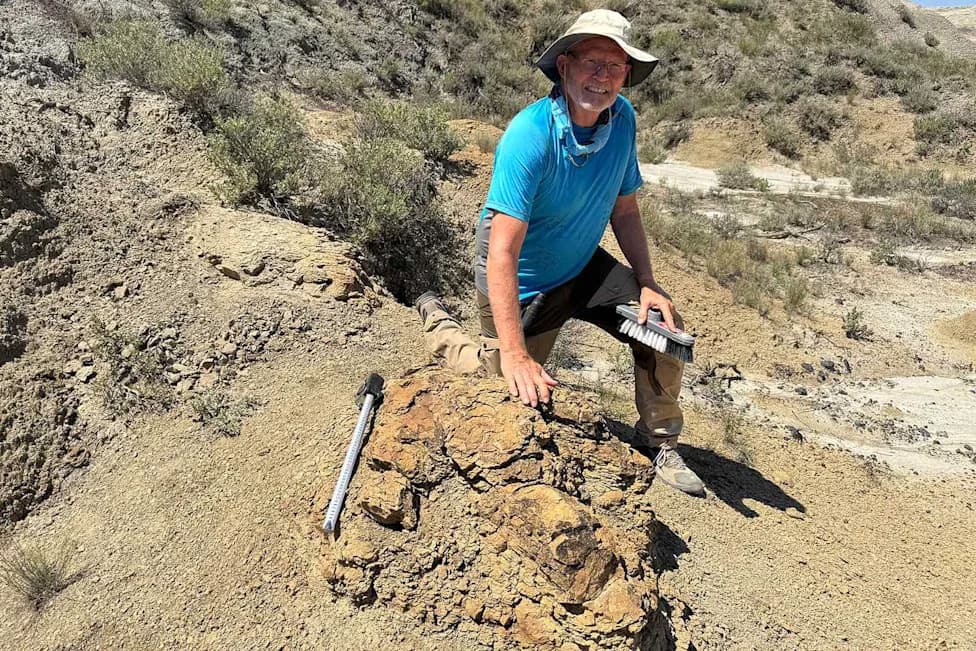
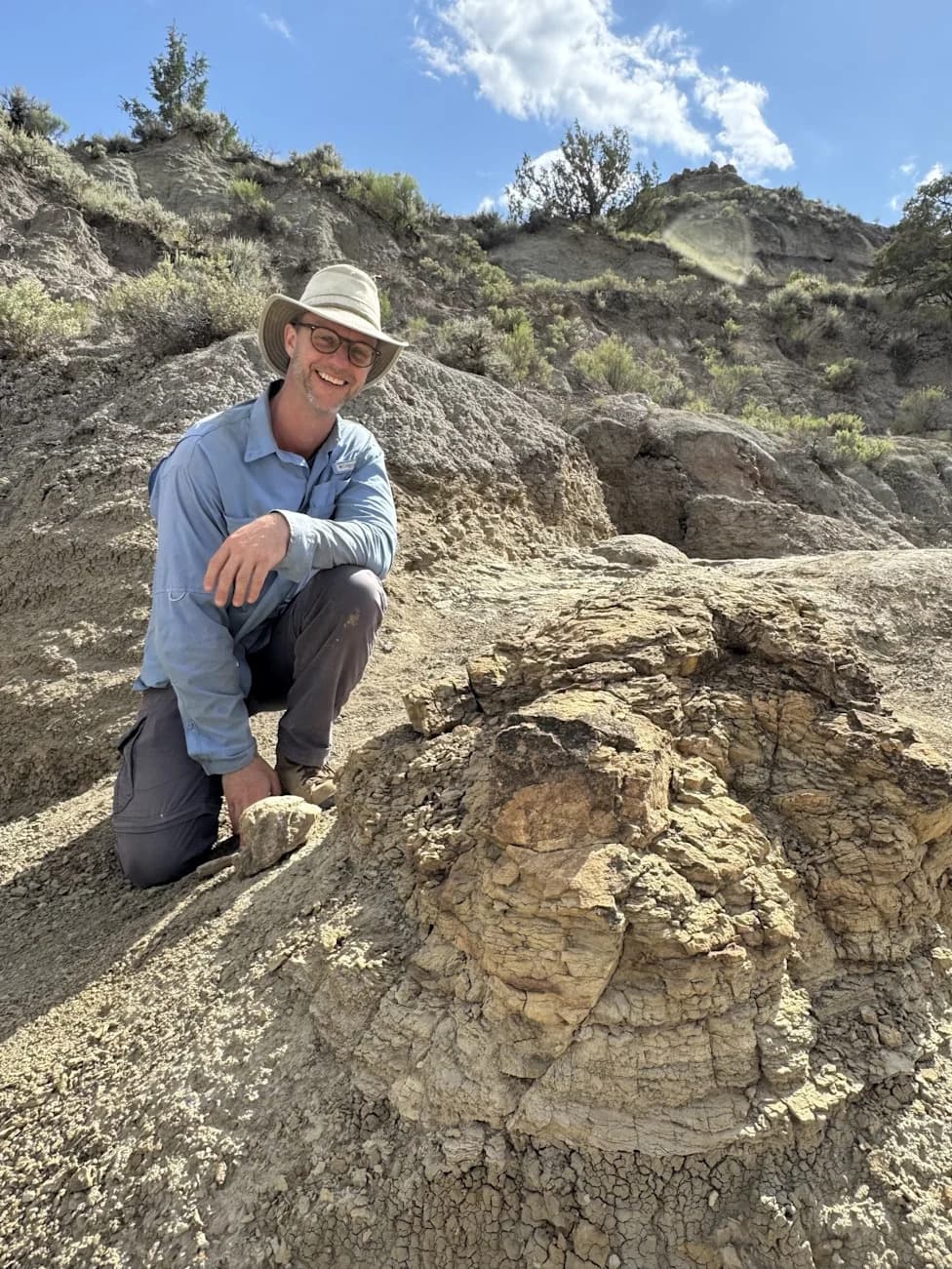
Key discovery: The first confirmed Diplodocus specimen outside North America was unearthed at La Tejería in El Castellar, Teruel, Spain. Evidence: 14 caudal vertebrae and several forked chevrons show diagnostic traits such as large pneumatic cavities and deep tail grooves. Analysis & Age: Phylogenetic analyses (maximum parsimony and Bayesian inference) place it near Diplodocus hallorum; the specimen dates to ~150 million years ago. Implication: At ~25 m long, the find supports Late Jurassic dispersal between continents, likely via temporary land bridges.
First Confirmed Diplodocus Found Outside North America — 150-Year Assumption Rewritten by a Spanish Discovery
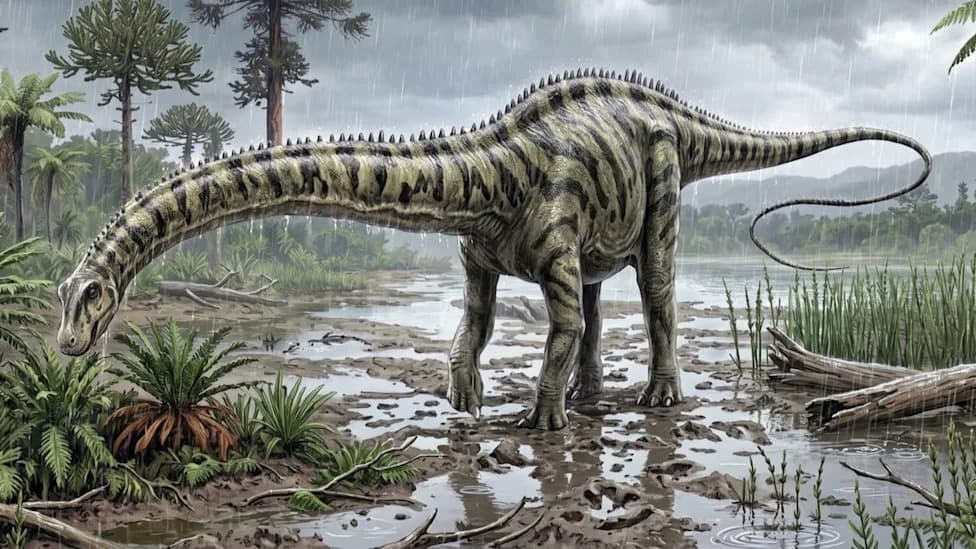
For 150 years, Diplodocus was thought to be only American, until this find in Spain
Paleontologists in Spain have identified the first confirmed specimen of Diplodocus ever found outside North America, overturning a century-and-a-half assumption about the genus's geographic range. The specimen, recovered at the La Tejería site in El Castellar (Teruel province), is among the most complete diplodocid remains discovered in Europe and offers new insight into Late Jurassic dinosaur dispersal.
Discovery and Excavation
Scientists from the Fundación Conjunto Paleontológico de Teruel–Dinópolis described the find in the Journal of Vertebrate Paleontology. A field team from Fundación Dinópolis excavated 14 exceptionally preserved caudal vertebrae along with several chevron bones — the double‑beam elements on a diplodocid's tail that inspired the genus name.
Anatomy and Identification
Initial osteological study showed strong similarities to diplodocine sauropods. Detailed anatomical analysis identified a combination of diagnostic features that match Diplodocus, including:
- Large pneumatic cavities within the vertebrae
- Deep longitudinal grooves along the tail vertebrae
- Distinctively forked (bifurcate) chevron bones
- Elongated vertebral centra lacking lateral ridges
Phylogenetic Analyses and Age
The team combined traditional anatomical comparisons with modern phylogenetic techniques — including maximum parsimony and Bayesian inference — and consistently recovered the Spanish specimen within the genus Diplodocus, closely related to Diplodocus hallorum. The fossil is dated to roughly 150 million years ago, near the end of the Jurassic period.
Size and Paleobiogeographic Significance
Co‑author Alberto Cobos, managing director of Fundación Dinópolis, estimated the El Castellar Diplodocus at about 25 meters (82 feet) long, comparable to its North American relatives. Its presence in Europe provides some of the strongest paleontological evidence so far for faunal exchange between North America and Europe across the proto‑Atlantic, likely via temporary land bridges that emerged during regressive sea phases.
Regional Context
This specimen adds to a growing record of diverse Late Jurassic dinosaurs from eastern Iberia. Teruel has already produced a range of sauropods, theropods, stegosaurs and ornithopods — including very different giant sauropods such as Turiasaurus and Losillasaurus — making the region an important reference for understanding Jurassic ecosystems in Europe.
Lead author Sergio Sánchez Fenollosa, a doctoral student in biodiversity and evolutionary biology at Fundación Dinópolis, said the identification unfolded gradually as multiple lines of evidence converged. Cobos added that the new find, together with other regional fossils, strengthens Teruel’s role as a key site for studying dinosaur diversity and biogeography.
Help us improve.