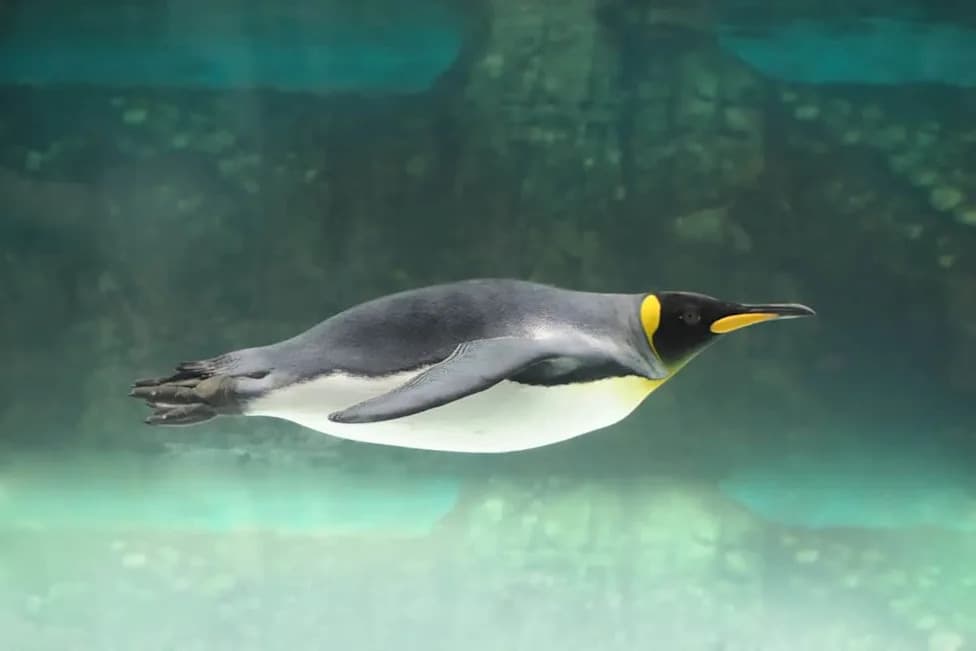
Deep beneath the Antarctic ice, the awkward-looking emperor penguin becomes one of the animal kingdom’s most extreme breath-holders. In 2007 biologist Barbara Wienecke recorded a staggering dive in which an emperor penguin descended 564 meters (about 1,850 feet) and remained submerged for nearly 28 minutes on a single breath — a combination of depth and duration unmatched by any other bird.
Record Dives and Typical Foraging Trips
While the 564 m, ~28-minute dive is exceptional, satellite tracking and tagging in the Ross Sea show that emperor penguins routinely dive deeper than 500 meters (more than 1,600 feet). Typical hunting trips often include dives lasting up to 18 minutes into the near-darkness below the sunlit zone, where they pursue fish and squid in frigid water.
Heart and Breath: A Dramatic Physiological Switch
Emperor penguins prepare for a plunge by hyperventilating and raising their heart rate, loading oxygen into the blood. Electrocardiograms taken at the surface in McMurdo Sound have recorded heart-rate spikes near 256 beats per minute — comparable to a human at full exertion.
Once submerged, the penguin executes an extreme dive response. Heart rate falls sharply: from an average resting rate of ~73 bpm to roughly 57 bpm when underwater, and even lower on long, deep dives. During dives that exceed aerobic limits, average rates have been measured near 41 bpm, with documented lows in the single digits — researcher Jessica Meir reported a rate as low as three beats per minute during an 18-minute dive.
Selective Blood Flow and Oxygen Conservation
Bradycardia (slowing of the heart) is paired with pronounced peripheral vasoconstriction: the bird restricts blood flow to nonessential tissues such as the flippers and some muscles, directing oxygen-rich blood to the heart, lungs and brain. This prioritization preserves critical organs while the penguin relies on stored oxygen.
Molecular and Structural Adaptations
Two additional adaptations further enable extreme dives. Emperor penguins have hemoglobin that can bind and release oxygen efficiently even at very low blood-oxygen levels, allowing tissues to tolerate hypoxia better than in most birds. Their bones are also unusually dense and reinforced, helping to withstand the roughly 57-times-greater pressure encountered at record depths (pressure increases by about 1 atmosphere every 10 meters).
Evolutionary Trade-Offs
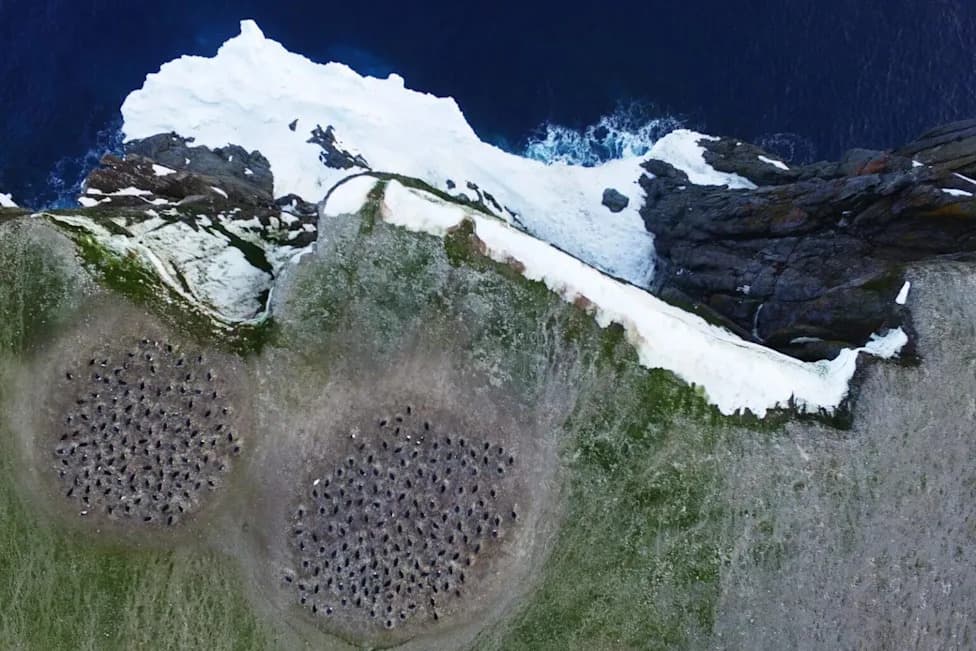
Emperor penguins are flightless, and evolution has favored underwater performance over aerial mobility. Grounded on land, they excel at exploiting an ecological niche beneath the ice. The species’ thriving coastal colonies across Antarctica attest that this trade-off has worked for millennia.
Conclusion
The emperor penguin’s feats are a reminder that extreme adaptations can be internal and physiological: slowing the heart almost to a stop, rerouting blood flow, and managing oxygen at the molecular level enable one of nature’s most remarkable deep-diving behaviors.