A new study in Nature Aging implicates fibronectin — a tissue‑repair protein produced by astrocytes — in blood–brain barrier breakdown in APOE4‑linked Alzheimer’s models. Excess fibronectin accumulates around cerebral vessels, disrupts protective growth‑factor signaling, and causes leakage; forcing fibronectin production in zebrafish produced leaks, and reducing it restored barrier integrity. A rare FN1 variant linked to lower Alzheimer’s risk supports fibronectin as a target, but findings are preclinical and cognitive benefits remain unproven.
Scientists Repair Leaky Blood–Brain Barrier In Alzheimer’s Models By Targeting Fibronectin
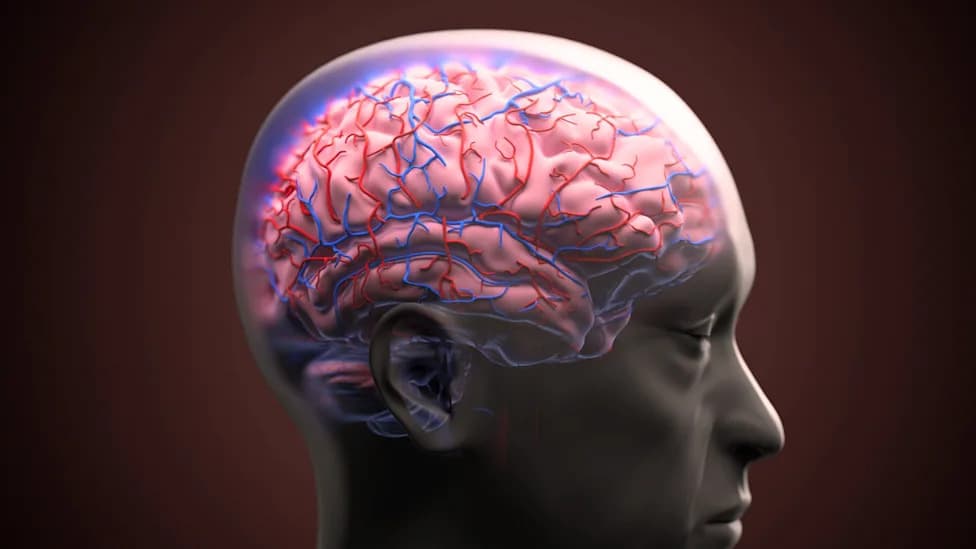
(Thom Leach/Science Photo Library/Getty Images)
The brain enforces one of the body's strictest entry rules: the blood–brain barrier lets oxygen and nutrients in while keeping toxins, pathogens and many circulating molecules out. New research published in Nature Aging identifies the repair protein fibronectin as a driver of blood–brain barrier (BBB) breakdown in models of Alzheimer’s disease linked to the APOE4 gene variant — and shows that reducing fibronectin can restore barrier integrity in experimental systems.
Study Overview
Researchers examined postmortem human tissue and cerebrospinal fluid, then validated findings across human cell cultures, three-dimensional engineered blood-vessel models, APOE4 mice and zebrafish. They found consistent accumulation of fibronectin around cerebral blood vessels, much of it originating from astrocytes — the star-shaped support cells that wrap vessels and help maintain the BBB.
How Fibronectin Undermines the Barrier
APOE4, inflammatory signals and amyloid‑beta each stimulated astrocytes to overproduce fibronectin. Rather than helping repair, this excess fibronectin clustered at vessel walls and interfered with growth-factor signaling between astrocytes and vascular cells. With protective signaling weakened, the tight junctions that normally seal blood vessels loosened and gaps formed, enabling blood-borne substances to enter brain tissue and fuel inflammation.
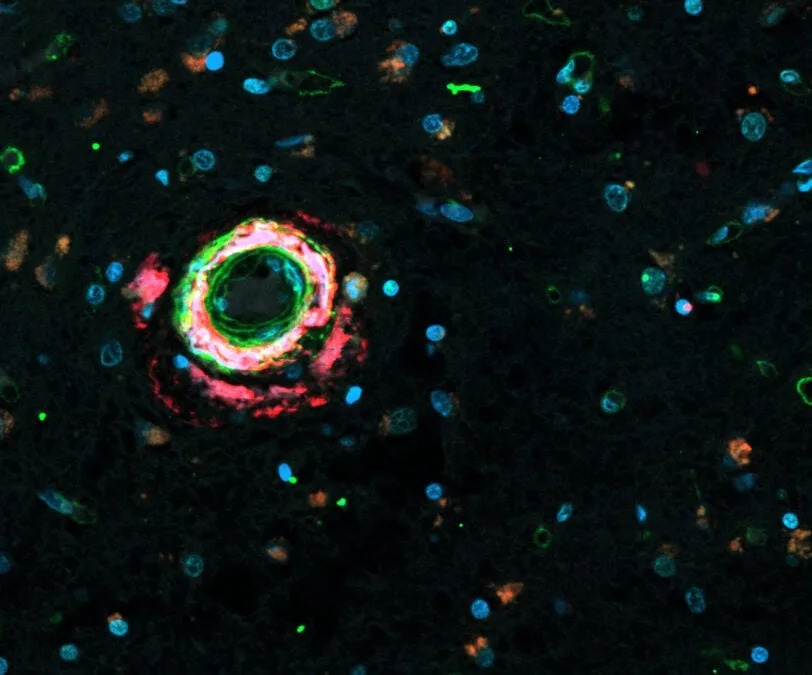
Fibronectin accumulates around a blood vessel in brain tissue, a process linked to blood-brain barrier leakage in Alzheimer's models. (Kizil Lab)
Key Experiments Demonstrating Causality
To test causality, the team forced zebrafish support cells to produce extra human fibronectin. That manipulation alone produced BBB leakage, showing fibronectin can drive the defect rather than simply accumulating at damaged sites. In complementary experiments, lowering fibronectin reduced leakage in zebrafish exposed to amyloid‑beta, and blocking the intracellular pathway by which fibronectin suppressed protective signals restored those signals.
When the investigators experimentally disrupted VEGF signaling to damage tight junctions, adding downstream growth factors HB‑EGF and IGF‑1 restored tight‑junction levels, suggesting multiple interventional points in the pathway.
"The most direct and most translatable finding is that reducing fibronectin itself rescues the barrier defects," said Columbia University neuroscientist Çağhan Kızıl.
Human Genetics and Therapeutic Possibilities
Genetic evidence strengthens the hypothesis: an earlier study identified a rare loss‑of‑function variant in the FN1 gene that appears to lower Alzheimer’s risk in APOE4 carriers by roughly 71% without clear harm — a natural experiment suggesting that reduced fibronectin activity in the brain may be protective.

Subscribe to ScienceAlert's free fact-checked newsletter
The researchers emphasize this does not imply removing fibronectin systemically. Fibronectin is vital for wound healing and vascular maintenance outside the brain. Instead, therapeutic strategies would aim to selectively prevent pathological fibronectin buildup around cerebral vessels. Potential approaches include locally targeted antibodies or small molecules to clear excess fibronectin, or gene‑based methods that mimic the protective FN1 variant in the brain.
Limits And Next Steps
These results are mechanistic and preclinical. The interventions have not yet been shown to preserve memory or cognition in animals, and human findings remain correlational and require replication in larger cohorts. Before clinical trials can begin, researchers must demonstrate cognitive benefit in animal models, confirm safety, and develop delivery methods that reach the brain without disrupting fibronectin’s beneficial roles elsewhere in the body.
Bottom line: The study uncovers a previously underappreciated mechanism for BBB breakdown in APOE4‑linked Alzheimer’s models — the brain’s own repair scaffold, when overproduced, can crowd vessel walls and prevent the barrier from resealing — and points to fibronectin as a promising, if still early‑stage, therapeutic target.
Study Source: Nature Aging. Coverage: ScienceAlert.
Help us improve.