A New Jersey court ordered radaris.com and 13 linked domains transferred to Atlas Data Privacy Corp after Radaris failed to respond to a lawsuit filed under Daniel's Law. Atlas alleges Radaris evaded enforcement by repeatedly reorganizing across offshore entities — a tactic it calls "island-hopping." Brian Krebs identifies operators as brothers Igor and Dmitry Lubarsky; Radaris says it will appeal the decision. Because Daniel's Law applies only to certain public officials, most individuals must still request removals site-by-site or use paid removal services for broader coverage.
Radaris Loses radaris.com — New Jersey Court Transfers Domain to Atlas After Privacy Suit
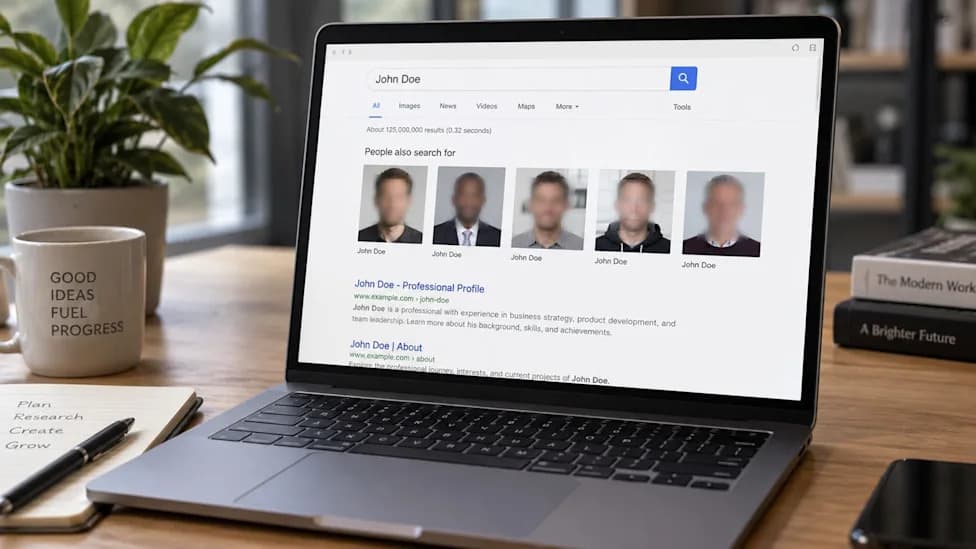
Image credit: Suzanne Kantra/Techlicious generated by ChatGPT
A New Jersey court has ordered radaris.com and 13 associated domains transferred to Atlas Data Privacy Corp after the people-search operator failed to defend itself in a lawsuit under New Jersey's Daniel's Law.
What happened: Atlas filed the suit in February 2024, relying on Daniel's Law, a state statute that lets certain public officials — including police officers, judges and prosecutors — demand that data brokers remove their personal information within 10 days and imposes a $1,000 penalty for each violation. Radaris did not appear in court; a default judgment followed, and on August 26 the court ordered the domain transfer, according to reporting by Brian Krebs of KrebsOnSecurity.
Atlas' allegation of evasion: Atlas says Radaris repeatedly avoided enforcement by reorganizing its operations across multiple entities and jurisdictions — a tactic Atlas calls "island-hopping." "Privacy policies changed constantly, and new entities kept appearing from places like the Marshall Islands, the British Virgin Islands, and Seychelles," Atlas CEO Matt Adkisson told Krebs. Raj Parikh of PEM Law, who handled the case for Atlas, said this pattern is familiar to litigants targeting people-search sites: plaintiffs sometimes gave up after protracted procedural maneuvers.
"In the past, they won by attrition. Plaintiffs' attorneys tired of the procedural games and just gave up," — Raj Parikh, PEM Law.
Who runs Radaris? Krebs' reporting identifies the operators as Igor and Dmitry Lubarsky, Russian-born brothers based in Massachusetts who run a network of people-search and Russian-language dating sites. That network reportedly includes at least 25 other people-search domains that were not covered by this particular court order.
As of this writing, radaris.com displays a notice announcing the ownership transfer rather than continuing to sell personal dossiers. Radaris has signaled it will fight the decision: attorney Victor Worms told Krebs the company will "pursue all appropriate appeals," arguing the domain handover amounts to an unconstitutional forfeiture.
What This Means For Most People
Daniel's Law applies only to a narrow set of people — police officers, judges, prosecutors and their immediate families — so most individuals cannot use it the way Atlas did. People who want their information removed from Radaris-affiliated sites or other people-search services still typically must submit removal requests on each site individually.
Those efforts can feel like a game of whack-a-mole: some data brokers delist records only temporarily, then rebuild profiles from newly available public records or from aggregated feeds supplied by other brokers; others ignore takedown requests. A practical alternative is to use a professional data-removal service such as Incogni or DeleteMe, which monitor many brokers and submit removal requests on users' behalf. Prices and effectiveness vary, often running roughly $7–10 per month or more, depending on the provider and plan.
Takeaway
The court order is an important enforcement milestone against a prominent people-search operator, but the broader ecosystem of data brokers remains large and resilient. Individuals concerned about personal data online should combine site-by-site requests with privacy services and ongoing monitoring to reduce exposure.
Reporting on the court order was informed by coverage from Brian Krebs (KrebsOnSecurity). This article clarifies options for individuals seeking removal and corrects a previous conflation of vendor names: Incogni and DeleteMe are separate services.
Help us improve.