Abu Dhabi hit record electricity demand in August and expects demand to nearly double from 2025 to 2035, prompting a 300 billion-dirham investment plan to expand capacity and accelerate clean generation. The emirate is rapidly expanding solar and battery storage and shifting desalination from gas-fired thermal systems to reverse osmosis by 2035. Tested by drone and missile attacks, its power and water systems held up without interruption, strengthening confidence in its resilience and boosting efforts to export solutions globally.
Tested by Conflict, Abu Dhabi Accelerates a Cleaner, More Resilient Energy and Water Future
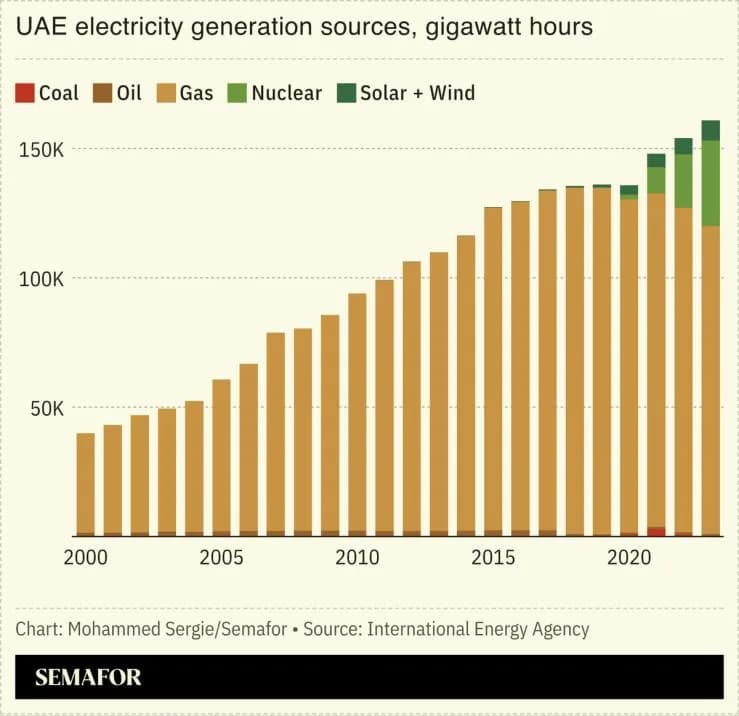
Chart showing UAE electricity generation sources.
Abu Dhabi recorded a record high in electricity use last August even as many residents left for the summer, highlighting growing pressure on the emirate's grid. Department of Energy Chairman Abdulla Humaid Al Jarwan told Semafor that demand is on track to nearly double between 2025 and 2035, driven by population growth, industrial expansion and new AI-related loads.
Large-Scale Investment and Clean-Energy Push
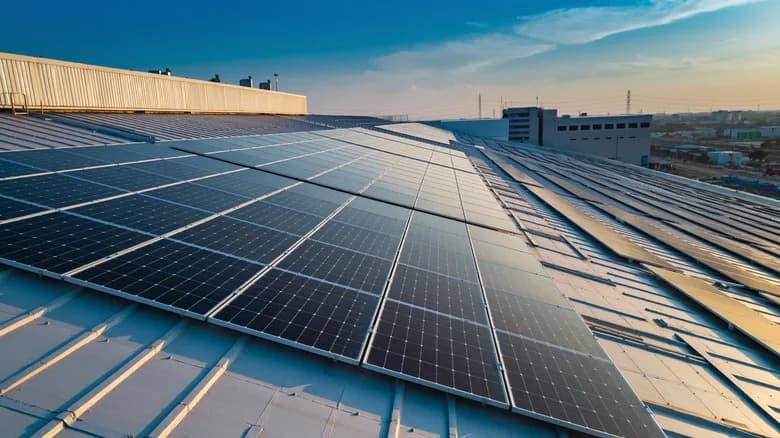
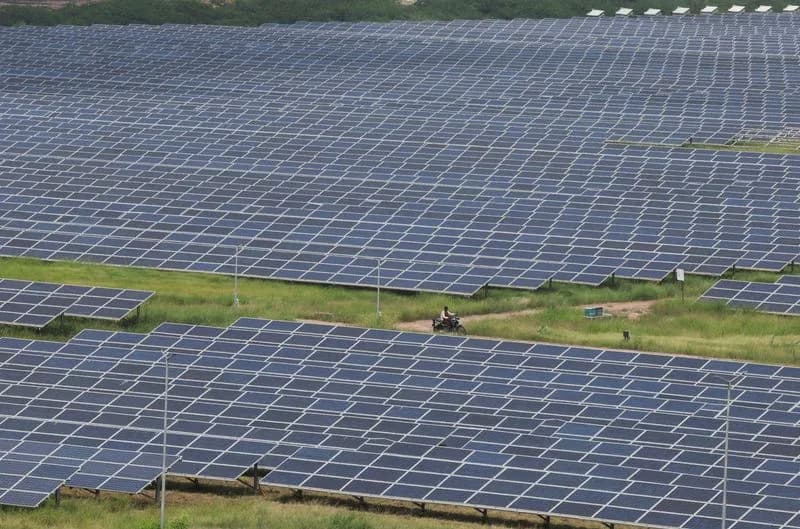
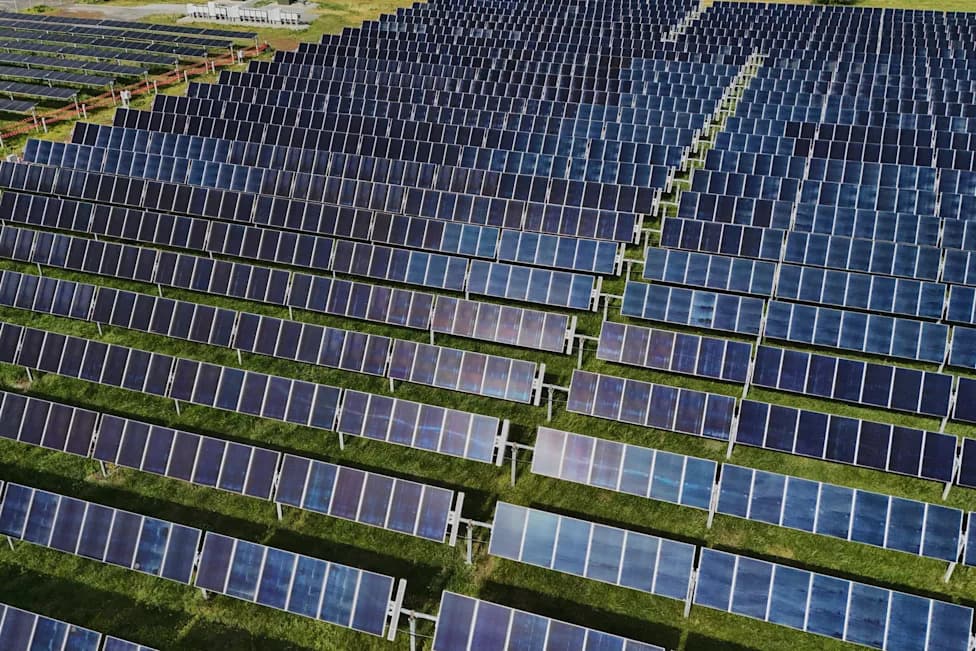
To meet that surge, Abu Dhabi plans to invest 300 billion dirhams (about $81.7 billion) by 2035 to add capacity and accelerate a shift to cleaner generation. The strategy emphasizes rapid solar deployment paired with round-the-clock battery storage: the Department of Energy aims to add roughly 3 gigawatts of solar per year in Abu Dhabi over the next decade, alongside grid-scale batteries to provide firm, 24/7 power.
Water Strategy: From Gas-Fired Thermal Plants to Reverse Osmosis
Desalination remains the UAE's principal source of fresh water. Historically, Gulf desalination has relied on thermal systems that use waste heat from gas-fired power plants. Abu Dhabi is fast-tracking a switch to reverse osmosis — which runs on electricity from any source — targeting nearly all desalination to use reverse osmosis by 2035, up from about a quarter in 2022. The move aims to reduce reliance on gas and lower the cost of producing potable water.
Resilience Under Attack
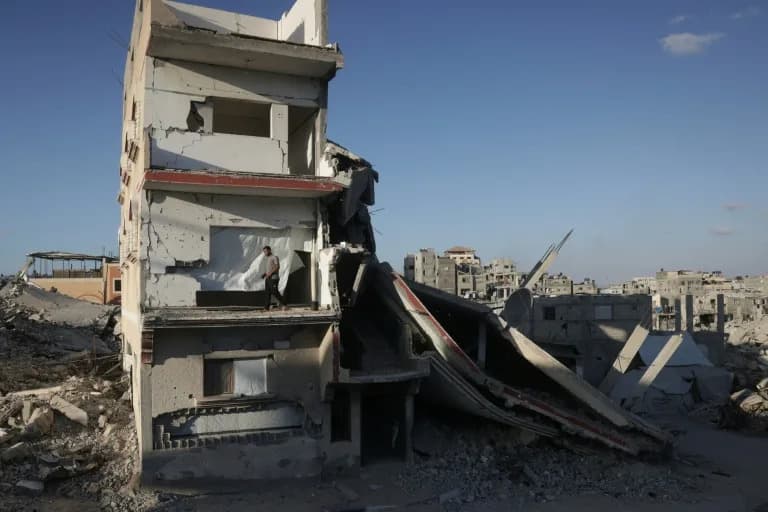
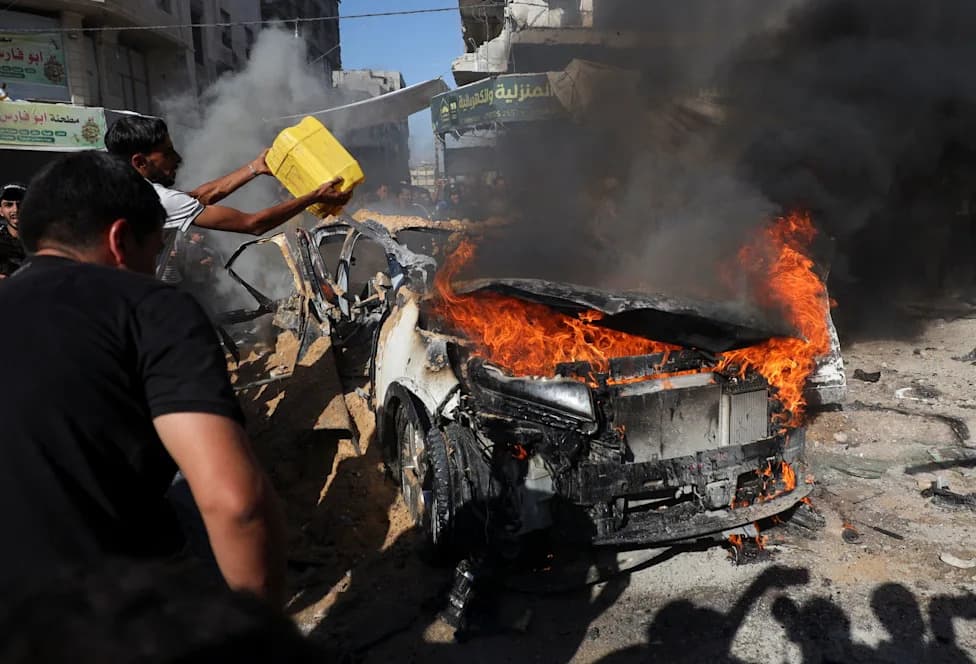
Early in the war, the UAE was the Gulf state most heavily struck by Iranian drones and missiles. Energy and water operators faced a real-time stress test: Al Jarwan said systems remained operational during the attacks. In May, a drone struck the Barakah Nuclear Energy Plant; authorities reported no leak or major disruption. Barakah — the Arab world's first nuclear power plant — supplies roughly a quarter of the country's electricity and was designed to withstand severe impacts.
“I think it's a privilege that we managed to test our system under real disruption in real time, and we performed,” Al Jarwan said, underlining confidence in Abu Dhabi's infrastructure resilience.
Strategic Reserves and Global Outreach
Abu Dhabi complements desalination with strategic water storage and groundwater resources. The Liwa emergency reserve, for example, could provide potable water to about 1 million people for 90 days in a crisis. Beyond domestic measures, the emirate is positioning water and energy as tools of soft power: officials and companies are pursuing international partnerships to export Abu Dhabi’s technology, expertise and capital.
Flagship Projects and International Events
Renewable-energy firm Masdar is building what it says will be the world’s largest 24/7 solar-and-battery project, a $6 billion development scheduled for completion in 2027. Abu Dhabi will also co-host the United Nations Water Conference with Senegal in December, coinciding with the Department of Energy's inaugural Water and Power Week, which expects more than 25,000 visitors. Officials intend to showcase concrete, deployable solutions to what UN researchers call global “water bankruptcy.”
As Al Jarwan put it, Abu Dhabi is focused on differentiating its system by deploying at scale, delivering measurable impact and globalizing its message on water and energy.
Help us improve.