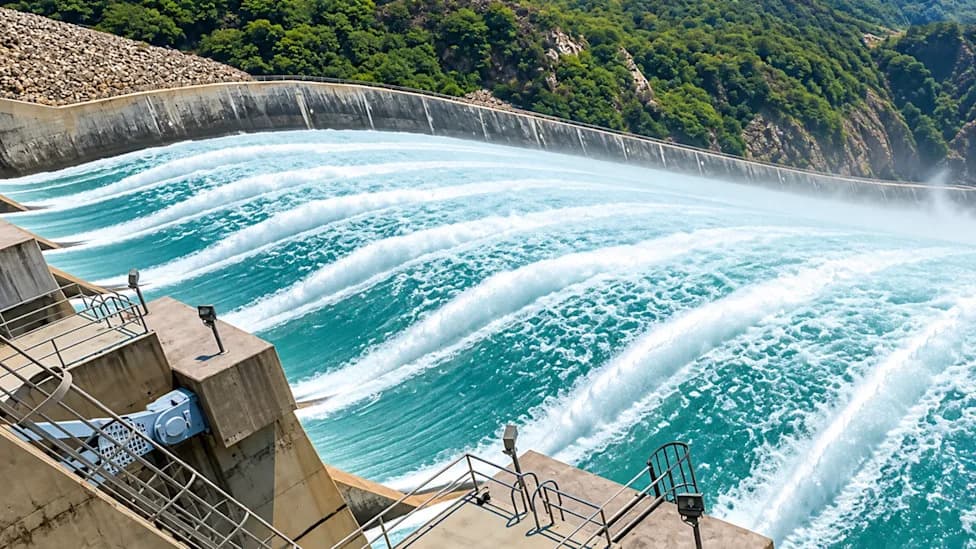
Viral video shows Tarbela Dam's spillway gates releasing an enormous surge of water that forms a towering standing-wave-like feature near the dam base. Tarbela rises about 147 metres and contains roughly 142 million cubic metres of material. WAPDA reported an auxiliary-spillway release of 242,600 cusecs in the 2026 flood season — about 1.81 million gallons per second — though the footage is undated. Given the force on display, experts warn the wave is dramatically dangerous and best observed from a safe distance.
Tarbela Dam Release Sparks Colossal 'Standing Wave' — Viral Video Shows Massive Spillway Surge
Tarbela Dam Erupts After 5 Years, Unleashing a Colossal ‘Standing Wave’ (Video)
Video from Pakistan's vast Tarbela Dam captures its spillway gates opening and an immense surge of water roaring downstream. When that torrent meets a hydraulic structure near the base, the flow rockets upward into what looks like a towering standing wave — an astonishing and unsettling sight.
Tarbela: A Giant on the Indus
Located on the Indus River northwest of Islamabad, Tarbela is one of the world's largest earth-and-rock-fill dams. The structure rises roughly 147 metres (482 feet) above the riverbed and contains about 142 million cubic metres of material. Its scale means it can move truly enormous volumes of water when spillways are opened.
Reported Release and Capacity
During the 2026 flood season, Pakistan's Water and Power Development Authority (WAPDA) reported the first operation of Tarbela's auxiliary spillway released 242,600 cusecs (cubic feet per second) downstream — roughly 1.81 million gallons per second. WAPDA said that controlled release ran from about 11:00 a.m. until 2:30 p.m., though that official event cannot be definitively matched to the undated viral footage.
For context, Tarbela's service spillway is designed for roughly 615,000 cusecs when full (about 4.6 million gallons per second) and the auxiliary spillway can handle around 795,000 cusecs (approximately 5.9 million gallons per second). The observed surge represents a substantial fraction of the dam's designed discharge capacity but remained within the dam's engineered limits according to reported figures.
What Is Happening Physically?
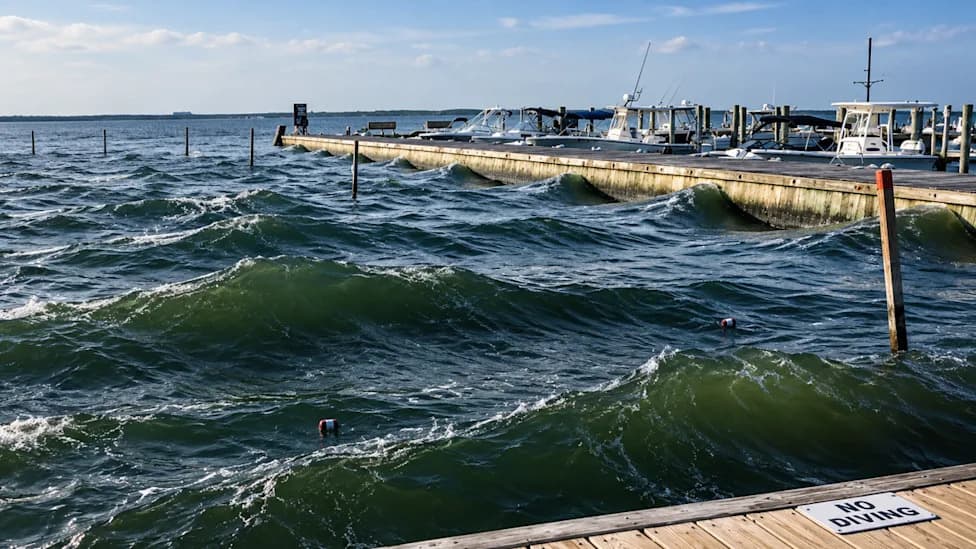
The hydraulic feature resembles a standing wave: fast-moving water meets slower water or a physical obstruction and continuously piles upward in essentially the same location. While the dramatic footage invites superlatives — some have playfully called it the "world's largest standing wave" — there is no formal global measurement for such a title, and authorities do not catalogue standing-wave records.
Safety Note: The volume and energy on display make this surge extremely hazardous. While extreme-sports riders have taken on dam-generated waves elsewhere, Tarbela's scale and force make attempting to ride this feature dangerously inadvisable.
Extreme-Sports Context
Surfers and bodyboarders have ridden spillways and engineered waves before — from swollen river mouths to dam runoffs — and personalities like Jamie O'Brien have built careers on tackling unconventional surf. Still, Tarbela's combination of height, flow rate and engineered structures puts it in a different category: spectacular to watch, perilous to approach.
This report is based on viral footage and WAPDA's public numbers from the 2026 flood season. The footage itself is undated and cannot be conclusively tied to the specific spillway operation WAPDA described.
Originally published by Surfer on Sep 16, 2026; republished here with added context and unit conversions.
Help us improve.