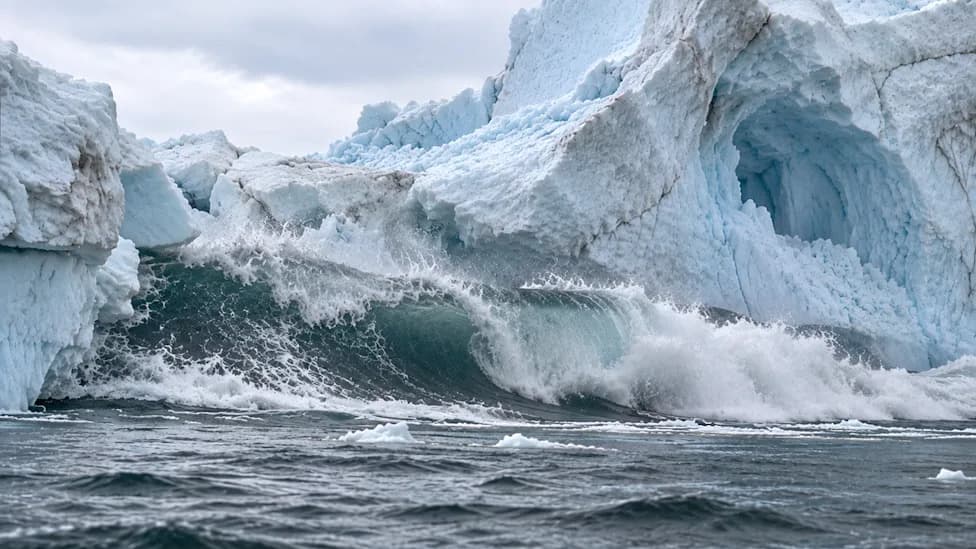
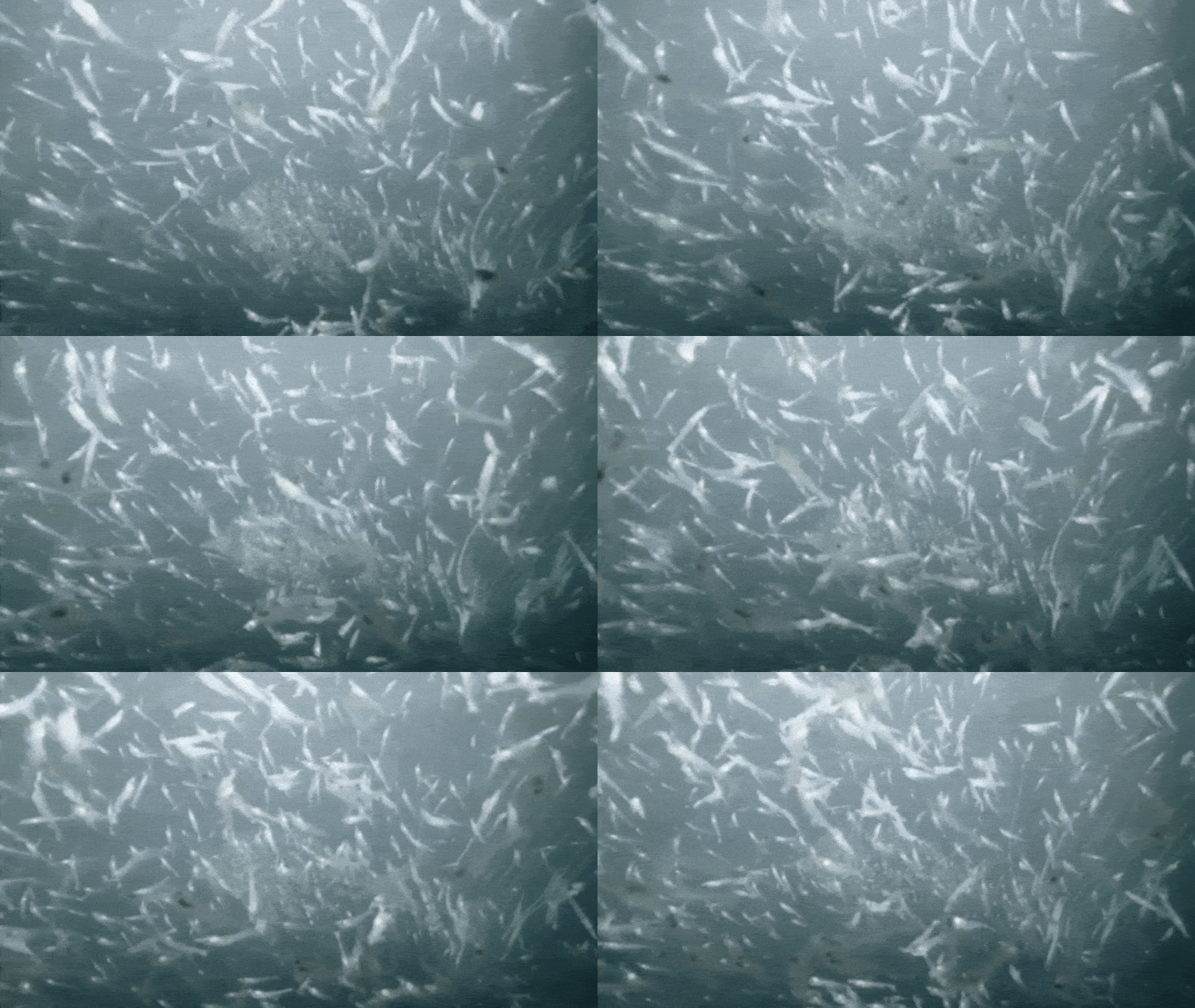
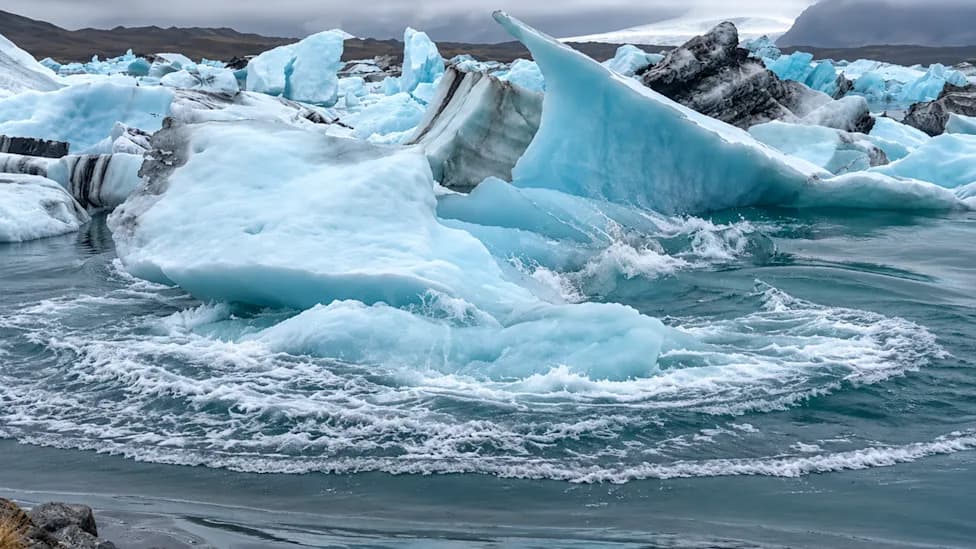
A dramatic video from Iceland shows a large iceberg shooting upward from below the surface, rolling over and launching a slab of ice while generating small tsunami-like waves across a lagoon. Scientists attribute such events to submarine calving ("basal bergs") and subsequent capsizing, processes documented by the National Park Service and the U.S. Geological Survey. Researchers in the Annals of Glaciology note that the rapid redistribution of mass during a capsize can produce powerful surface-gravity waves. While some surfers have chased glacier-generated waves, these unpredictable events are dangerous for anyone nearby.
Giant Iceland Iceberg Surges Up, Capsizes and Sends Mini-Tsunami Across Lagoon (Video)
Giant Iceland Iceberg Flips and Hurls a Mini Tsunami at Shore (Video)
A dramatic video from Iceland captures a massive iceberg suddenly thrusting upward from beneath the water, rolling onto its side and flinging a slab of blue-white ice skyward. As the berg completes its slow-motion flip, water cascades off its newly exposed face and a series of small, tsunami-like waves radiates across the lagoon.
What the Video Shows
The clip shows the submerged portion of a glacier breaking away and rapidly rising to the surface, then rotating and dumping a large amount of ice and water back into the lagoon. Observers can clearly see the upward surge, the somersaulting motion of the berg and the pulse of waves that spread outward from the impact.
Why This Happens
One likely cause is submarine calving, when an underwater section of a glacier detaches and buoyancy forces it explosively toward the surface. The National Park Service uses the term "basal bergs" to describe pieces of glacier ice that "rise suddenly and unexpectedly," sometimes emerging "explosively, without warning at the water surface."
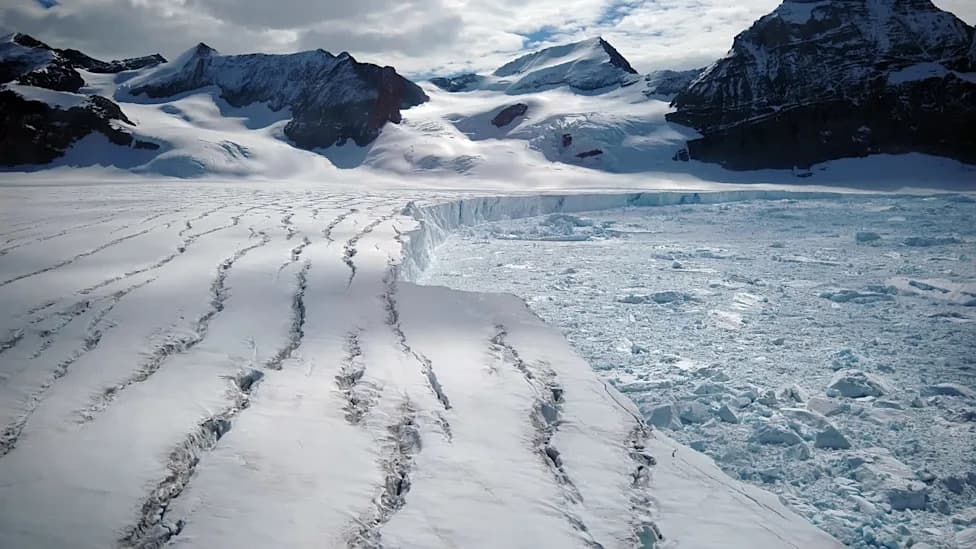
The U.S. Geological Survey has described similar events at Alaska's Columbia Glacier, noting ice that "broke free from under the water and shot to the surface," spinning as it rose. Researchers writing in the Annals of Glaciology explain that newly calved bergs often capsize while seeking a more stable orientation; that abrupt redistribution of mass releases gravitational energy and can generate "large-amplitude surface-gravity waves known as tsunamis."
Hazards And Human Interest
Although surfers have chased glacier-generated waves—most famously Garrett McNamara and Kealii Mamala on waves reported up to 25 feet—this footage highlights the danger of being near unpredictable calving events. The sudden upward thrust and capsizing of an iceberg can produce powerful, short-lived waves and hurl large chunks of ice without warning.
Bottom line: Iceberg calving and capsizing are dramatic natural events driven by buoyancy and shifting mass. They can create local, tsunami-like waves and are hazardous to anyone nearby.
Related Coverage
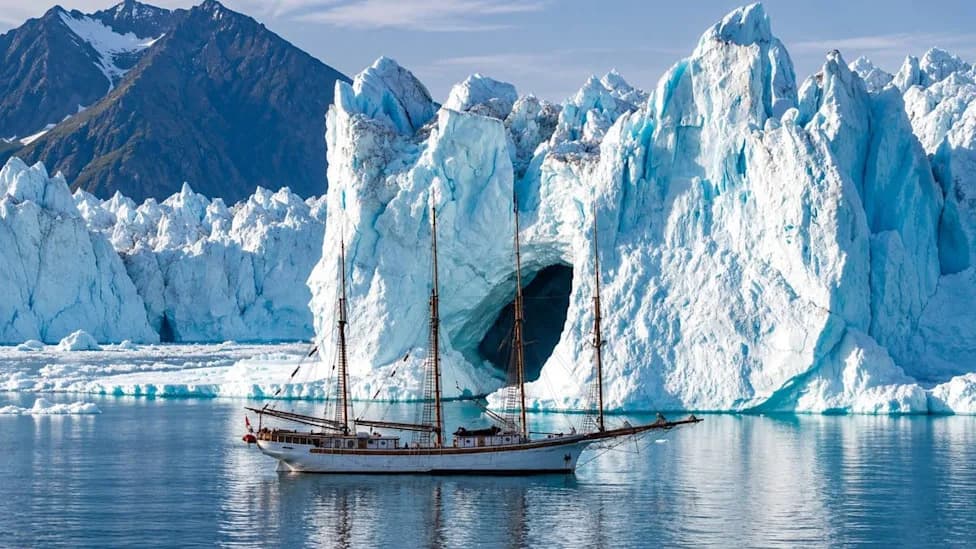
This footage mirrors other dramatic glacier collapses, including incidents in Greenland that generated large waves and endangered boats and observers. The original story appeared on Surfer.
Note: Video footage referenced in this report shows the event but is not embedded here.
Help us improve.