Rybrevant (amivantamab-vmjw) plus chemotherapy produced a median overall survival of 34.3 months vs 27.9 months with chemotherapy alone in the Phase III PAPILLON trial for EGFR exon 20 insertion NSCLC. A prespecified crossover-adjusted analysis showed a 43% reduction in the risk of death, despite 76% crossover from the chemotherapy arm. Safety was consistent with prior studies (most common TEAEs: paronychia, neutropenia and rash), and these OS data build on earlier PFS gains reported in October 2023.
Rybrevant Plus Chemotherapy Achieves Longest-Reported Median Survival in EGFR Exon 20 Insertion NSCLC
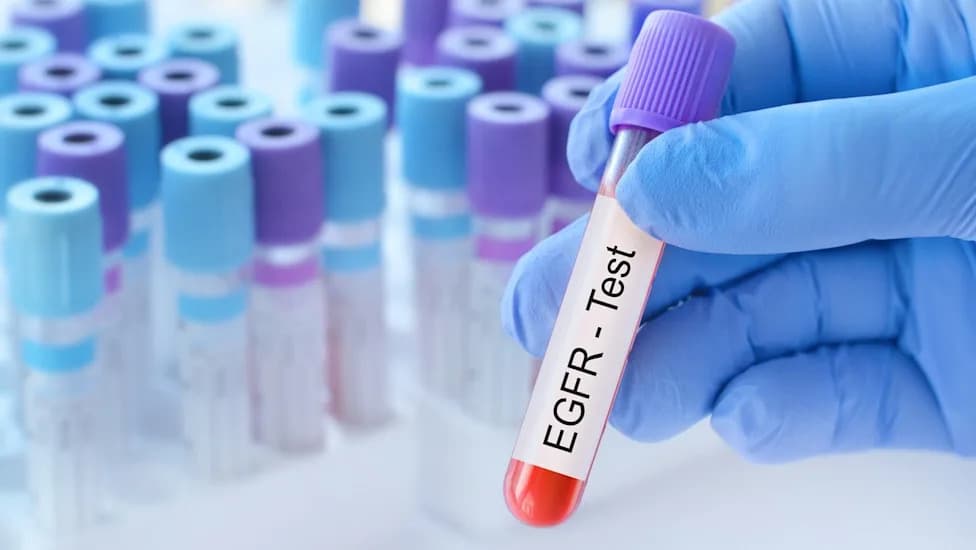
J&J presented the data at the Presidential Symposium at the International Association for the Study of Lung Cancer (IASLC) 2026 World Conference on Lung Cancer (WCLC). Credit: Erman Gunes / Shutterstock.com.
Johnson & Johnson's Rybrevant (amivantamab-vmjw) administered with chemotherapy produced the longest median overall survival (OS) reported to date in a Phase III trial for patients with advanced non-small cell lung cancer (NSCLC) bearing EGFR exon 20 insertion (Ex20ins) mutations.
Key Results From PAPILLON (NCT04538664)
In the Phase III PAPILLON study, patients who received Rybrevant plus chemotherapy achieved a median OS of 34.3 months, compared with 27.9 months for those treated with chemotherapy alone. The survival advantage exceeded six months despite substantial crossover: 76% of eligible patients in the chemotherapy arm subsequently received second-line Rybrevant after progression.
A prespecified analysis that adjusted for crossover reported a 43% reduction in the risk of death for patients randomized to Rybrevant plus chemotherapy. These overall survival data were presented during the Presidential Symposium at the IASLC 2026 World Conference on Lung Cancer (WCLC) in Seoul, 12–15 September.
Durability and Safety
Investigators noted notable durability of benefit, with many patients continuing on therapy years after initiation. The intravenous Rybrevant safety profile in PAPILLON was consistent with prior studies. The most common treatment-related adverse events (TEAEs) included paronychia, neutropenia and rash.
Context and Earlier Findings
These OS findings build on the primary PAPILLON analysis released in October 2023, which met the trial's primary endpoint by showing a statistically significant and clinically meaningful 60% improvement in progression-free survival (PFS). Median PFS was 11.4 months in the triplet arm versus 6.7 months in the doublet arm.
EGFR Ex20ins mutations comprise roughly 12% of EGFR alterations and have historically been difficult to treat with targeted therapies. Historically reported median OS for this population ranged from 16 to 24 months, with five-year survival around 8%—making the current PAPILLON OS data notable in this context.
Regulatory and Market Notes
Johnson & Johnson has secured approvals for Rybrevant in patients with EGFR-mutated advanced NSCLC that include common activating mutations (exon 19 deletions and exon 21 L858R) as well as Ex20ins, for use in first- and second-line settings.
Market analysis from GlobalData—the parent company of Clinical Trials Arena—estimates the NSCLC therapeutics market across the seven major markets (7MM: US, France, Germany, Italy, Spain, the UK and Japan) was valued at $24.1 billion in 2022 and is forecast to reach $56.5 billion by 2032 (CAGR 8.9%).
Study Quote: Dr Chul Kim, director of thoracic oncology at MedStar Georgetown University Hospital and a PAPILLON investigator, said: "We've come a long way in treating EGFR Ex20ins-positive lung cancer, and these results demonstrate the lasting impact RYBREVANT plus chemotherapy can have in helping patients live longer. Patients are continuing treatment years after they started, which speaks to the durability of this approach and its value as a first-line treatment for this disease."
Overall, PAPILLON's OS results mark an important advance for a historically hard-to-treat subgroup of EGFR-mutant NSCLC and will inform clinical decision-making for first-line therapy in patients with Ex20ins mutations.
Help us improve.