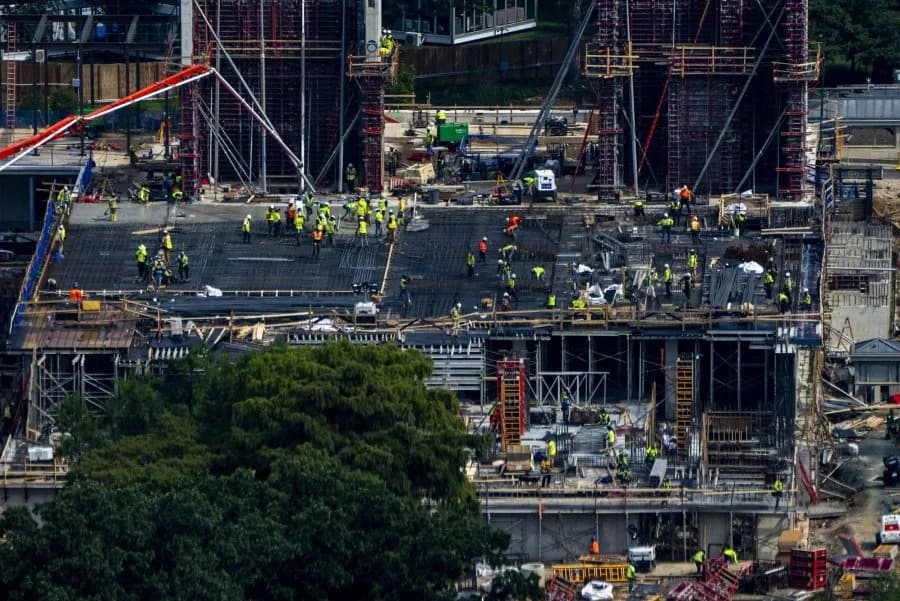
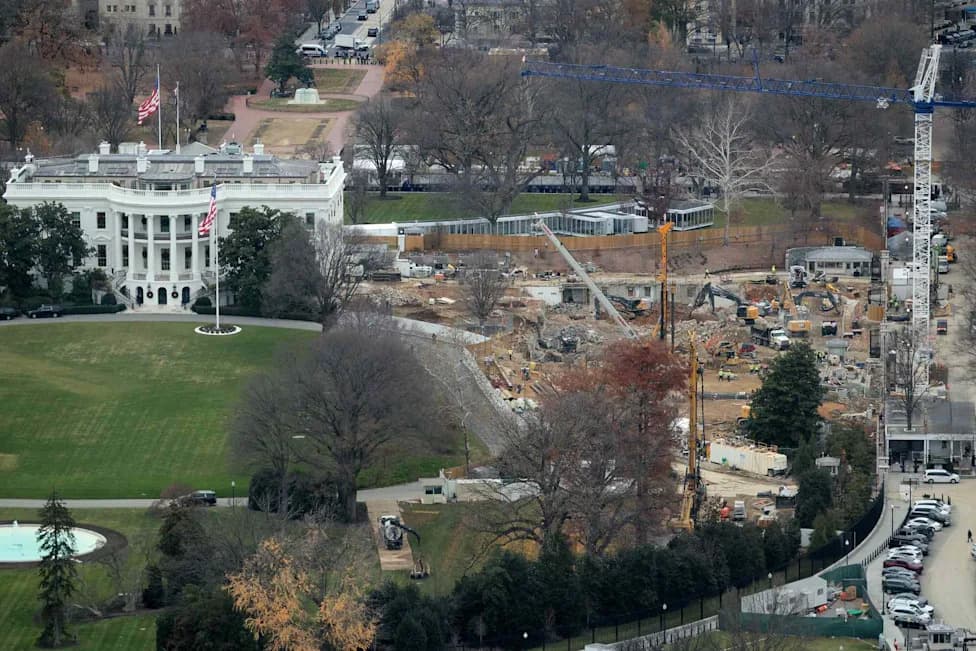
President Trump released interior renderings of a planned 90,000-square-foot White House ballroom showing an ornate, gold-dominated neoclassical design. The ballroom replaces the East Wing, demolished last October, and has provoked backlash from preservationists and legal challenges over whether the administration required congressional approval. The Supreme Court allowed construction to proceed in late August, though Chief Justice John Roberts joined liberal justices in dissent, calling the work "likely unlawful." Costs have surged from an initial $200 million estimate to at least $400 million, and reporting indicates more than $350 million in federal funds were redirected to the project despite claims of private funding.
Trump Unveils Lavish Interior Renderings of Controversial New White House Ballroom
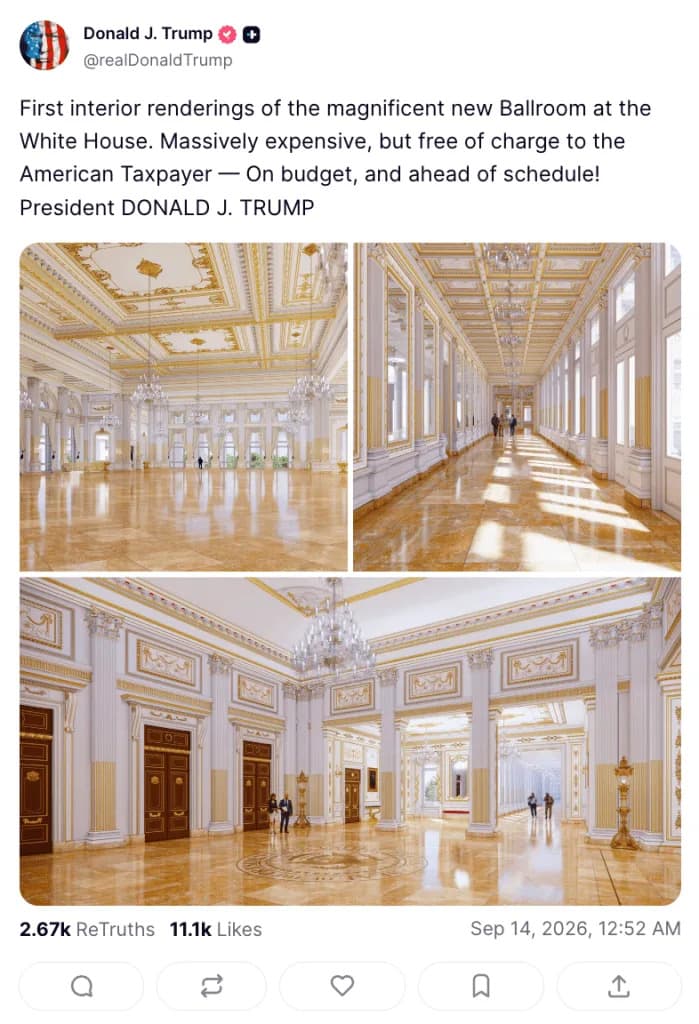
President Donald Trump shared three renderings of the new White House ballroom on Sunday.
President Donald Trump has released the first interior renderings of a proposed 90,000-square-foot White House ballroom, depicting an opulent, gold-heavy neoclassical space. The visuals — shared on Truth Social — show a main ceremonial room with crystal chandeliers, gilded ceilings and a golden marble floor, approached via a long, formal corridor.
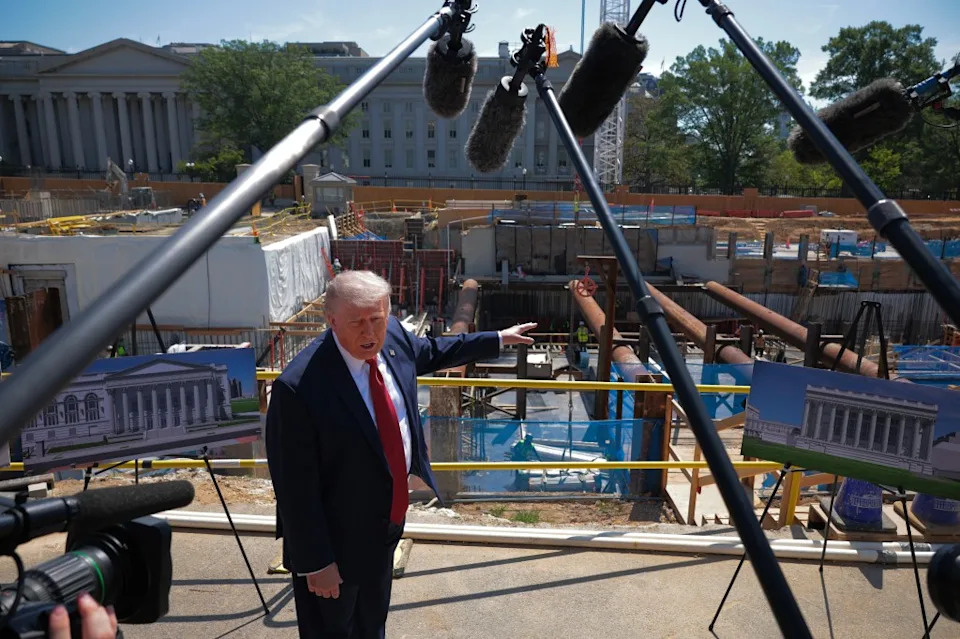
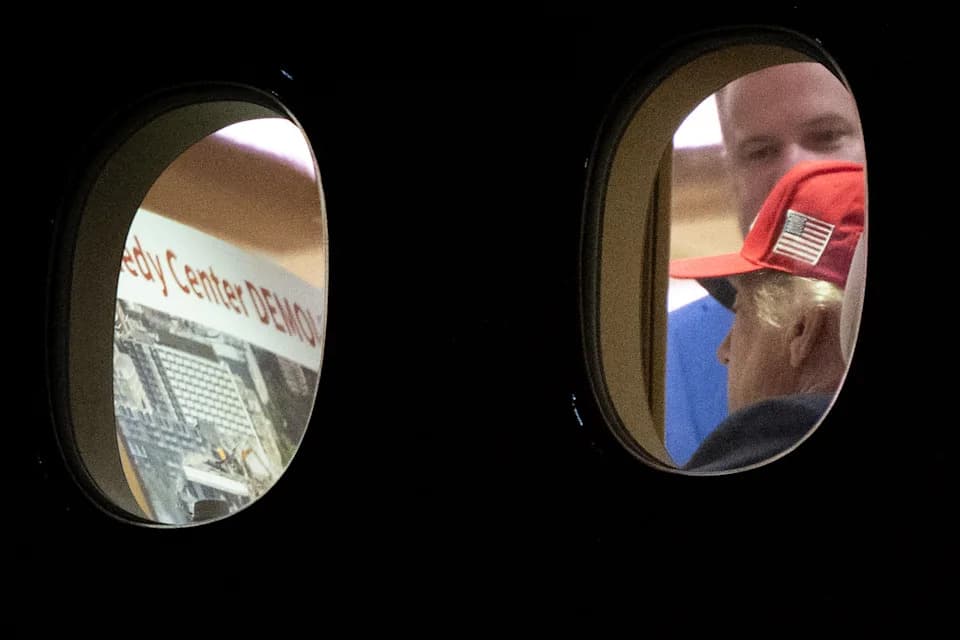
President Donald Trump speaking next to the ballroom construction site in Washington, D.C., in May.
Design, Demolition and Public Backlash
The ballroom is planned to replace the East Wing, which was demolished last October despite earlier assurances from the administration that new construction would not affect existing structures. That demolition prompted criticism from historians, preservationists and members of the public concerned about the loss of historic fabric.
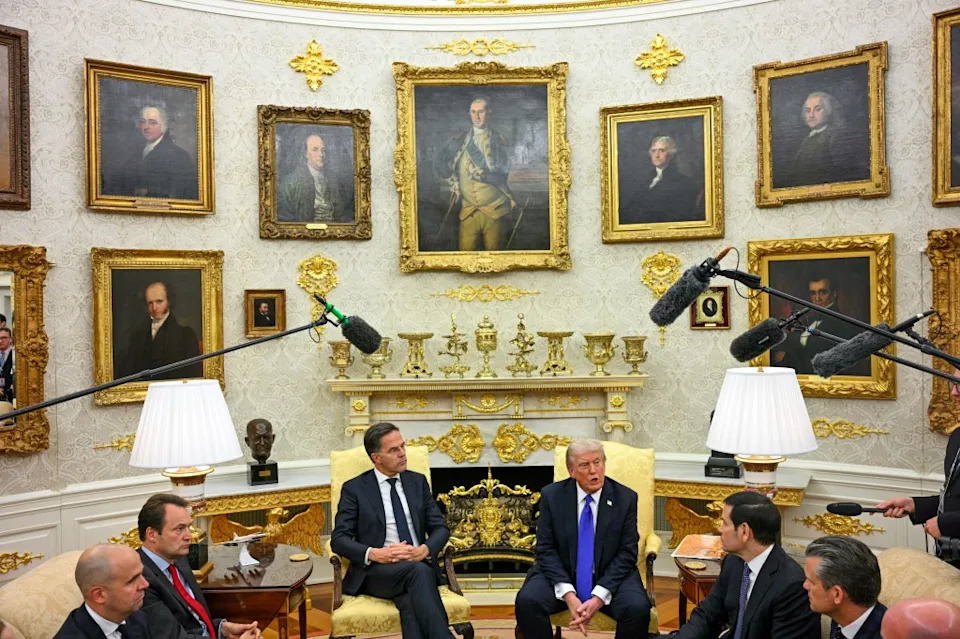
U.S. President Donald Trump meets with NATO Secretary General Mark Rutte in the Oval Office of the White House in Washington, D.C., on October 22, 2025.
Legal Battle and Supreme Court Decision
The project became the subject of litigation over whether a president may alter historically significant grounds without congressional approval. In late August, five justices of the U.S. Supreme Court voted to allow construction to continue, temporarily blocking lower-court injunctions that had halted work. Chief Justice John Roberts joined the court's three liberal justices in dissent, warning that "construction is likely unlawful" because it lacked congressional authorization.
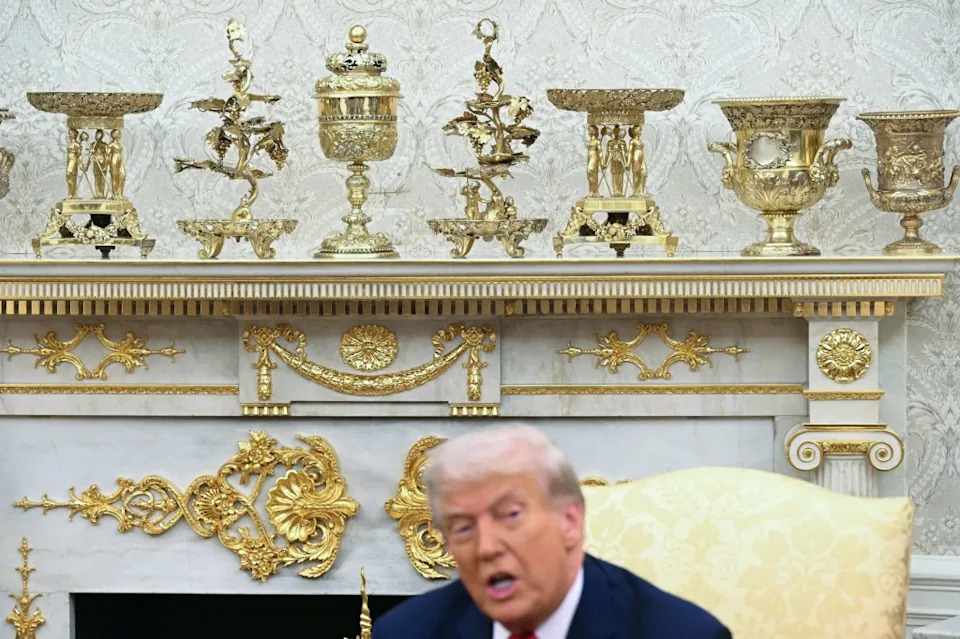
Gold-colored ornaments and decor are seen as U.S. President Donald Trump speaks in the Oval Office of the White House in Washington, D.C., on September 25, 2025.
Costs and Funding Controversy
Costs have ballooned since the administration announced the ballroom in July 2025: the initial $200 million estimate rose to $400 million, and some estimates now exceed $600 million. While the White House has repeatedly stated the project will be funded entirely by private donors, reporting in June indicated the administration redirected more than $350 million in federal funds originally earmarked for the Secret Service to the ballroom.
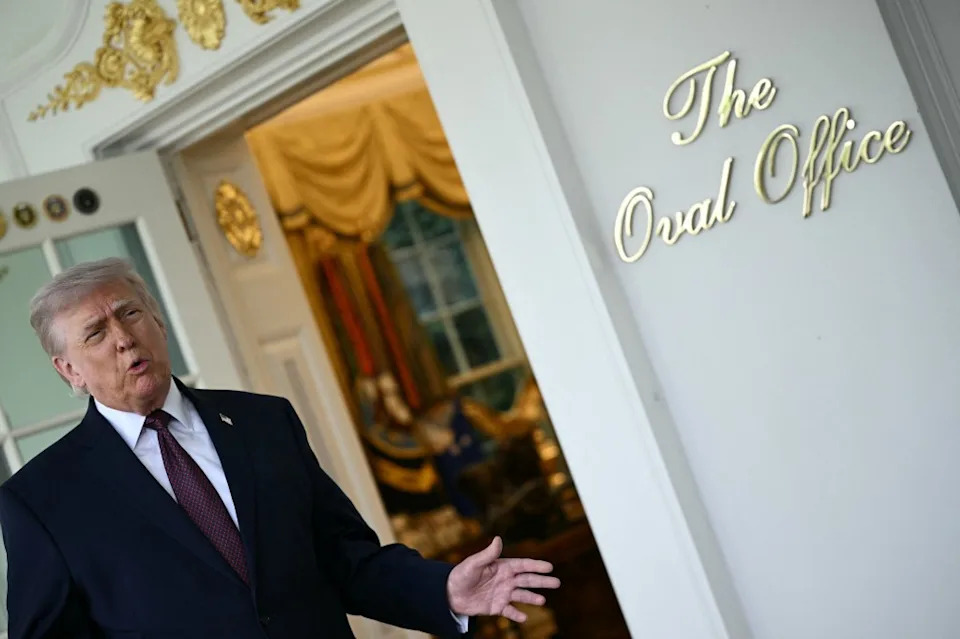
U.S. President Donald Trump speaks to the press outside the Oval Office of the White House in Washington, D.C., on April 13, 2026.
House Minority Whip Katherine Clark released a project summary saying Clark Construction informed the White House on March 5 that the total had risen to $600 million, with $293 million coming from "private sources." The summary identified additional taxpayer-funded sources as $155 million from the Secret Service, $149 million from the White House Military Office and $3 million from the Executive Residence.
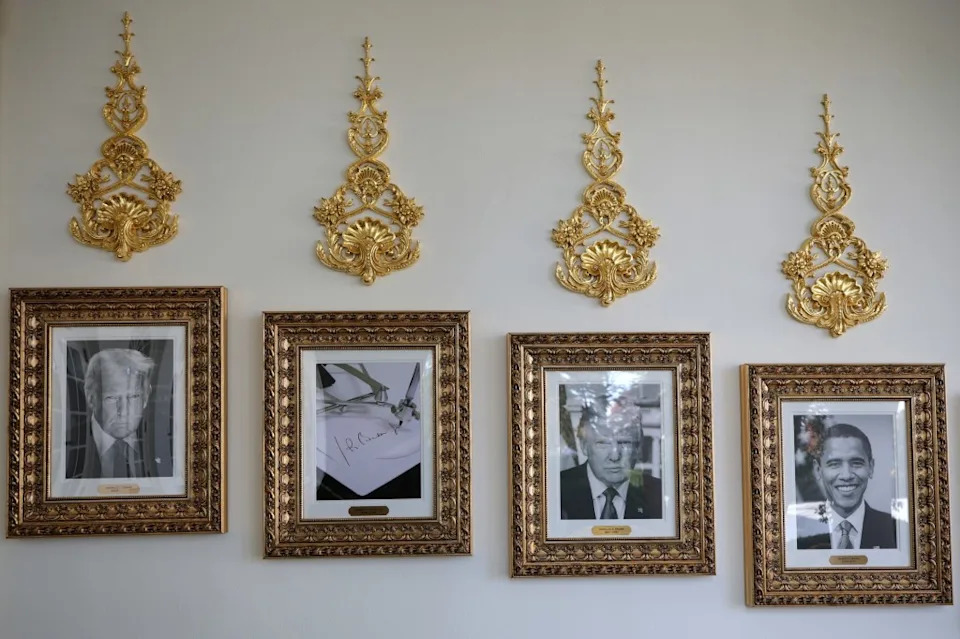
Framed portraits of U.S. Presidents Donald Trump and Barack Obama flank an image of President Joe Biden's signature and an autopen along the Presidential Walk of Fame on the wall of the colonnade outside the Oval Office of the White House on October 30, 2025, in Washington, D.C.
Administration Statement and Rationale
"First interior renderings of the magnificent new Ballroom at the White House. Massively expensive, but free of charge to the American Taxpayer—On budget, and ahead of schedule!" — President Donald Trump, Truth Social
The president has defended the project as necessary to host state dinners and gatherings larger than the East Room's roughly 200-person capacity, and has framed the ballroom as a national-security and diplomatic asset. He described the planned space as "the GREATEST of its kind anywhere in the World" and called it a gift from private donors and "other American Patriots."
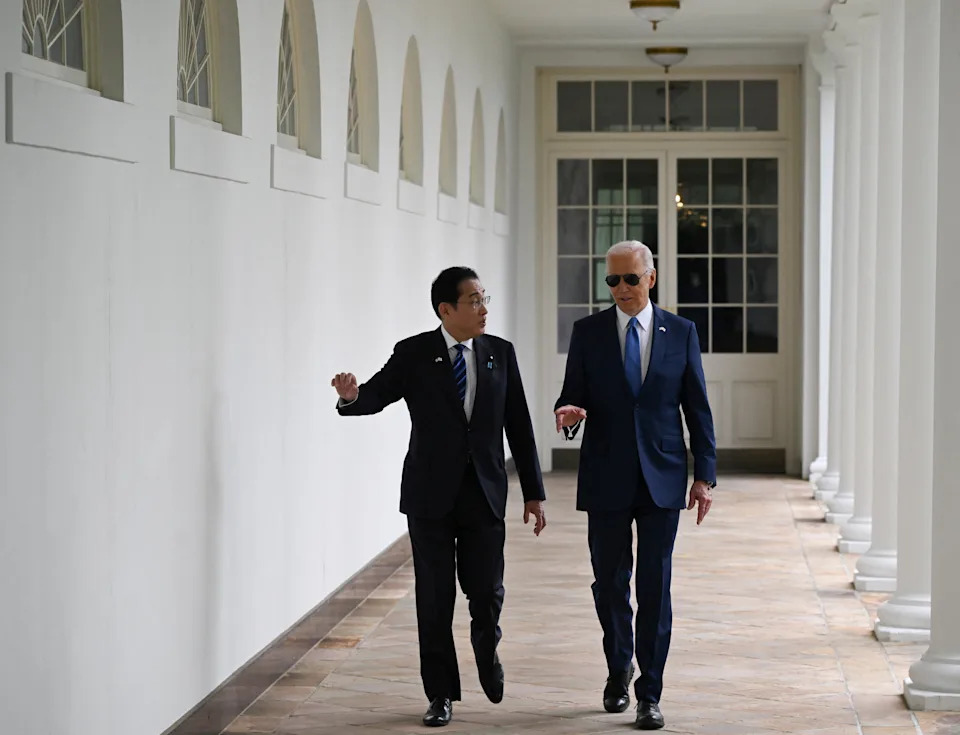
U.S. President Joe Biden and Japanese Prime Minister Fumio Kishida walk along the colonnade of the White House in Washington, D.C., on April 10, 2024, left, and framed portraits of U.S. presidents hang along the wall of the colonnade under the words "The Presidential Walk of Fame" in gold lettering on November 6, 2025. |Andrew Caballero-Reynolds/AFP via Getty Images; Andrew Harnik/Getty Images
Broader Redecoration of the White House
The renderings are part of broader interior changes introduced since Trump's return, including expanded gilding across the Oval Office, a revised West Wing colonnade now dubbed the "Presidential Walk of Fame," marble floors in the Palm Room, additional portraiture in the Cabinet Room and a paved patio in the Rose Garden. Photographs and reporting from 2024–2026 highlight the administration's preference for heavy gold ornamentation and palatial white-and-gold schemes.
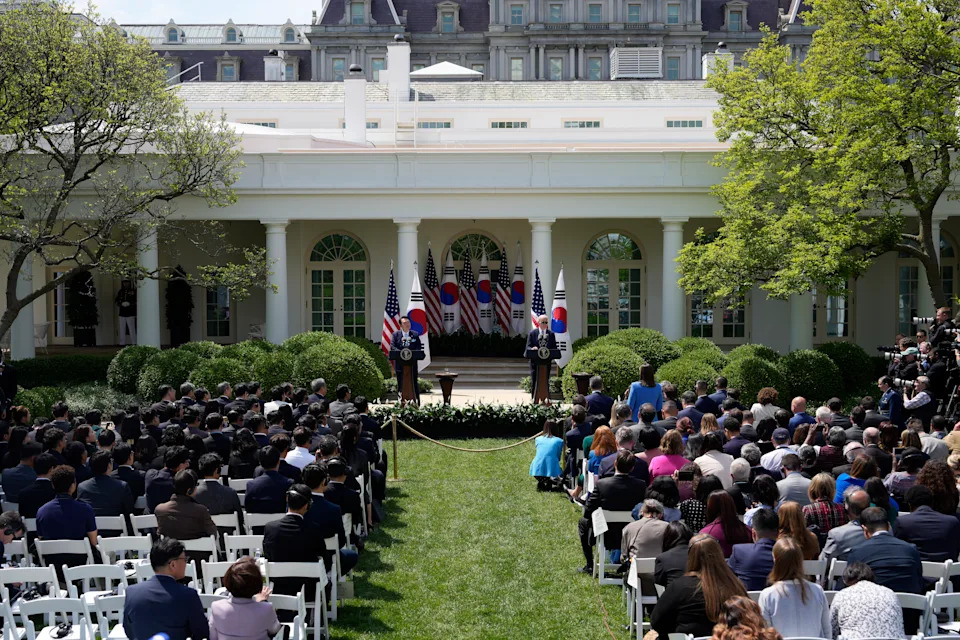
U.S. President Joe Biden and South Korean President Yoon Suk-yeol hold a joint press conference in the Rose Garden at the White House on April 26, 2023, in Washington, D.C., left, and staff set up for a dinner hosted by U.S. President Donald Trump in the newly renovated Rose Garden on September 5, 2025. |Drew Angerer/Getty Images; Kevin Dietsch/Getty Images
Implications: The project raises questions about presidential authority over historic federal property, transparency in funding, and preservation of national heritage — issues that helped trigger public debate and ongoing legal scrutiny.
Help us improve.