This article explains how Germany's Federal Constitutional Court (FCC) operates, based on interviews with Professors Susanne Baer and Christoph Möllers. The FCC has 16 justices in two senates, appointed by Bundestag and Bundesrat with two-thirds majorities for 12-year terms. It handles about 10,000 constitutional complaints a year, can ban parties, resolve federal–state conflicts, and has issued landmark rulings on the budget, climate policy and EU law. The court emphasizes consensus, enjoys broad public trust, and wields significant institutional power through reasoned remedies rather than partisan action.
Inside Germany’s Federal Constitutional Court: Power, Process and Landmark Rulings

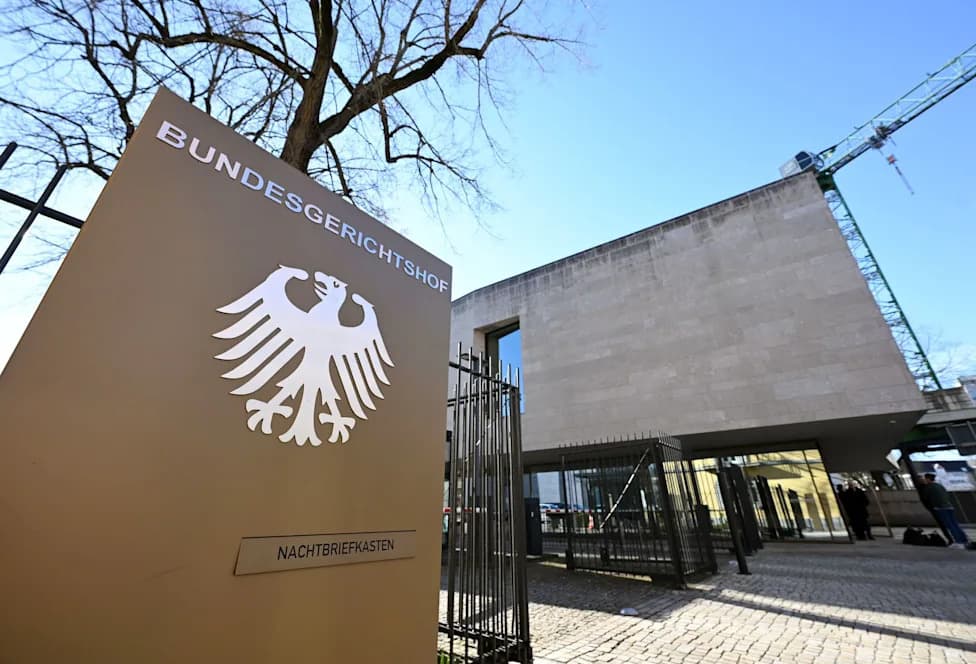
(Uli Deck/Picture Alliance via Getty Images)
Welcome to a detailed look at Germany’s Federal Constitutional Court (FCC), based on a SCOTUSblog interview with Professors Susanne Baer and Christoph Möllers. This article explains where the FCC sits in Germany’s judicial system, how its justices are chosen, how the court decides cases, and the most important recent and historical rulings that show its influence.
Role Within the German Judiciary
The FCC is a specialist constitutional tribunal that decides constitutional questions only: judicial review of legislation, executive acts and judicial decisions under the Basic Law (Grundgesetz). Germany also has several highest courts for other fields (civil/criminal, labour, administrative, social security and tax law), and each federal state maintains its own constitutional court.
Composition and Appointments
The court has 16 justices divided into two senates of eight. Half the justices are elected by the Bundestag and half by the Bundesrat; each election requires a two-thirds majority. This supermajority rule encourages cross-party agreement and often results in candidates proposed by the larger parties but acceptable to the opposition. Justices serve 12-year nonrenewable terms or until the age of 68.
Jurisdiction and Caseload
Formally, the FCC has original jurisdiction, but in practice it receives roughly 10,000 constitutional complaints a year (Verfassungsbeschwerden), most of them against court decisions. The court can also resolve disputes between federal and state institutions, decide on the constitutionality of laws, and rule on removal proceedings for high officials. Certain state actions — for example, a request to ban a political party — can be brought only by the Bundestag, Bundesrat or the federal government.
Decision-Making and Opinions
Cases are allocated according to an organizational plan renewed periodically; a reporting justice prepares the file and drafts opinions with assistance from clerks seconded from the states. Although a simple majority (five of eight) suffices in a senate, the FCC has a strong institutional culture of consensus. Many rulings are unanimous and delivered per curiam; dissents are permitted but relatively rare and have become less frequent over time.
On culture and role: Baer emphasizes that the court seeks consensus and fashions remedies mindful of political realities; Möllers notes the FCC’s institutional, rather than partisan, power.
Major Recent and Historical Rulings
The FCC has shaped German law and politics through a range of high-profile decisions:
- Schuldenbremse (Budget Rule): The FCC struck down a federal budget mechanism, a decision that constrained government finances and contributed to the collapse of a government in 2024.
- Neubauer (Climate Ruling, 2021): The court required the state to consider the freedoms of future generations, prompting legislative changes on climate policy.
- NPD II and Party Regulation: The court rejected a bid to ban the NPD because it lacked the capacity to threaten democracy, but it clarified standards for a "streitbare Demokratie" and helped spur procedures to withdraw state funding from extremist groups (as later applied to "Die Heimat").
- EU-Related Decisions: The FCC has repeatedly confirmed its role as a national guardian of fundamental rights alongside the European Court of Justice and has sought clearer division of review between national and EU courts, including scrutiny of ECB actions.
- Longstanding Controversies: Historical flashpoints include bans on extremist parties, Cold War-era reunification rulings, free-speech limits (e.g., Wunsiedel), protest regulation (Brokdorf), religious expression cases (Kreuz in der Schule, Kopftuch), gender equality and labor rulings (Stichentscheid, Nachtarbeit), and landmark recognition of intersex and trans rights (Dritte Option and related decisions).
Public Perception and Institutional Power
The FCC enjoys high public trust in Germany and is not commonly perceived as partisan. The two-thirds appointment rule and a culture of seeking consensus help protect the court's reputation. Scholars stress that the court is powerful — it shapes public policy through its rulings — but it exercises influence through legal authority and reasoned remedies rather than direct political means.
Takeaways
The FCC combines strong judicial powers with institutional practices designed to build cross-party legitimacy: fixed, nonrenewable terms; a supermajority appointment process; an emphasis on consensus; and a willingness to craft remedies that account for political realities. These features help explain why many Germans view the court as a stable protector of constitutional rights.
Sources: Interview excerpts with Professors Susanne Baer and Christoph Möllers, SCOTUSblog.
Help us improve.