Germany's Federal Court of Justice has referred two privacy disputes to the European Court of Justice to clarify whether the GDPR applies to data shared in private or family contexts. One case concerns a mother recorded in her kitchen whose daughter gave the footage to police; the other involves private chats forwarded to an employer by a former friend. Proceedings in Karlsruhe are suspended pending the ECJ's preliminary guidance on the GDPR versus the household exemption.
German Top Court Asks ECJ To Clarify How Far GDPR Reaches Into Private Life
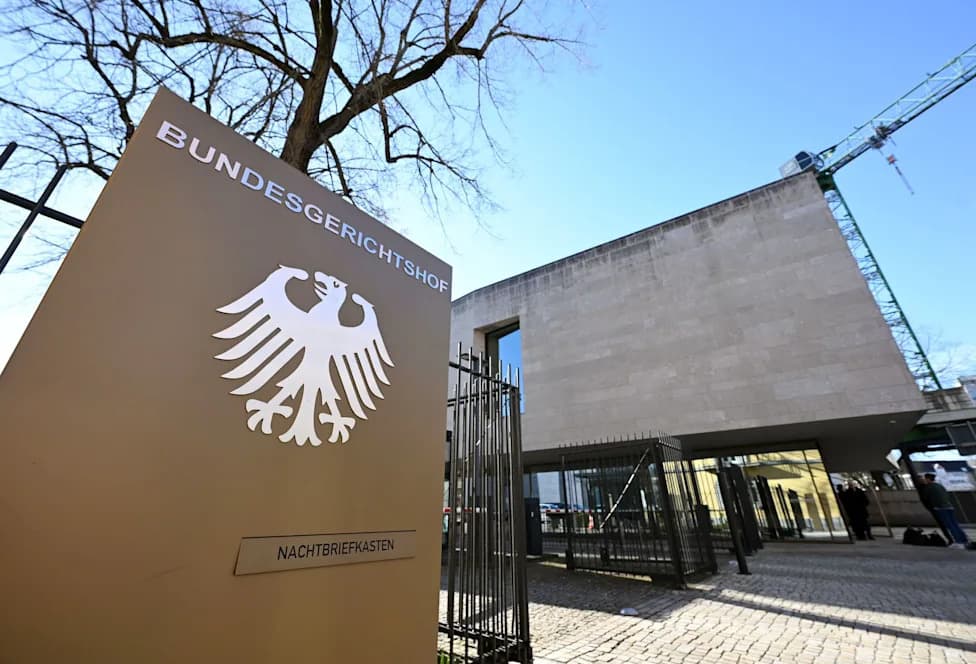
FILE PHOTO - A sign with the federal eagle and the words "Bundesgerichtshof" (Federal Court of Justice), photographed in front of the Federal Court of Justice. (is associated with: «German court asks EU to clarify data protection in private sphere») Uli Deck/dpa
Germany's Federal Court of Justice in Karlsruhe has asked the European Court of Justice (ECJ) to clarify whether EU data protection rules extend into strictly private or family settings. The referral concerns two separate disputes in which relatives or friends passed on sensitive personal information to third parties.
Two Cases Prompting the Referral
The first case involves a mother who sued her daughter after the mother was recorded by a surveillance camera while in her kitchen; the daughter subsequently handed the footage to the police. The second involves a woman suing a former friend who forwarded private chat messages to the claimant's employer following a personal dispute.
Legal Question: GDPR Or Household Exemption?
In a statement, the Karlsruhe court said it had asked the ECJ to determine whether the defendants breached the EU's data protection framework — the General Data Protection Regulation (GDPR) — or whether the incidents fall within the so-called "household exemption."
Household Exemption: EU data protection rules do not apply to the processing of personal data carried out by an individual in the course of a purely personal or household activity.
Both proceedings are suspended while the Luxembourg-based court considers the questions. After the ECJ issues preliminary guidance, the Federal Court of Justice will resume and decide the cases in light of the ECJ's interpretation.
Why This Matters
The ECJ's guidance could help define the boundary between private, family-based actions and those subject to EU data protection law — with implications for domestic recordings, the sharing of personal messages, police inquiries, and workplace disputes. Courts across the EU could rely on the ruling when similar conflicts arise between privacy and the free sharing of personal information within families and social circles.
Help us improve.