A joint DOJ and Education Department probe alleges UC Berkeley School of Law's admissions practices advantaged Black applicants and disadvantaged white and Asian candidates, saying Black applicants had 5.8 times higher odds of admission than comparable white applicants in 2025. Berkeley and Dean Erwin Chemerinsky deny race is used in admissions and say they will provide evidence of compliance. The DOJ cited October 2025 enrollment figures—1,128 students, including 516 white, 293 Asian and 51 Black students—and said it sought a voluntary resolution agreement. The action comes amid broader federal scrutiny of campus diversity and policy issues.
Federal Probe Says UC Berkeley Law Favored Black Applicants; School Denies Bias
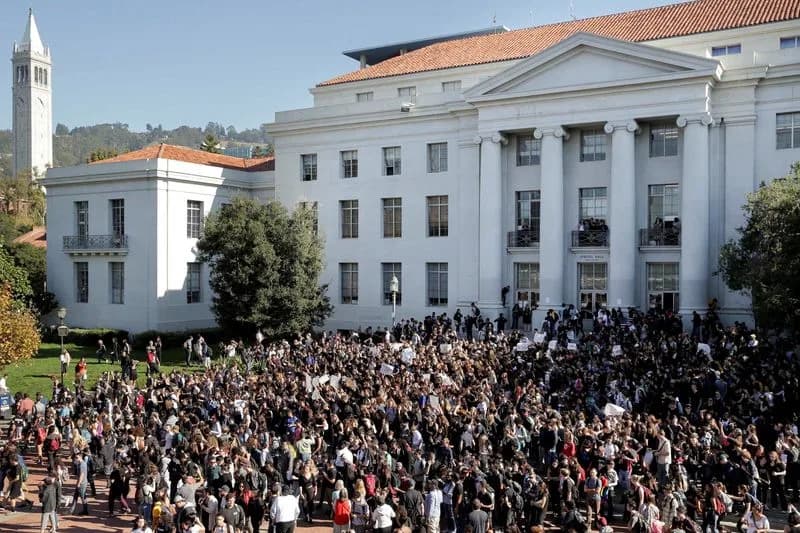
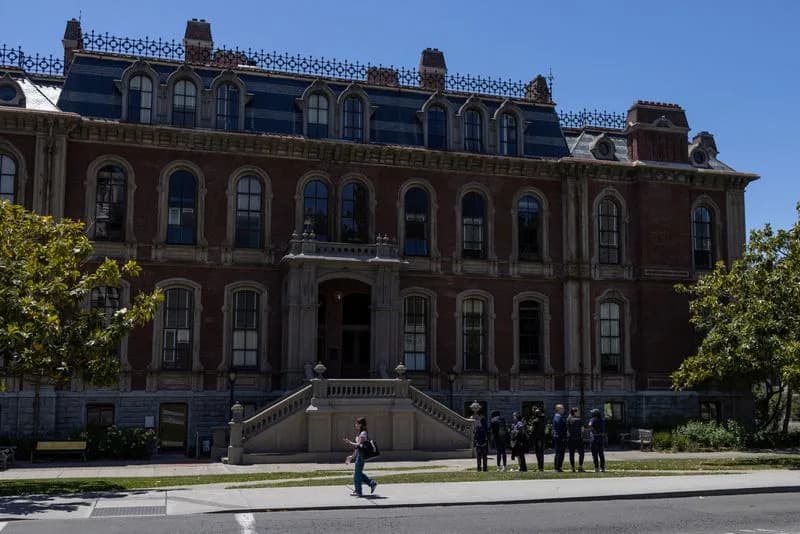
FILE PHOTO: Berkeley High School students assembling in front of Sproul Hall on the UC Berkeley campus in Berkeley, California, U.S. November 9, 2016. REUTERS/Elijah Nouvelage/File Photo
WASHINGTON, Sept 8 (Reuters) - Federal officials on Wednesday said a joint probe by the U.S. Department of Justice and the Education Department found that admissions practices at the University of California, Berkeley School of Law intentionally advantaged Black applicants while disadvantaging white and Asian candidates.
The administration alleged Berkeley Law used race, targeted essay prompts and other tactics to advance its diversity goals. The Justice Department's analysis said Black applicants in 2025 had 5.8 times higher odds of admission than comparable white applicants.
Berkeley Responds
Erwin Chemerinsky, dean of Berkeley Law, said the school's admissions policy "is clear that race is not considered in any way in admissions decisions." UC Berkeley's central administration added the university "will spare no effort to provide ample evidence" that it complies with all applicable laws, policies and rules governing admissions.
Data Cited In The Probe
The law school's October 2025 enrollment figures cited by the probe showed 1,128 students overall: 516 identified as white, 293 as Asian and 51 as Black. The Justice Department said it has sought a voluntary resolution agreement with the law school to address the findings.
Wider Context
The findings are the latest in the Trump administration's broader scrutiny of university diversity programs and other campus policies. Rights advocates argue that diversity initiatives address historic inequities affecting racial minorities, women and LGBTQ communities. The probes follow the U.S. Supreme Court's 2023 rulings that struck down race-conscious admissions at Harvard and the University of North Carolina.
From the government: "The data produced by Berkeley Law demonstrates a strong bias against Asian and white applicants, with a corresponding bias in favor of Black applicants."
The probe is part of a pattern of investigations and funding threats by the administration into campus activism, diversity policies, transgender accommodations and climate programs—moves that have prompted debate about free speech, due process and academic freedom.
Help us improve.