The State Department warns some employment-based green card categories could become unavailable before the fiscal year ends on Sept. 30, with EB-1 India specifically at risk and EB-2 India and EB-5 unreserved India already unavailable. If a category closes, immigrant visas in that category cannot be issued until the next fiscal year, though approved petitions are usually put on hold rather than denied. A separate DHS public-charge rule takes effect Sept. 18, broadening the factors USCIS may consider but not automatically denying applicants who used public benefits.
Green Card Alert: EB-1 India At Risk — Some Employment-Based Categories Could Close Before Sept. 30
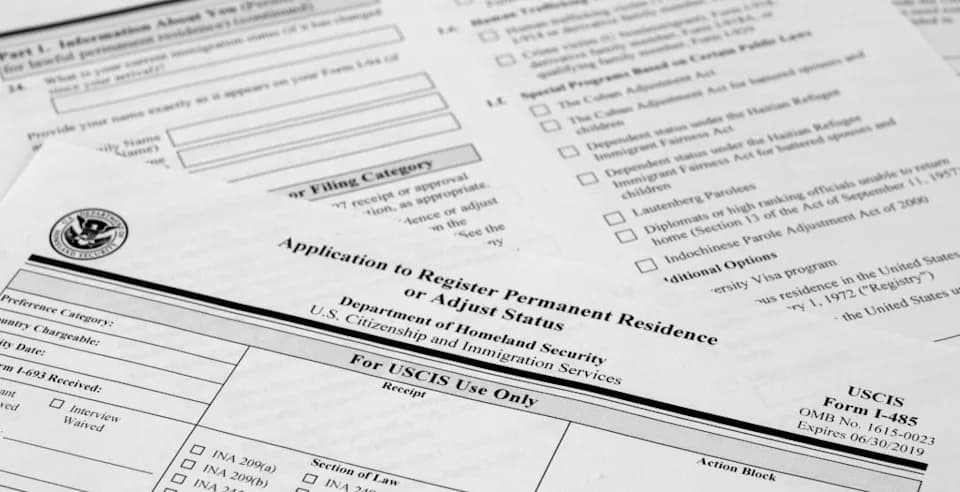
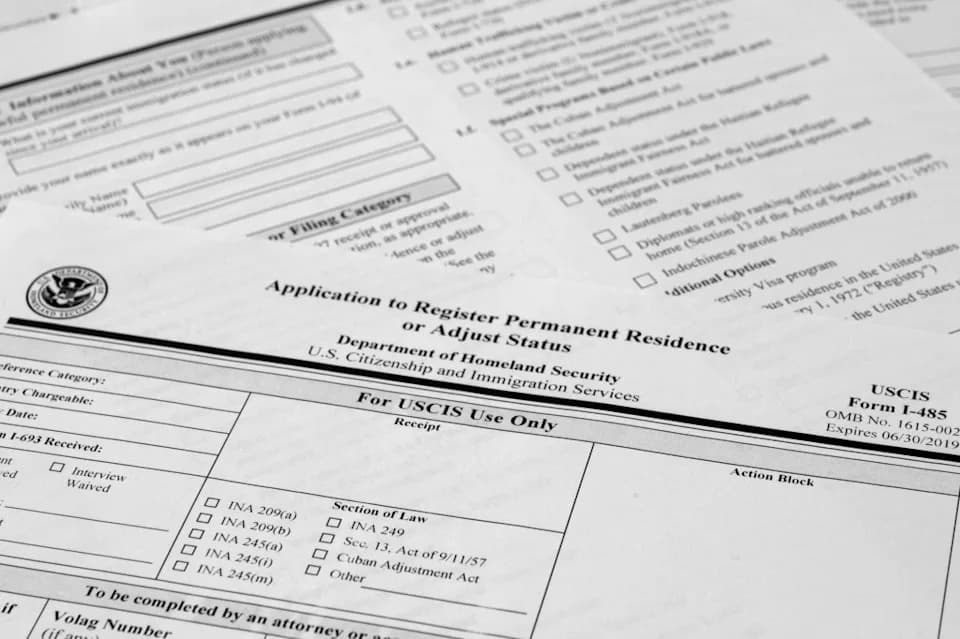
File photo: the Application to Register Permanent Residence or Adjust Status Form I-485 is seen.
The U.S. State Department warns that several employment-based green card categories could become unavailable before the fiscal year ends on September 30, potentially delaying final green card approvals for many applicants. EB-1 India is specifically on notice, while EB-2 India and EB-5 unreserved India are already listed as unavailable.
Which Categories Are Affected
The September Visa Bulletin lists a final action date of October 15, 2022 for EB-1 India, but the State Department cautioned that the category could move to "unavailable" if remaining visa numbers are exhausted before September 30. EB-2 India and EB-5 unreserved India reached their India per-country limits earlier in the year and remain unavailable. Other employment-based categories remain available for some nationalities under the September bulletin but could retrogress or close if demand consumes the remaining allocations.
What Happens When A Category Becomes Unavailable
When an employment-based category is marked "unavailable," U.S. authorities cannot issue additional immigrant visas in that category for the rest of the fiscal year. That does not automatically cancel approved immigrant petitions; rather, most cases are held in limbo until numbers are available again:
- Adjustment of Status (AOS): Cases filed in the U.S. can remain pending until an immigrant visa number becomes available.
- Consular Processing: Applicants outside the U.S. cannot receive an immigrant visa while the category is unavailable, which halts final visa issuance until availability resumes.
Fiscal Year Turnover And Future Availability
The fiscal year ends on September 30 (Fiscal Year 2026), with Fiscal Year 2027 beginning October 1. New annual visa limits begin with the new fiscal year, but cutoff dates will not necessarily revert to earlier levels immediately. Future availability depends on overall demand, annual allocations, and how quickly visa numbers are used.
Immigration attorney Nandini Nair told Newsweek: "For most applicants, the case is not denied or lost—it is put on hold at the finish line until a visa number becomes available again. For applicants who have waited years, sometimes decades, the frustrating reality is that even an otherwise fully approvable green card can be stopped simply because the government ran out of numbers before September 30."
Separate Change: Public-Charge Rule Effective Sept. 18
A separate Department of Homeland Security rule affecting the public-charge ground of inadmissibility takes effect on September 18. The rule applies to Forms I-485 postmarked or submitted electronically on or after that date and expands the factors USCIS officers must consider when assessing whether an adjustment-of-status applicant is likely to become a public charge.
USCIS officers must consider factors including age, health, family status, assets and resources, financial status, and education and skills. For means-tested benefits received on or after September 18, officers may consider "any and all" such benefits as part of a case-by-case assessment of the totality of the applicant's circumstances; benefits received before that date will be judged under the prior, narrower standard.
The public-charge policy affects many family- and employment-based applicants but exempts certain groups, including refugees, asylees, some trafficking and crime victims, Violence Against Women Act (VAWA) self-petitioners, and special immigrant juveniles.
On the changes, Nair emphasized: "The September 18 change does not create an automatic 'benefits equal denial' rule, but it does give USCIS officers a wider lens, and potentially more discretion to examine an applicant's life and finances." She added that applicants should prepare documentation of their finances and benefit history if subject to the public-charge ground.
Practical Takeaway: Applicants and attorneys should track Visa Bulletins closely through the end of the fiscal year, confirm whether a category is listed as unavailable before scheduling final steps, and prepare supporting financial documentation in light of the new public-charge guidance.
File photo: Form I-485, Application to Register Permanent Residence or Adjust Status.
Help us improve.