Researchers from UC Davis and Argentina’s CONICET report that even tiny amounts of plastic can alter the physiology and growth of southern giant petrel chicks. The birds acquire microplastics when adults regurgitate prey contaminated by floating debris, making these seabirds useful sentinels for marine pollution. Findings raise concern about wider impacts on ocean food webs and on coastal communities that depend on healthy seas.
Tiny Plastics, Big Consequences: Study Shows Microplastics Alter Growth of Southern Giant Petrel Chicks
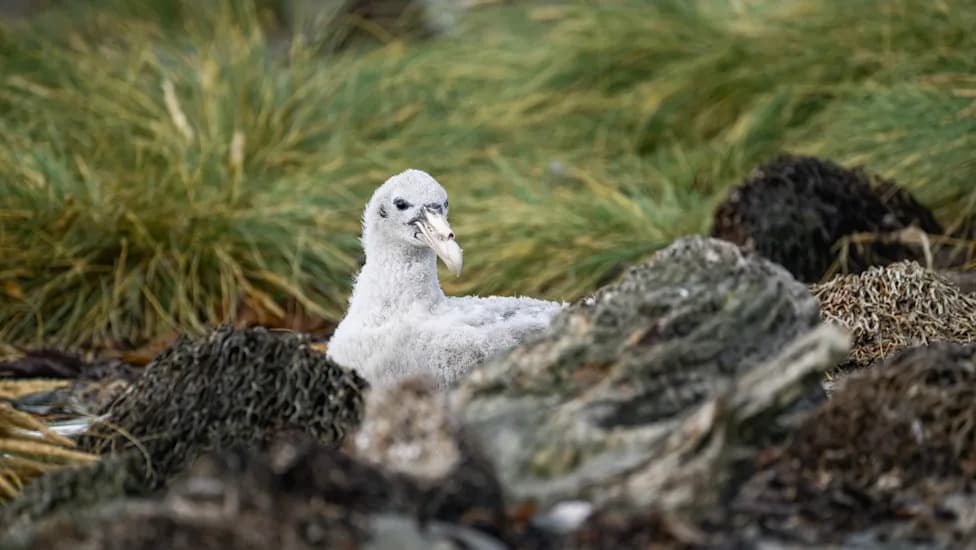
Photo Credit: iStock
New research from UC Davis and Argentina’s National Research Council (CONICET) finds that even very small amounts of ocean plastic can change the physiology and growth of southern giant petrel chicks while they are still developing.
Study Findings
Scientists reported that adult southern giant petrels can unintentionally feed tiny plastic fragments to their chicks via regurgitation. The study shows these low-level exposures are enough to alter chick physiology — a worrying sign that microplastics may interfere with normal development even in species not currently considered globally threatened.
How Chicks Are Exposed
Southern giant petrels feed at the ocean surface, where floating debris and plastic fragments concentrate. When adults bring back prey contaminated with microplastics, chicks can ingest those particles during feeding, creating a direct pathway for contamination from ocean to offspring.
Why This Matters
Seabirds are sentinel species: changes observed in resilient, wide-ranging birds can signal broader harm across marine food webs. If small amounts of plastic disrupt growth in a hardy species like the southern giant petrel, similar or worse effects may be occurring in other seabirds, fish, and invertebrates — with potential consequences for coastal communities that rely on healthy oceans for food, jobs, and storm protection.
Scope of Contamination
The research also highlights how pervasive plastic pollution has become: floating waste is reaching remote regions, including waters connected to Antarctica, and entering the diets of wild animals far from human population centers.
Actions and Solutions
Policy: The findings strengthen the scientific case for policies that reduce plastic at the source — for example, cutting single-use plastics, improving waste collection and recycling, and preventing litter from reaching rivers, ports, and coastlines.
Practical Steps: Communities and individuals can help by choosing reusable products, reducing unnecessary packaging, supporting local cleanups, and backing stronger waste-management systems.
Monitoring: Continued surveillance of sentinel species such as southern giant petrels can help conservationists and policymakers detect emerging trends early and prioritize interventions.
While the exact physiological mechanisms remain under study, scientists point to possible pathways such as inflammation, chemical exposure from plastic additives, and nutritional effects as potential contributors to altered growth.
Help us improve.