The U.S. and regional partners have released more than a billion sterile New World screwworm flies this year to contain a parasite that threatens livestock, wildlife and pets and could cause up to $2.5 billion in damage in the Southwest. Sterile-fly releases are a proven control method, but experts warn production is the bottleneck: officials estimate a need of roughly 400–500 million effective male flies per week while current capacity is well below that. New facilities in Panama, Mexico and Texas, a $100 million Screwworm Grand Challenge and trials of a male-only strain (Novofly) aim to boost output, but it will take months to years to reach target levels.
A Billion Sterile Flies Released — Can Production Keep Up With the Screwworm Threat?
CNN
Scientists in the United States, Mexico and Panama have released more than a billion sterile New World screwworm flies this year as part of an emergency campaign to contain a returning parasite that threatens livestock, wildlife and pets across the region.
What the Screwworm Does
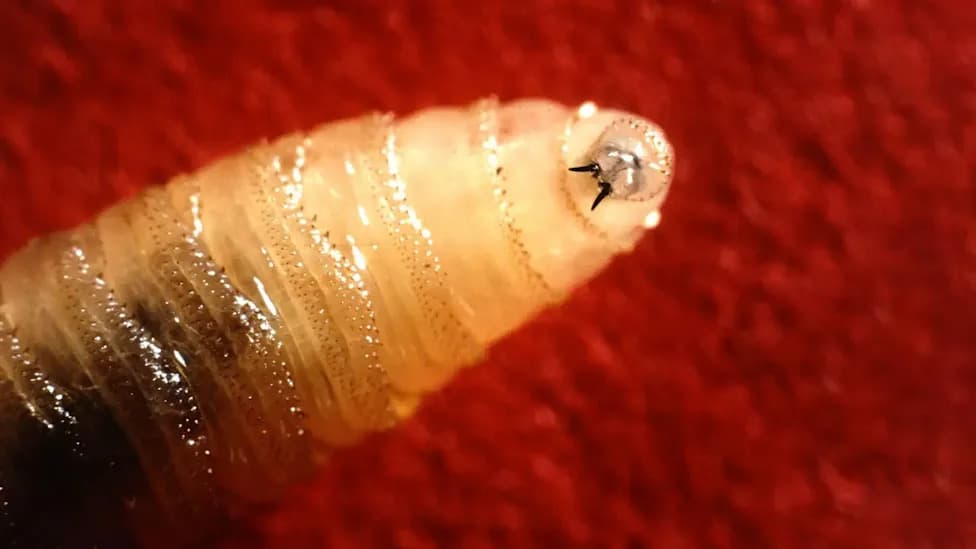
The New World screwworm lays eggs on warm-blooded animals; the larvae then burrow into living tissue, causing painful wounds, infections and in severe cases, death. While the parasite is not primarily a food-safety issue, heavy infestations can disrupt the food supply and inflict serious economic damage—U.S. officials estimate the pest could cause up to $2.5 billion in losses in the U.S. Southwest alone.
How the Outbreak Re-emerged
Decades ago the screwworm was eradicated from the U.S., Mexico and most of Central America. In 2023 the pest breached containment in the Darién Gap — the dense rainforest between Colombia and Panama — and pushed north. Governments across the region responded with traps, sniffer dogs, drone surveillance and large-scale releases of sterile flies. Despite those efforts, thousands of animals in Panama and Mexico were infested, and in June the U.S. Department of Agriculture (USDA) confirmed new cases in the United States.
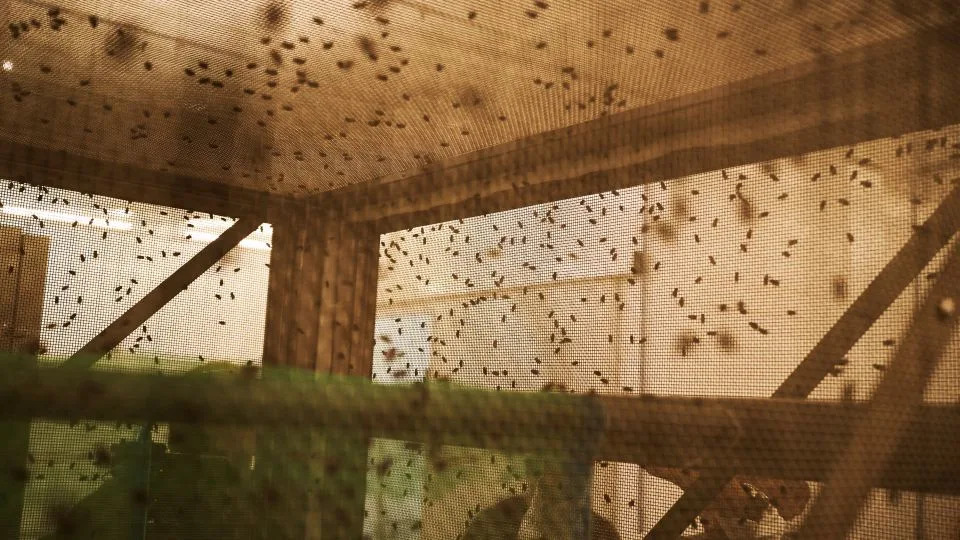
New World screwworm flies are shown during the inauguration of a sterile screwworm fly production facility in Mexico in June. - Mauricio Palos/Bloomberg/Getty Images
Sterile-Fly Releases: The Proven Tool
Releasing sterilized males has been the most effective method historically. Wild female screwworms typically mate only once; if that mating is with a sterile male, the female produces no offspring and the local population declines. Past eradication campaigns used massive weekly releases—about 500 million sterile flies per week in the 1960s and 1970s.
USDA Secretary Brooke Rollins said the administration has ramped up production and emphasized low case counts: "Through this all of federal, state, local, and private rancher effort, we have been able to keep cases in America low with only 48 total — 30 in June, 14 in July, and just 4 cases in August. Right now, we only have three active cases, and not a single case in cattle in over a month."
Production Is The Bottleneck
Experts warn the main constraint is how fast sterile flies can be produced. A single female screwworm can lay up to 3,000 eggs, adults live about 21 days, and new adults can develop in under a week — a combination that enables rapid population growth if releases lag. Entomologist Dr. Dave Taylor, who spent years developing screwworm-control methods with the USDA, cautioned that low case counts could surge if production and reporting fall short. Taylor — an influential figure in the field — died on August 6 at age 71; he had warned publicly this summer about the risk of a rapid rebound.
Current Production and Planned Capacity
Officials say the hemisphere's production capacity is far below historical levels. At capacity, the Panama facility produces roughly 100 million flies per week; a new plant in Chiapas, Mexico is expected to reach a similar output after several months of ramp-up. The USDA began construction of a Texas plant in April that is scheduled to open late next year; projections indicate it could produce 100 million flies per week by the end of 2027 and add another 300 million per week by late 2028. The USDA also announced a $25 million sterile-fly dispersal facility in Arizona, though its timeline remains unspecified.
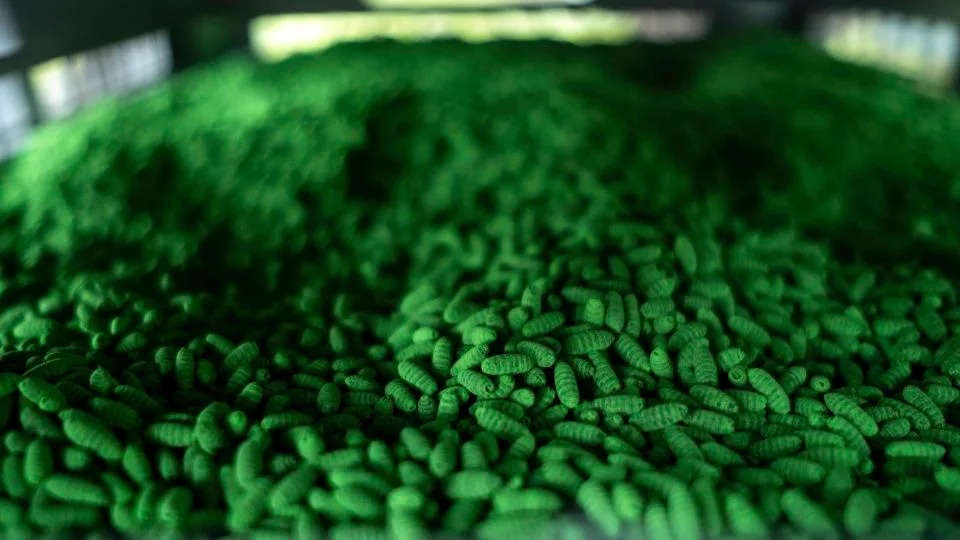
A crate of 80,000 sterile New World Screwworm pupae is installed at Chapparosa Ranch in June in La Pryor, Texas, after the first infestation in the US in decades was reported. The sterile pupae are dyed green to distinguish sterile from non-sterile flies. - Joel Angel Juarez/Getty Images
Even with those additions, shared production with Mexico and Panama and the fact that roughly half of produced insects are sterile females mean effective male output may still fall short of the 400–500 million-per-week benchmark some experts say is needed to suppress the outbreak quickly.
New Technologies: Male-Only Flies and Funding Initiatives
To improve efficiency, the USDA is trialing a genetically engineered male-only line known as Novofly in Panama. Male-only releases would effectively double usable output and reduce interference from sterile females, which can distract released males. Early field-test results have been described as encouraging by USDA officials.
In January the USDA launched a Screwworm Grand Challenge — a $100 million funding opportunity to accelerate innovations that raise sterile-fly production. Nonprofit advocates and researchers say fast-tracking technologies like Novofly and other production advances will be essential to scaling capacity quickly.
Outreach and Remaining Concerns
The sterile-fly program is being combined with wildlife monitoring, animal inspections and outreach to ranchers to encourage regular checks for infestations. Landowners in affected areas have generally welcomed deployments. Still, some experts warn the USDA lacks sufficient tools and scale right now and urge faster adoption of new technologies to avoid a larger, longer-term resurgence.
The coming months will be decisive: ramping plants to full output, validating male-only lines in the field and maintaining vigilant surveillance will determine whether sterile-fly releases can head off a costly and painful return of the screwworm.
Help us improve.