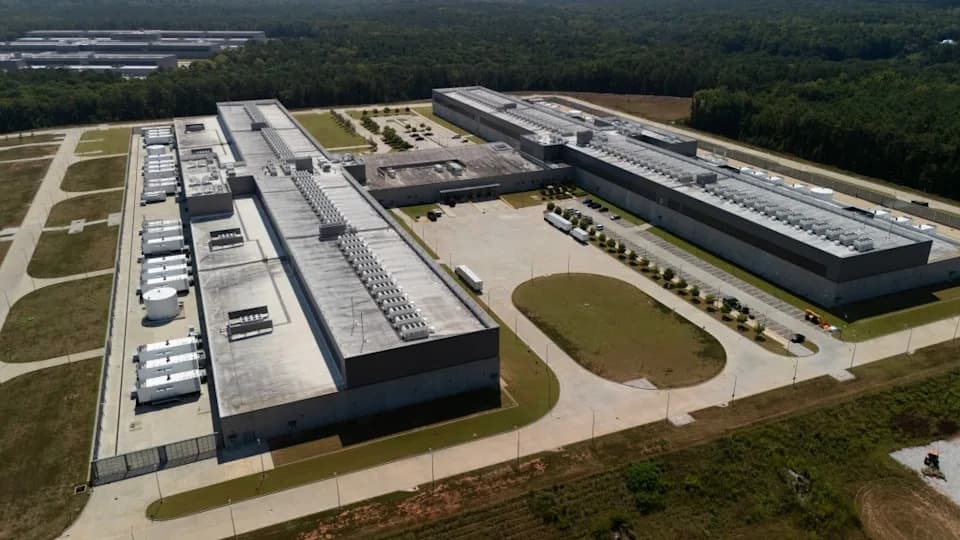
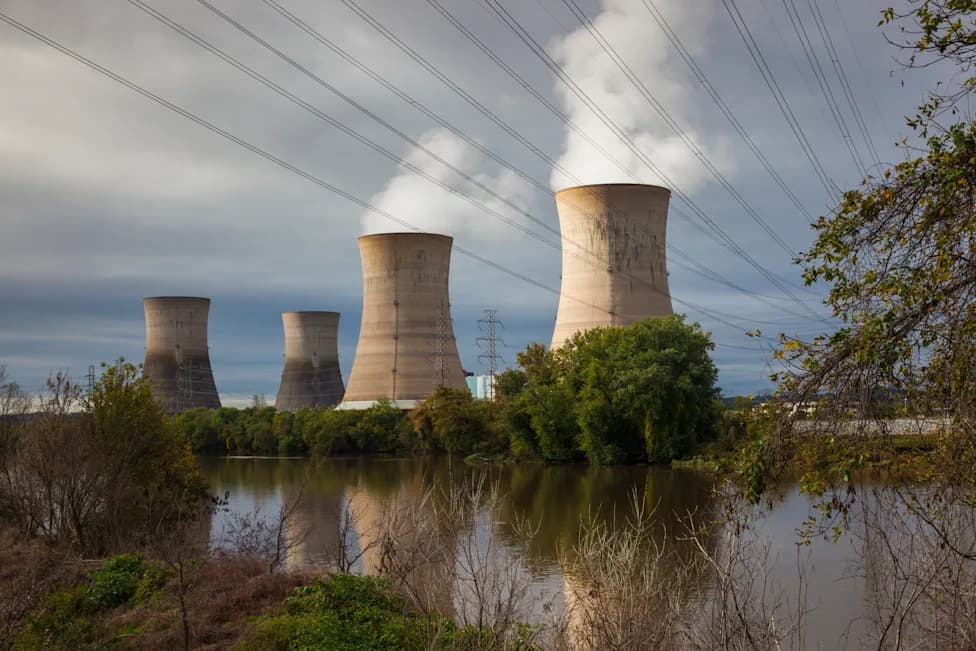
Data centers drive the AI economy but face strong local opposition—often for reasons that are overstated. Hosting communities can reap significant benefits: Quincy, Washington used data center tax revenue to fund major public projects and reduce poverty. Water-use concerns are frequently exaggerated—U.S. data centers account for about 0.14% of national water use and many operators are shifting away from evaporative cooling. Electricity demand is a real issue, but the main barrier is slow permitting and infrastructure constraints rather than the facilities themselves.
Data Centers: Water Use Is Overstated — Local Benefits and Real Infrastructure Challenges Explained
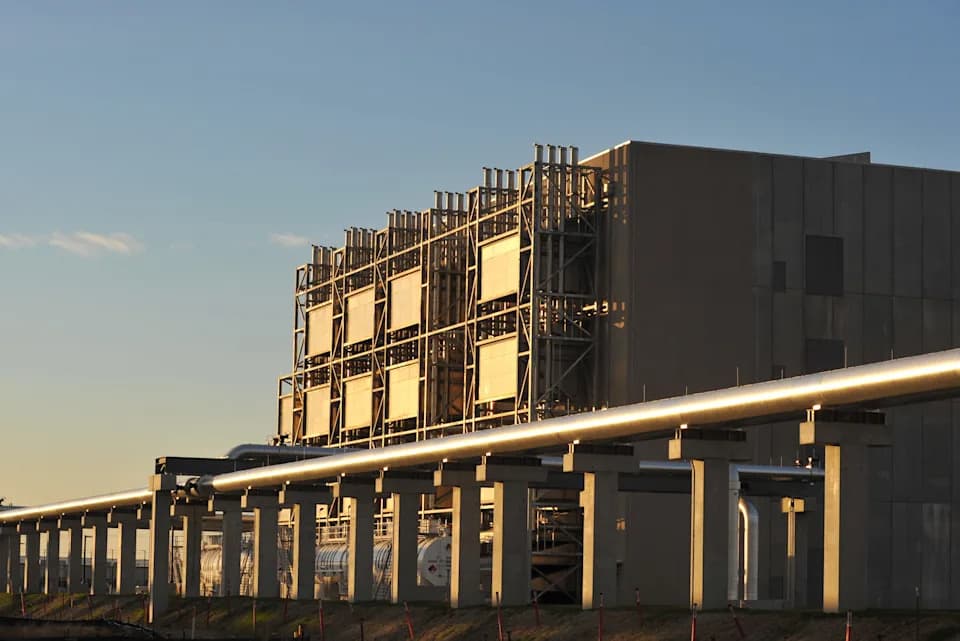
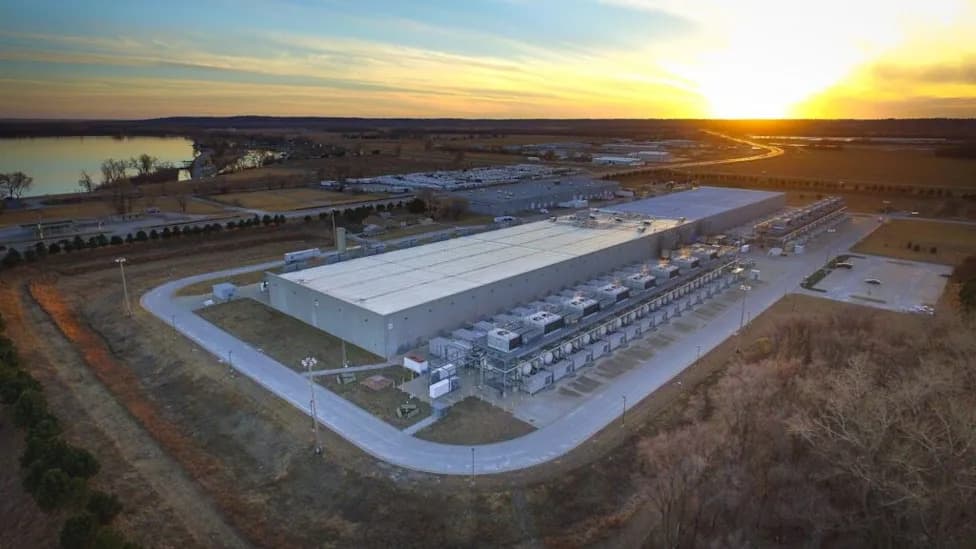
Google's data center in Mayes County, Oklahoma is shown.
Data centers—the vast facilities powering the current artificial intelligence surge—are drawing strong local opposition. A recent Gallup poll found roughly seven in 10 Americans would oppose one being built in their area. Many objections are understandable, but several are based on misunderstandings or overstated risks.
Local Benefits Often Outweigh Fears
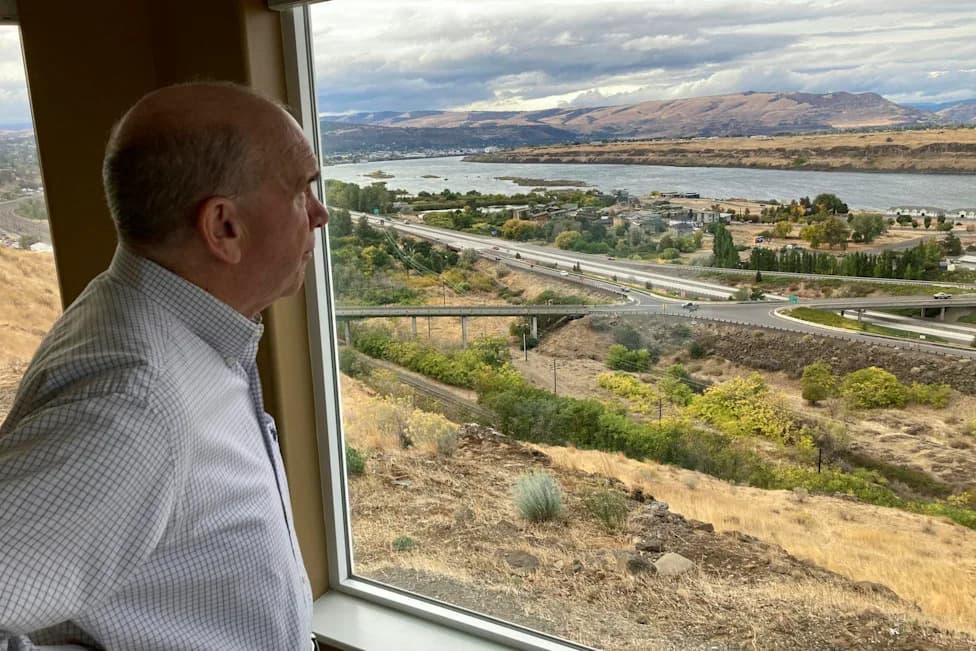
Communities that welcome data centers frequently gain substantial economic benefits. Quincy, Washington, for example, hosts more than two dozen data centers that now contribute over half of the city’s property-tax revenue. That funding helped finance a new high school, a sports complex, a hospital, a library, police and fire stations, a water park, and roughly 900 new jobs; Quincy’s poverty rate dropped from nearly 30% in 2012 to 6.2% in 2024.
Other localities have seen tangible gains: Richland Parish, Louisiana, used increased tax revenue to award teachers $50,000 bonuses, and Loudoun County, Virginia—often called the global data center capital—has used revenue from these facilities to reduce property tax rates. Analysts project U.S. data centers will generate about $27 billion in tax revenue over the next decade. The industry also requires engineers, electricians and construction crews; pay for construction workers on some large projects has risen into six figures amid a “gold rush.”
Why Water Use Is Often Misunderstood
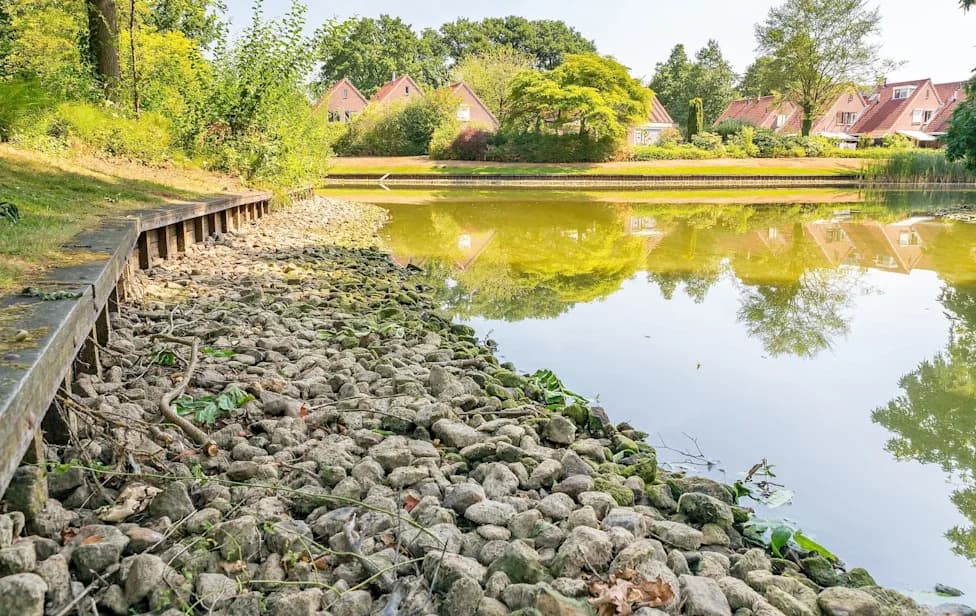
Water use is a frequent concern, but it is commonly overstated. Data centers use water primarily for cooling. Older evaporative cooling systems consume water by evaporating it to remove heat, while closed-loop systems recirculate the same water and dramatically reduce consumption. Currently, about 56% of data centers still use evaporative cooling, but many major operators are shifting to closed-loop or other low-water approaches.
Measured nationally, U.S. data centers account for roughly 0.14% of annual water use—about 449 million gallons per day. By comparison, California almond farms use roughly 4.2 billion gallons per day and golf courses about 1.4 billion. These comparisons help put data center water use into perspective, though local impacts can still matter where water is scarce and must be managed carefully.
Electricity: The Real Challenge Is Infrastructure, Not Just Demand
Electricity demand is the harder issue. Data centers already represent about 4% of U.S. electricity consumption, and some forecasts suggest that figure could approach 12% by 2028. That prospective growth understandably alarms residents in regions where the grid lacks spare capacity.
However, data-center demand is stable and predictable, which can help utilities plan new generation and upgrades. The central problem is often restrictive rules and long permitting timelines that make building generation, transmission and related infrastructure difficult. Regions with surplus power—such as parts of North Dakota—have seen electricity prices hold steady or even fall despite rising data center demand. By contrast, states with strict permitting or other policy constraints can experience higher local costs.
Transmission itself is often relatively inexpensive; it is the permitting, local infrastructure and siting costs that drive up expenses. Communities worried about price increases should push for clearer, faster processes to build the energy resources and grid upgrades needed to serve new demand.
Politics, Polls And Policy Responses
As data centers have expanded, more than 500 U.S. localities have restricted new construction. New York State enacted the first statewide moratorium, and 14 other states have considered similar measures. At the federal level, Sen. Bernie Sanders (I‑Vt.) and Rep. Alexandria Ocasio‑Cortez (D‑N.Y.) have proposed a national moratorium. Politicians are responding to constituent concerns: about half of opponents cite environmental impacts—mainly water and energy use—as their reason for opposing new data centers.
Bottom line: Data centers can deliver large local economic benefits and predictable electricity demand, but responsible siting and faster infrastructure permitting are essential to avoid local harms. Policymakers should focus on enabling the energy and water infrastructure that make these facilities sustainable rather than reflexively banning the projects.
Photograph note: Images associated with the topic sometimes show robotics and AI applications—such as a humanoid robot playing soccer in Shenzhen—to illustrate the broader technology ecosystem.
Author: Dace Potas, law student and opinion columnist for USA TODAY. Follow on X: @DacePotas
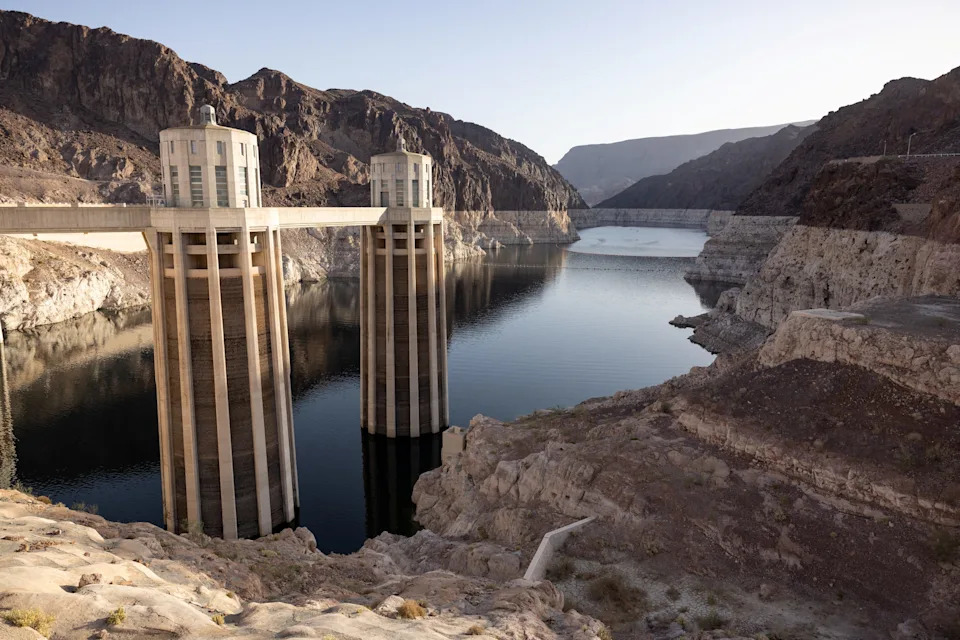
A growing amount of exposed rock is seen near intake tubes at Hoover Dam, where water levels have declined dramatically to lows not seen since the Lake Mead reservoir was filled after its construction, as climate change and growing demand for its water shrink the Colorado River and create challenges, in Boulder City, Nev., April 17, 2022.

Humanoid robot plays soccer on Aug. 5, 2026, in Shenzhen, Guangdong Province, China. The world's first robot 6S offline complex, a physical retail and service center for the robotics industry, is located in Shenzhen, China.(Stringer/Anadolu via Getty Images)

A humanoid robot performs a dance for visitors on Aug. 5, 2026, in Shenzhen, Guangdong Province, China. The world's first robot 6S offline complex is located in Shenzhen. It adapts the automotive 4S dealership model to the robotics industry by offering two core servicesâ"robot leasing and personalized customizationâ"and provides a closed-loop service system covering the entire robot life cycle.(Stringer/Anadolu via Getty Images)
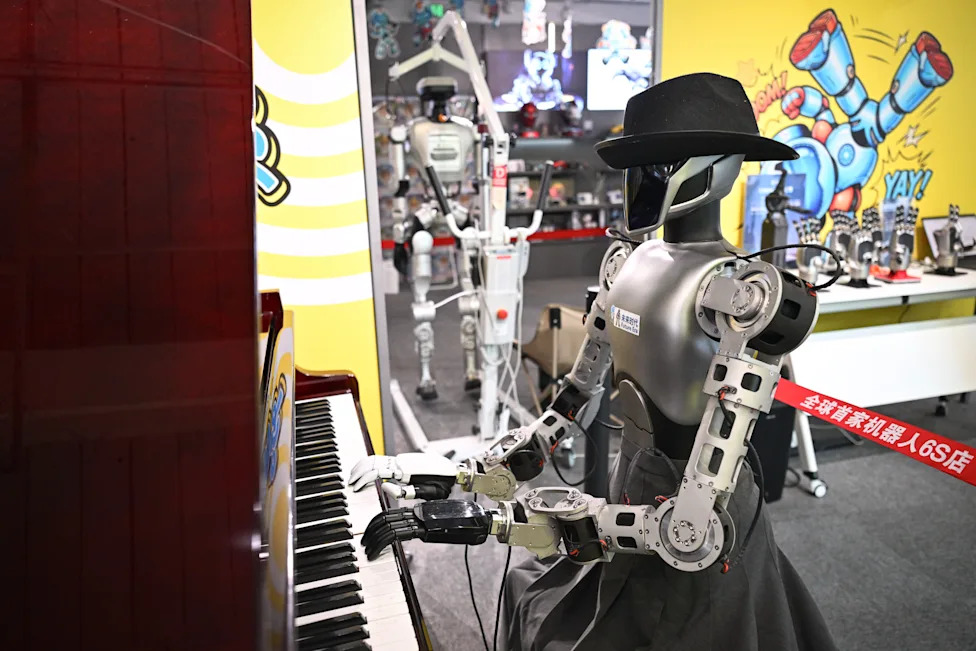
A humanoid robot plays the piano on August 5, 2026, in Shenzhen, Guangdong Province, China. Located in Shenzhen, the world's first robot 6S offline complex adapts the automotive 4S dealership model to the robotics industry by offering robot leasing and personalized customization services and providing a closed-loop service system covering the entire robot life cycle.(Stringer/Anadolu via Getty Images)

Humanoid robot dances performance during the Artificial Intelligence Robot Exhibition on July 21, 2026 in Zhongshan, Guangdong Province of China.The exhibition showcases the latest achievements in the fields of artificial intelligence and robotics, providing immersive technology experiences for the public through intelligent technology experience areas, robot performances, youth competitions, and interactive projects, and promoting AI science education.(John Ricky, Anadolu via Getty Images)

Humanoid robots designed for boxing are seen on Aug. 5, 2026, in Shenzhen, Guangdong Province, China. The world's first robot 6S offline complex is located in Shenzhen. It adapts the automotive 4S dealership model to the robotics industry by offering two core services, "robot leasing and personalized customization," and provides a closed-loop service system covering the entire robot life cycle.(Stringer/Anadolu via Getty Images)
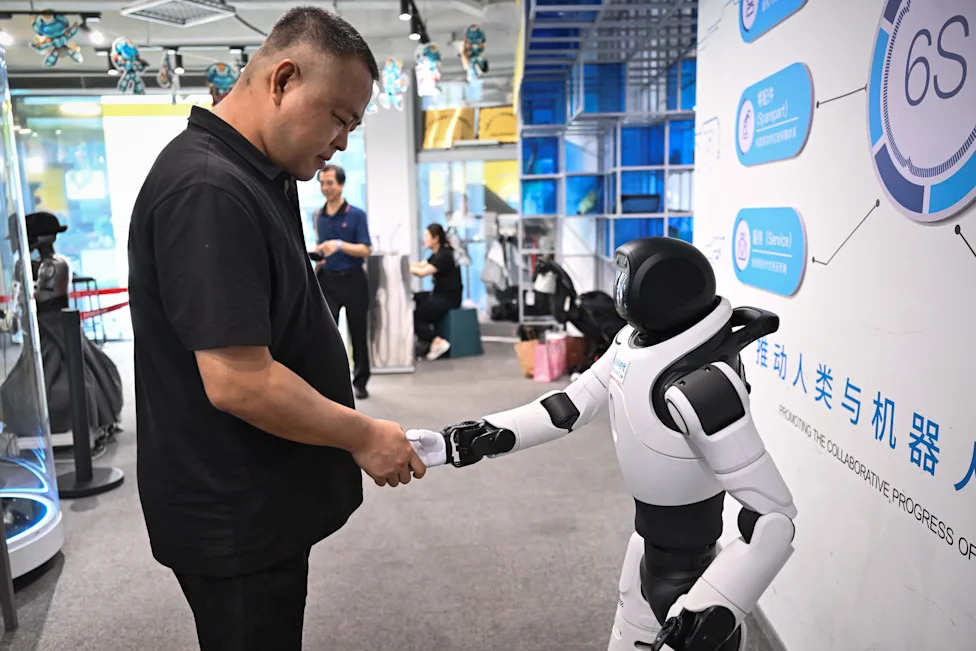
A visitor shakes hands with a humanoid robot on August 5, 2026, in Shenzhen, Guangdong Province, China. The world's first robot 6S offline complex is located in Shenzhen. It adapts the automotive 4S dealership model to the robotics industry by offering two core services: robot leasing and personalized customization, and provides a closed-loop service system covering the entire robot life cycle.(Stringer/Anadolu via Getty Images)

Humanoid robot is seen during the Artificial Intelligence Robot Exhibition on July 21, 2026 in Zhongshan, Guangdong Province of China.The exhibition showcases the latest achievements in the fields of artificial intelligence and robotics, providing immersive technology experiences for the public through intelligent technology experience areas, robot performances, youth competitions, and interactive projects, and promoting AI science education.(John Ricky, Anadolu via Getty Images)
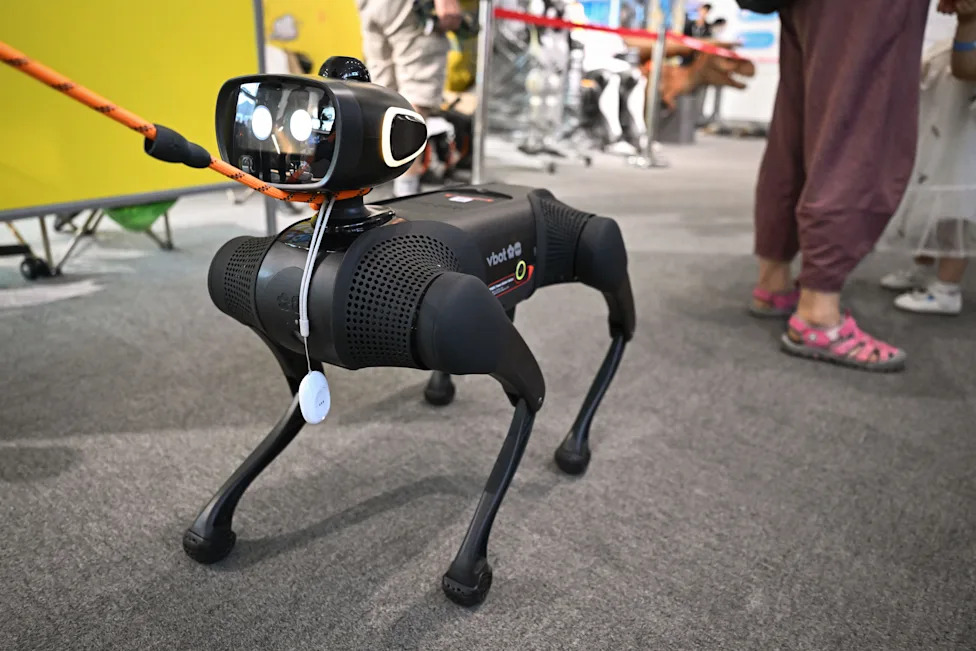
A robotic dog is seen as visitors interact with it on August 5, 2026, in Shenzhen, Guangdong Province, China. The world's first robot 6S offline complex is located in Shenzhen. It adapts the automotive 4S dealership model to the robotics industry by offering two core services: robot leasing and personalized customization, and provides a closed-loop service system covering the entire robot life cycle.(Stringer/Anadolu via Getty Images)

A humanoid robot is seen on Aug. 5, 2026, in Shenzhen, Guangdong Province, China. The world's first robot 6S offline complex is located in Shenzhen. It adapts the automotive 4S dealership model to the robotics industry by offering two core services, "robot leasing and personalized customization," and provides a closed-loop service system covering the entire robot life cycle.(Stringer/Anadolu via Getty Images)

A humanoid robot performs a dance for visitors on Aug. 5, 2026, in Shenzhen, Guangdong Province, China. The world's first robot 6S offline complex is located in Shenzhen. It adapts the automotive 4S dealership model to the robotics industry by offering two core services, "robot leasing and personalized customization," and provides a closed-loop service system covering the entire robot life cycle.(Stringer/Anadolu via Getty Images)

Intelligent robot pets are seen on Aug. 5, 2026, in Shenzhen, Guangdong Province, China. The world's first robot 6S offline complex is located in Shenzhen. It adapts the automotive 4S dealership model to the robotics industry by offering two core services: robot leasing and personalized customization, and provides a closed-loop service system covering the entire robot life cycle.(Stringer/Anadolu via Getty Images)
Help us improve.