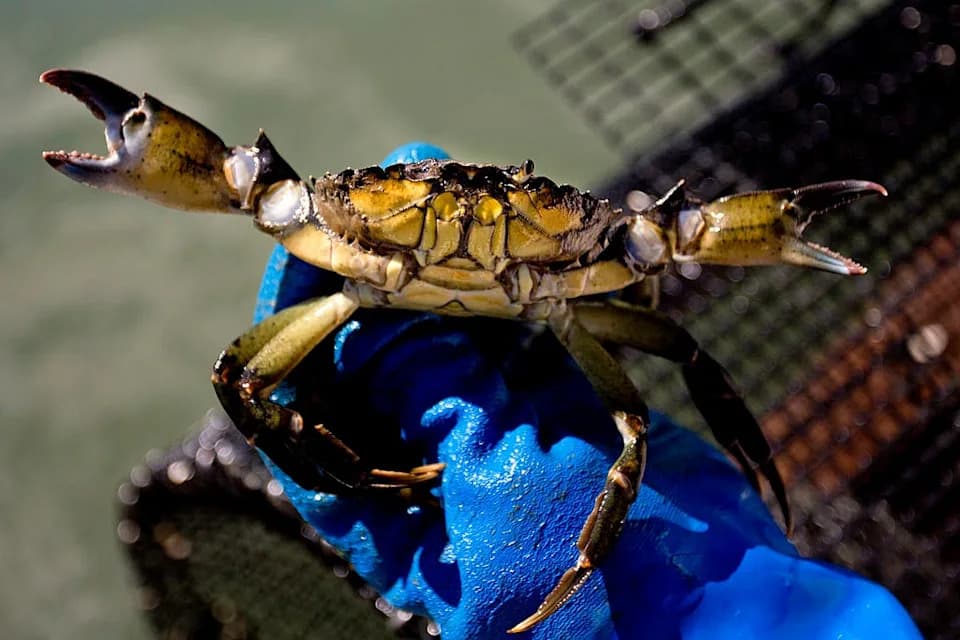
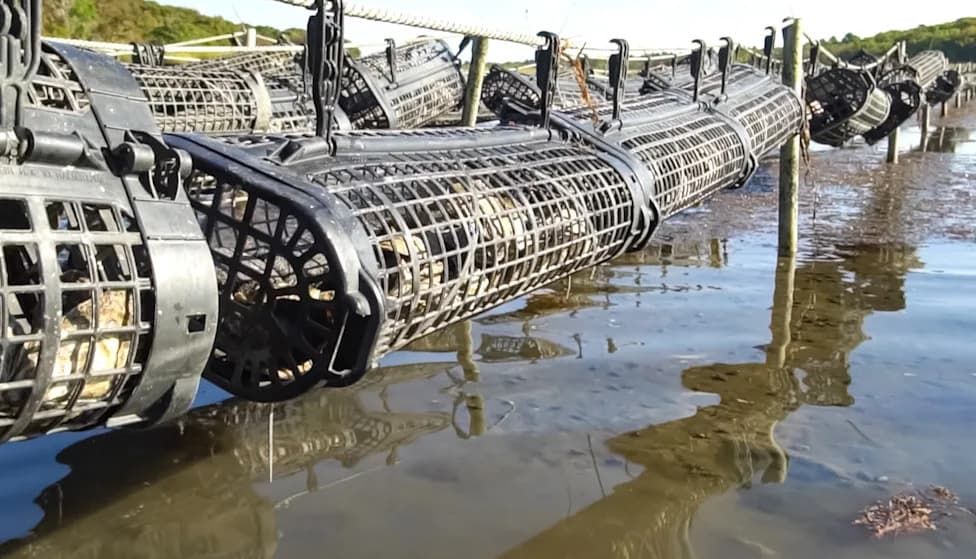
Researchers and volunteers in Casco Bay are racing to study and restore eelgrass (Zostera marina), a vital underwater flowering plant that shelters juvenile marine life, improves water quality and sequesters carbon. Maine has lost large portions of its seagrass — over half in parts of the coast — with declines linked to warming waters, storms, invasive green crabs and nutrient runoff. Team Zostera and partners are harvesting seeds from healthy “mother meadows,” testing seed storage and transplant methods, and working with Indigenous and community partners to scale restoration where conditions allow.
Race to Save Maine’s Seagrass: Scientists Harvest Seeds From 'Mother Meadows' to Restore Eelgrass
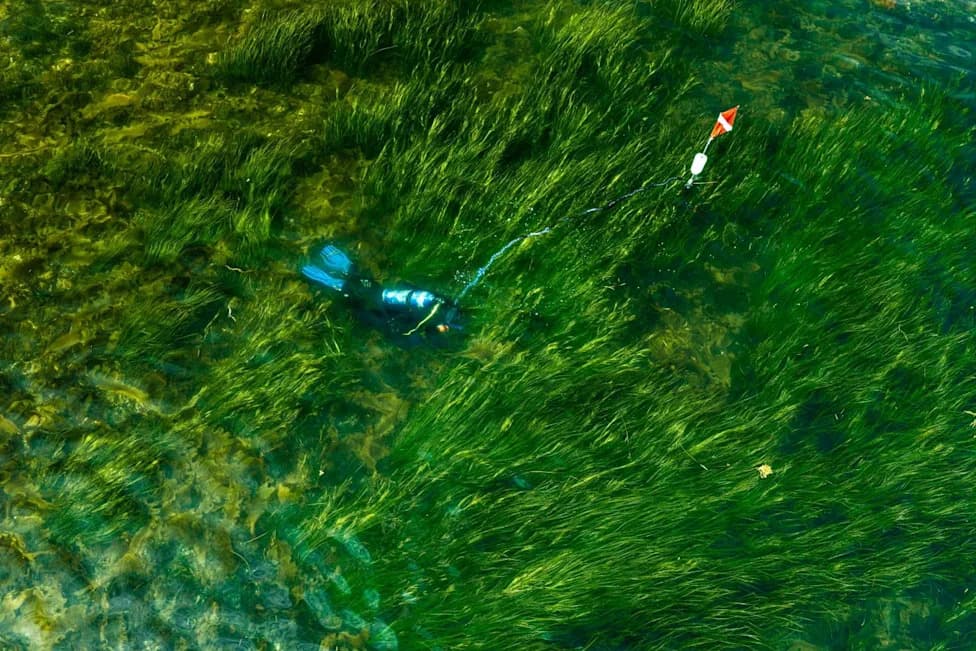
Glenn Page, who leads a seagrass research and restoration project called Team Zostera, collects reproductive shoots from a healthy eelgrass meadow in Casco Bay on August 7, 2026. Photo by Jamie Walter forThe Maine Monitor.
On a bright August afternoon in Casco Bay, researchers in wetsuits and fins slipped over sandbars and kelp into a thick meadow of eelgrass. Long, narrow ribbons of Zostera marina lay flattened by current while small fish wove through the blades and crustaceans sheltered below. A seal even drifted past as divers gathered reproductive shoots.
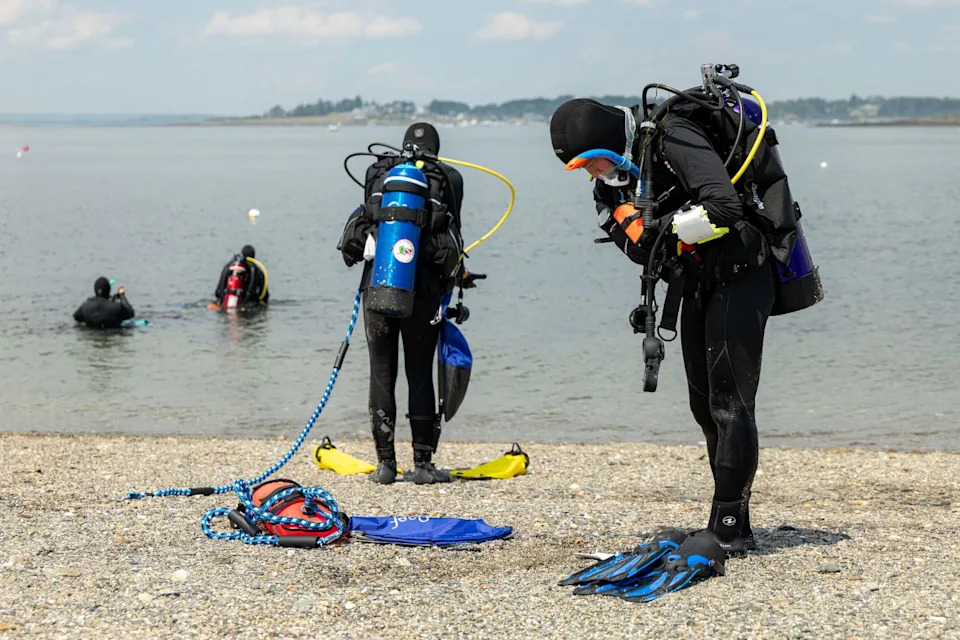
Team Zostera divers prepare to collect a type of seagrass calledZostera marinafor research and future restoration to other areas of Casco Bay where the species has been lost. August 7, 2026. Photo by Jamie Walter forThe Maine Monitor.
Why Seagrass Matters
Seagrass meadows are underwater flowering-plant ecosystems that shelter juvenile marine life, improve water quality and sequester carbon. They also absorb wave energy, reducing erosion and buffering coastal communities during storms. Scientists often call them the ocean's "greatest kindergarten" for young species.
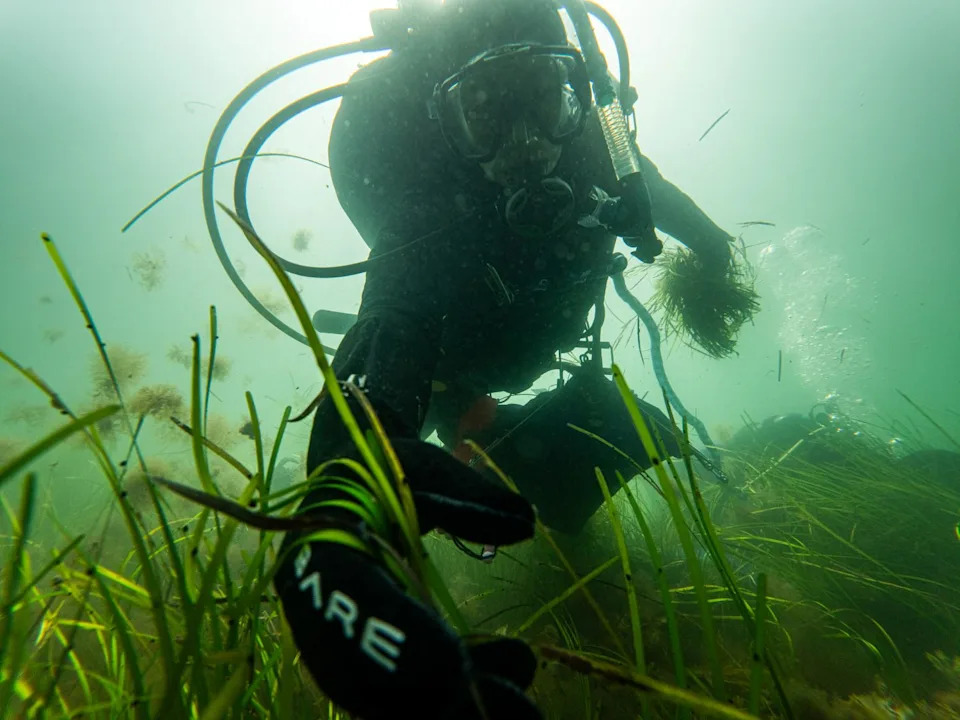
Scientific divers with Team Zostera collect eelgrass for research and conservation efforts from a healthy meadow in Casco Bay on August 11, 2026. Photos by Jamie Walter forThe Maine Monitor.
Decline, Monitoring And Gaps In Data
Seagrass once stretched widely along Maine’s coastline but has declined substantially in recent decades. The Maine Department of Environmental Protection estimates the state had more than 30,000 acres of seagrass in the 1990s. Since then, many regions have lost large shares of their beds: Casco Bay lost more than half of its seagrass acreage between 2018 and 2022; Midcoast Maine has lost roughly 60% since 2005; Penobscot Bay about 35% since the mid-2000s; and the Acadia region more than 50% since the late 2000s. Mapping efforts have been intermittent — statewide surveys ran in the 1990s and 2000s, Southern Maine and Casco Bay were mapped from 2013–2022, and a new statewide program began in 2023.
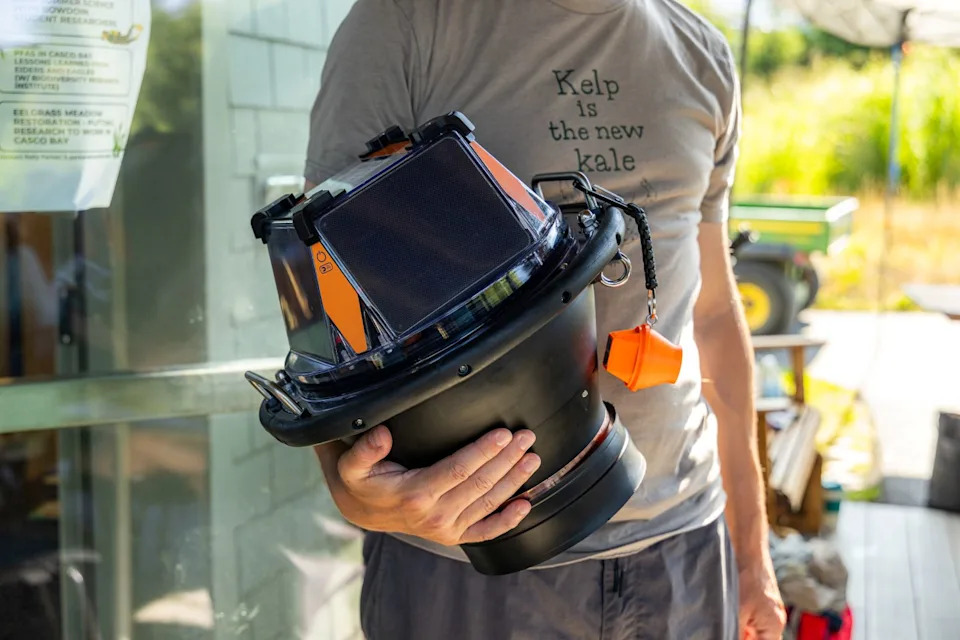
Left: Andrew Thompson, CEO of Bluesonde, holds one of his company's scientific buoys, which are being used to monitor water quality in Casco Bay's seagrass meadows. Right: A poster shows the life cycle ofZostera marinaeelgrass. Photos by Jamie Walter forThe Maine Monitor.
Multiple Stressors, No Single Culprit
Researchers do not expect a single cause. Likely contributors include rising water temperatures, stronger storms that uproot or smother beds, invasive green crabs that tear and burrow through meadows, and nutrient runoff that fuels harmful algal blooms and reduces light availability for photosynthesis. Identifying the dominant stressors at specific sites is a key first step to effective protection and restoration.
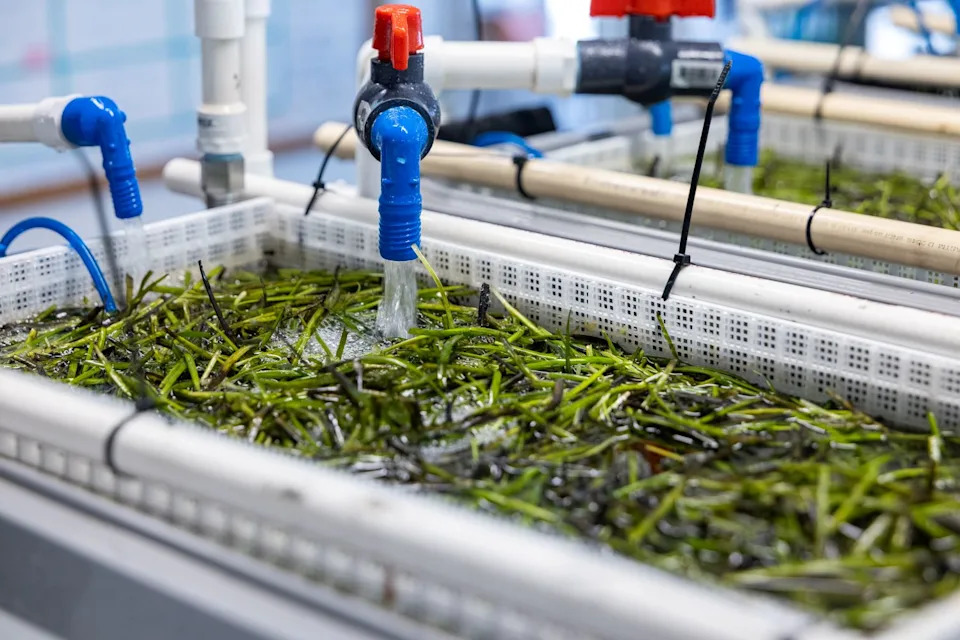
Left: The reproductive parts of eelgrass shoots, called spathes, float in saltwater tanks where their seeds will fall out and be used for research and potential transplanting. Center: Jaret Reblin, associate director for science at Bowdoin College's Schiller Coastal Studies Center, checks on eelgrass shoots in a temporary holding tank on August 7, 2026. Right: Pipes circulate filtered seawater through tanks holding eelgrass, while colored ribbons mark the different "mother meadows" the shoots came from. Photos by Jamie Walter forThe Maine Monitor.
Fieldwork And Restoration Trials
Team Zostera — a collaboration led by COBALT with Bowdoin College, the Casco Bay Estuary Partnership and other partners — focuses on studying eelgrass reproduction and testing methods to harvest, store and transplant seeds. At a healthy "mother meadow" between Haskell and Upper Flag Islands, four younger divers collected more than 3,000 shoots in an hour and Team lead Glenn Page collected nearly 2,000 more.
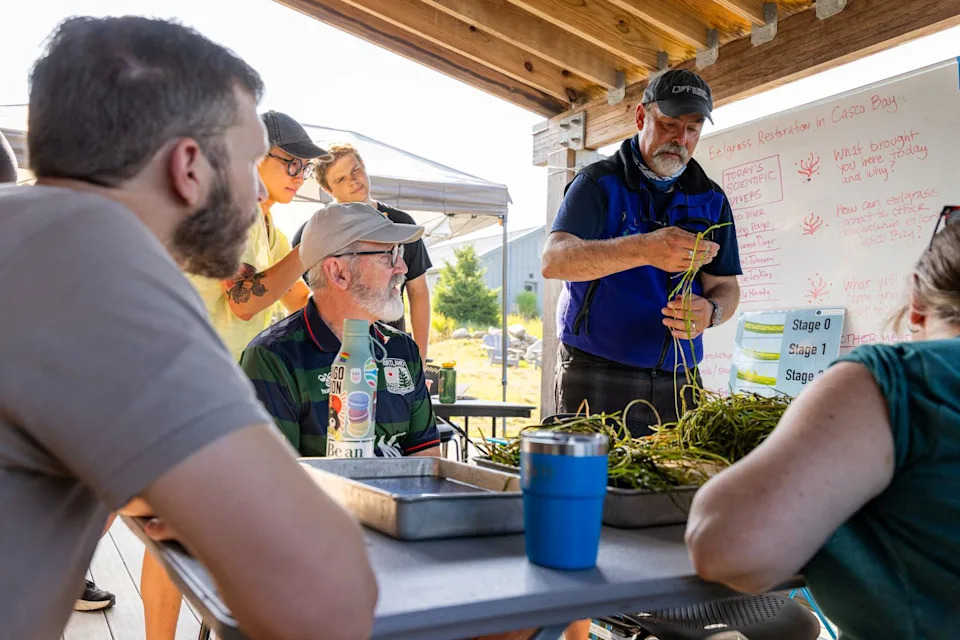
Volunteers and researchers pluck the reproductive parts of eelgrass, called spathes, at the Schiller Coastal Studies Center in Harpswell on August 7, 2026. Photos by Jamie Walter forThe Maine Monitor.
Back at Bowdoin's Schiller Coastal Studies Center, volunteers processed spathes (the translucent pods that contain seeds) in tanks supplied with Harpswell Sound seawater. That day's volunteers worked through nine bags of eelgrass — roughly 18,000 spathes — to recover seeds for research and potential transplanting. Researchers from the University of Maine are also preparing a restoration effort in the Damariscotta River's Great Salt Bay.
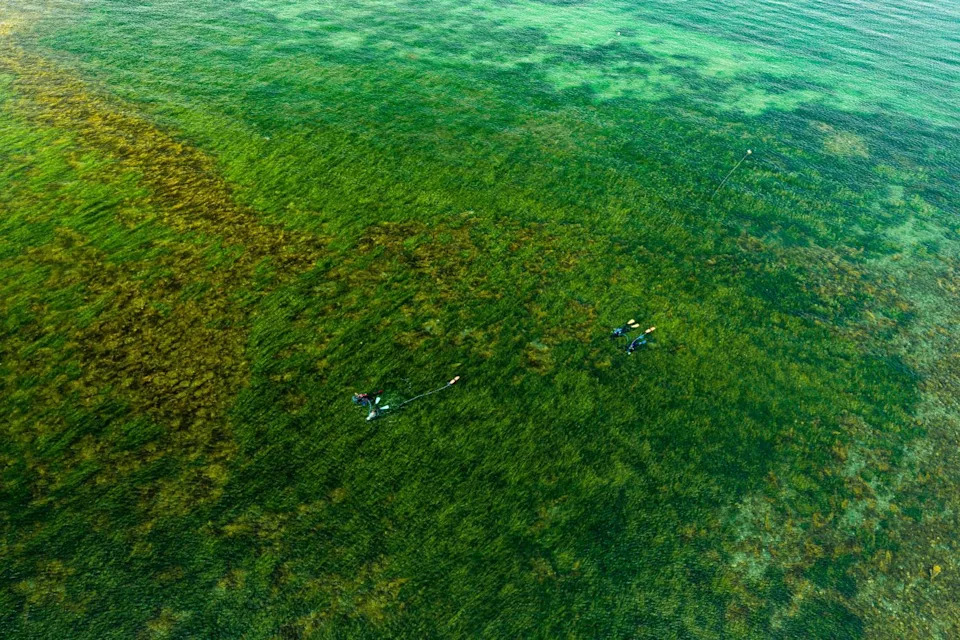
Divers explore an eelgrass bed between Haskell and Upper Flag Islands in Casco Bay on August 7, 2026. Photo by Jamie Walter forThe Maine Monitor.
Community And Indigenous Partnerships
These efforts include local volunteers, faith groups and Indigenous partners. Team Zostera has worked with Passamaquoddy (Peskotomuhkati) collaborators to incorporate traditional knowledge, translate seagrass terminology and share cultural perspectives. Leaders such as Dwayne Tomah and Hugh Akagi emphasize connections between language, stewardship and the long-term health of coastal ecosystems.
Signs Of Hope And Next Steps
Some eelgrass in Casco Bay that was lost between 2018 and 2022 has shown signs of returning, possibly aided by cooler water temperatures in recent years. Researchers are using drone surveys with the U.S. Fish and Wildlife Service to measure changes more precisely. While restoration is promising in some places, experts stress caution: restoring an area without addressing underlying stressors risks repeated loss. The current work focuses on understanding local drivers, refining seed-collection and planting techniques, and scaling restoration where conditions are suitable.
“There is concern about being able to restore these systems in time, before they're lost,” said Cheyenne Adams of the Maine DEP. “But groundwork now improves the odds later.”
Team Zostera’s approach — pairing scientific monitoring with community engagement and Indigenous knowledge — aims to improve the odds that Maine’s eelgrass meadows can recover and continue to provide critical ecological and coastal protection services.
Help us improve.