French scientists confirmed that more than 200,000 barrels of low-level radioactive waste were dumped in the Northeast Atlantic in the mid-20th century. A May–June 2026 NODSSUM expedition made 20 dives with the manned submersible Nautile and found several corroded, leaking drums. On-site readings detected cobalt‑60 and niobium‑94 above background levels. Paired samples of sediment, water and organisms will undergo months of lab analysis to determine the chemical form and ecological impact of the releases.
Scientists Confirm More Than 200,000 Barrels Of Radioactive Waste Dumped In Northeast Atlantic
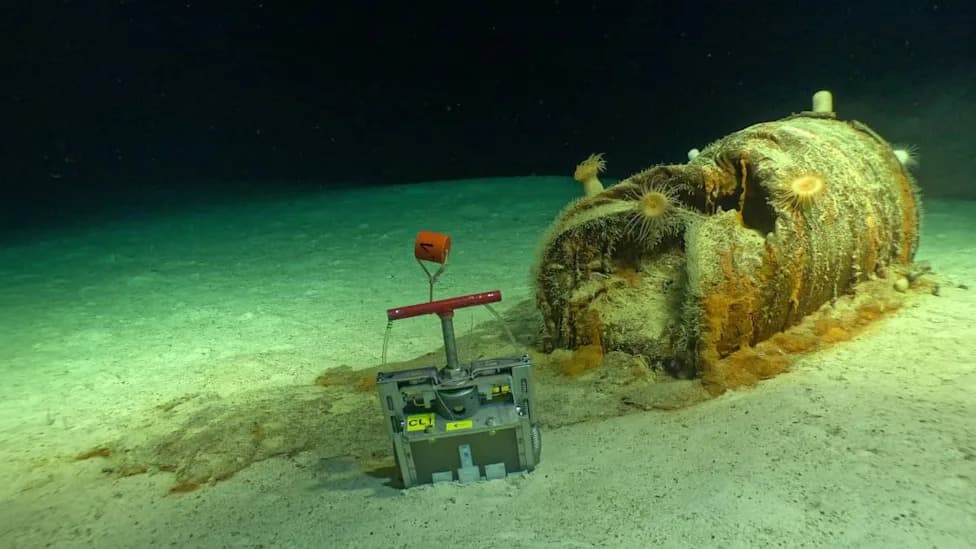
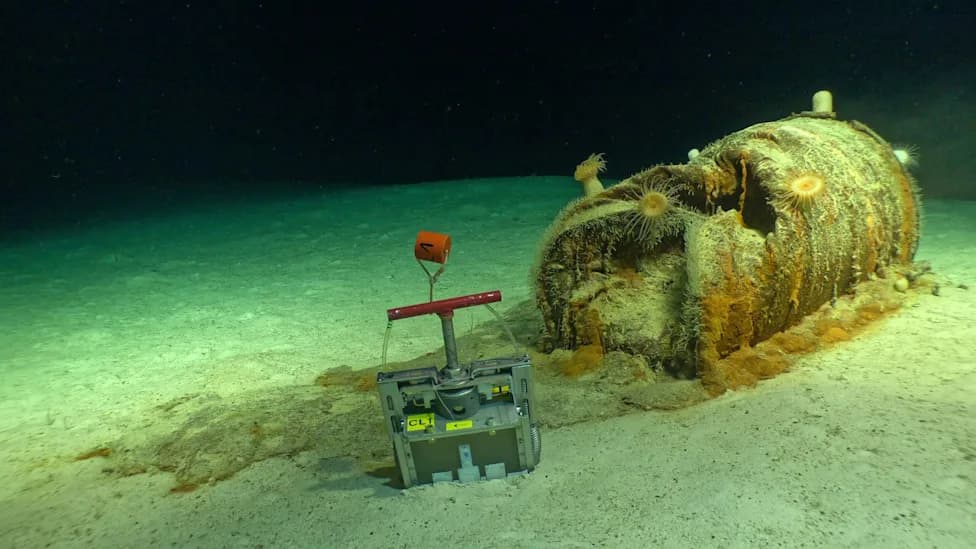
A heavily corroded radioactive waste barrel leaks onto the seafloor as a Nautile sampling device collects sediment at 4,700 metres during the 2026 NODSSUM expedition | ©Image Credit: Campagne NODSSUM, CNRS, Flotte océanographique française
French researchers have confirmed that more than 200,000 barrels of radioactive waste were dumped in the Northeast Atlantic during the second half of the 20th century. A month-long expedition under the NODSSUM project (Nuclear Ocean Dump Site Survey Monitoring) made targeted dives to inspect the containers and collect environmental samples.
Expedition Details
From May 27 to June 28, 2026, roughly 30 scientists aboard the research vessel Pourquoi Pas? conducted 20 dives with the manned submersible Nautile to depths beyond 15,400 feet (about 4,700 meters). This was the most detailed, close-up survey of the dump sites in decades.
What the Team Found
Investigators discovered multiple metal drums with advanced corrosion; some barrels were breached and had clearly released material into the surrounding mud. On-site instrument readings registered elevated radionuclide levels above background, notably cobalt-60 and niobium-94—isotopes typically produced inside nuclear facilities and uncommon in routine environmental fallout. Cesium-137 and americium-241 were also detected, but their sources may include historic weapons testing or major nuclear accidents, making attribution less certain.
Marine Life And Sampling
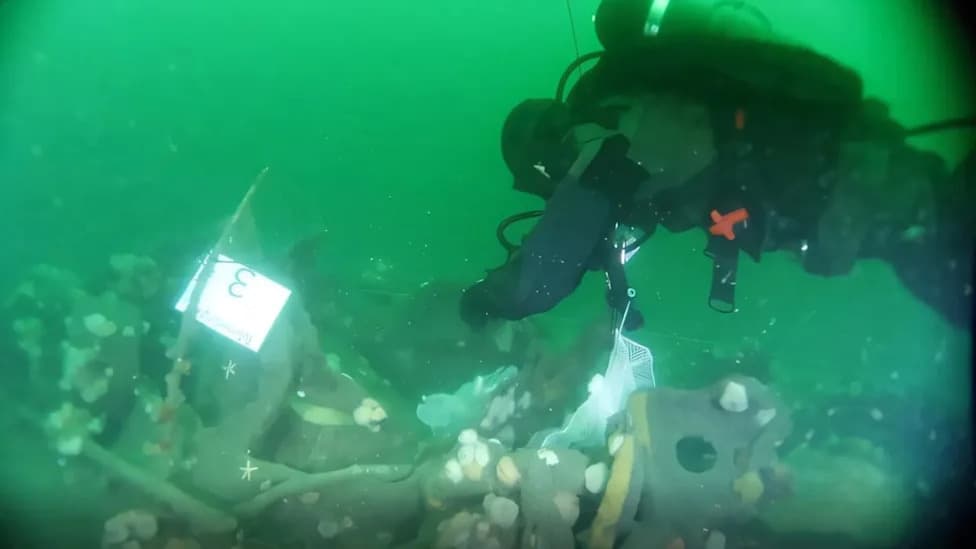
Many barrels are now colonized by sessile species such as anemones and sponges, and by mobile fauna including crabs. The drums provide rare hard substrate across stretches of otherwise soft, muddy seabed. Whether these organisms are bioaccumulating radionuclides is unknown: the team collected paired samples of sediment, water, organisms and microbial communities near contaminated barrels and from nearby natural rocky habitats to enable comparison.
Nature Of The Waste And Historical Context
Records and on-site assessment indicate the material is low-level radioactive waste, typically mixed with concrete or bitumen and sealed in metal drums. Disposal practices at the time did not emphasize permanent containment; authorities appear to have expected gradual leakage and dilution. CNRS (French National Centre for Scientific Research) records show France alone dumped more than 46,000 barrels in two operations in 1967 and 1969. Other European countries also used the same dumping ground, and researchers are still determining the origins of many containers.
Prior Mapping And Ongoing Work
A 2025 robotic mapping by the vehicle Ulyx identified 3,355 individual containers and collected 5,000 liters of water samples, 345 sediment cores and 34 fish and crustacean specimens, enabling the 2026 team to target specific barrels for close inspection. The current expedition was led by Patrick Chardon (Clermont Auvergne University) and Javier Escartín (École Normale Supérieure, Paris). Field teams have confirmed that releases have occurred; months of laboratory analysis remain to determine the chemical form, concentration and spatial extent of leaked material.
Policy And Oversight
The OSPAR Convention (the Convention for the Protection of the Marine Environment of the North-East Atlantic) is using these early findings from NODSSUM to update records and improve understanding of historical dumping sites. Results from ongoing laboratory analyses will inform risk assessments and any needed remediation or monitoring actions.
What Happens Next? Detailed laboratory assays of collected samples will determine radionuclide speciation, concentrations and potential ecological uptake. Those results will be essential to assess environmental and public-health implications and to guide policy responses.
Sources: CNRS, French Oceanographic Cruises, Earth; NODSSUM project releases.
Help us improve.