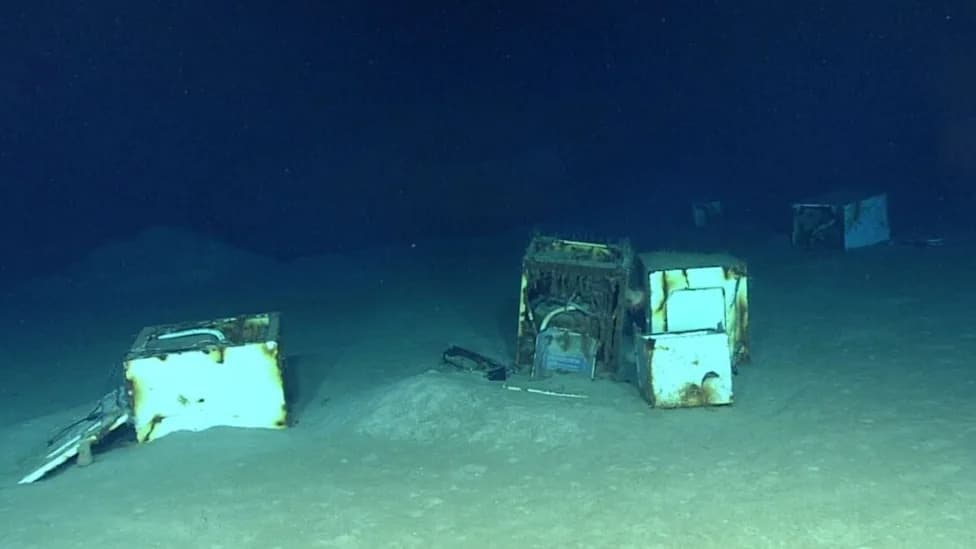
Researchers led by Daniel Lauretta photographed and documented human litter across the Mar del Plata Submarine Canyon, roughly 180 miles off Argentina, at depths exceeding two miles. During 17 dives (10 with an ROV) they recorded 29 manmade objects and observed about 40 species that may be new to science. The canyon's shape and currents appear to funnel and trap debris, and wildlife both interacts with and becomes attached to plastics and ropes. These observations add to mounting evidence that plastic pollution reaches the deepest ocean regions.
Human Trash Reaches Abyssal Depths: Plastics and a Boot Found Over 3,700 m Down in Mar del Plata Canyon
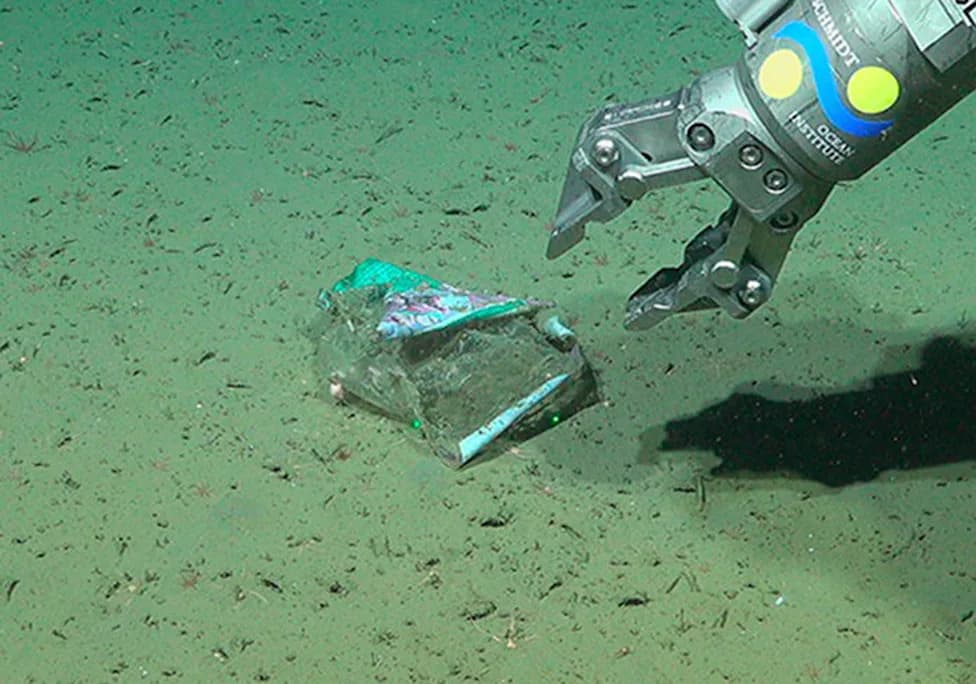
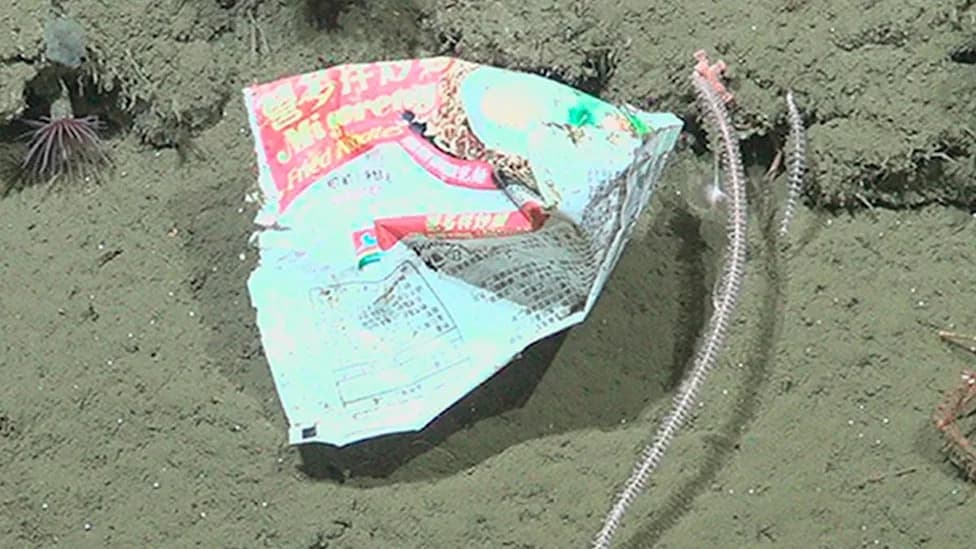
A plastic wrapper found at the bottom of the ocean. (Teso et al., 2026, PLOS One, CC-BY 4.0 via SWNS)
New research shows that even the most remote parts of the seafloor are not safe from human litter. An international team led by Daniel Lauretta of Argentina's Natural Science Museum conducted the first photographic survey of the Mar del Plata Submarine Canyon, about 180 miles (≈290 km) off Argentina, and documented plastic pollution more than two miles below the surface.
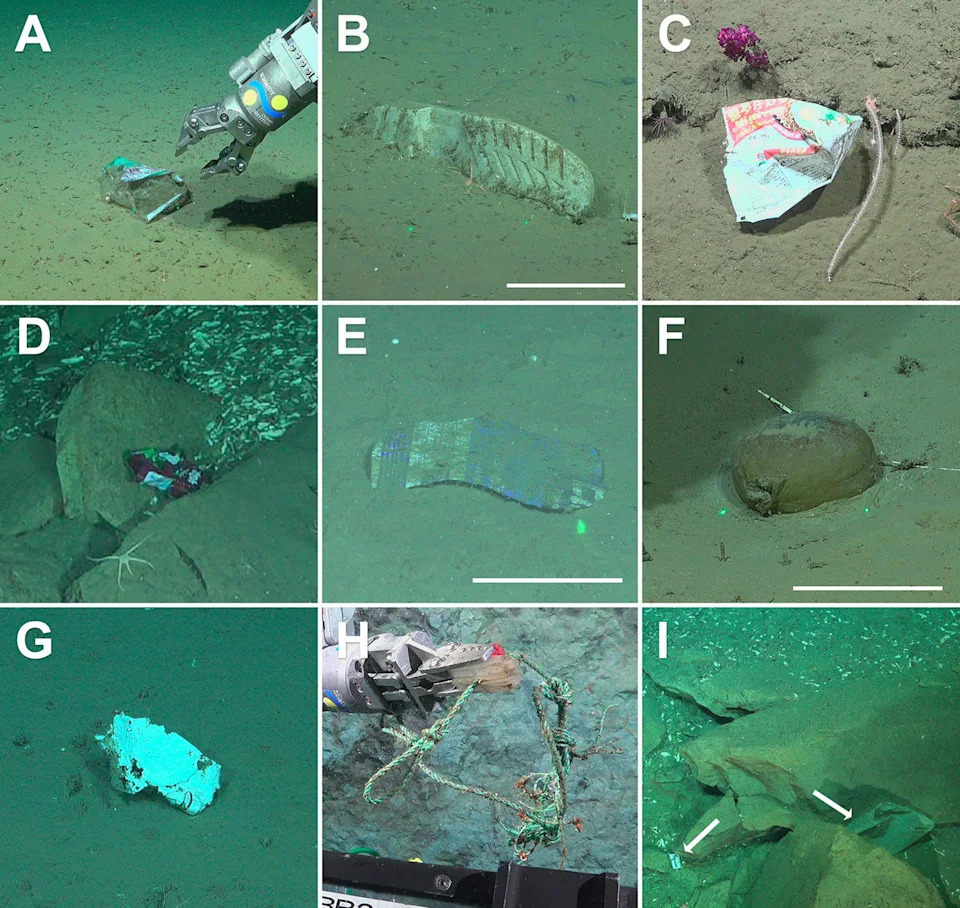
Examples of deep-sea litter found in the Mar del Plata Submarine Canyon. (A) Medium-sized plastic wrapper, 2,109 m. (B) Rubber boot, 2,598 m. (C) Food wrapper, 1,920 m. (D) Snack wrapper, 3,231 m. (E) Tissue paper wrapper, 3,814 m. (F) Sediment-filled plastic bag, 3,739 m. (G) Highly degraded plastic fragment, 3,709 m. (H) Nylon cord with a hook, 1,949 m. (I) White plastic cup and bag (arrows), 3,243 m. Scale bars: 10 cm. All images courtesy of Schmidt Ocean Institute/ ROV SuBastian (CC BY 4.0), expedition FKt250712. (Teso et al., 2026, PLOS One, CC-BY 4.0 via SWNS)
What the Survey Found
Across 17 dives (10 with a remotely operated vehicle, ROV), researchers recorded 29 clearly identifiable manmade objects on the canyon floor. Items photographed and measured included a medium-sized plastic wrapper at 2,109 m, a rubber boot at 2,598 m, a food wrapper at 1,920 m, a snack wrapper at 3,231 m, a tissue-paper wrapper at 3,814 m, a sediment-filled plastic bag at 3,739 m, a highly degraded plastic fragment at 3,709 m, a nylon cord with a hook at 1,949 m, and a white plastic cup and bag at 3,243 m (scale bars: 10 cm). Image credits: Schmidt Ocean Institute/ROV SuBastian (expedition FKt250712), reported by Teso et al., 2026 (PLOS One).
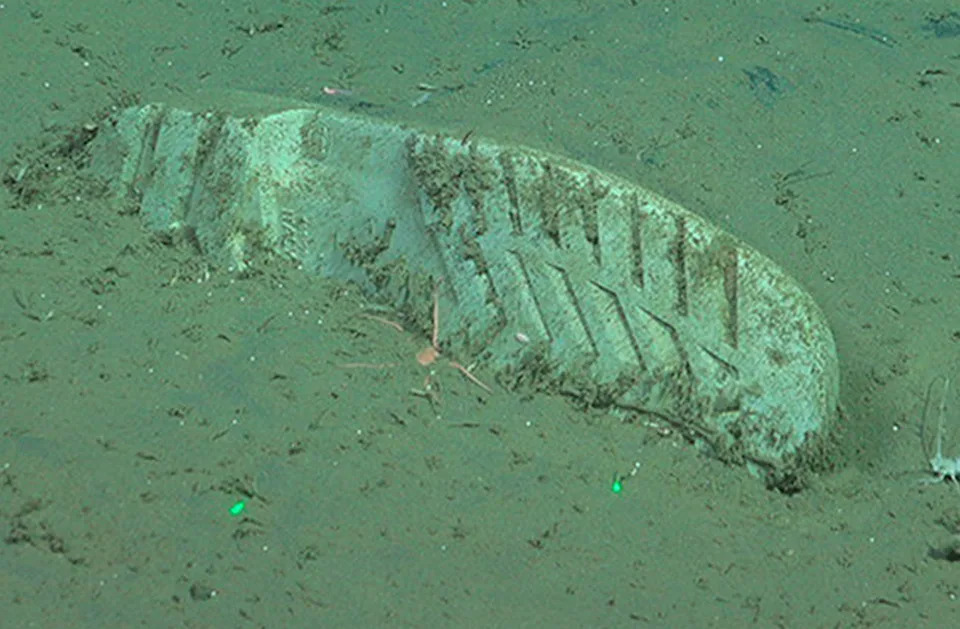
A rubber boot found on the bottom of the ocean. (Teso et al., 2026, PLOS One, CC-BY 4.0 via SWNS)
Ecological Observations
The team also documented roughly 40 species that may be new to science alongside more familiar fauna. Researchers noted more litter inside the canyon than in surrounding areas, suggesting that the canyon's topography and local currents funnel and concentrate debris into its depths. Observed interactions included transient contacts by mobile animals such as crustaceans, and longer-term attachment or partial envelopment of plastics and ropes by sessile organisms like corals and starfish.
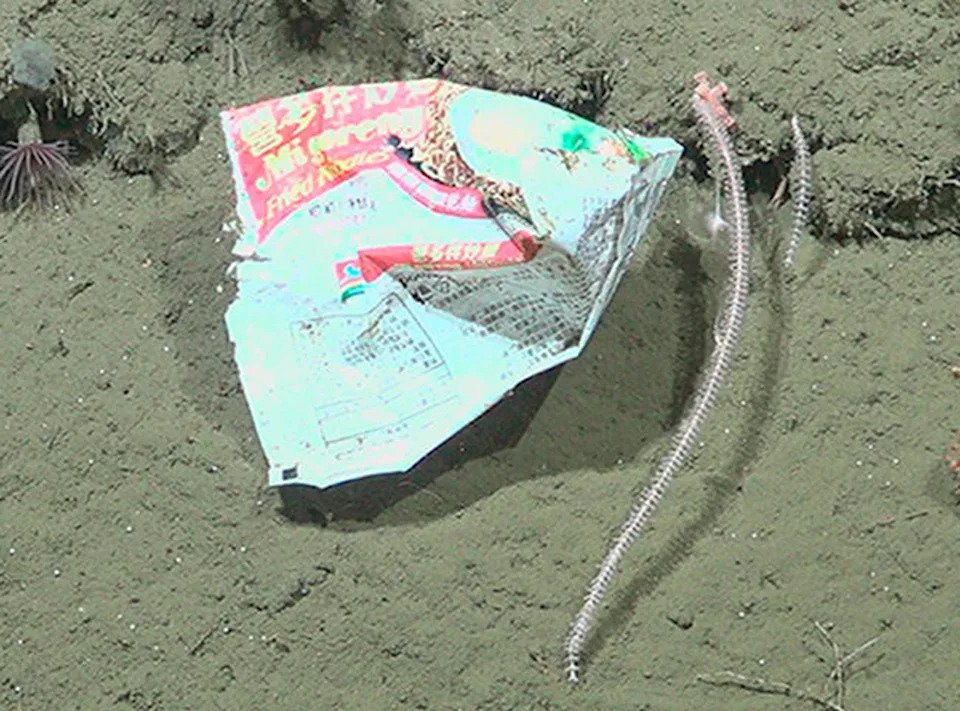
Fried noodles wrapper littering the ocean. (Teso et al., 2026, PLOS One, CC-BY 4.0 via SWNS)
Lauretta commented: "The ocean's depths remain one of Earth's greatest unknowns, but as the fish swim — or as the debris sinks — the sea floor is not so distant from human influence."
Broader Context
These findings add to a growing body of evidence that plastics reach extreme ocean depths; only months earlier, a plastic bag was reported from the Mariana Trench, Earth’s deepest known fissure. The study underscores that the downward transport of materials sustains deep-sea ecosystems, but it also transports persistent, non‑nutritive debris that can alter habitats and harm organisms.
Study source: Teso et al., 2026, PLOS One. Figures courtesy of Schmidt Ocean Institute/ROV SuBastian (CC BY 4.0), expedition FKt250712.
Help us improve.