The Guarani community in the Jaraguá Indigenous Territory near São Paulo is working to preserve 13 varieties of native stingless bees through meliponiculture — moving nest material into new hives to bolster colonies. Scientists warn Brazil hosts about 300 stingless bee species, many threatened by habitat loss, pesticides and climate change. Beyond ecology, the bees' honey and wax are integral to Guarani spiritual rituals and intergenerational knowledge, making conservation both an ecological and cultural priority.
Guarani Community Near São Paulo Races To Save Native Stingless Bees
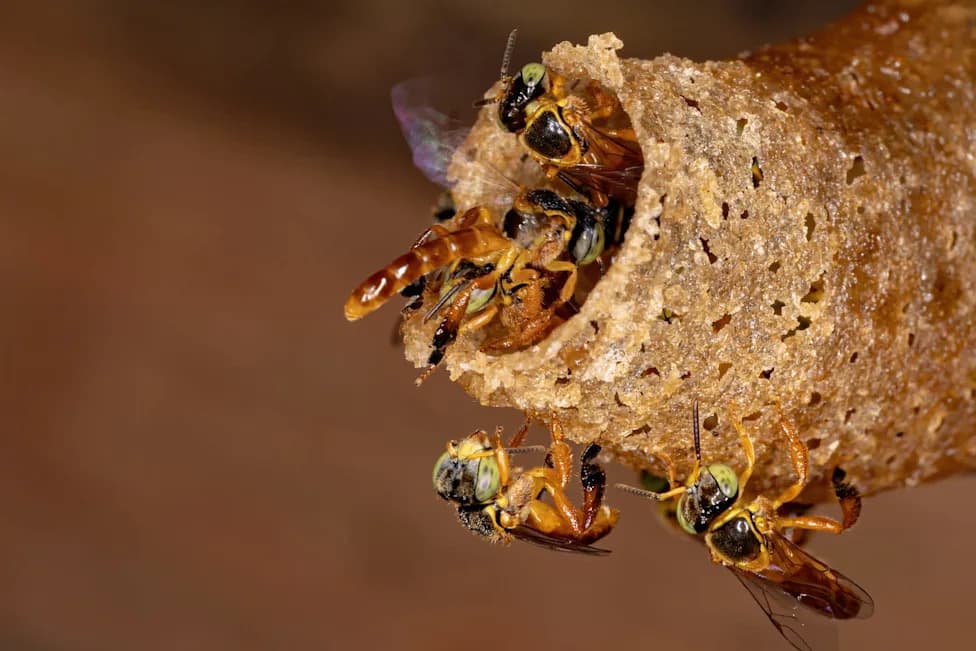
Photo Credit: iStock
On the outskirts of São Paulo, members of the Guarani community in the Jaraguá Indigenous Territory are intensifying efforts to protect native stingless bees whose pollination supports local forests, food production and spiritual traditions.
Community-Led Conservation
Keeper Marcio Karai cares for 13 varieties of stingless bees, including Mirim and Jataí. On Aug. 4, Reuters reported he was transferring part of a colony into a small wooden box to establish a new hive — a practice known as meliponiculture.
"Our elders are very concerned about the disappearance of these native species that they have always worked with, always had close at hand, and that are becoming increasingly scarce today," he said.
Why The Bees Matter
Researchers warn native pollinators face mounting threats. Osmar Malaspina, who leads an ecotoxicology and bee-conservation group at Universidade Estadual Paulista, says Brazil hosts roughly 300 stingless bee species and that habitat loss tied to agricultural expansion may already have caused local extinctions. A 2016 intergovernmental biodiversity assessment also flagged climate change, deforestation and pesticides as major risks to wild pollinators worldwide.
Animal pollinators are essential: they enable about 90% of wild flowering plants to reproduce and support roughly 75% of the crops grown for people.
Meliponiculture And Cultural Survival
Meliponiculture — the careful transfer of nest material into prepared hives — produces smaller quantities of honey than conventional beekeeping but is prized for its quality and cultural value. For the Guarani, honey and wax from stingless bees are used in religious rituals, including wax for ceremonial candles, so protecting colonies is also a way to preserve language, spiritual practice and ancestral knowledge.
The work takes place in the Jaraguá Indigenous Territory, a remnant of Atlantic Forest increasingly pressed by São Paulo's expanding suburbs. Karai describes the effort as an obligation to the land and to future generations: "We consider ourselves the guardians of these species that are so important to our ecosystem, to our lives, and to future generations," he said.
Community-driven propagation, careful hive relocation and local stewardship illustrate how traditional knowledge can complement scientific conservation to help stingless bees persist amid urban and agricultural pressures.
Help us improve.