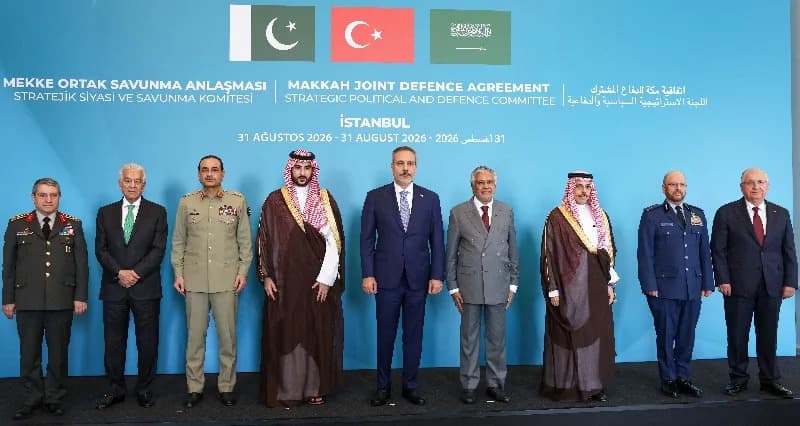
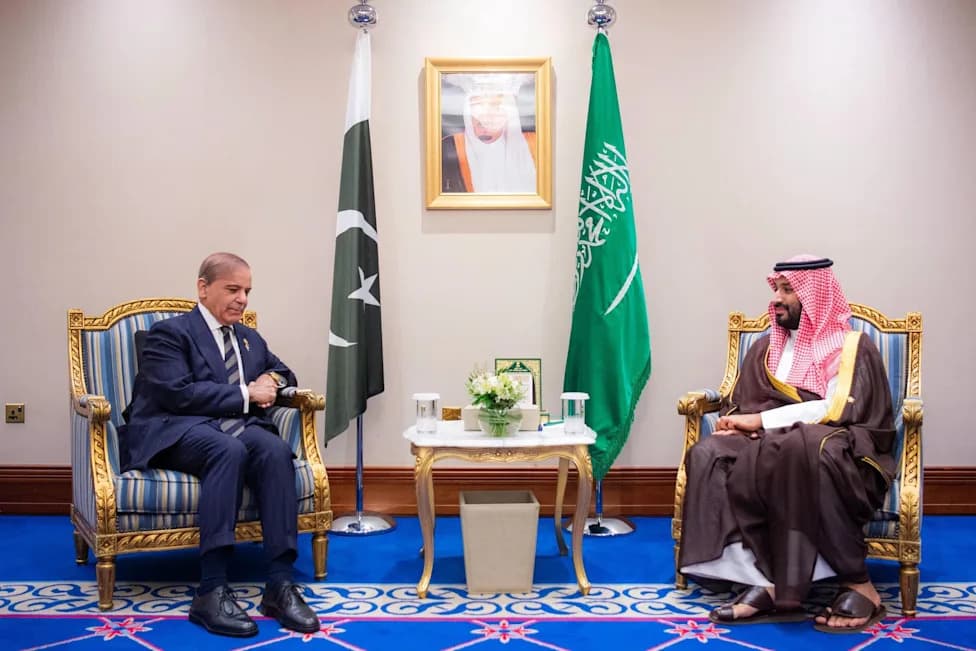
Turkey's foreign minister said the Mecca Joint Defense Agreement signed by Saudi Arabia, Pakistan and Turkey is not aimed at Iran or any specific nation and is intended to strengthen regional stability. The pact, signed in Mecca, states an attack on one signatory would be treated as an attack on all, a clause Fidan likened to NATO's Article 5. Assistance could range from intelligence sharing and logistics to military deployments, depending on the threat. The agreement creates regular ministerial and military committees and a Saudi-based secretariat; Egypt has been named as a potential future participant.
Turkey Says Mecca Defense Pact With Saudi Arabia and Pakistan Is Not Targeting Iran, Aims To Bolster Regional Stability
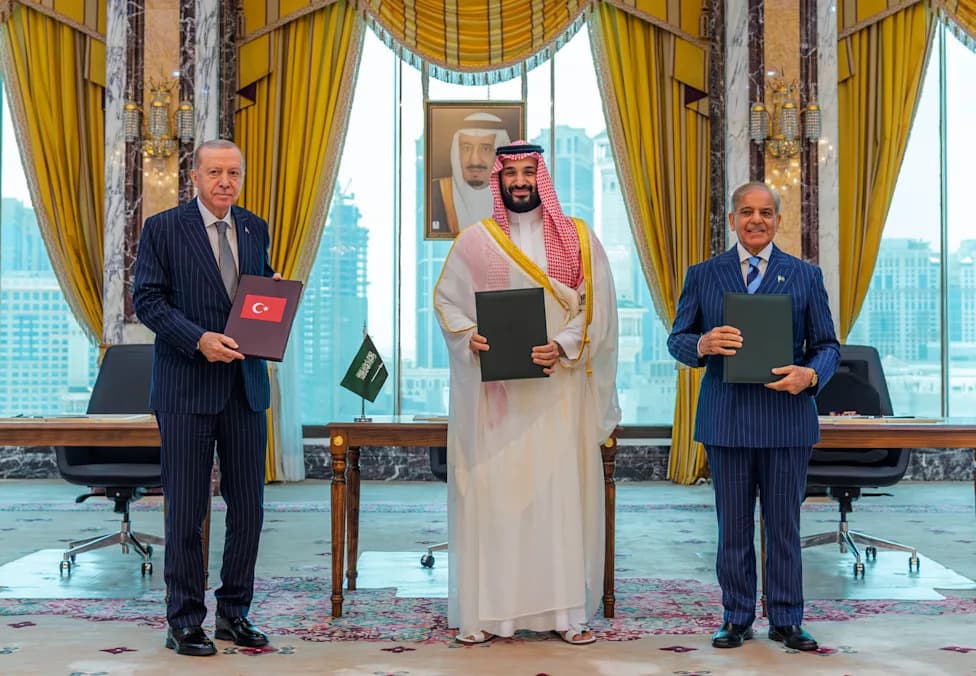
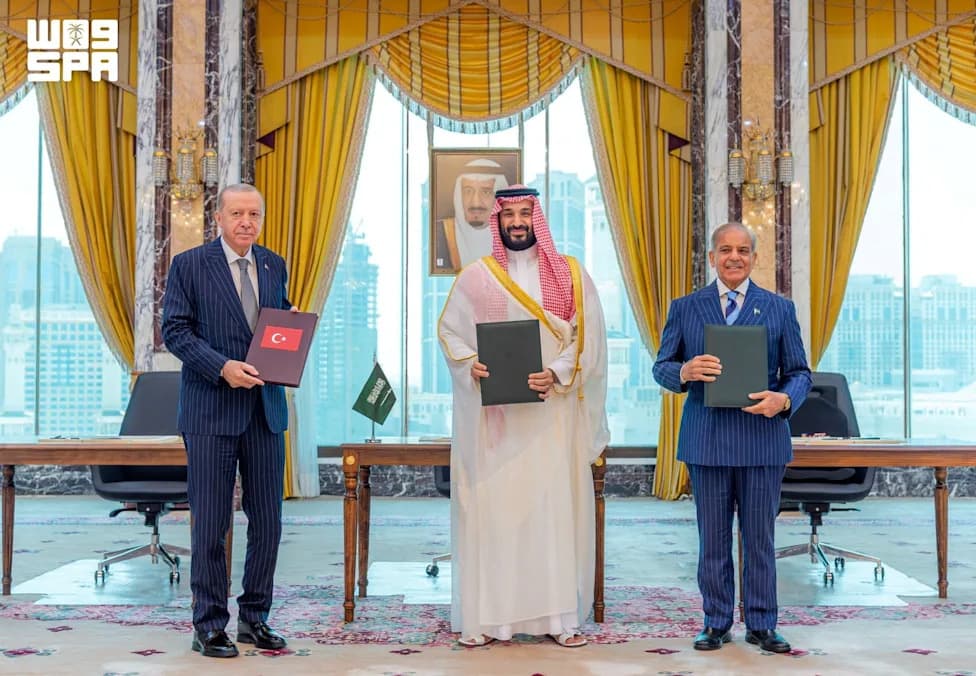
From left, Turkish President Recep Tayyip Erdogan, Saudi Crown Prince Mohammed bin Salman and Pakistani Prime Minister Shehbaz Sharif pose after signing a trilateral defense agreement in Mecca, Saudi Arabia, Friday, Aug. 7, 2026. (Saudi Press Agency via AP)
ANKARA, Turkey — Turkey's foreign minister said Saturday that the new defense agreement signed by Saudi Arabia, Pakistan and Turkey is not directed at Iran or any other specific country, calling the pact an important step toward regional stability and deterrence.
The leaders of the three countries — Saudi Crown Prince Mohammed bin Salman, Turkish President Recep Tayyip Erdogan and Pakistani Prime Minister Shehbaz Sharif — signed the accord in Mecca on Friday. Officially named the "Mecca Joint Defense Agreement," the text stipulates that an attack on one signatory would be treated as an attack on all.
What the Pact Says and How It Would Work
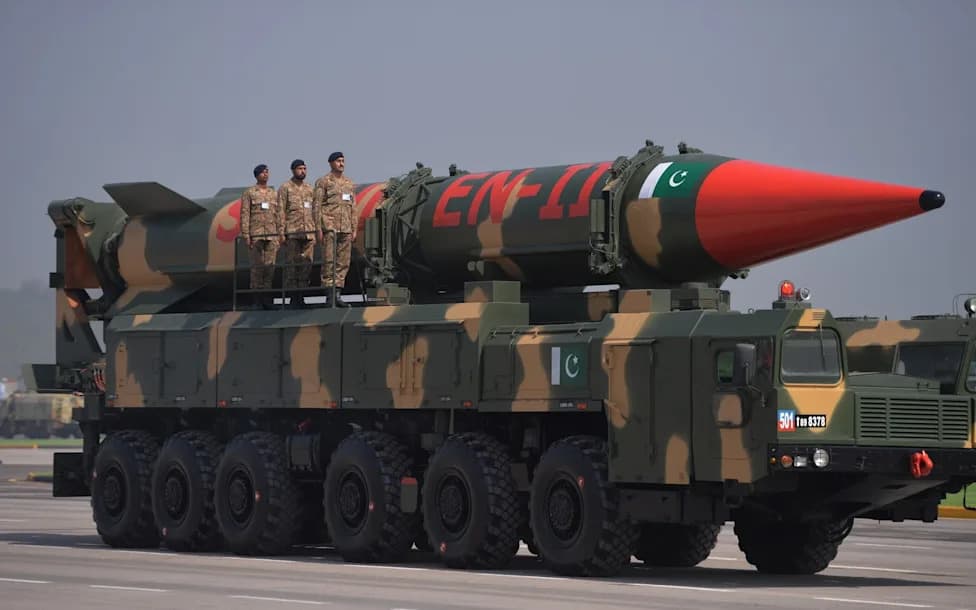
The agreement links oil-rich Saudi Arabia and nuclear-armed Pakistan with Turkey, which has one of NATO's largest standing armies and a growing defense industry. Officials say the pact is intended to deepen cooperation and strengthen deterrence amid heightened regional uncertainty and tensions related to conflicts in and around Iran.
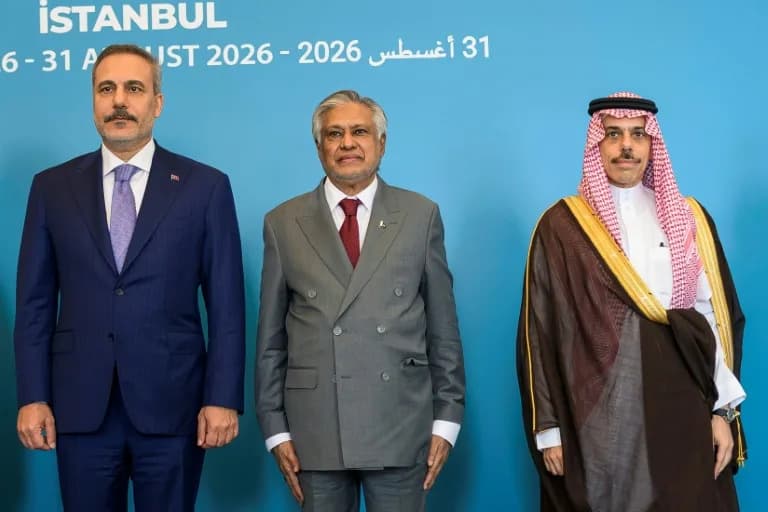
"We don't have anything written down — nothing we've signed — that defines a common threat," Foreign Minister Hakan Fidan told state-run Anadolu Agency. "Any country that does not attack us is not a target for us."
Fidan compared the pact's mutual-defense clause to NATO's Article 5, saying it is "technically the same," under which an attack on any member is regarded as an attack on all. He explained that the mechanism would require a formal request for assistance from the member under attack, and the response could vary from intelligence-sharing and logistical support to the deployment of military units, depending on the scale and character of the threat.
"These are multi-layered matters that vary according to the scale of the threat," Fidan said. "This is the perspective we have set out so far in our work."
Coordination, Secretariat and Potential Expansion
Under the pact, the foreign and defense ministers and the military chiefs of the three countries will hold regular committee meetings to coordinate policy and responses. The agreement also foresees the establishment of a joint secretariat to be based in Saudi Arabia to handle administration and coordination.
Fidan said other countries have expressed interest in joining the framework, and he singled out Egypt as a "natural partner" he expects could participate at a later stage. He did not name other interested states.
The signatories present the pact as a defensive and cooperative arrangement intended to deter aggression and enhance regional stability, while insisting it is not formulated to single out any particular country.
Help us improve.