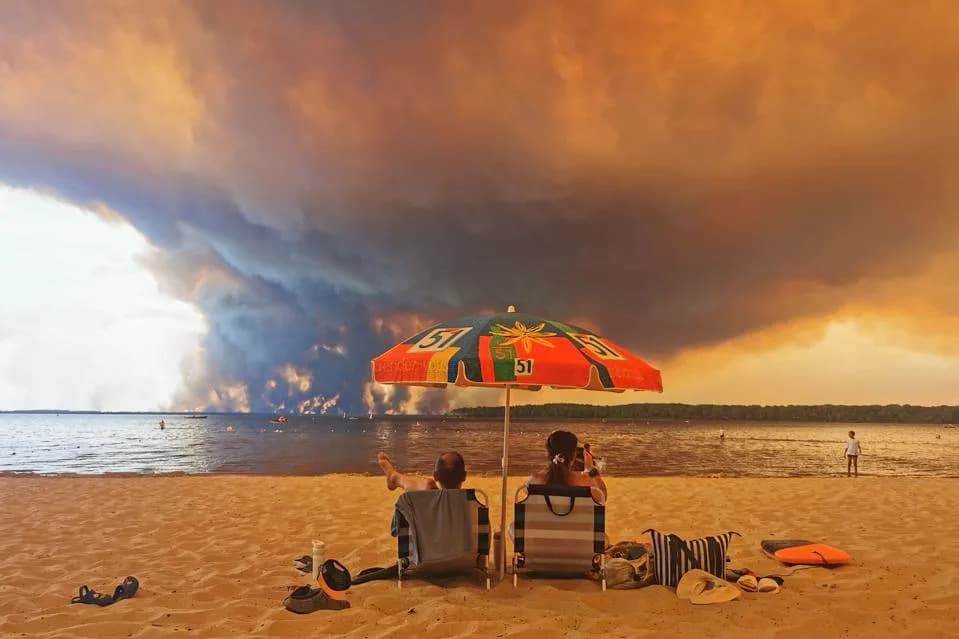
France has suffered its worst wildfire season since World War Two, with more than 300,000 acres burned. Authorities have arrested 420 people (including 166 minors) amid debates over whether prosecutions are proportionate. Investigators say most fires involve human activity but are often accidental; tracing origins is complex and made easier by drought conditions. Political leaders have called for unity while stressing the need to adapt forests and emergency plans to a changing climate.
France's Worst Wildfires Since WWII: 420 Arrests, Arson Inquiries And Climate Pressure
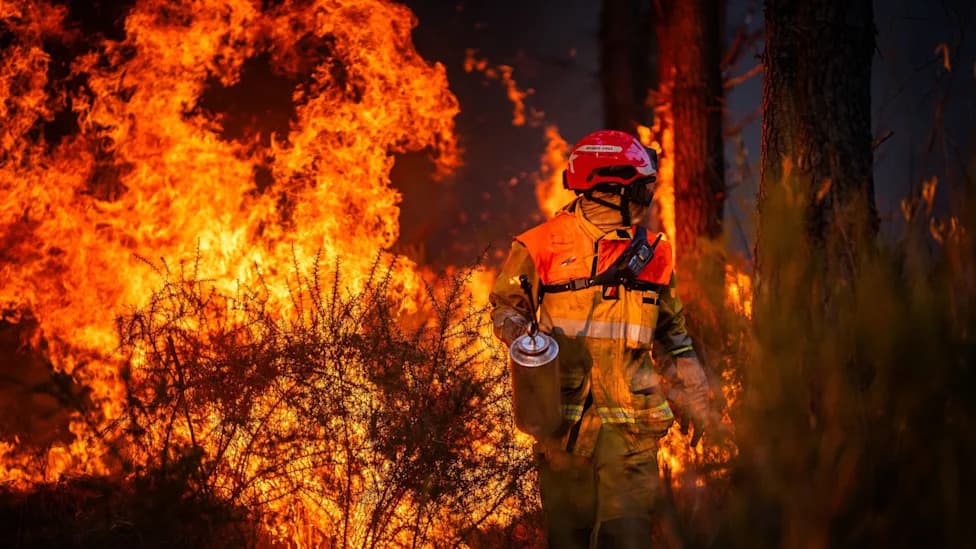
An emergency response to major wildfires was launched in the Gironde region in late July [EPA/Shutterstock]
France has endured its most destructive wildfire season since World War Two, with more than 300,000 acres scorched this summer. The scale of the blazes has prompted a wide-ranging response: hundreds of arrests, intense forensic investigations and sharp public debate about responsibility and preparedness.
Investigations and Arrests
The interior ministry says 420 people have been arrested on suspicion of either deliberately or accidentally starting fires; 166 of those detained are minors. Reported cases include a 23-year-old accused of setting 10 blazes in five days in the Var department — he faces up to 15 years in prison and a €150,000 fine if convicted — and a man in the Vosges who received a three-year sentence for starting three fires in the Raon-L'Etape forest. Local media noted the relatively small area burned in that specific incident.
Several prosecutions have drawn criticism. Reports say a homeless person and an individual with severe autism were jailed after discarding cigarette butts, and lawyers and commentators have called the sweep of arrests "excessive" or rushed. Le Monde and defence attorneys have questioned whether each case has been sufficiently investigated before charges and rapid sentences were applied.
How Investigators Trace Fire Origins
Experts note that determining how a fire started is technically difficult. Fire investigator Eric Dufayet describes the standard method: mapping the perimeter of burnt vegetation and working backwards to the likely ignition point. When winds are steady the burn pattern often forms a "V" shape that points to the origin.
"In periods of drought such as this one, all you need is a simple lighter," Dufayet explains. He adds that deliberately set fires sometimes involve multiple ignition points, which can increase the chance of finding forensic evidence like DNA or fingerprints.
Investigators also cite what is colloquially called the "30 rule" for cigarette-related ignitions: temperature of at least 30°C (86°F), humidity below 30%, wind under 30 km/h, and at least 30% of the cigarette unburnt. Under current drought conditions, those thresholds are easier to reach and a tiny spark can spread rapidly.
Causes, Motives and the Limits of Arson Claims
While official figures indicate that the vast majority of wildfires involve human activity, specialists say deliberate arson is only a small fraction of incidents. Most blazes are believed to be accidental, triggered by construction sparks, faulty electrical equipment, discarded cigarette butts or barbecues.
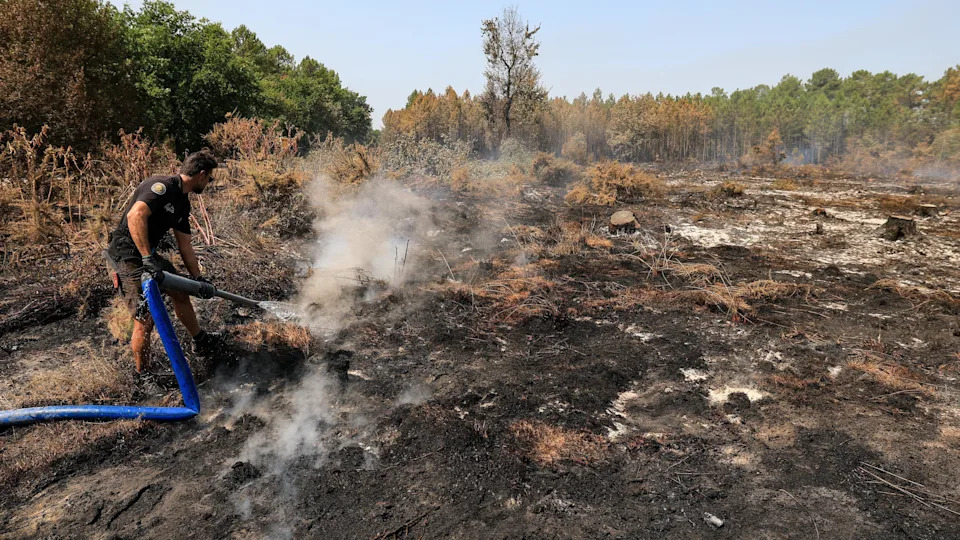
French President Emmanuel Macron called the fires "completely unprecedented" [Reuters]
Psychiatrist Michel Lejoyeux categorises people who start fires into three groups: the careless, those who profit (for example via insurance), and pyromaniacs. He stresses that pyromania is a rare, difficult-to-diagnose disorder and accounts for relatively few convictions.
Defence lawyers have suggested other motives in some cases — from a desire for attention to financial incentives such as overtime pay for volunteer firefighters — but such claims remain allegations and require careful legal and forensic proof.
Political Response And The Climate Context
Authorities have defended a robust response. Bordeaux prosecutor Renaud Gaudeul told Le Monde that conditions for charging people with endangering lives can be met by seemingly small actions in wooded areas:
"The conditions for a charge of endangering lives are met for those who throw a cigarette butt or light a barbecue in wooded areas. It only takes a tiny spark for it to start."
At the national level President Emmanuel Macron called the fires "completely unprecedented" and urged unity while emphasising adaptation:
"We will have to replant and rebuild a different kind of forest because we must adapt to the structural conditions of climate change. The time for reviewing lessons learned will come — in the meantime, the country must remain united."
Scientists and emergency planners warn that climate-driven heat and drought make ignition more likely and fires spread faster; forecasts at the time of reporting suggested another heatwave could arrive within days.
Impact And Next Steps
The fires have caused substantial environmental damage, harmed air quality, affected hundreds of homes and disrupted local economies and tourism. Public demand for clearer accountability — and for improved prevention, early detection and forest management — is growing. Authorities, investigators and courts face the twin tasks of establishing individual responsibility where warranted while also addressing systemic preparedness and climate adaptation.
Help us improve.