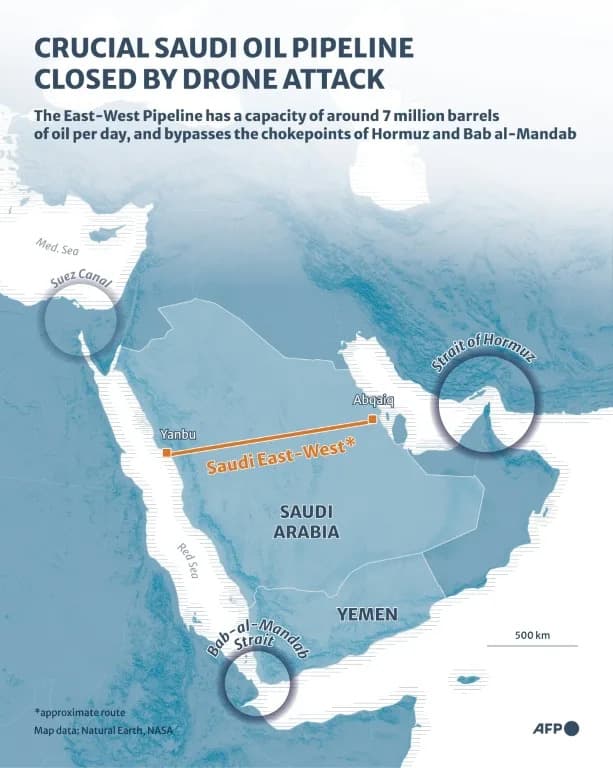
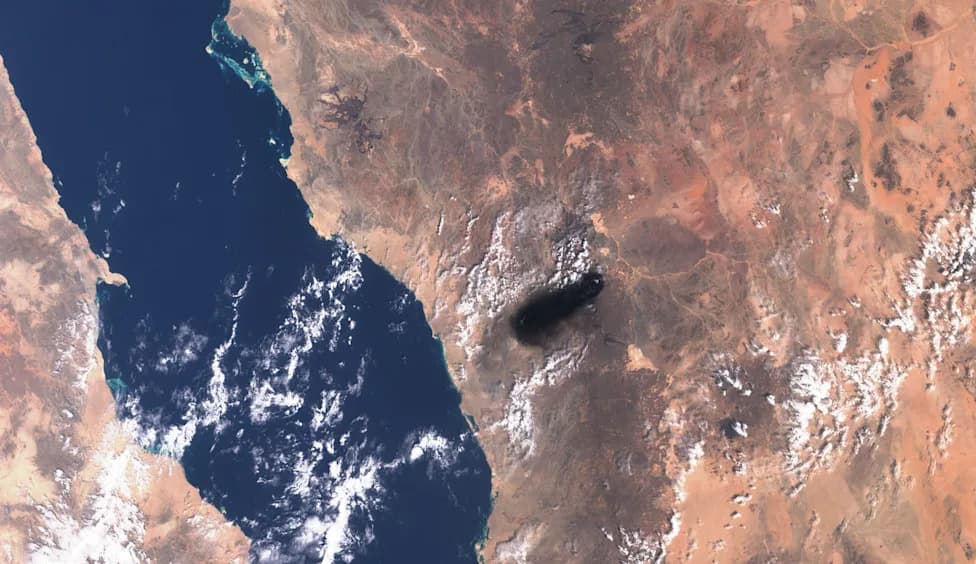
Gulf exporters are weighing an overland pipeline through Israel to avoid attacks on sea chokepoints. The plan would route Saudi crude across the peninsula into Israel, join the 163‑mile Trans‑Israel Pipeline and reach Mediterranean terminals, bypassing the Strait of Hormuz and Bab‑el‑Mandeb. While the route could reduce maritime vulnerability and deepen regional energy ties, engineering costs, security threats to terminals and the lack of Saudi‑Israeli normalization present major obstacles.
Could an Overland Pipeline Through Israel Break Iran’s Grip on Gulf Oil?

Benjamin Netanyahu, the Israeli prime minister, with Donald Trump - Jim Watson/AFP via Getty Images
Gulf energy producers, led by Saudi Arabia, are exploring an overland alternative to risky maritime export routes. The Bab-el-Mandeb Strait and the Strait of Hormuz—the two principal sea chokepoints for oil and gas shipments—have become increasingly hazardous due to Houthi attacks in the Red Sea and Iranian pressure in Hormuz. One proposed solution is a cross‑peninsula pipeline that would route crude across Saudi Arabia into Israel and on to Mediterranean terminals.
How the Route Would Work
The concept under discussion would start with a new pipeline across the Saudi desert toward Israel's border. It would then link into Israel's existing Trans‑Israel Pipeline (TAP) — a roughly 163‑mile (about 260 km) conduit built in the 1960s — which runs north to Mediterranean ports such as Ashkelon. From there oil could be loaded onto tankers bound for Europe and other markets, bypassing both the Bab‑el‑Mandeb and Hormuz sea routes.
Strategic Rationale
Proponents say a land route would reduce dependence on vulnerable tanker lanes and weaken Iran's leverage over maritime traffic. Israel's energy minister Eli Cohen and Prime Minister Benjamin Netanyahu have publicly promoted the idea, arguing that pipelines to the Mediterranean could "bypass both Iran and the Houthis" and reduce the importance of maritime chokepoints.
"If you create a land route, you bypass both Iran and the Houthis ... The best route is through the State of Israel," said Eli Cohen.
Technical, Security and Diplomatic Hurdles
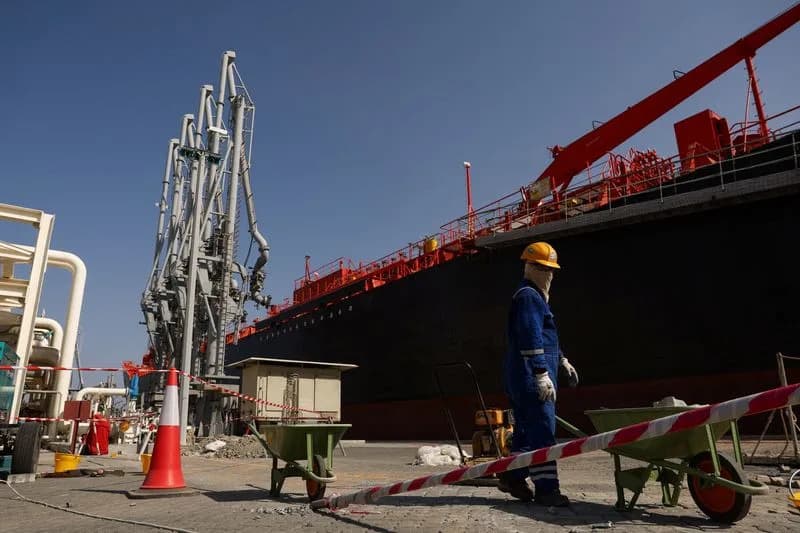
Technically, building long pipelines across desert and coastlines is feasible but expensive and time‑consuming. Security risks are substantial: Israeli terminals at Eilat and Ashkelon have been targeted by missiles and drones, and Eilat saw so few visiting ships last year that operations were temporarily suspended. A new pipeline would also create a long, visible target for potential attackers.
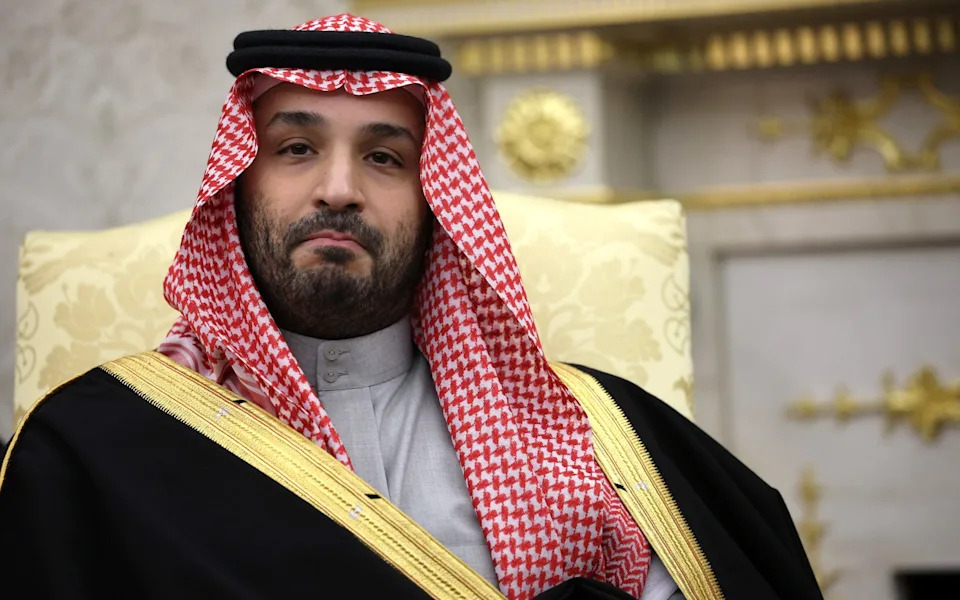
Crown Prince Mohammed bin Salman of Saudi Arabia has frequently accused Israel of genocide - Win McNamee/Getty Images
Diplomatically, the biggest obstacle is the lack of formal ties between Saudi Arabia and Israel. Riyadh has insisted that normalization depends on progress toward an independent Palestinian state — a demand Israel has not accepted. Despite this, behind‑the‑scenes contacts and growing Gulf investment in Israeli energy (for example, Mubadala Energy's $1 billion stake in Israel's Tamar gas field) show the contours of a pragmatic relationship driven by energy and security considerations.
What Analysts Say
Experts caution that pipelines are a partial solution rather than a full replacement for tanker routes. Claire Jungman of Vortexa describes pipelines as a "pressure valve": while they can move significant volumes, they cannot replace the bulk capacity carried by tankers. The article cites crude flows through Hormuz that dropped to about 1.5 million barrels per day (b/d) in May — roughly a 90% decline from normal levels — before recovering to about 5.3 million b/d by July, with pipelines filling only part of that gap.
Michael Carolan of Argus Media notes that Saudi Arabia already uses east‑west pipelines, the Suez Canal and the Sumed pipeline to sustain exports, but warns that production and storage facilities remain vulnerable and that a new pipeline would not be a fail‑safe solution.
Outlook
For now, discussions are exploratory. Building an overland corridor through Israel could offer strategic benefits — greater export resilience for Gulf producers and increased geopolitical ties — but major engineering costs, security threats and unresolved diplomatic conditions make it a complicated and long‑term prospect. Gulf states are likely to pursue a mix of options rather than rely on any single fix.
Key Facts: Trans‑Israel Pipeline length ~163 miles; targeted attacks have disrupted Israeli terminals; pipelines can only replace a fraction of tanker capacity; normalization between Saudi Arabia and Israel remains the primary diplomatic hurdle.
Help us improve.