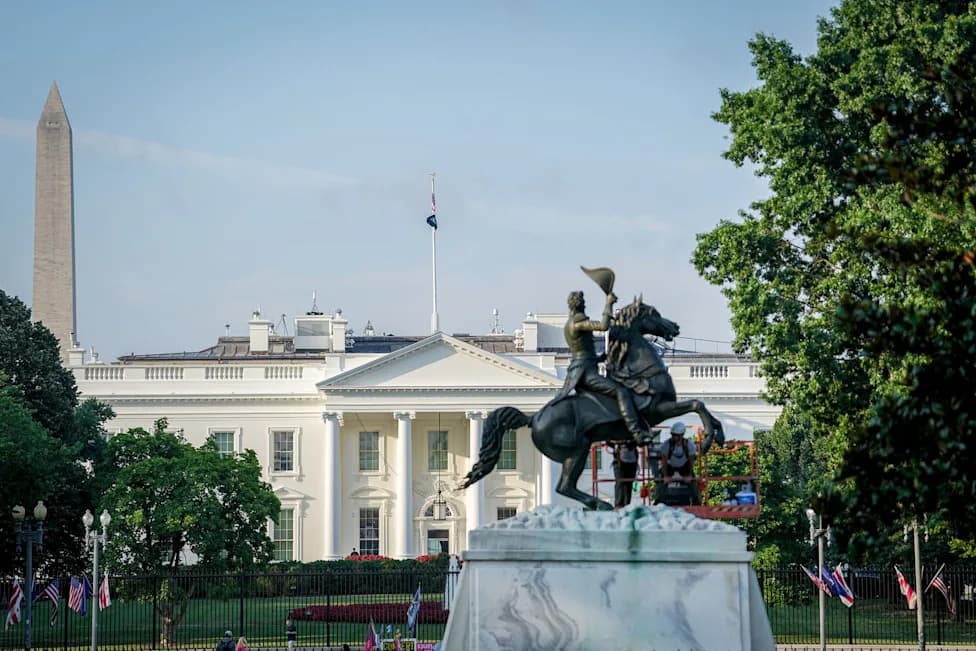
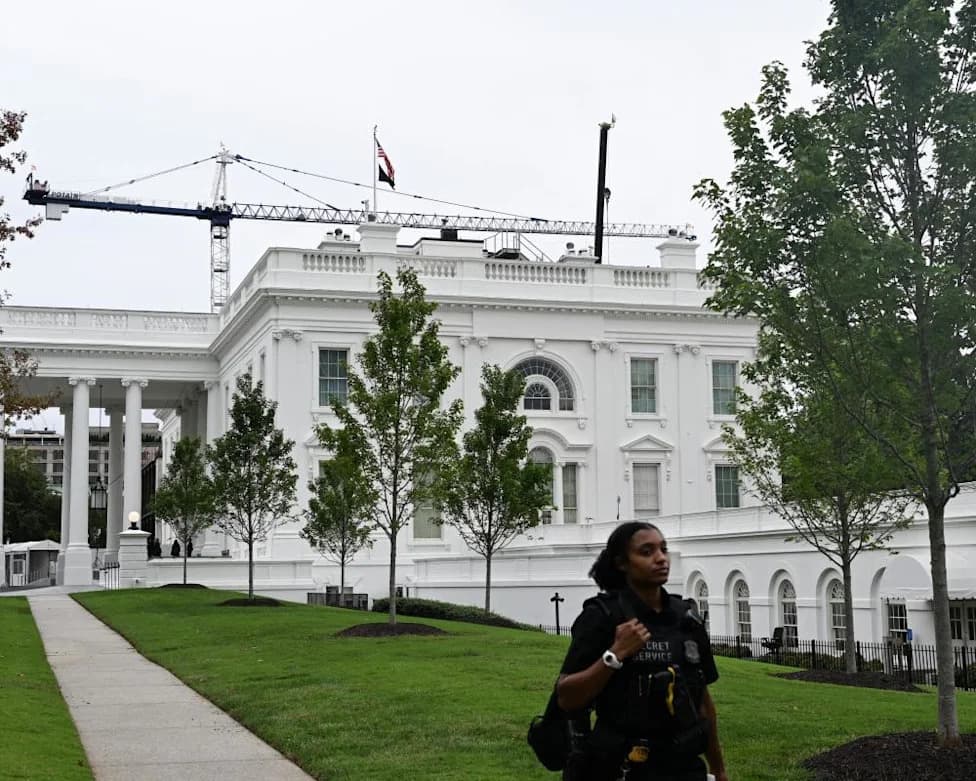
The US Court of Appeals has blocked above‑ground construction of President Trump’s proposed $400m White House ballroom, upholding an injunction obtained by the National Trust for Historic Preservation after the East Wing was demolished. The 2‑1 decision stressed that Congress — not the President alone — must authorize major alterations to the White House and paused enforcement for 14 days to allow a possible Supreme Court appeal. The administration cites security needs and private funding; preservationists argue no emergency justified proceeding without congressional approval.
Appeals Court Pauses Trump’s $400M White House Ballroom, Setting Up Possible Supreme Court Showdown
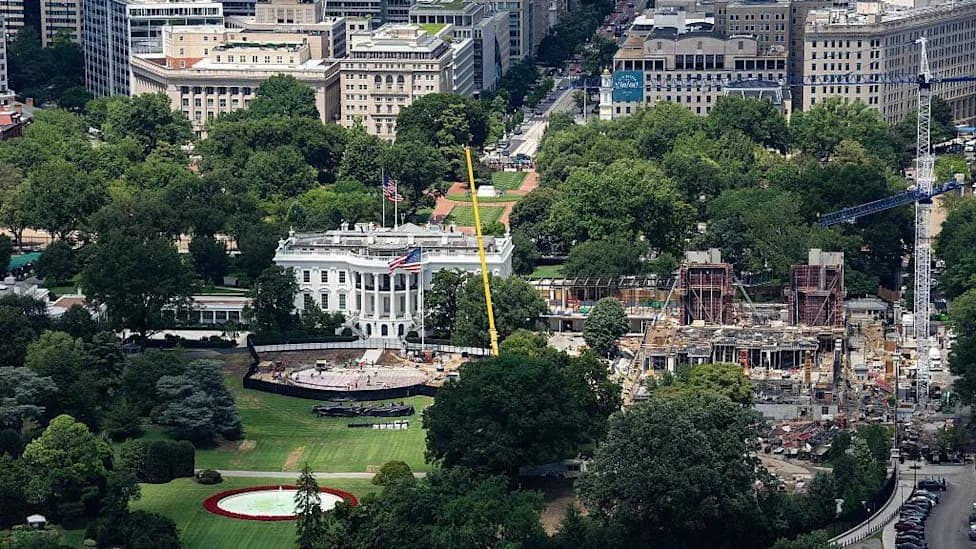
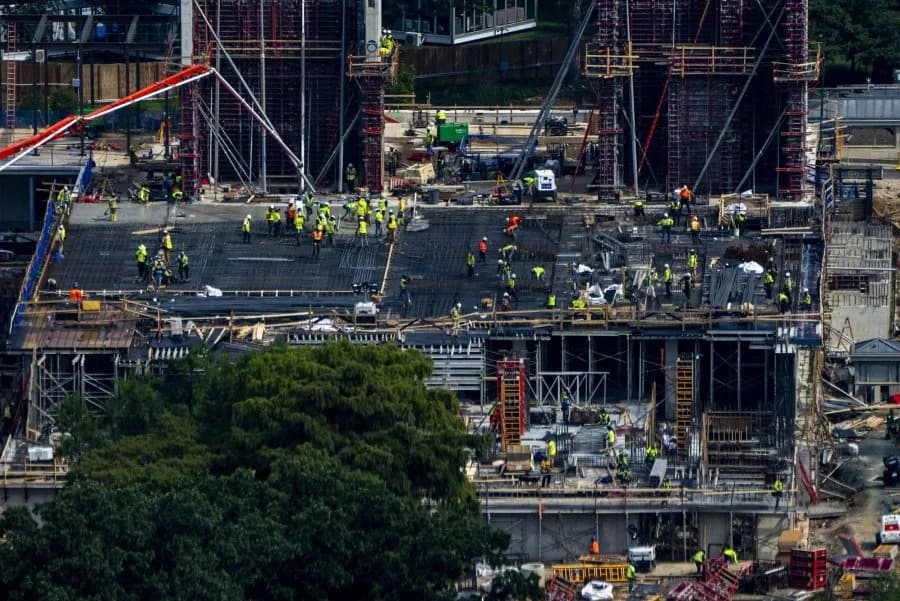
The White House helipad and new ballroom extension under construction in Washington DC on 5 August 2026 [Getty Images]
A federal appeals court on Friday ordered the Trump administration to stop above‑ground construction of a proposed $400 million White House ballroom, upholding a preliminary injunction won by the National Trust for Historic Preservation and setting the stage for a likely appeal to the US Supreme Court.
The three‑judge panel issued a 2‑1 decision that emphasized major alterations to the White House require congressional authorization. The majority wrote: "Whether or not a massive ballroom should be constructed is for Congress to decide and is not a matter for Executive self‑help," adding that a President is a temporary tenant, not the owner, of the Executive Residence.
"The President has no — and claims no — constitutionally assigned authority over that property, which is designed and maintained for the use of all Presidents, current and future, and for the American people."
The injunction preserves a lower court order that twice blocked above‑ground work while allowing excavation and other underground activities to continue. The appeals court paused the immediate effect of its ruling for 14 days to give the administration time to seek emergency review at the Supreme Court.
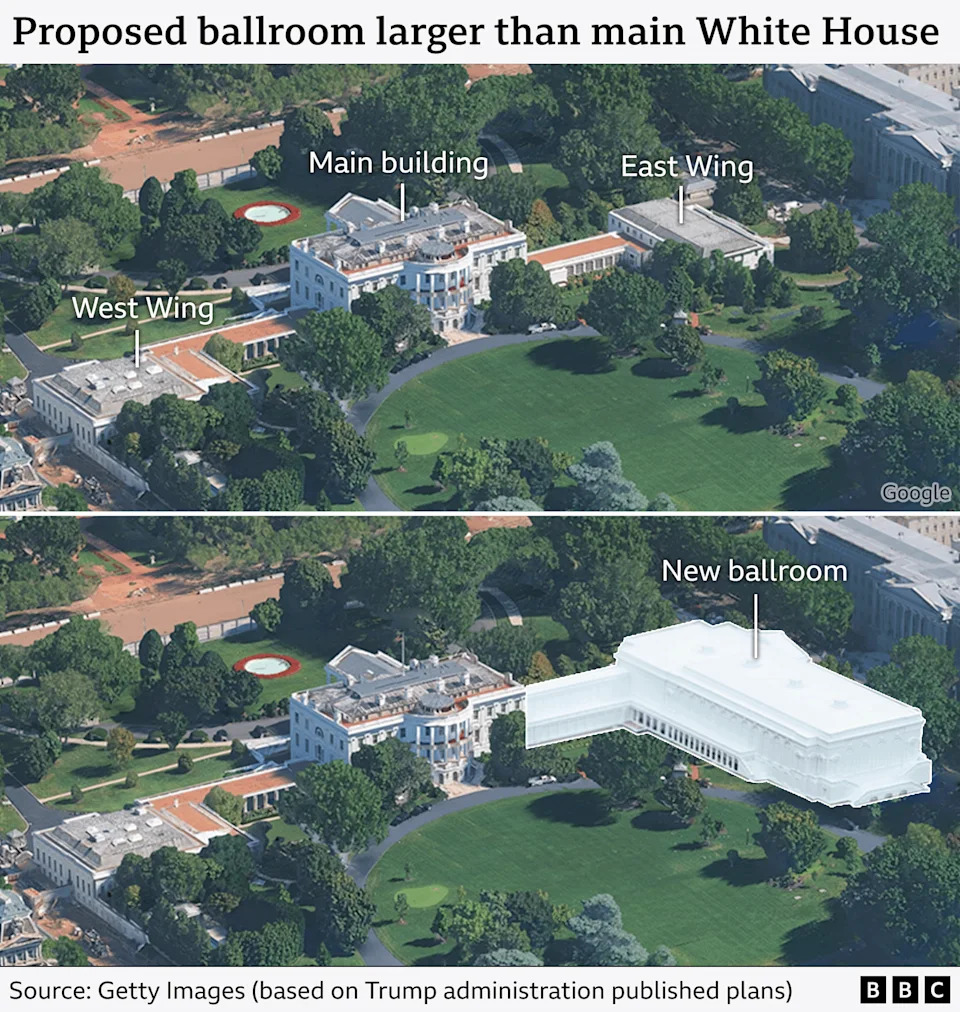
[Getty Images]
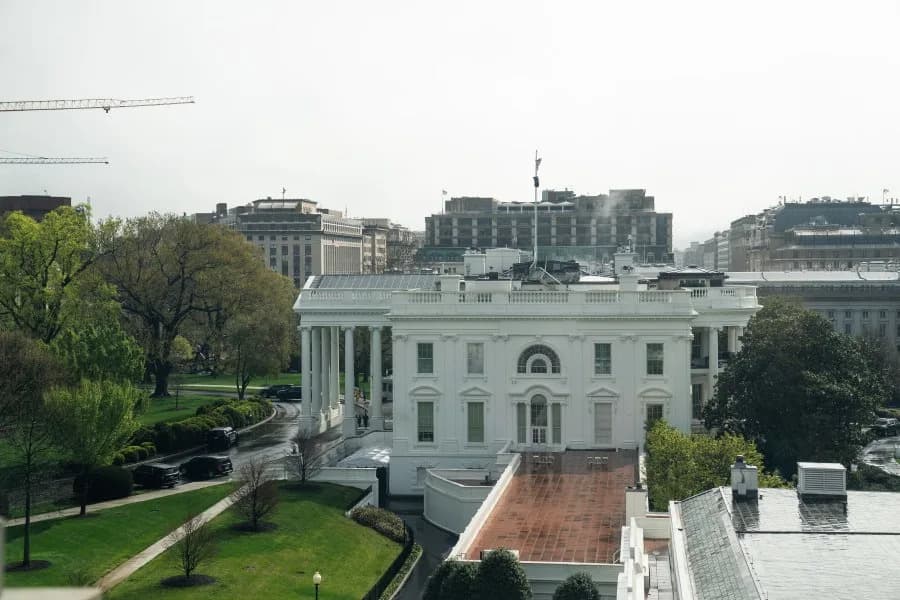
The National Trust sued after the administration demolished the East Wing — built in 1902 — last year and began work without seeking explicit congressional approval. Preservationists argue that demolishing and redesigning parts of the historic Executive Residence cannot be justified as an emergency and requires statutory authorization.
The administration contends the project includes a below‑grade security complex and other features necessary to protect the White House from evolving threats, including drones, ballistic attacks and biohazards. Officials have described the plan as containing bomb shelters, medical facilities and hardened security elements. The White House and Department of Justice were contacted for comment.
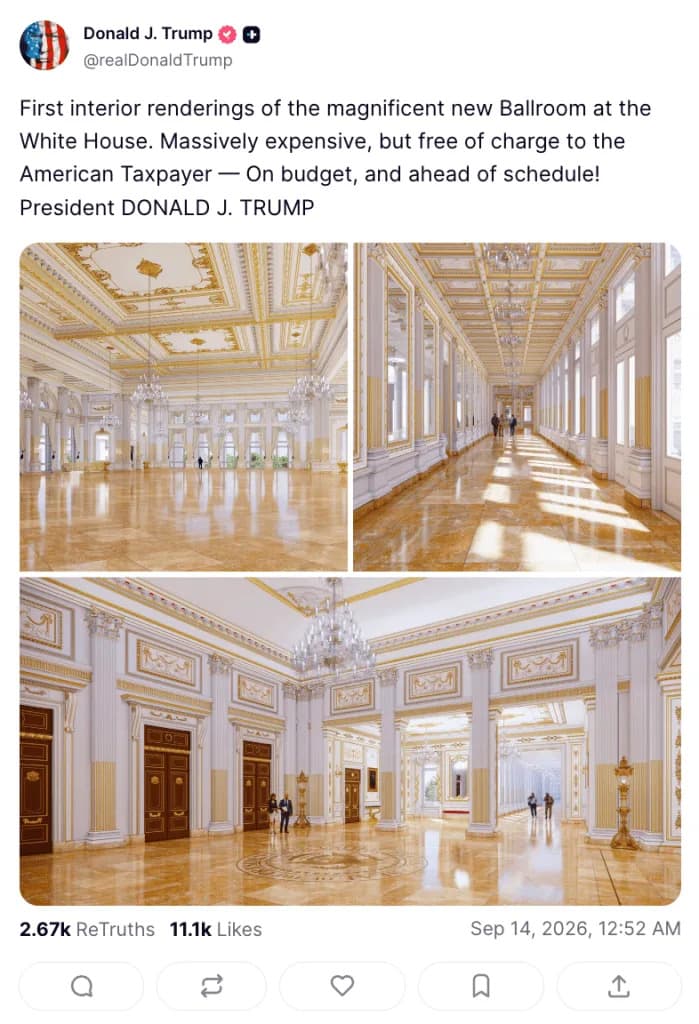
President Trump denounced the ruling on social media as "horrendous" and "politically motivated," citing the dissenting judge’s charge that the injunction was "a blatant abuse of discretion." He reiterated that the ballroom is being financed by private donors, is ahead of schedule and under budget, and was intended as a gift to the American people. Some Republican lawmakers have proposed using part of a broader package for Secret Service upgrades to help fund related security work, though a federal budget watchdog rejected that approach in May.
The appeals court stressed that its opinion does not decide whether a ballroom is desirable or whether Congress might eventually authorize the project. Instead, the court said, it only prevents the administration from proceeding above ground without the statutory authority required by the Constitution and federal law during the district court’s expedited litigation.
Brent Leggs, President and CEO of the National Trust for Historic Preservation, praised the decision, saying the White House is "a global landmark that symbolizes American identity and the ideals of democracy" and belongs to the American people. With the administration indicating it will seek Supreme Court review, the dispute over the ballroom is likely to continue at the highest level of the judiciary.
Help us improve.