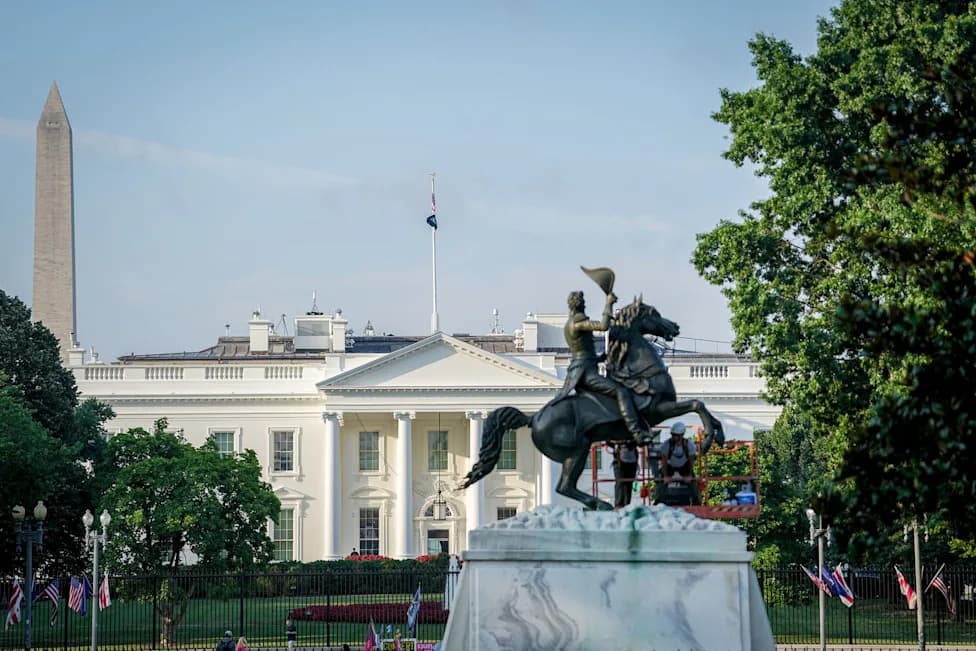
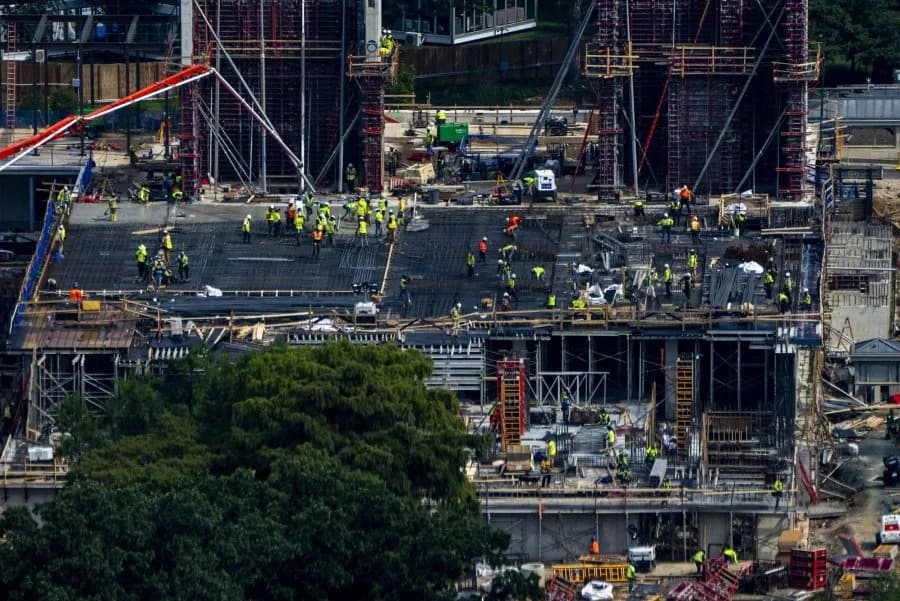
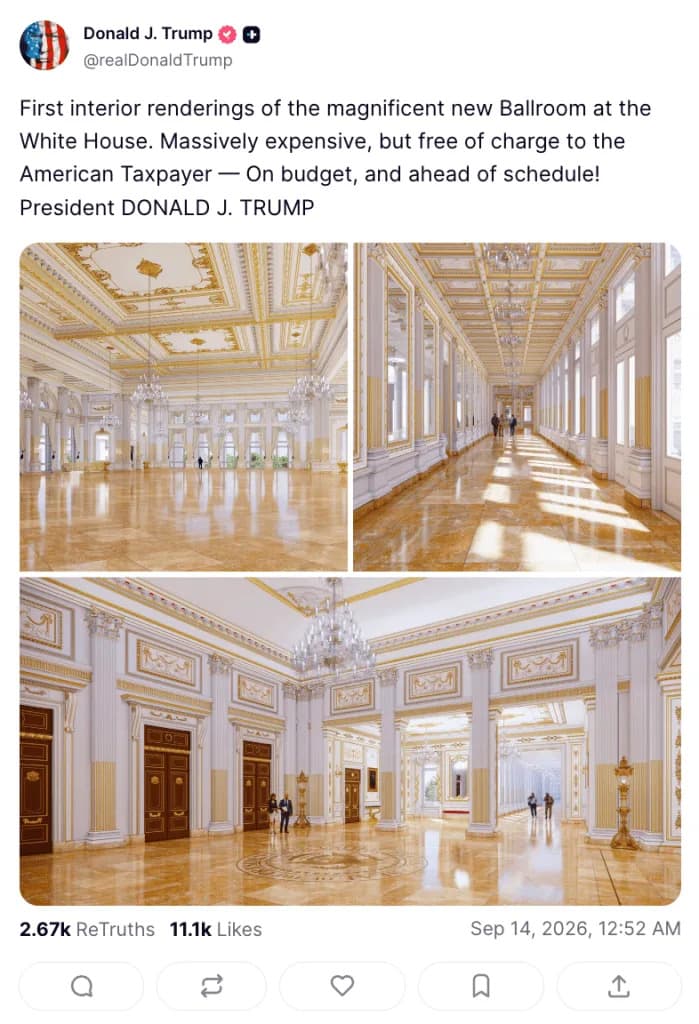
The Supreme Court issued a narrow order allowing above‑ground work on the new White House ballroom to continue while legal challenges proceed. NewsNation photos show rapid progress after the decision, with roughly 250 workers reportedly operating up to 20 hours a day. The administration says the project is about two‑thirds complete and argues completion is needed for national security; lower courts had halted work for lacking congressional approval. Chief Justice John Roberts dissented, calling the unilateral expansion “likely unlawful.”
Supreme Court Clears Way for Above‑Ground Work on White House Ballroom; Photos Show Rapid Progress
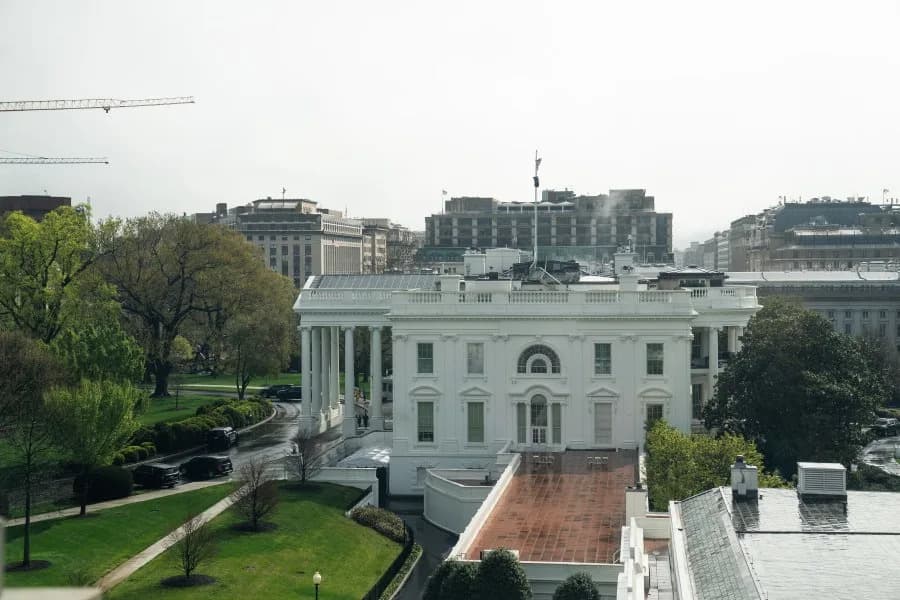
White House ballroom construction moving at rapid pace: Photos
Construction on the new White House ballroom has accelerated after a narrow Supreme Court order allowed above‑ground work to continue while legal challenges proceed. Photographs released by NewsNation show crews making rapid visible progress in the weeks following the court’s decision.
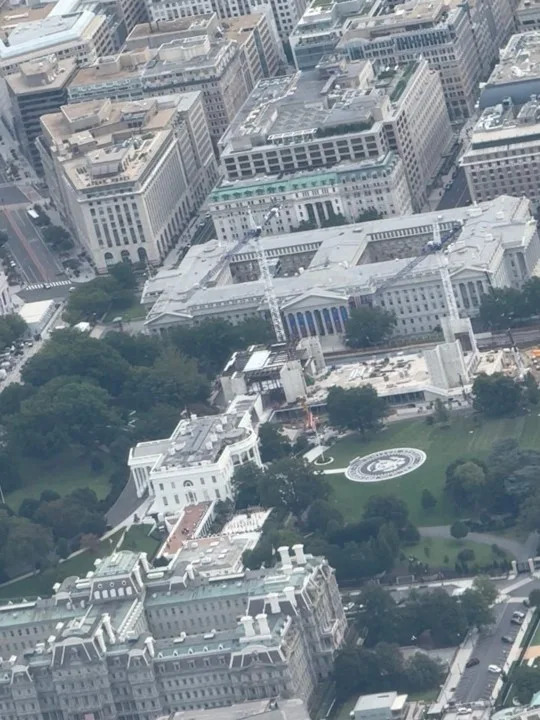
Heavy Work Schedule and Status
The administration has deployed about 250 workers on a demanding schedule—reportedly up to 20 hours a day, seven days a week—to advance the above‑ground phase. In court filings, officials say the project was already roughly two‑thirds complete and argued that stopping now would be impractical.
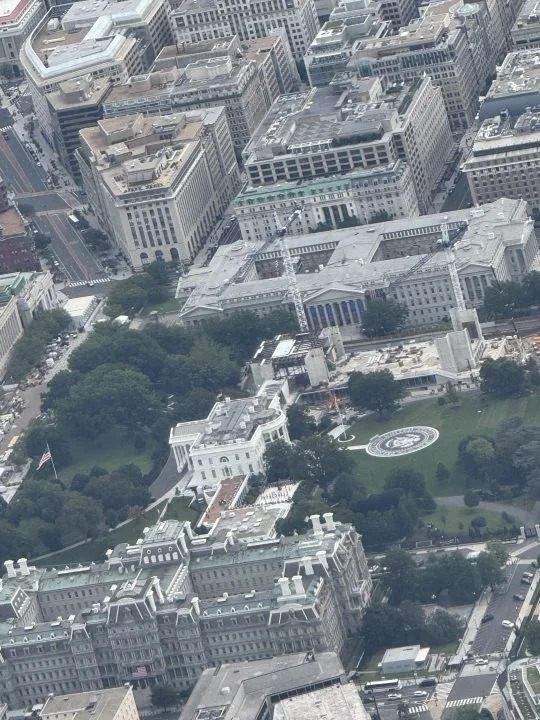
Legal Arguments and Stakes
Lower courts had blocked above‑ground construction on the grounds that the project lacked explicit congressional approval. The administration argues that the president has broad authority to renovate the White House and other federal buildings and has framed completion of the ballroom as a national security necessity. The Supreme Court’s temporary order permits construction to proceed while the broader constitutional and statutory disputes continue through litigation.
Dissent: Chief Justice John Roberts issued a dissent, warning that the unilateral expansion is “likely unlawful.”
What Comes Next
The work is continuing under the court’s limited allowance, and the case will return to lower courts for further proceedings. Observers say the dispute raises larger questions about executive renovation authority, congressional oversight of federal property, and how courts balance project momentum against legal process.
Related Note: The original report also referenced separate Middle East developments—such as Iraq’s statement about the origin of attacks on a Saudi pipeline—but those items are distinct from the White House construction story.
Help us improve.