Recent Democratic primary fights — amplified by a public shaming incident in Brooklyn and aggressive progressive organizing in New York — echo an earlier Republican pattern of "purifying, primarying, and purging." Those intra‑party battles helped create the conditions that enabled Donald Trump’s rise after years of RINO‑targeting and Tea Party insurgency. Political operatives warn that winning primaries is not the same as winning general elections: broad coalitions matter. Democrats should balance principle with pragmatism to avoid narrowing their tent and weakening their electoral prospects.
How Purity Tests Helped Trump Hijack the GOP — And Why Democrats Shouldn’t Repeat Them

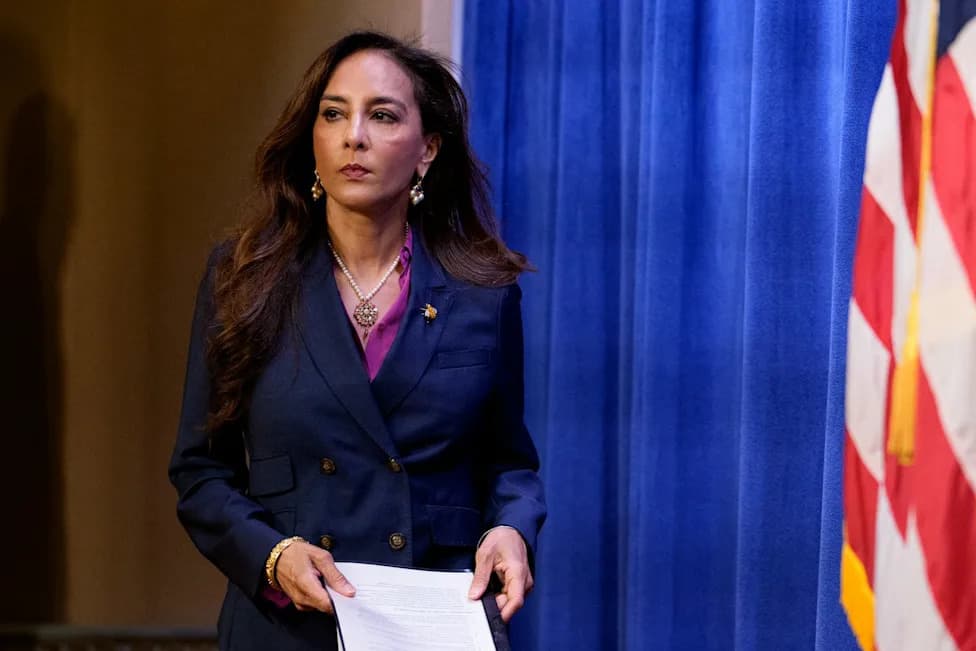
Rep. Dan Goldman (D-N.Y.) lost his primary to former city comptroller and DSA ally Brad Lander.
On a June Sunday in Williamsburg, Brooklyn, a man who had taken his seven-year-old daughter into a coffee shop to use the restroom left after buying a coffee to thank the staff. Hours later, Poetica Coffee posted an angry Instagram message that identified the customer from surveillance images as Democratic Rep. Dan Goldman and declared the shop would not serve "racists, fascists, homophobes, genocide enablers or anyone in between." The shop suggested his money was tied to AIPAC, issued a refund, and said he was unwelcome.
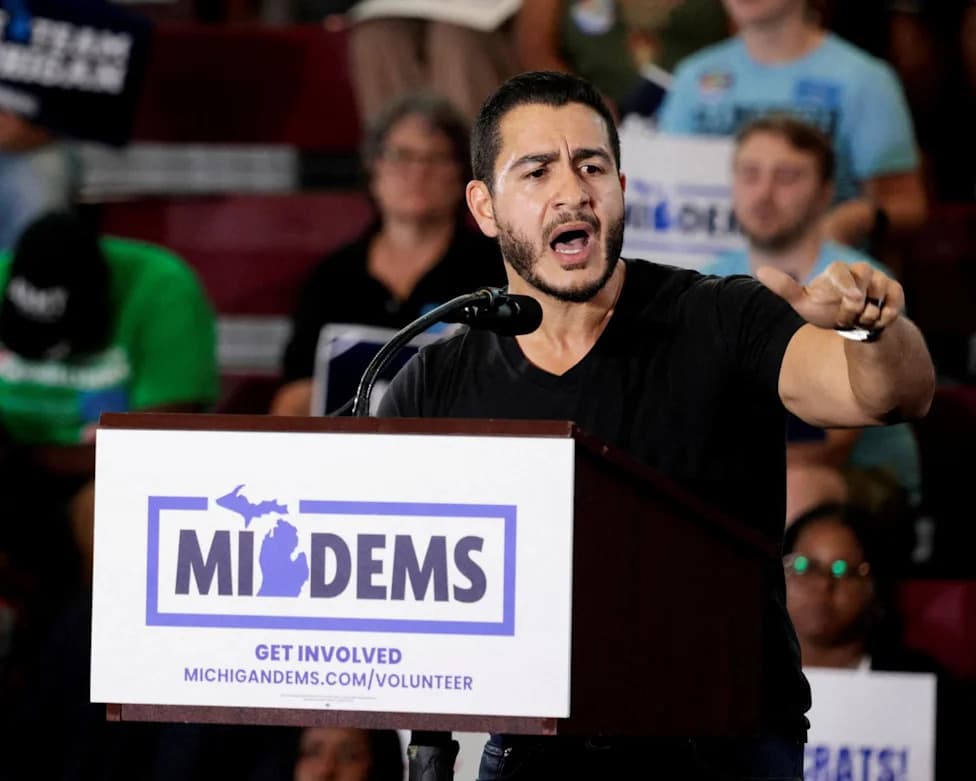
Two days later, Goldman lost a Democratic primary to a far-left challenger who made criticism of Israel a central issue. New York Mayor Zohran Mamdani — who had publicly denounced AIPAC and actively promoted anti‑establishment progressive candidates — declined to condemn the coffee shop’s post. His deep involvement in recruiting and supporting candidates helped several rivals defeat establishment Democrats.
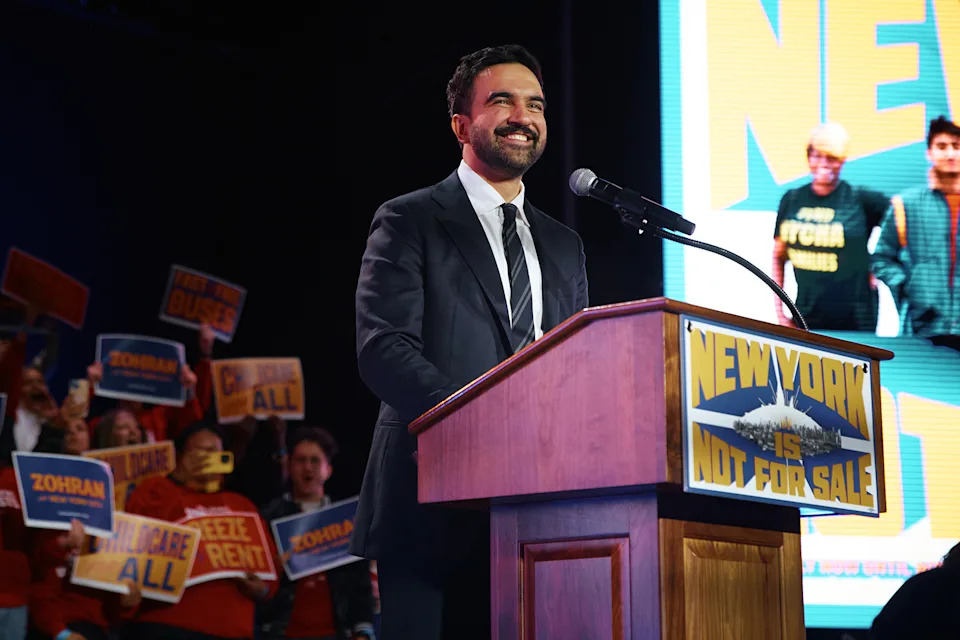
New York Mayor Mamdani flexed his political muscle in the primary this year and won victories for DSA candidates at the expense of establishment Democrats.
From RINO Hunting To Political Self‑Harm
The Democrats’ intra-party fights echo an older Republican story. For decades the GOP was a large coalition of fiscal hawks, social conservatives, neoconservatives, libertarians and traditionalists. That coalition produced decisive victories in the Reagan era, but internal campaigns to enforce ideological purity began to fray the tent.
In 1999 the Club for Growth emerged to champion fiscal discipline, targeting incumbents it deemed insufficiently conservative. Its efforts — and later the Tea Party’s insurgency after the 2008 financial crisis and bank bailouts — expanded the “RINO” label beyond fiscal matters to encompass social and foreign‑policy disagreements. Primary fights grew more frequent and bitter; candidates who might have been electoral assets were pushed aside for ideological reasons.
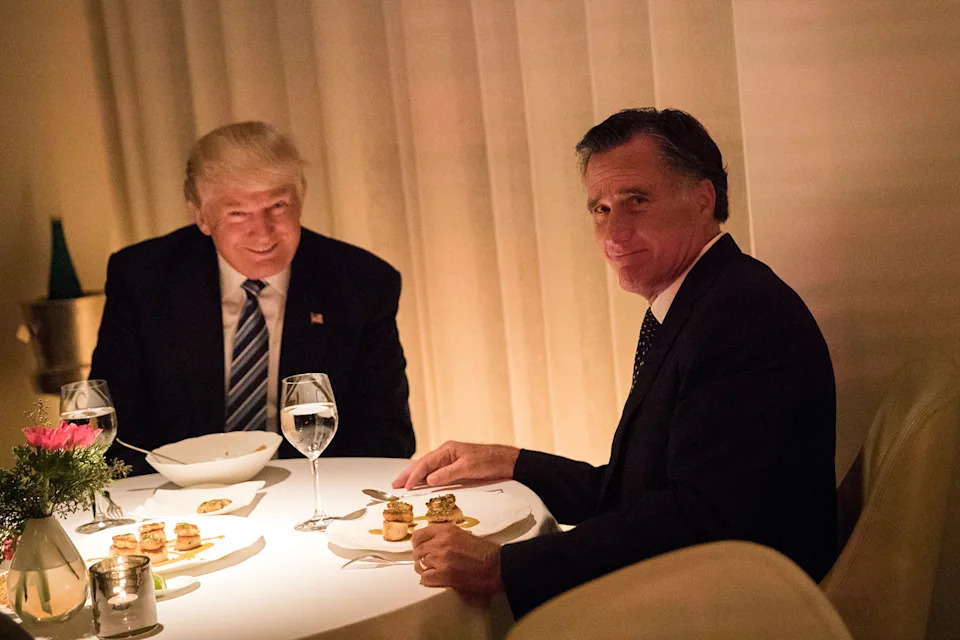
Then President-elect Donald Trump and Sen. Mitt Romney at dinner in 2016. Romney would leave the Senate after clashing with the president and the MAGA wing of the party. Romney voted to impeach Trump over the attempt to overturn the 2020 election.
Those purges didn’t create Donald Trump, but they helped create the opening he exploited. By the time Trump won the 2016 nomination, the party had been conditioned by years of intra‑party warfare that rewarded confrontation over coalition‑building. Once Trump consolidated power, long-standing GOP orthodoxies shifted: deficits rose, trade policy moved toward protectionism, norms around governance weakened, and loyalty to a single leader often trumped coherent governing ideas.
Is The Left Repeating The Same Pattern?
On the left, online influencers and activist networks increasingly press candidates for strict litmus‑test positions on issues from Israel to immigration, criminal justice and health care. Figures such as Hasan Piker have used their platforms to demand ideological purity and to amplify challengers who promise uncompromising change. That pressure can help energize a base, but it also risks alienating swing voters, working‑class communities, and longtime coalition partners.
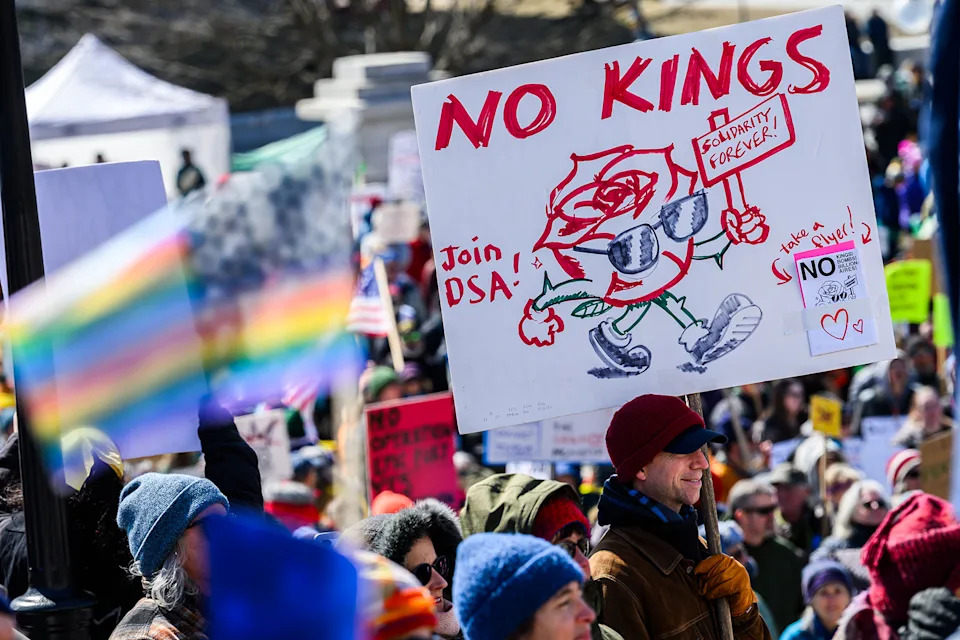
Protestors at a No Kings anti-Trump demonstration at the Vermont State House in Montpelier, Vermont.
Recent primaries illustrate the tradeoff. Progressive candidates who win nominating contests by appealing to energized activist bases may struggle to hold the broader coalition that win general elections — a point underscored by losses or narrow wins in districts and the backlash from essential constituencies such as Black and working‑class voters.
“There is a real danger of winning the primaries and losing the war,” Obama White House veteran David Axelrod warned. “An opposition party that is unified to the degree it can be in a big, diverse country has a better shot than one that is at war with itself.”
Lessons And A Way Forward
The GOP cautionary tale shows the political costs of prioritizing purity over pragmatism: weakened coalitions, lower turnout in some cycles, and ultimately the rising influence of a demagogic leader who benefited from a divided establishment. Democrats face a similar risk if internal purges become the dominant strategy.
To avoid that fate, parties should emphasize coalition building, prioritize electability and governance, and protect coalition partners who may disagree on noncentral issues. Doing so doesn’t mean abandoning principles; it means choosing which fights matter most to win broad public support and to govern effectively.
For voters who feel politically homeless — disaffected conservatives repulsed by MAGA and Democrats alienated by the far left — this period creates space for candidates who emphasize competence, civility and pragmatic solutions. If both major parties continue to reward ideological purity above coalition‑building, they risk shrinking their base and ceding influence to opportunists and extremists.
Help us improve.