The Democratic Party is deeply split over U.S. support for Israel, a divide that is already reshaping primaries and fundraising dynamics ahead of the midterms and the 2028 presidential cycle. Public reaction to the Gaza war and the Oct. 7 Hamas attacks has energized both pro-Israel and critical factions, leading some Jewish activists to back Republicans and making AIPAC-linked donations politically risky. The author urges Democrats to postpone their internal fight over Israel until after the midterms and to focus on shared economic and policy priorities now.
Israel Is the Tipping Point for Democrats — Unity at Risk Ahead of the Midterms and 2028
Under the Democratic Party's proclaimed "big tent," a sharp ideological struggle over U.S. policy toward Israel is intensifying and could shape campaigns through the 2026 midterms and into the 2028 presidential race. While Democrats remain divided on issues such as socialism, transgender rights, immigration and outreach to the white working class, the clearest and most consequential fault line today concerns U.S. support for Israel.
"The genocide in Gaza has had an overwhelming effect on large, significant segments of the American public," said Ian Lustick, co-author of Israel's Lobby: America in the Grip of a Foreign Power. "Israel's policies in the past 20 years have become essentially indefensible."
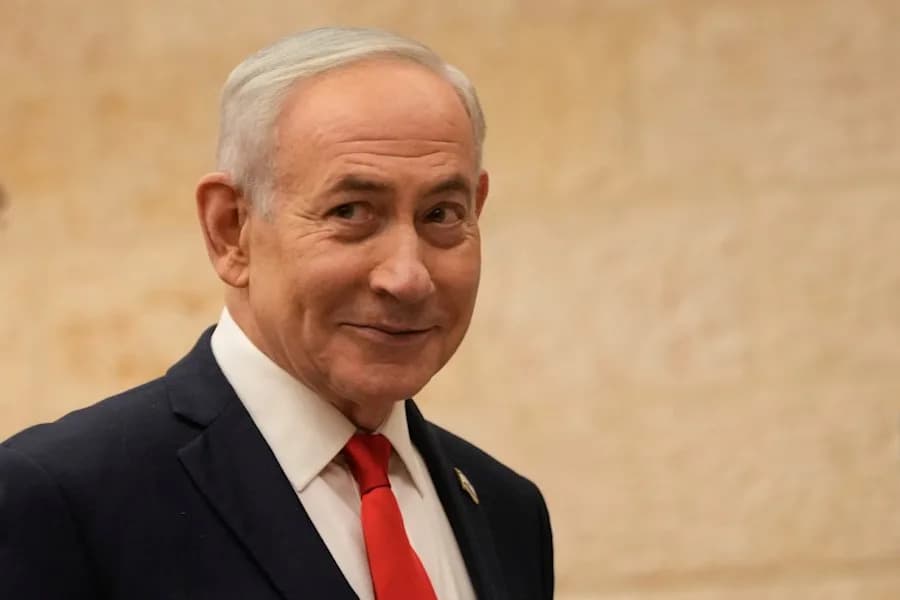
For Jews critical of Prime Minister Benjamin Netanyahu's government, the Oct. 7 Hamas attacks — which killed roughly 1,200 Israelis and left hundreds hostage — do not justify the mass civilian casualties in Gaza or strikes that have at times targeted journalists and medical personnel. Conversely, single-issue pro-Likud voters view a Democratic Party willing to curb U.S. aid to Israel as a reason to back Republicans such as J.D. Vance or Marco Rubio and a GOP-controlled Congress.
How the Debate Is Playing Out in Races
That divide is already influencing competitive Senate contests. In Michigan and Georgia, some pro-Likud activists have shifted support to Republican candidates. After Abdul El-Sayed won a Democratic primary in Michigan, Detroit businessman Eric Bronstein — a Democrat — urged Jewish Democrats and independents to support Republican former Rep. Mike Rogers. Several Jewish Democratic bundlers later attended a Rogers fundraiser.
Not all Jewish Democrats agreed. Michigan Attorney General Dana Nessel declined to endorse Rogers, saying at a meeting of Jewish Democrats, "we have a moral imperative to place the needs of the world above even our own self-interest and, yes, even our own survival," a remark that drew protests from Likud supporters.
In Georgia, Atlanta Jewish Times publisher Michael Morris publicly accused Sen. Jon Ossoff (D) of misrepresenting his support for Israel. El-Sayed and Ossoff both condemned alleged antisemitic posts by streamer Hasan Piker, but some legacy Jewish organizations said those responses were insufficient or belated.
Money, Messaging and Primary Upsets
Accepting AIPAC-linked contributions has become politically risky in insurgent primaries. For decades AIPAC and allied groups wielded influence through donations and super PAC support, but this cycle those funds have sometimes proven toxic. In Michigan, Rogers's campaign has sought discretion around AIPAC funding, routing money through allied organizations to blunt optics, even as Rogers attended multiple fundraisers. In Oklahoma, Democratic primary candidate N'kiyla Jasmine Thomas ran a social media spot mocking "AIPAC Funds" and decisively beat her pro-Israel centrist opponent, Jim Priest.
Florida's Senate primary highlighted the tensions further. State Rep. Angie Nixon, a democratic socialist who has described Israel's actions as genocide, criticized primary front-runner Alex Vindman for silence and introduced state-level legislation calling for a ceasefire. Nixon refuses AIPAC money and supports cutting U.S. military aid to Israel; her stance helped power an upset primary win.
These developments show that both grassroots organizing and single-issue activism can reshape traditional constituencies and fundraising patterns within the party.
What Comes Next
There are unpredictable variables. If Prime Minister Netanyahu is voted out or resigns, it could alter the contours of U.S. debate. Yet, despite sharp differences about Israel, Democrats remain largely aligned on immediate midterm messaging: prioritizing economic issues and affordability, expanding access to health care, raising the federal minimum wage, supporting free preschool, and addressing technology and AI concerns.
My practical recommendation for Democratic strategists is straightforward: defer the most divisive intra-party fights over Israel until after the midterms so the party can focus on shared priorities that matter to voters in November.
Mark I. Pinsky is a journalist and author based in Durham, N.C. He served as a civilian volunteer attached to the IDF in El Arish, Sinai, in the summer of 1967.
Help us improve.