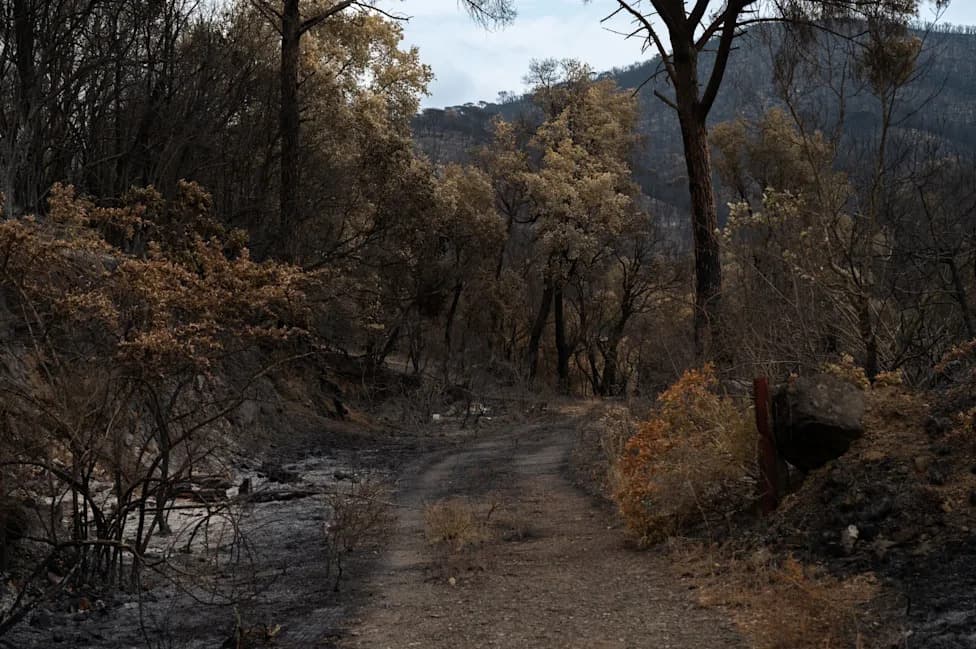
Rapid analysis by World Weather Attribution finds human-caused warming roughly doubled the likelihood of the hot, dry, windy conditions that fueled Canada’s summer wildfires. Lightning-started fires in remote northern forests burned more than 5,000 square miles as exceptional weather turned ignitions into enormous, fast-moving blazes. Scientists say climate change — not forest mismanagement alone — is the primary driver of the rising area burned, and they urge rapid cuts to fossil-fuel emissions. The study is a quick attribution analysis and has not yet been peer reviewed.
Study: Human-Caused Warming Doubled Odds Of Weather That Fueled Canada’s Massive Wildfires
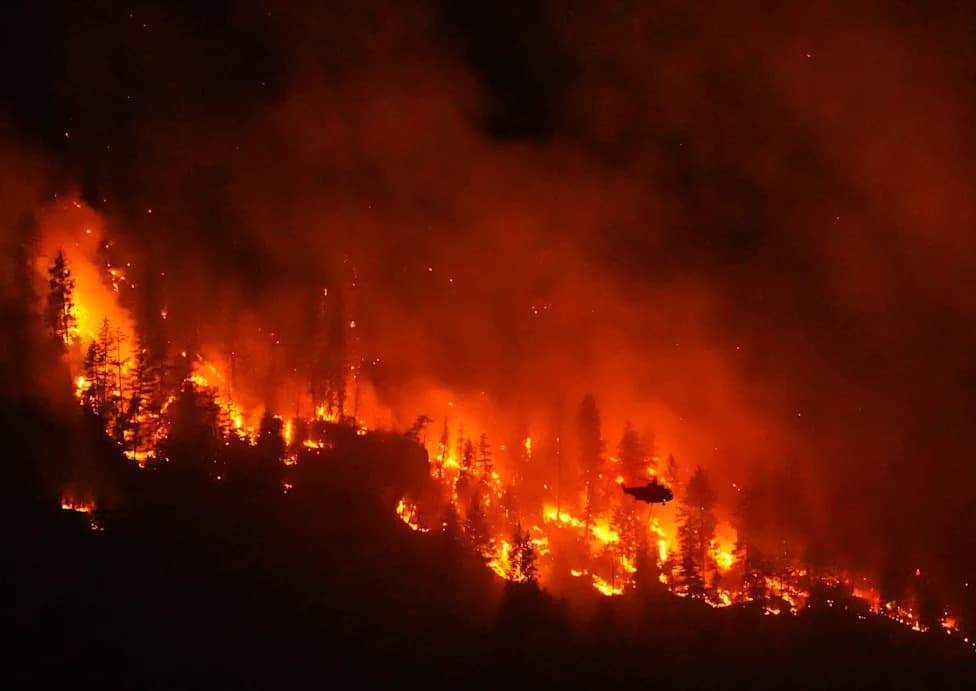
FILE - A helicopter conducting night operations prepares to drop water on the Quilpituk Creek wildfire burning on the west side of Okanagan Lake near Fintry, British Columbia, Aug. 3, 2026. (Darryl Dyck/The Canadian Press via AP, File)(DARRYL DYCK/The Canadian Press via AP)
A rapid international analysis found that human-driven climate change roughly doubled the likelihood of the hot, dry, windy conditions that ignited and amplified Canada’s vast summer wildfires — the same blazes that sent hazardous smoke across the United States and prompted criticism from U.S. President Donald Trump.
What the Study Did
The World Weather Attribution team used Canada's fire-weather index, which combines heat, lack of rain, low humidity and wind, to compare recent conditions with a counterfactual world without roughly 2.5°F (1.4°C) of warming since the preindustrial era. Using established attribution methods, the researchers concluded that the specific week of weather that produced the Ontario fires is now the kind of spell that occurs about once every six years, whereas it would have been much rarer in a preindustrial climate.
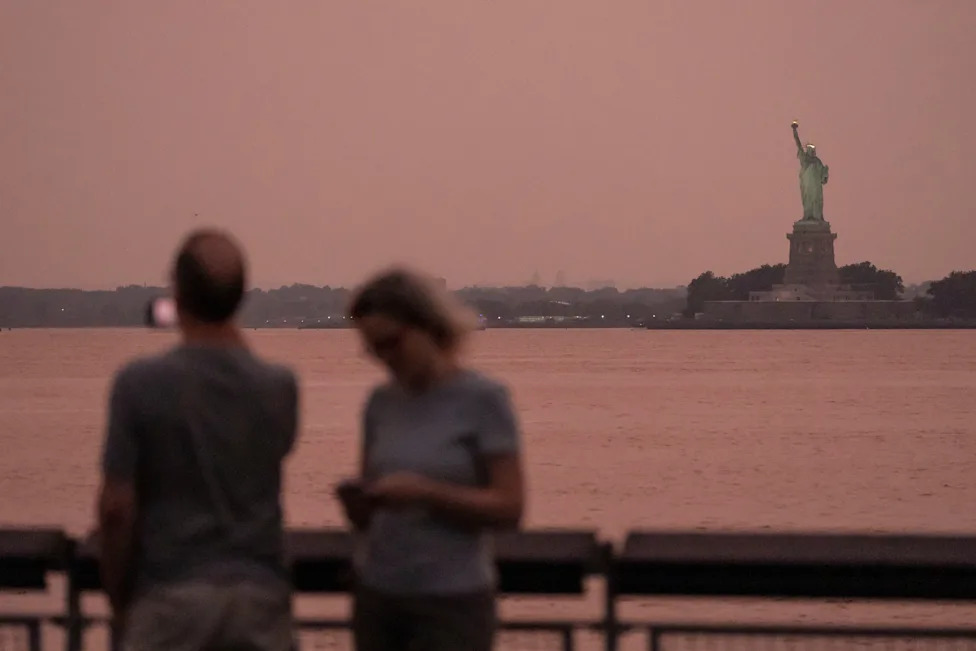
FILE - The Statue of Liberty is visible through haze due to Canadian wildfire smoke during sunset Aug. 5, 2025, in New York. (AP Photo/Yuki Iwamura, File)(AP Photo/Yuki Iwamura)
Scope And Findings
The study highlights the enormous fires in the remote Northwest Territories, where lightning ignitions and extreme weather combined to burn more than 5,000 square miles (about 12,950 square kilometers). Researchers say lightning provided many initial ignitions, but the exceptional heat, dryness and wind enabled those sparks to grow into fast-moving, uncontrollable blazes.
Expert Reactions
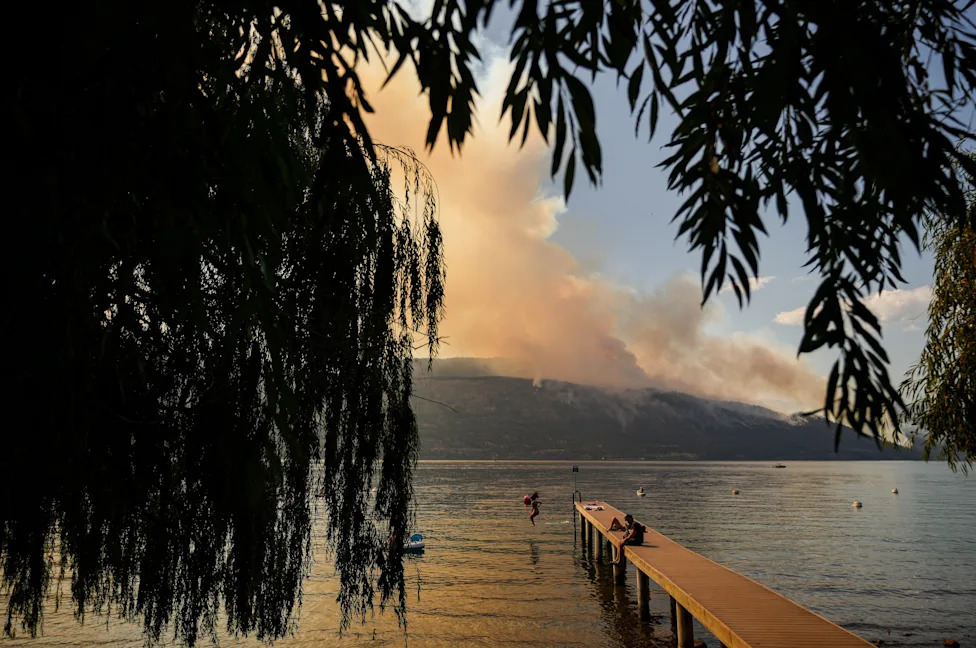
FILE - A woman jumps off a dock into Okanagan Lake, in Lake Country, British Columbia, as the Quilpituk Creek wildfire burns on the mountainside across the lake near Fintry, Aug. 3, 2026. (Darryl Dyck/The Canadian Press via AP, File)(DARRYL DYCK/The Canadian Press via AP)
Outside fire and climate scientists not involved in the quick analysis said the findings fit a broader pattern: hotter, drier conditions are making fires more frequent and severe. "In a pre-industrial climate this would have been much less likely to occur, maybe once in a lifespan. So climate change has made those events more likely," said Jonathan Boucher, a fire scientist with Canada’s Forest Service and a co-author of the study. Mike Flannigan of Thompson Rivers University added, "Mother Nature's been burning. Now she's on amphetamines and she burns more and more."
Policy Debate
President Trump blamed Canada’s forest management for the smoke that reached U.S. cities. On July 21 he said:
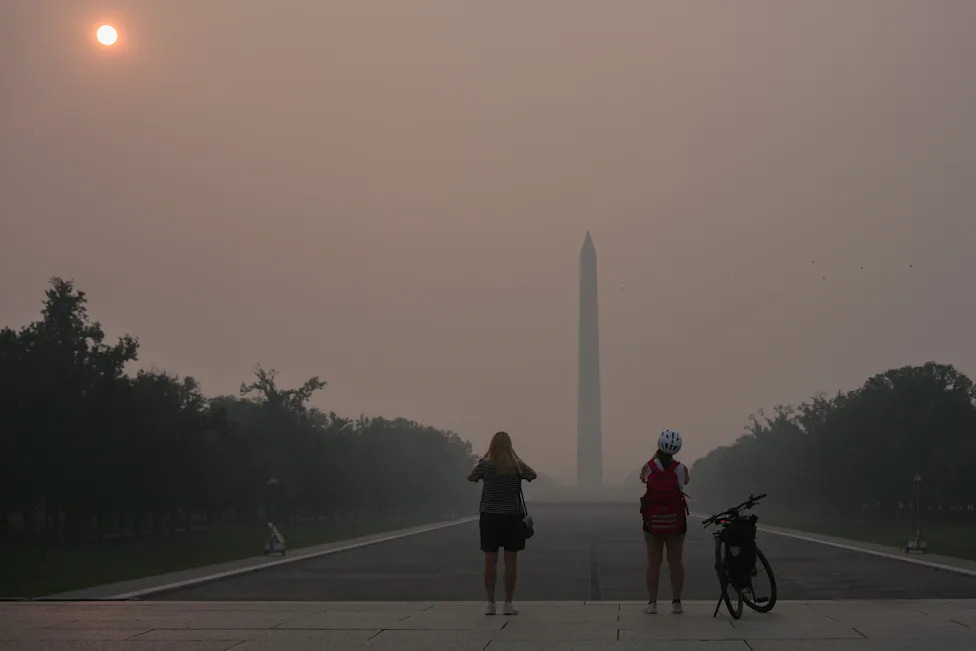
FILE - The sun is obscured by wildfire smoke as people stop to photograph the Washington Monument and Lincoln Memorial Reflecting Pool, July 17, 2026, on the National Mall in Washington. (AP Photo/Julia Demaree Nikhinson, File)(AP Photo/Julia Demaree Nikhinson)
"A lot of damage has been done. They're not managing their forests properly."
Canadian scientists pushed back, urging attention to long-term emissions rather than short-term forestry practices. "Smoke does not carry a passport, but carbon pollution does have a history. That history shows that the United States contributed more than any other country," said University of Victoria climate scientist Andrew Weaver.
Context And Caveats
The report is a rapid, or "flash," attribution study and has not yet been peer reviewed. Attribution studies assess how much climate change altered the odds of specific extreme conditions, not whether it "caused" every individual ignition. The authors noted similar analyses found a comparable doubling of probability for summer fires in France and a much larger climate signal for recent Spanish fires.
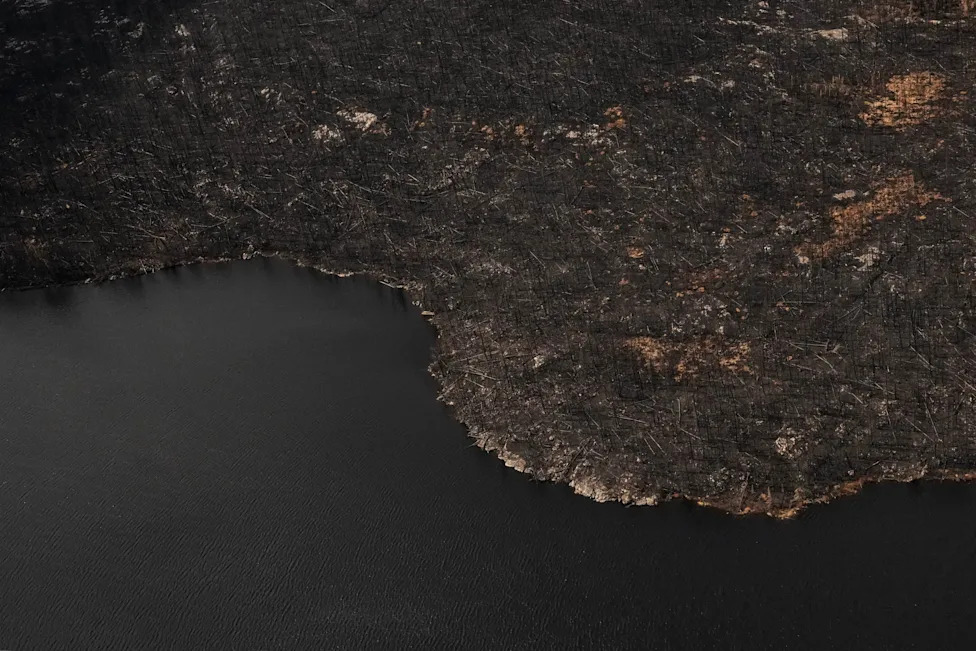
FILE - Wildfire damage is visible in the immediate area surrounding Collins First Nation, a small, remote Ojibwa community in northwestern Ontario, July 22, 2026. (Chris Young/The Canadian Press via AP, File)(Chris Young/The Canadian Press via AP)
Trend Data
Researchers and outside scientists also noted longer-term trends: Canada has warmed substantially faster than the United States in recent decades, and the average annual area burned in Canada has risen roughly 50% over the past 30 years, while U.S. burned area has more than doubled in the same period.
What This Means
Experts say that reducing fossil-fuel emissions remains essential to limit the frequency and severity of such extreme fire-weather events in the decades ahead. As study co-author Friederike Otto of Imperial College London put it: "If you care about anyone but the super rich, you have to stop burning fossil fuels because the impacts are here and they're now and have huge consequences."
Note: This article summarizes a rapid attribution study released by World Weather Attribution. The analysis has not yet undergone formal peer review.
The Associated Press' climate and environmental reporting is supported by philanthropic funding; AP retains editorial control of its coverage.
Help us improve.