Malaysian durian growers face mounting pressure as climate change disrupts flowering, pollination and fruit quality while rising fuel, fertilizer and pesticide costs squeeze margins. Malaysia's durian area expanded rapidly to 92,100 hectares in 2024, but oversupply and falling farmgate prices — even as China’s demand soars — have cut profitability for many growers. Farmers are adapting by moving orchards uphill, expanding water reserves, installing tube wells and using sensors to manage risks, though El Niño could intensify challenges.
Under Pressure: Malaysian Durian Growers Battle Climate Change and Rising Costs While Chasing China’s Booming Market
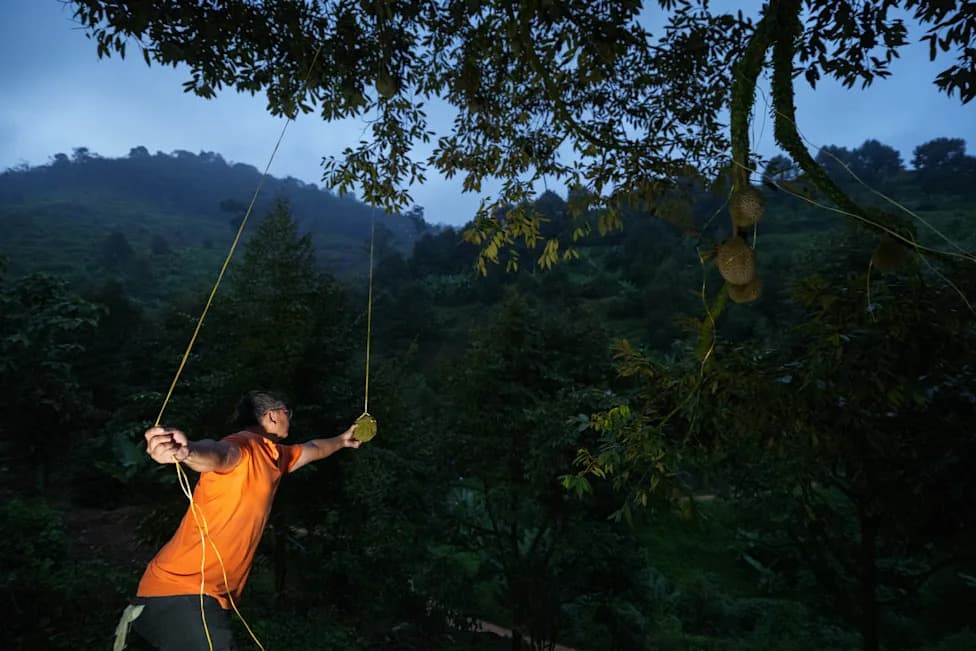
A durian harvester searches for ripe fruit in an orchard at dusk in Karak, Pahang state, Malaysia, Tuesday, June 23, 2026. (AP Photo/Vincent Thian)(AP Photo/Vincent Thian)
In Karak, roughly an hour’s drive from Kuala Lumpur, orchard owner Stephen Chow and his crew routinely work through the night under headlamps to harvest durians prized by Chinese consumers. Despite the intense labor, Chow says the business is under severe financial strain as changing weather and rising input costs make it harder to produce premium varieties such as Musang King and Black Thorn.
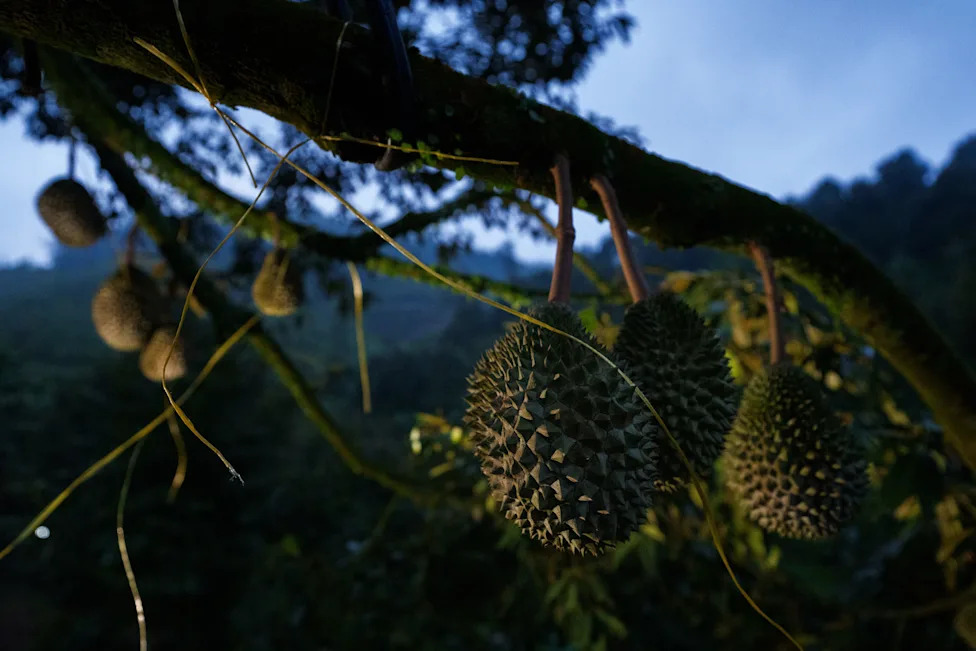
Durians hang from a tree at an orchard in Karak, Pahang state, Malaysia, Tuesday, June 23, 2026. (AP Photo/Vincent Thian)(AP Photo/Vincent Thian)
Climate shocks and rising costs
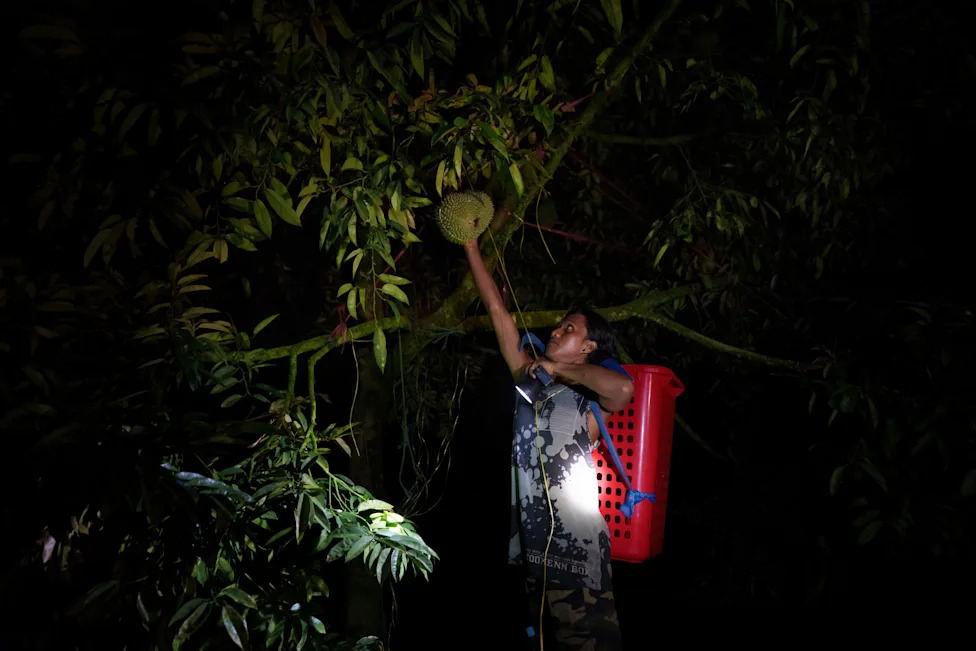
A worker sorts freshly harvested durians at a farm collection point in Karak, Pahang state, Malaysia, Tuesday, June 23, 2026. (AP Photo/Vincent Thian)(AP Photo/Vincent Thian)
Extreme weather has repeatedly hit Chow’s farm. Heavy rains in 2021 caused flooding that damaged about 100 trees and farm machinery, and persistent rain during several flowering seasons since then has disrupted pollination and reduced yields. Between February and April this year, afternoon temperatures reached 33–35°C (91–95°F) with most rain falling at night, a pattern that encouraged flowering but forced growers to increase pruning, irrigation and fertilization to protect fruit quality.
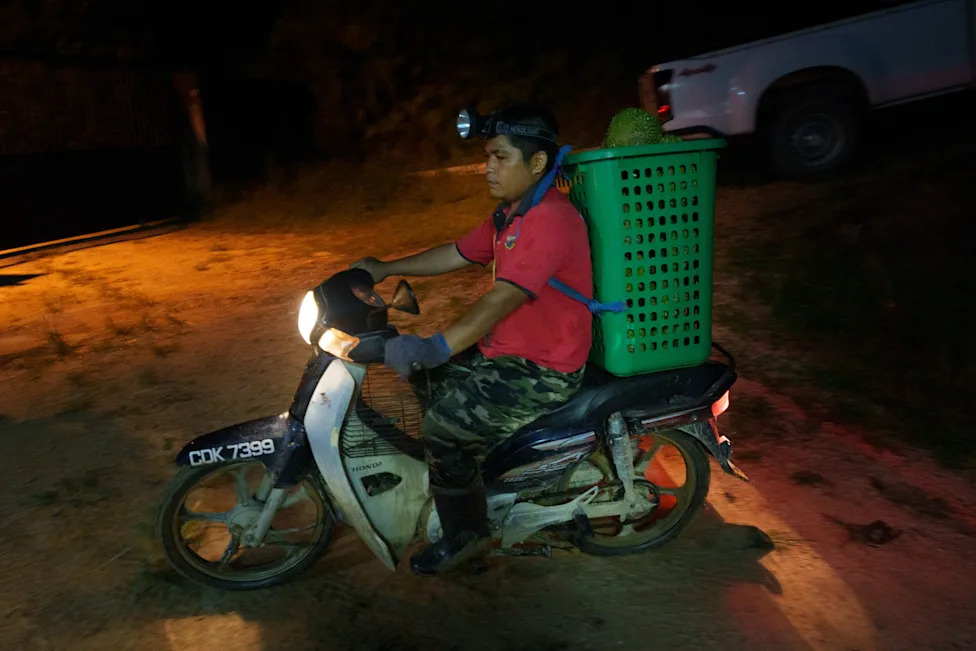
A worker transports freshly harvested durians on a motorcycle to a durian farm collection point in Karak, Pahang state, Malaysia, Tuesday, June 23, 2026. (AP Photo/Vincent Thian)(AP Photo/Vincent Thian)
Those measures, however, came with higher bills. Fuel and fertilizer prices rose after geopolitical tensions linked to the Iran war, while pesticide costs have climbed for many growers — one farmer reported a roughly 30% increase over three years.
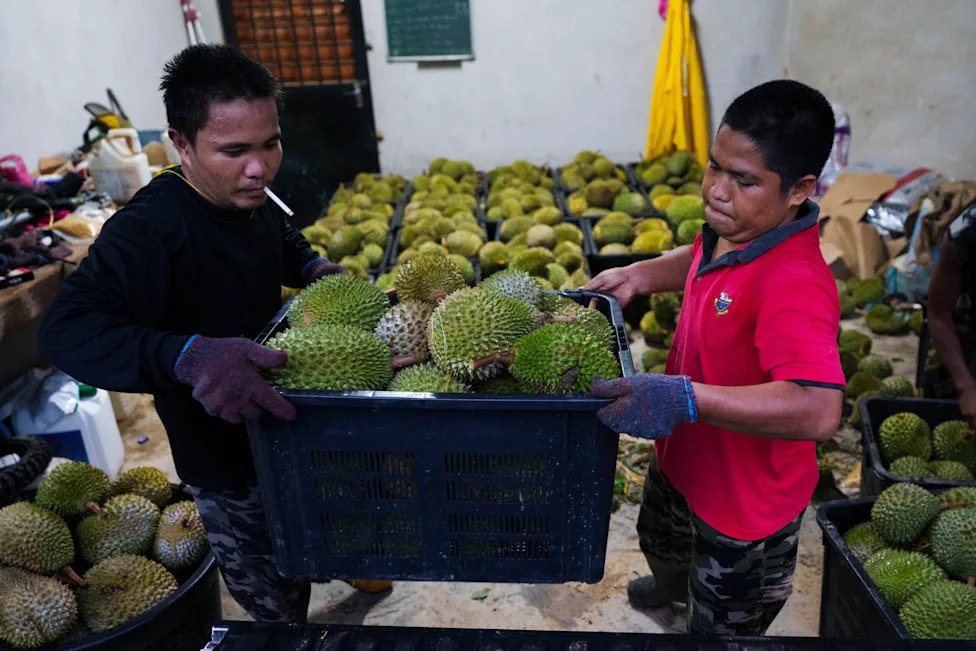
Workers carry a basket of freshly harvested durians at a farm collection point in Karak, Pahang state, Malaysia, Tuesday, June 23, 2026. (AP Photo/Vincent Thian)(AP Photo/Vincent Thian)
Oversupply, price swings and China’s appetite
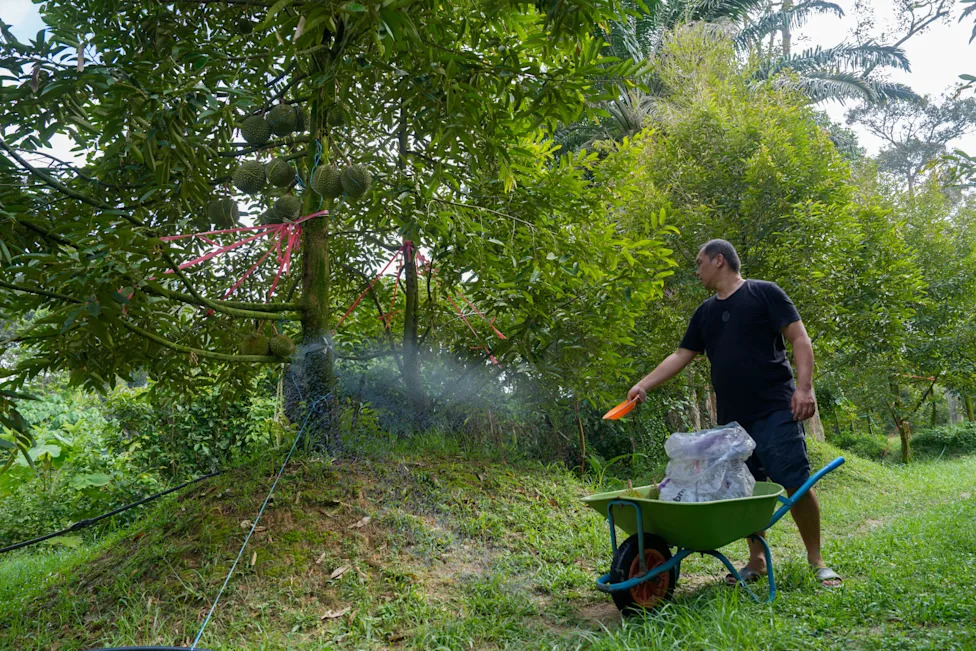
Durian farmer Stephen Chow sprays fertilizer on a tree at an orchard in Karak, Pahang state, Malaysia, Tuesday, June 23, 2026. (AP Photo/Vincent Thian)(AP Photo/Vincent Thian)
The rapid expansion of Malaysian durian acreage has created new market dynamics. Official figures show durian plantations covered 92,100 hectares (227,600 acres) in Malaysia in 2024 — nearly 40% growth since 2016 — and production rose almost 90% to about 568,800 tonnes.
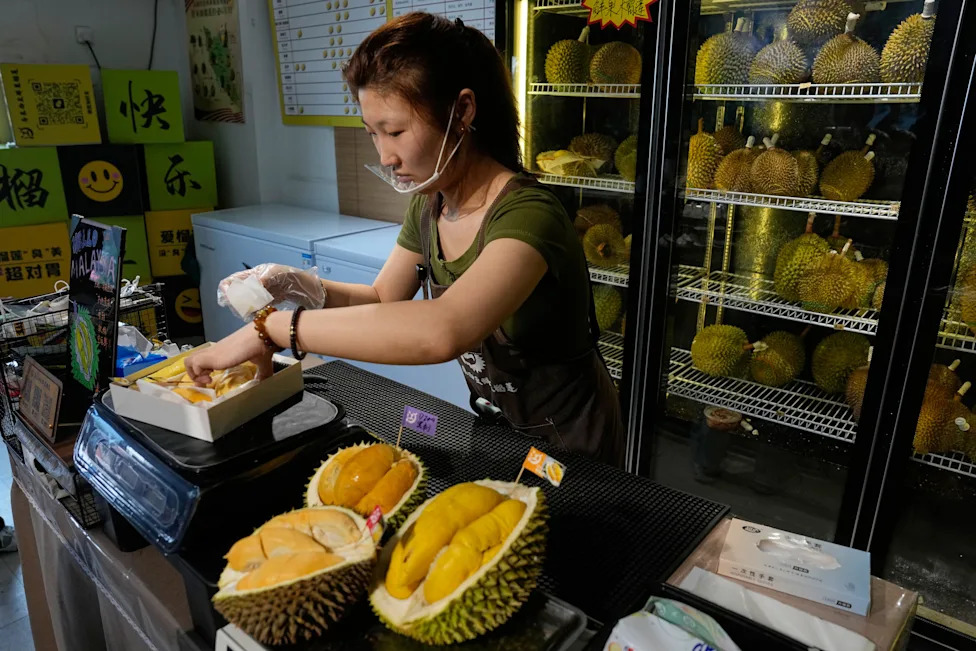
Worker Hou Yuxin packs durian fruit imported from Malaysia for delivery for a customer at a shop in Beijing, China, Monday, July 13, 2026. (AP Photo/Andy Wong)(AP Photo/Andy Wong)
That boom was driven in part by China, which began importing whole frozen Malaysian durians in 2019 and opened wider access to fresh fruit in 2024. The Food and Agriculture Organization says China accounted for roughly 95% of global durian imports between 2020 and 2022. China’s customs data show it imported 1.87 million tonnes of fresh durians worth $7.5 billion in 2025, a sixfold increase over the past decade.
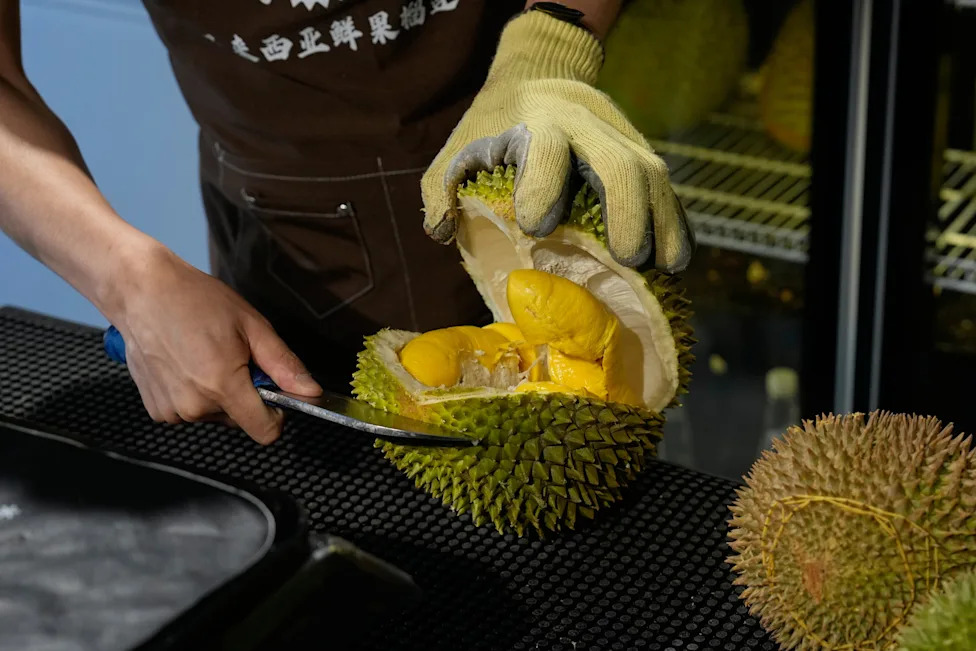
A worker opens durian fruits imported from Malaysia to pack and deliver for customer at a shop in Beijing, China, Monday, July 13, 2026. (AP Photo/Andy Wong)(AP Photo/Andy Wong)
Yet the surge in supply and more orchards maturing have pushed prices down in some seasons. Grade A Musang King from Chow’s orchard sold for the equivalent of about $8.60 per kilogram in early July — roughly half the price a year earlier and about one-third of its 2024 peak — squeezing margins even as demand remains strong.
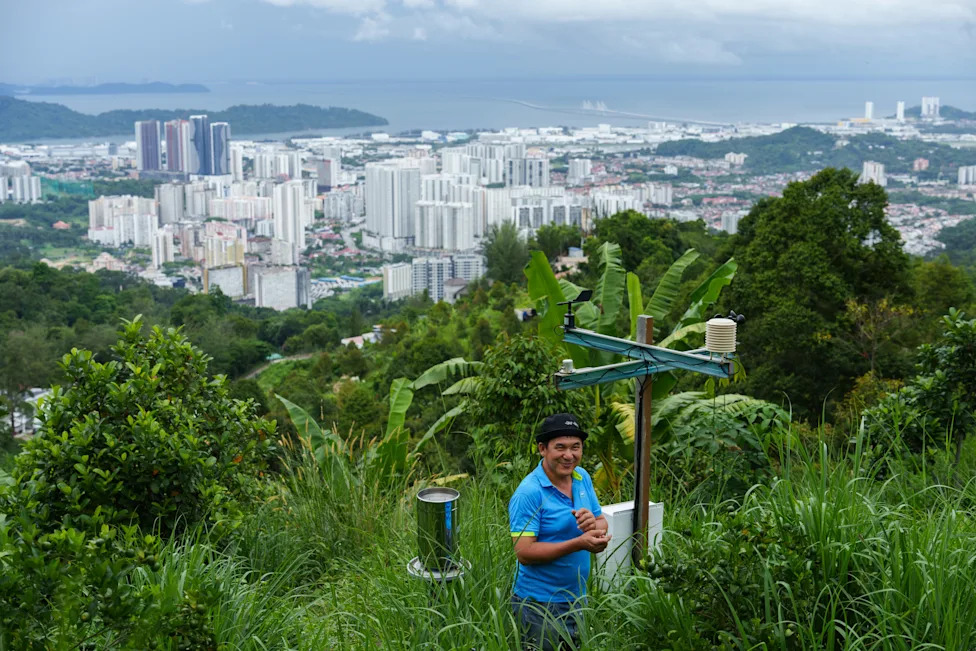
Durian farmer Kie Kim Hwa stands beside a weather and climate sensor station overlooking Penang Island in Balik Pulau, Malaysia, Wednesday, June 24, 2026. (AP Photo/Vincent Thian)(AP Photo/Vincent Thian)
How climate affects quality
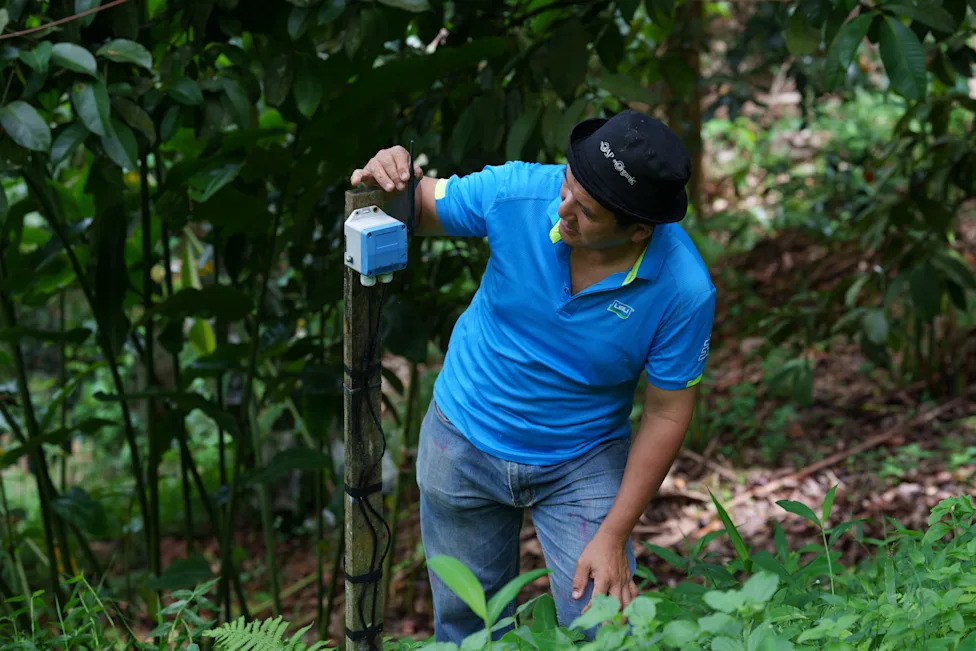
Durian farmer Kie Kim Hwa sets up a weather and climate sensor station at his hillside orchard in Balik Pulau, Penang Island, Malaysia, Wednesday, June 24, 2026. (AP Photo/Vincent Thian)(AP Photo/Vincent Thian)
Growers and scientists say rising average temperatures and more frequent extreme events make durian cultivation more unpredictable. Peninsular Malaysia’s average temperature rose about 0.24°C per decade between 1969 and 2025, according to the national meteorological department. For sensitive varieties such as Musang King, too much rain during rapid fruit development can produce white or grayish patches on the flesh; drought can cause dark spots. Pollinators are also at risk: one grower reported no fruit bats in his orchard during this year’s flowering season, potentially due to heat or heavier pesticide use.
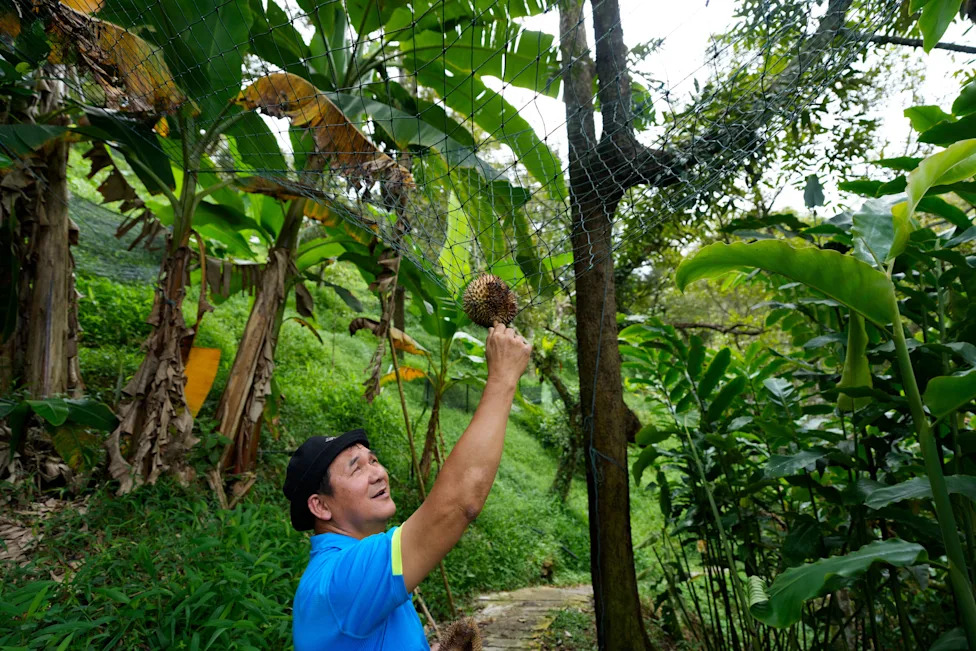
Durian farmer Kie Kim Hwa collects a durian on a net at his hillside orchard in Balik Pulau, Penang Island, Malaysia, Wednesday, June 24, 2026. (AP Photo/Vincent Thian)(AP Photo/Vincent Thian)
Adaptation and technology on the farm
Some growers are responding. Ooi Teik Hock moved his orchard from lowland plains to cooler, more humid highlands to protect fruit quality. Others are expanding water storage, preparing tube wells, and adopting monitoring technology. On Penang Island, Kie Kim Hwa installed sensors to track rainfall, humidity, wind and soil moisture, sending data to the cloud so he can intervene early. Simple low-tech checks, such as observing insects in a bucket of standing water, remain useful complements to digital systems.
"We live and die by the weather," Kie said. "But we can still prepare."
Outlook
Experts warn El Niño could push Malaysia toward record-high temperatures and greater climate volatility, raising the stakes for water management and pest control. While extreme weather may reduce supply and lift prices in some seasons — creating opportunities for well-prepared growers — the combination of volatile weather, rising input costs and market competition from Thailand and Vietnam means many Malaysian durian farmers will need to invest in adaptation to remain profitable.
Associated Press writer Fu Ting in Washington contributed to this report. The Associated Press’ climate and environmental coverage receives financial support from private foundations; AP is solely responsible for this content.
Help us improve.