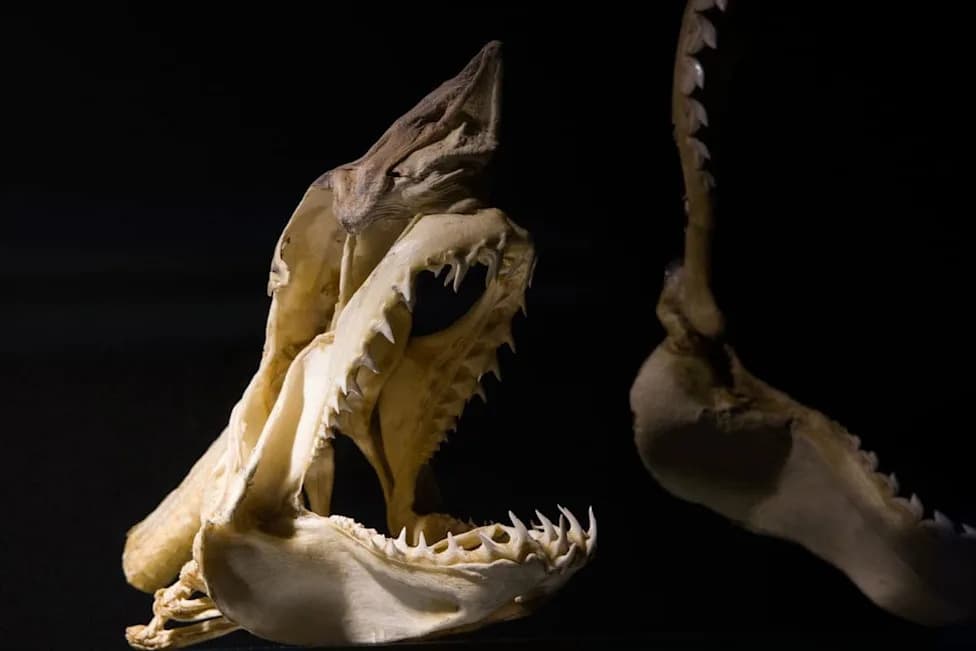
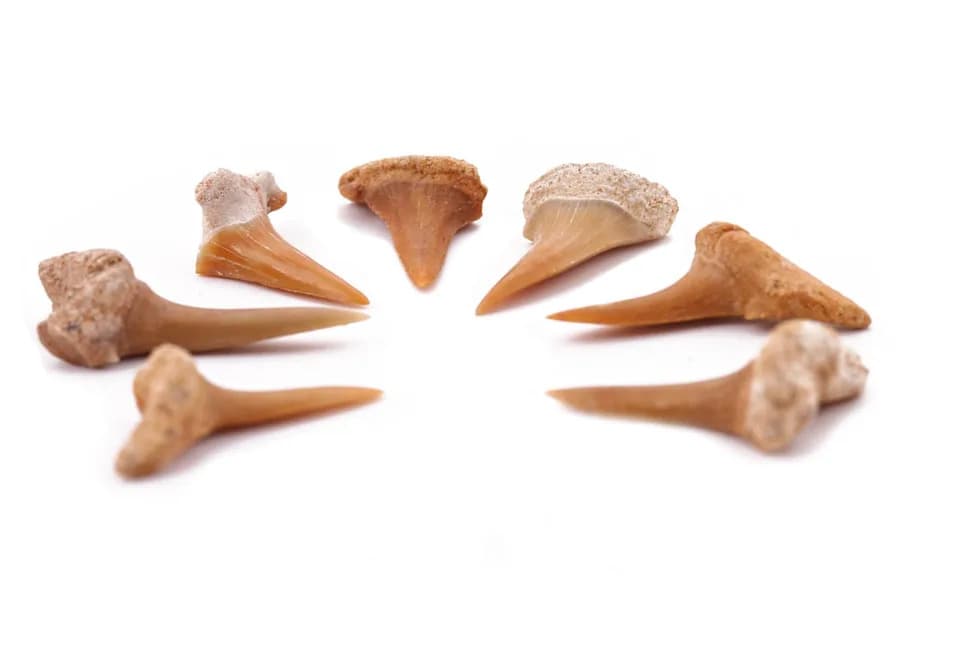
NOAA ROVs recovered several large fossil shark teeth about three inches long from the seafloor southwest of the Cook Islands. Measurements and morphology point to Otodus megalodon, a roughly 60-foot predator that disappeared about 3.6 million years ago. Beyond illustrating the shark's size and bite power, the teeth preserve rare earth elements and often seed polymetallic nodules, offering geochemical records researchers use to reconstruct past ocean circulation and environments.
Megalodon Teeth Recovered Off Cook Islands Offer New Clues About Ancient Ocean Giants

Several megalodon teeth found on the ocean floor offer new clues about the ancient giant
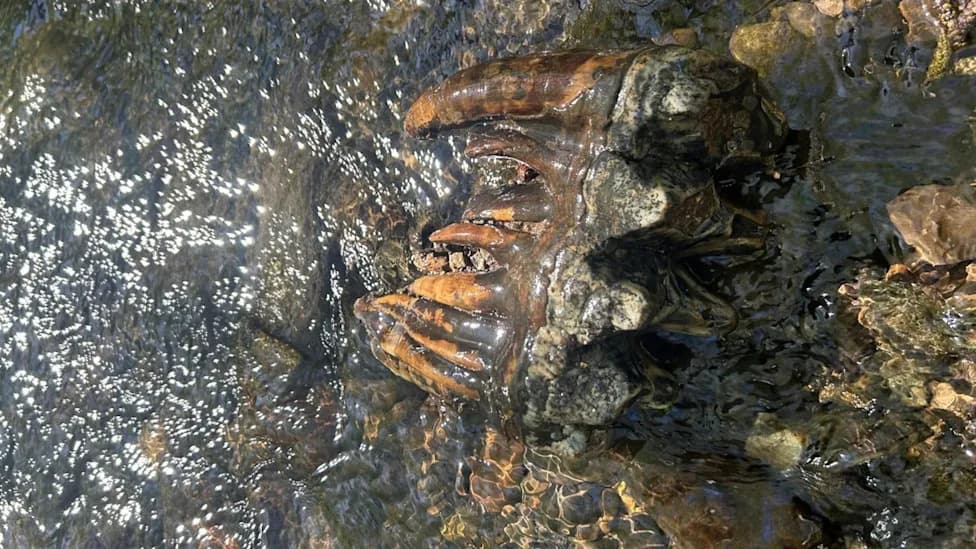
Researchers operating remotely operated vehicles (ROVs) on the southwestern seafloor of the Cook Islands recovered several large fossilized shark teeth, according to the National Oceanic and Atmospheric Administration (NOAA). Each tooth measured about three inches long, a size consistent with those of the extinct giant shark commonly identified as Otodus megalodon.
What the Teeth Reveal
Measured and examined by scientists, the teeth reinforce the identification of a predator that dominated the oceans until roughly 3.6 million years ago. Megalodon is estimated to have reached lengths near 60 feet and weights on the order of 50 tons—comparable to a railroad car—and would have wielded a powerful bite capable of taking sizeable chunks from large whales of its era.
Scientific Value Beyond Size
NOAA highlighted that, while megalodon has been extinct for millions of years, its teeth continue to provide valuable scientific information about ancient ocean environments. Fossil teeth can absorb and preserve traces of rare earth elements and other minerals from seawater as they form, leaving geochemical signatures researchers can analyze to reconstruct past ocean circulation, temperature, and chemistry.
“While they have been extinct for over 3 million years (save for in the movies), their teeth continue to provide us with valuable clues about the ocean environment,” NOAA said.
Teeth also frequently act as nuclei for polymetallic nodule growth: minerals such as manganese and iron accrete layer by layer around hard objects on the seafloor over millions of years. These mineral layers, together with the tooth's chemistry, form a chronological archive scientists can study to better understand prehistoric marine ecosystems.
Ongoing Research
Scientists will continue laboratory analyses of the recovered teeth, combining morphological study with geochemical assays to refine estimates of the animals' size and to extract environmental data from the elements locked in the fossils. Findings like these help paleontologists and oceanographers reconstruct how ancient oceans circulated and how large marine predators interacted with their ecosystems.
Help us improve.