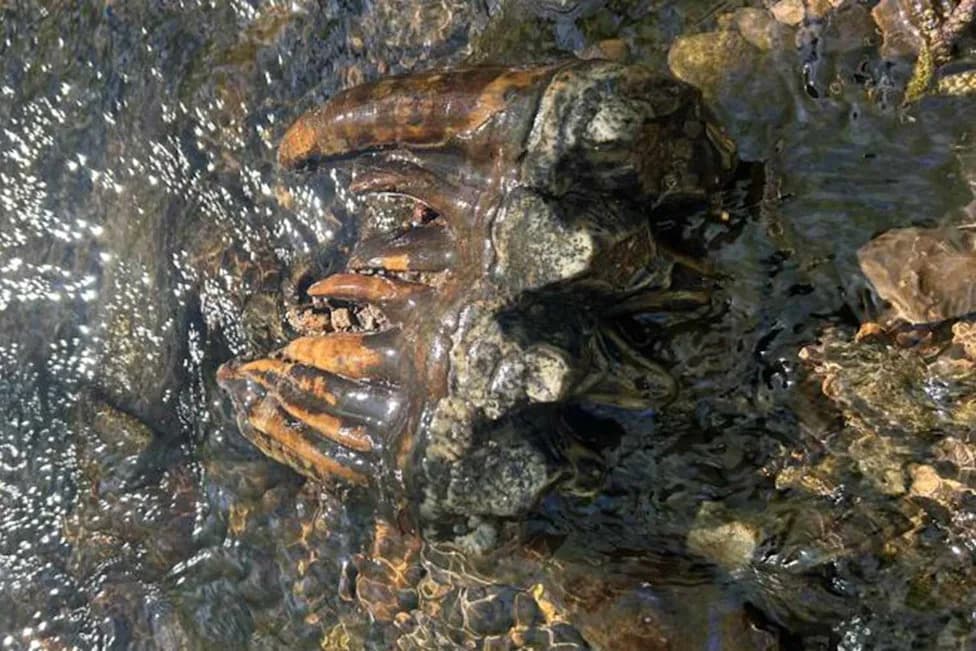
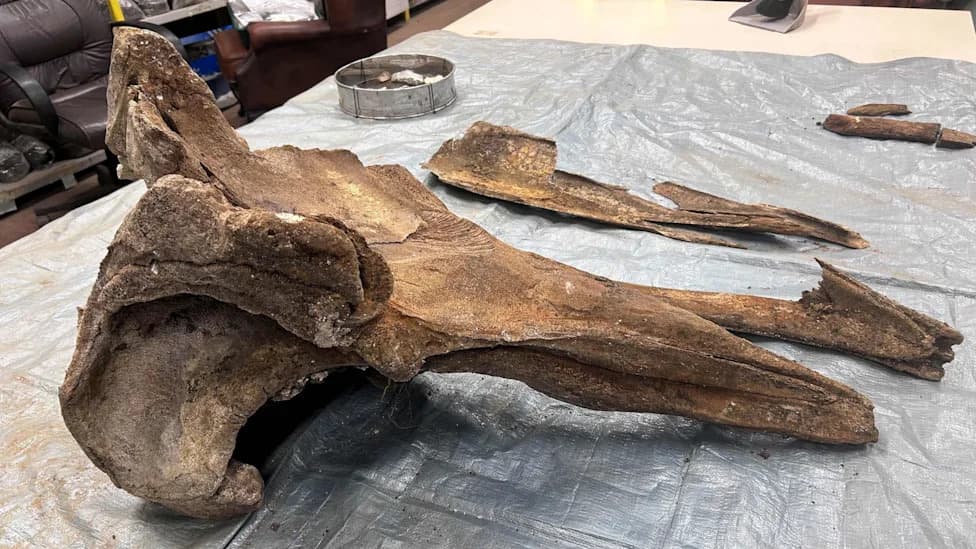
An exceptionally preserved Pacific mastodon molar—estimated at least 10,000 years old—was discovered in a San Mateo County creek during Midpen regional open space surveys. The intact adult molar, roughly 8.5" by 7" by 3", was first mistaken for a rock before paleontologists confirmed its identity. Donated to Stanford's Doerr School of Sustainability, researchers will attempt radiocarbon dating and produce a 3D scan; if radiocarbon is not possible other dating methods may be used. The specimen bolsters research into mastodon anatomy, migration and Pleistocene ecosystems, complementing recent genetic studies showing wide-ranging movement and diversity in the species.
Immaculate 10,000-Year-Old Pacific Mastodon Molar Unearthed in San Mateo Creek
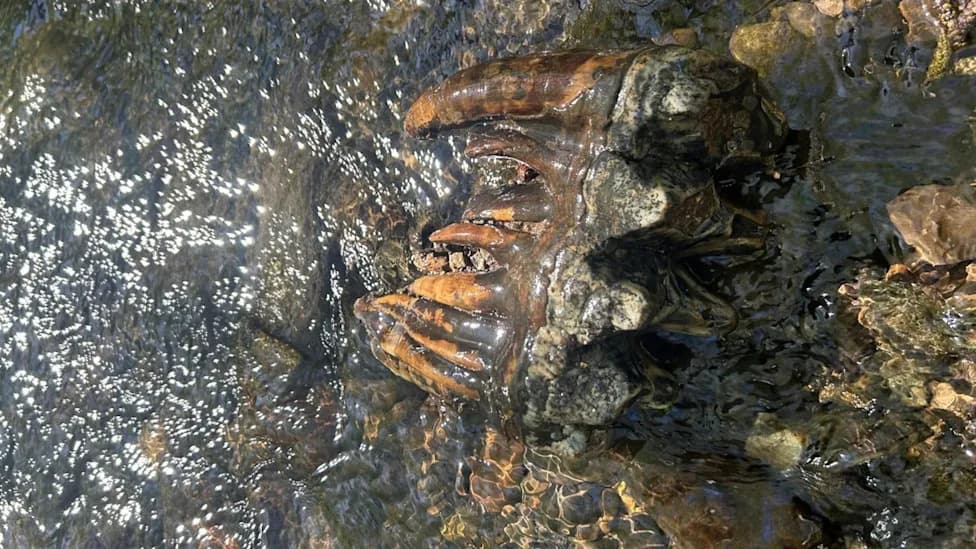
10,000-year-old fossilized mastodon found in creek
Scientists have recovered an exceptionally preserved Pacific mastodon molar from a creek bed in San Mateo County, California. The specimen—estimated to be at least 10,000 years old—was discovered during routine field surveys tied to a habitat enhancement project in a Midpeninsula (Midpen) Regional Open Space District preserve.
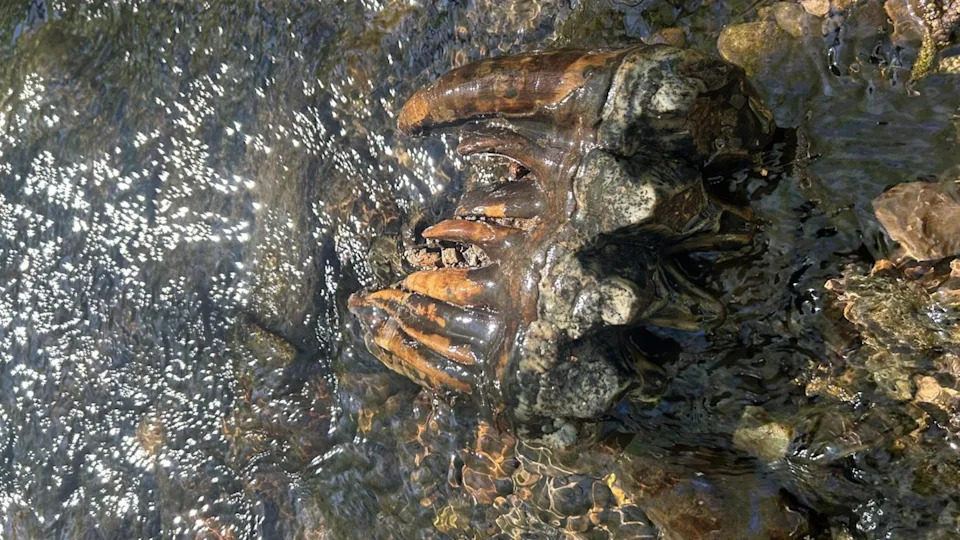
Midpeninsula Regional Open Space District - PHOTO: A fossilized Pacific mastodon tooth was discovered in San Mateo, Calif.
Discovery
Midpen officials described the find as an "exceptionally preserved fossilized tooth." Geologist Brigid Lynch discovered the object during standard environmental surveys; it was initially mistaken for an oddly shaped rock until paleontologists examined it and confirmed it was an intact adult mastodon molar. Midpen reports the tooth measures about 8.5 inches long, 7 inches deep and 3 inches wide.
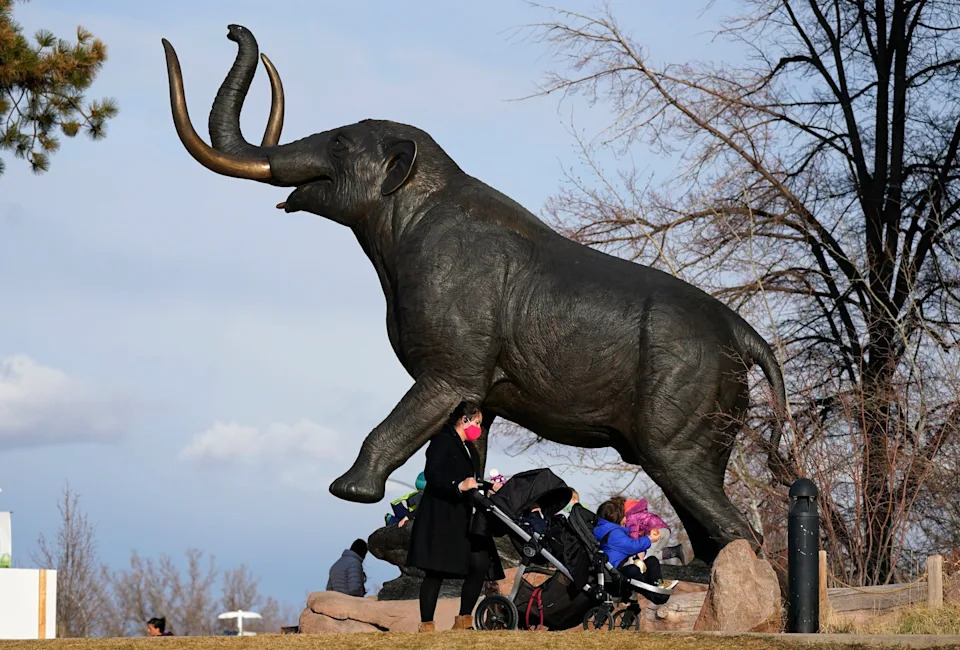
David Zalubowski/AP, FILE - PHOTO: In this Jan. 5, 2021, file photo, a mother pushes a child in a stroller past a mastodon sculpture outside the Denver Museum of Nature & Science in Denver.
“It's the most complete mastodon molar from our area, and the most spectacular mastodon molar that I've ever seen,” said Wayne Thompson, paleontologist and owner of Pacific Paleontology. “I had chills and shivers up and down my spine.”
About the Pacific Mastodon
Pacific mastodons were large herbivores that lived across parts of western North America during the Pleistocene epoch, which began roughly 2.5 million years ago and ended about 11,700 years ago. They differed from American mastodons and woolly mammoths in several anatomical ways: Pacific mastodons often had narrower molars adapted for crushing twigs and coarse vegetation, thicker leg bones, and distinct tusk morphology.
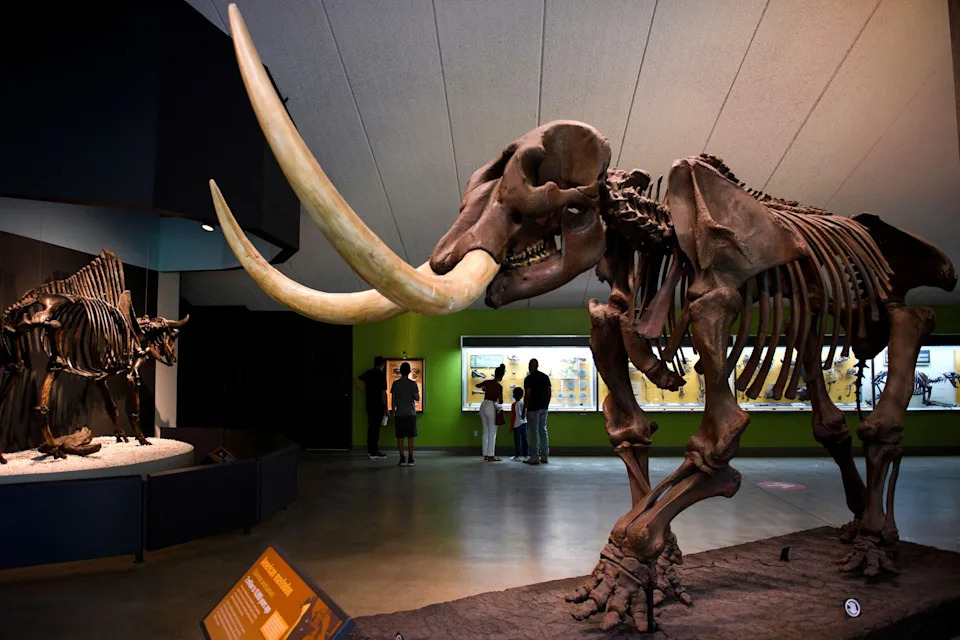
Patrick T. Fallon/AFP via Getty Images, FILE - PHOTO: In this April 8, 2021, file photo, an American Mastodon stands as visitors tour exhibits on the reopening day of the George C. Page Museum at the La Brea Tar Pits, in Los Angeles.
Research Plans
The molar has been donated to Stanford University's Doerr School of Sustainability. Researchers there plan to attempt radiocarbon dating to refine the tooth's age and will create a high-resolution 3D scan for study and preservation. If radiocarbon dating cannot be performed because the specimen is fully mineralized, other geochemical or stratigraphic dating methods may be used instead.
“We can study fossils to better understand Earth's past, past wildlife and the ecosystems they inhabited, and to help us make better predictions and better decisions about how to support ecosystems and biodiversity moving forward,” said Christine Garcia, curator and manager of the Geoscience Specimen Collection at Stanford.
Significance
This intact molar is one of the most complete mastodon teeth recovered in the region and will add valuable anatomical, chronological and potentially genetic context to the fossil record. A 2025 study published in Science Advances used DNA from mastodon remains to show the species was more genetically diverse than previously recognized and that individuals migrated long distances in response to climatic change. This San Mateo find could help researchers refine understanding of mastodon distribution, behavior and responses to past environmental shifts.
Further analysis of the specimen, including dating, scanning and comparative study, will determine how it fits into the broader picture of Pleistocene megafauna in western North America.
Help us improve.