The Scotts Valley Band of Pomo Indians opened an invitation-only modular preview casino in Vallejo on July 25, but the U.S. Department of the Interior rescinded approval and ordered it closed on Aug. 1. Assistant Secretary William H. Kirkland III ruled the parcel did not qualify as restored tribal land under the Indian Gaming Regulatory Act, putting a planned $700 million, 160-acre resort on hold. The tribe says it will challenge the decision in federal court while the ruling fuels wider debates over tribal gaming, land claims and state revenue sharing in California.
Invitation-Only Scotts Valley Casino Shut Down After Seven Days; $700M Resort Plans Put On Hold
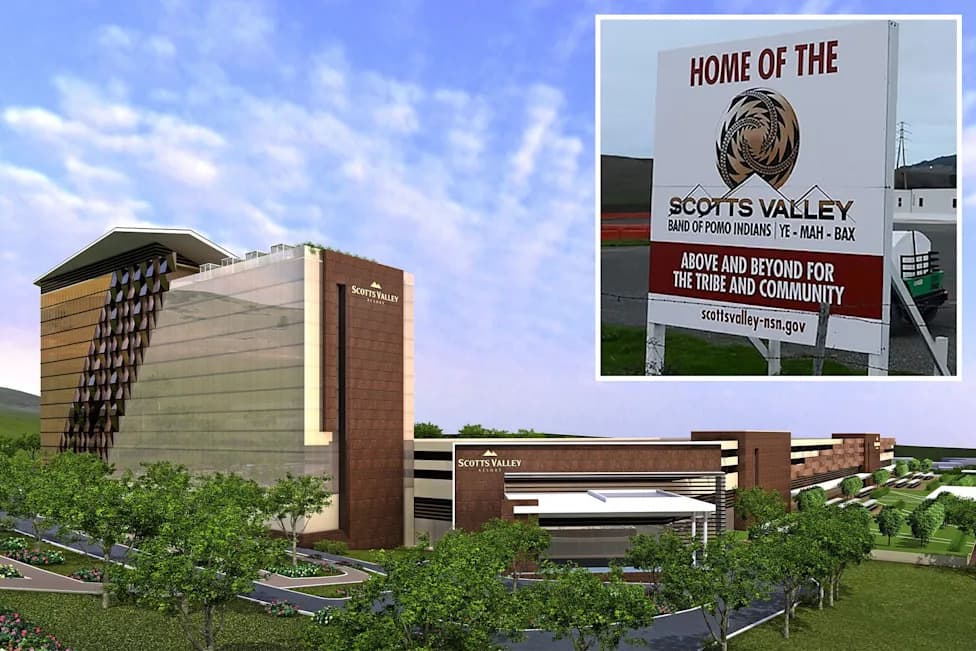
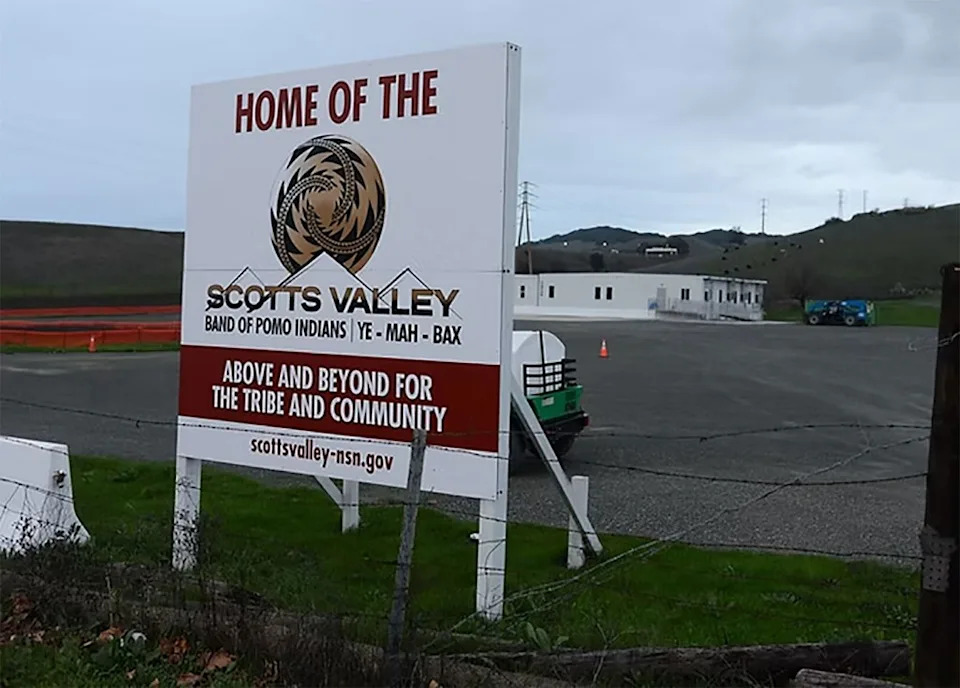
Collage of an illustration of the Scotts Valley Resort and a sign for the Scotts Valley Band of Pomo Indians.
The Scotts Valley Band of Pomo Indians' invitation-only, modular preview casino in Vallejo opened to invited guests on July 25 but was ordered to close on Aug. 1 after the U.S. Department of the Interior rescinded earlier federal approval for a larger casino resort project.
Federal Ruling Halts Project
Assistant Secretary for Indian Affairs William H. Kirkland III concluded that the Vallejo parcel does not meet the criteria for the restored-lands exception under the Indian Gaming Regulatory Act. In his decision, Kirkland wrote:
"Consequently, the Vallejo parcel does not qualify as restored lands within the meaning of applicable law, and the Band may not conduct gaming on the parcel pursuant to (the Indian Gaming Regulatory Act's) restored lands exception."
The ruling suspended plans for a roughly 160-acre development near Interstate 80 and Columbus Parkway that had been envisioned as a $700 million resort, including an eight-story casino, restaurants and bars, a ballroom, a parking garage, two dozen homes, tribal offices and a 45-acre biological preserve.
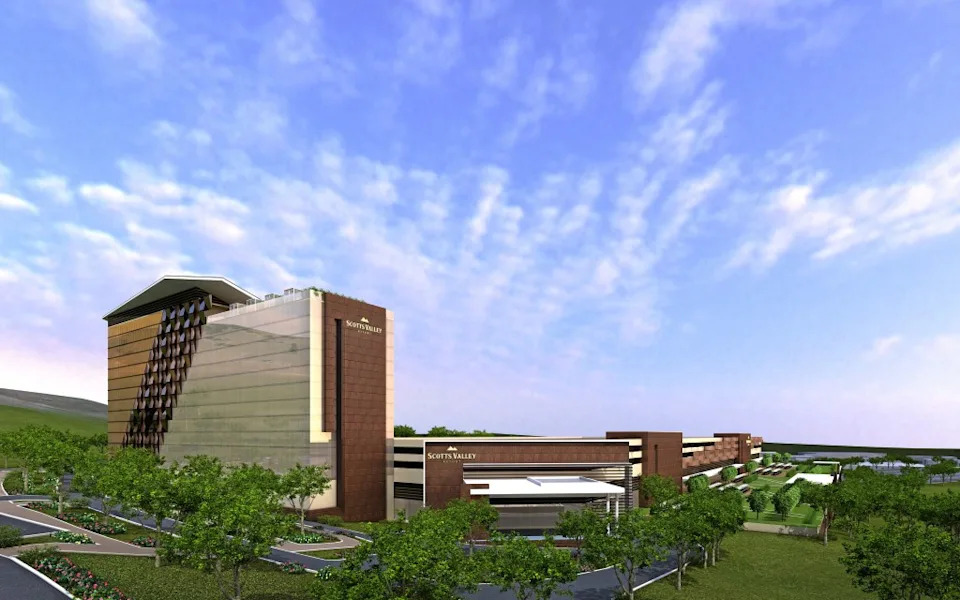
The Scotts Valley Band of Pomo Indians' preview casino was forced to close after the Interior Department blocked its $700M Vallejo resort project. Stand with Scotts Valley
Legal Challenge and Opposition
The Interior's reversal followed a legal challenge by opponents who questioned the Scotts Valley Band's historical connection to the site. Among them, the Yocha Dehe Wintun Nation argued the Vallejo property lies within the ancestral territory of the Patwin people and challenged the tribe's claim to the land.
Tribal Chairman Shawn Davis said the Scotts Valley Band will take the decision to federal court. "The administrative record overwhelmingly supports the Tribe's gaming eligibility. We will move quickly to challenge the decision in federal court," Davis told Tribal Business News.
Brief Preview, Big Stakes
The temporary preview facility—comprised of modular buildings—was open only to invited guests for a week before operations were ordered to stop. With the Interior ruling in place, gaming at the Vallejo site is suspended while the tribe evaluates legal options.
The agency bet against the project, ruling the tribe had not demonstrated the historical connection to the property required for gaming approval. Stand with Scotts Valley
Wider Context: Tribal Gaming And Revenue Disputes
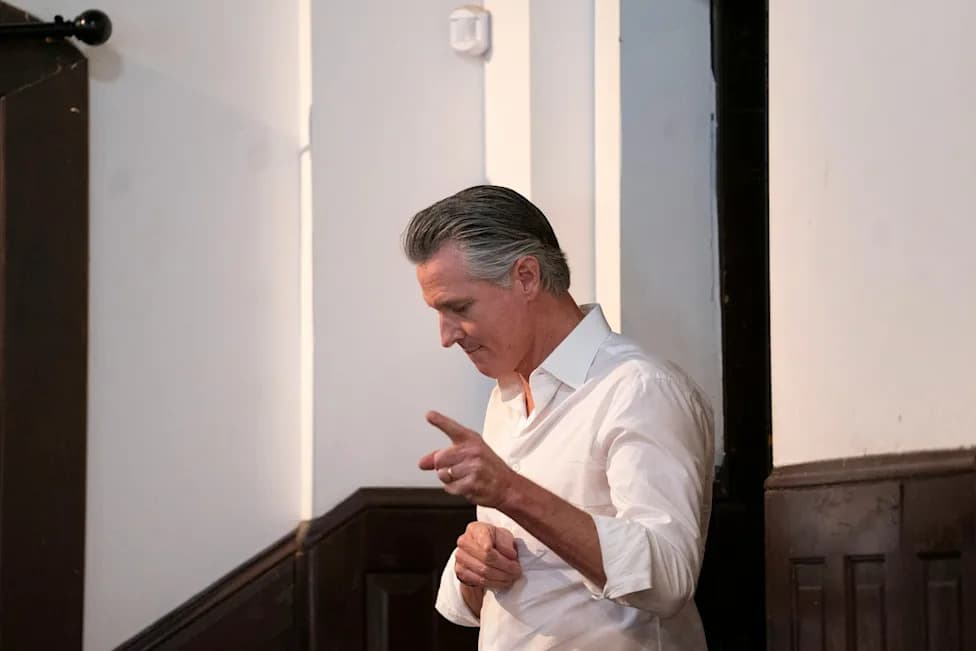
The closure comes amid broader debates in California about tribal gaming expansion, land sovereignty and revenue-sharing. Critics have raised concerns about recent statewide compacts that alter how the state shares in tribal gaming revenue. For example, Gov. Gavin Newsom's 25-year compact with the Fort Mojave Indian Tribe removes a prior revenue-sharing requirement in many circumstances and limits the state's share to primarily regulatory cost recovery and targeted local mitigation if device thresholds are exceeded.
Industry observers say such changes could reduce the state's revenue from tribal gaming. Tribal gaming generated an estimated $46.2 billion in gross gaming revenue last year, according to data cited by Casino.org.
What Comes Next
The Scotts Valley Band's legal challenge could affect how the restored-lands exception is applied and influence future disputes over tribal land claims and casino projects in California. For now, the tribe's $700 million resort plan remains on hold.
Help us improve.